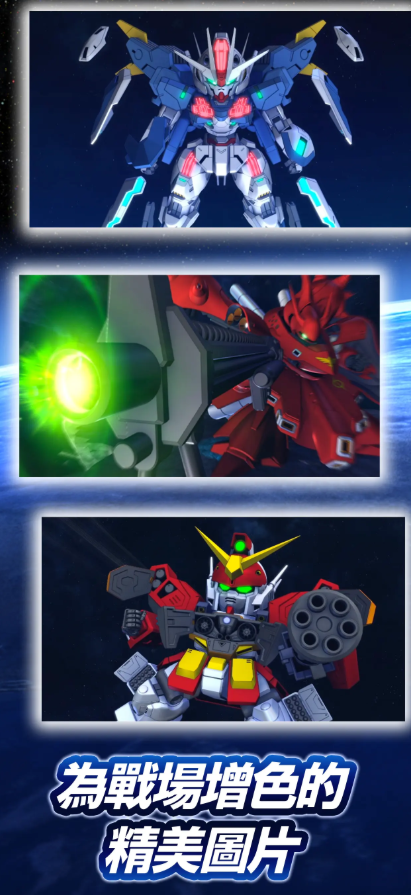
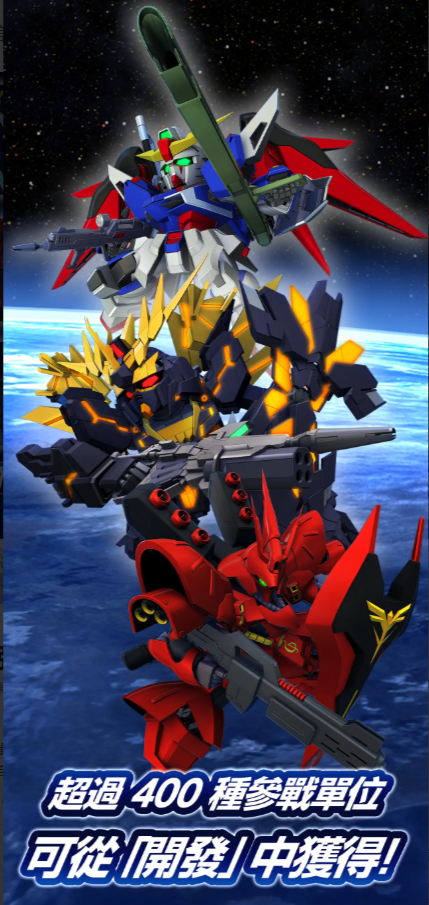
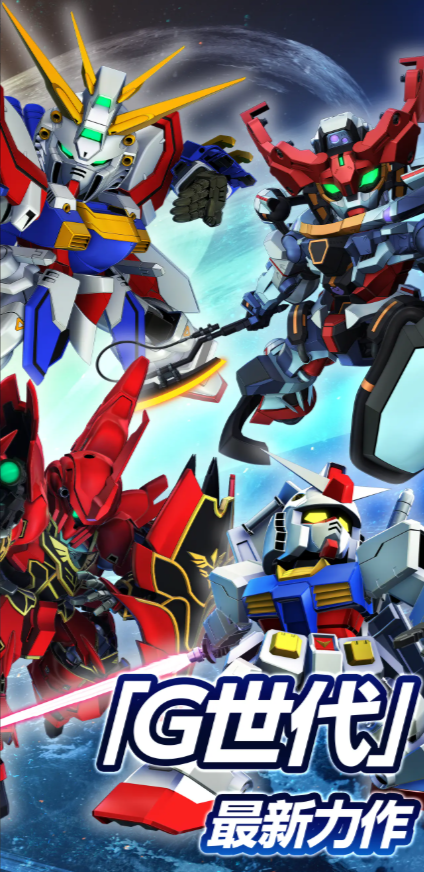
If you've been a Gundam fan for ages, the first time you boot up SD Gundam G Generation Eternal, the thing that'll hook you isn't the rush of pulling an UR unit—it's the pure joy of finally being able to toss mechs from different series into the same team! From the original Gundam, Z Gundam, Gundam W, SEED, 00, Iron-Blooded Orphans, all the way to Witch from Mercury, even those rare side story units—you can slowly collect them all via the Development System. Mixing Gundam series from across eras into one world? That's the core charm of the G Generation series.
SD Gundam G Generation Eternal officially launched way back on April 16, 2025, and after over a year of updates, it's nothing like the small roster of just a few hundred mechs at launch! The official roster now includes 98 series, over 940 MS units and characters, with stories expanded to 18 original works, plus more than 670 mechs you can develop. Basically? It's not too late to get into this game at all—there are tons of series to collect and unlock at your own pace!
That said, the biggest headache for new players right now is super obvious: this game has so many systems! UR, SSR, Development, TAG, SP Evolution, SSP Evolution, Eternal Path, Generation Tower, Support Attacks, Triple Drive... If you rush to tap every red dot as soon as you start, you'll probably waste rare materials on units/characters you'll never use later. It's way safer to figure out the basics before diving deep.
So, from the perspective of a player who's been grinding this game for a hot minute, I've put together a complete guide for everyone: download steps, first pull tips, unit strength analysis, Development System breakdown, TAG team building, and how to progress as a F2P player!
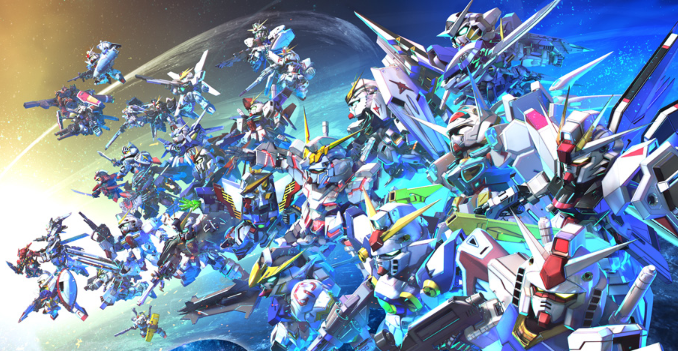
I. What is SD Gundam G Generation Eternal? Game Introduction & Key Features
SD Gundam G Generation Eternal is a Gundam-themed strategy simulation RPG from Bandai Namco, and it's the brand-new G Generation entry built specifically for mobile devices, optimized perfectly for touchscreen play.
If you've played older G Generation titles like Generation Genesis or Crossfire, most systems will feel super familiar at first glance—they kept the classic core strategy gameplay intact, so it's really easy to get into.
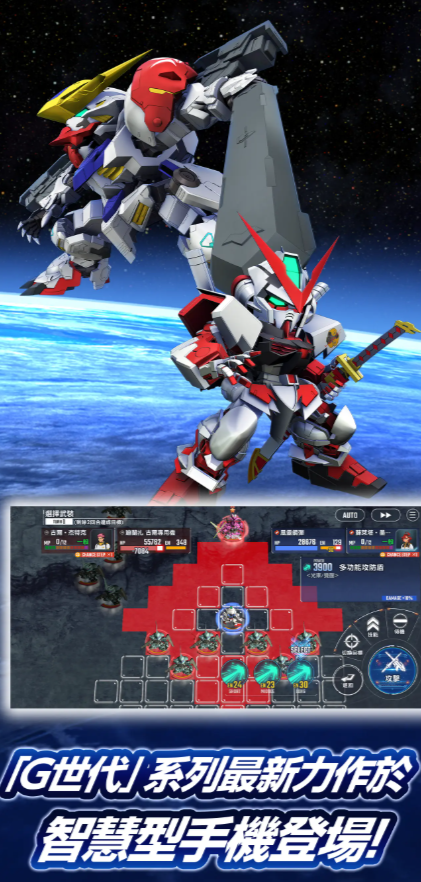
The core of every team is 5 mechs + their pilots, plus one support unit. Battles use the classic grid-based turn-based system, where you have to master movement range, attack range, target selection, and skill timing to test your strategy. The devs also added auto-battles—great for farming materials without having to manually play every stage, saving you tons of time.
The biggest difference between this game and your typical gacha RPG? "Pulling from the gacha isn't the only way to get mechs"—that's one of the biggest draws for Gundam fans.
A ton of SSR-tier and even late-game strong mechs can be obtained through this progression chain:
Unlock via stages → Level up units → Develop to transform → Unlock higher-tier mechs
Level up step by step, no full dependence on gacha—super friendly for F2P players.
That's why I think the biggest appeal for Gundam fans isn't spending cash on gacha—it's the process of developing mechs and completing your collection.
Like, you might farm a regular mass-produced unit just to develop Freedom Gundam, and before you know it, you've unlocked the entire SEED development tree, and suddenly it's the next morning and you've been deep diving into all the unit lore the whole time~
II. Download & Installation Guide for SD Gundam G Generation Eternal
A. Mobile Device (Google Play / App Store) Download Steps
Mobile players can just search on the App Store or Google Play for:
SD Gundam G Generation Eternal
Once you confirm the developer is Bandai Namco Entertainment Inc., just hit install—super straightforward.
Right now, Android and iOS are fully supported platforms. The game is free-to-download, with paid content only for gacha pulls and shop items—no forced pay-to-win elements. It holds around a 4.5 rating on Google Play, and the global store will keep updating through 2026+, so you don't have to worry about support dropping suddenly.
When you first install the game
I recommend downloading it over Wi-Fi.
After downloading the game from the app store, you’ll still need to download more content like mechs, characters, original storylines, and voice files once you launch the game. These types of long-term collection games only get bigger with updates, so make sure you don’t have just a few GB of storage left on your phone to avoid installation failures.
If you can't find it in the app store, first check if your Google Play or Apple ID region is correct. Don’t go looking for modded APKs right away—this is a surefire way to get your account banned or lose all your data.
The longer you play, the more you’ll realize that the real value is all the data in your game account—not some random installation package.
B. Smooth Setting Tips for PC Emulators and PC Version
Back in the day, if you wanted to play this game on PC, your only thought was popular emulators like BlueStacks—but now there are way more smooth options. Once you download an emulator, just set up storage space and graphics quality, and you’re good to go.
BlueStacks, MuMu, or LDPlayer—though honestly, you don’t even need to prioritize emulators anymore these days.
《SD Gundam G Generation Eternal》 officially supports Google Play Games for PC starting October 16, 2025. Mobile players just need to link their Bandai Namco ID to easily transfer their game data from mobile to PC and keep playing.
So here’s my recommended order:
Google Play Games for PC > Official PC-Supported Environments > Third-Party Emulators.
If you really have to use an emulator, here’s what I recommend:
Allocate 4+ CPU cores, use 6GB+ RAM, run a 64-bit Android environment, and enable VT virtualization.
That said, this game isn’t like a frame-rate-dependent FPS—you don’t need to chase ultra-high FPS. What matters is stability, no crashes, and smooth scaling of the tactical map plus smooth mouse control.
III. Account Linking, Data Sync & Cross-Platform Play Setup
For accounts, I recommend new players handle this as early as possible.
This game lets you link data via a Bandai Namco ID. Once linked, even if you switch phones, reinstall the game, or jump to Google Play Games for PC, you can get all your old game data back and keep playing.
The official PC version also clearly supports using Bandai Namco ID to carry over data from iOS and Android.
The basic process is:
Game Menu → Data Link → Log in or create a Bandai Namco ID → Finish linking.
If you plan to reroll for a top-tier pull, don’t link your account in the first run.
It’s way easier to wait until you get an account you’re happy with before linking.
Also, it’s a good idea to save a screenshot of your Player ID—if you ever run into login issues, you can give customer support complete data, making it way easier to resolve.
IV. New Player Start & Reroll Guide
A. Reroll Process & Tips
《SD Gundam G Generation Eternal》 has a really friendly reroll process.
The first run needs to go through the newbie tutorial, which takes a few minutes. From the second run onward, you can skip most of it. If you’re not happy with your first pulls, you don’t need to delete and reinstall the whole app—just delete user data from the title screen menu to start rerolling again.
Here’s roughly my reroll process:
Complete Newbie Tutorial → Claim mailbox and event rewards → Pull from current limited banner → Check results → If unhappy, delete data and reroll → Once happy, pull from the free UR Guaranteed reroll banner → Finally, link your Bandai Namco ID.
From the second reroll onward, it’s way faster.
B. Early Game UR/SSR Mechs & Pilots Recommendation
Don’t just reroll for “my favorite Gundam mech” at the start.
For a truly good early-game mech, I judge it based on these four points:
Movement, Range, Terrain Adaptability, Weapon Performance.
Mechs with long range and high movement make clearing maps so much smoother.
As of August 2026, the most talked-about UR mechs for high-difficulty content include:
God Gundam (EX)
Bo...
This unit hits really hard, and when the conditions line up, its single-target burst damage is absolutely insane.
Wing Gundam Zero EW (EX)
It has excellent range, great MAP weapons, and is super versatile—can slot it in basically any team in most stages.
00 Raiser Final Battle Spec (EX)
It balances solid damage output with great survivability—perfect for tough stages where you need to hold your ground and deal big hits.
Also, units like Strike Freedom, some limited-time gacha units, and newly released high-performance EX units get mentioned as top-tier (T0) picks depending on the current meta and tag-based teams. The exact order in tier lists can shift a bit, but God Gundam, Wing Zero EW, and 00 Raiser are consistently the most reliable top-tier units right now.
If I get a solid Ultra Rare (UR) support unit + two powerful UR units in my starter gacha roll, I’d stop rolling immediately—no need to keep going.
Why? Because UR support units have a lower drop rate than regular UR units. They’re super important for building tag teams that work well long-term.
V. SD Gundam G Generation Eternal Unit Tier List & T0 Rankings
A. UR Unit Roles & Recommendations
The biggest mistake people make when looking at tier lists is thinking a T0 unit can do everything for every stage. But every unit has its own niche—they shine in different battle scenarios, so don’t let tier lists be your only guide. Pick units that fit your playstyle instead.
The tag system everyone talks about in the community classifies units and pilots based on their attributes, origin, and strengths. It covers stuff like their series, role, unique weapons, and even pilot personalities. Mixing different tags not only gives extra team boosts—it’s the core of building teams and planning tactics. Many tough stages are only beatable if you link the right tags together to make your team way more powerful.
These team tags are one of the most important factors when building your squad in the game!
Common tags include:
Universal Century
Protagonist
Rival
Ace Unit
Psycommu
Mass Produced Unit
One-Hit Kill (OHK)
and many more.
Support units’ leader skills usually boost specific tags. So in the late game, building a team isn’t just slotting your 5 strongest units. The real key is making sure your whole team gets those high-boost support effects at the same time.
Tags like OHK (One-Hit Kill) work great for building teams with high burst damage to take down bosses fast. A key ability for support pilots is increasing the number of "support attacks/defends" to boost your team’s combo damage.
Some SSR pilots, when paired with units from the same series or support-type units, add extra support counts. That means every enemy move lets multiple of your allies chip in with damage—huge boost to overall output.
What makes teams strong in the late game isn’t just one unit dealing massive damage. It’s the combo effects your whole team triggers together—that’s the real art of building a squad.
VIII. F2P & Low-Spend Progression Routes
A. Budget-Friendly Top Units & Team Comps
F2P (Free to Play) players don’t have to force themselves to get 5 UR units—it’s way too big of a resource drain.
Here’s a solid team comp F2P players can build:
1-2 UR main damage units from gacha + 2 SSR units from development + 1 support/survivability unit.
You can tweak this as needed for tough stages.
For F2P players, the units worth sinking most of your resources into are development units that are easy to max out, have useful tags, and can evolve to SP/SSP forms.
The biggest perk of development units is:
You will definitely get it—no need to rely on gacha luck!
No more gambling on gacha rates—save tons of gems and stress.
B. Resource Allocation & Progression Priority
My personal resource priority order is: Main UR Units → Corresponding Main Pilots → Core Support Units → Main Development SSR Units → Secondary Tag Teams → Collection Characters.
CAPITAL will become extremely scarce in the mid-game.
So don’t rush to max out every new unit you get—you’ll just waste precious resources.
The same goes for EXP materials.
Start with 5-10 sets of pilots and units that can clear high-difficulty stages, then expand your roster at your own pace.
IX. Eternal Road, Tower of Generations, and High-Difficulty Stage Guide
A. Recommended Units & Pilots for Each Series in Eternal Road
The biggest quirk of Eternal Road is that it forces you to properly level up units and pilots from different game series.
A T0-tier unit can wreck main story stages on normal runs, but in series-locked stages? Well…
"Sorry, this unit isn’t from this series."
You just can’t use it—total garbage.
So never disassemble or discard SSR and SR units from any series.
My rule of thumb for each series is to keep at least:
1 main attacker, 1 sub-attacker, 1 support unit, 1 tank, and several pilots that can utilize series-specific bonuses.
Series like the original, Z, W, SEED, and 00 are really content-rich, so investing in them gives you a great return.
B. Tower of Generations Clear Strategies & Team Examples
Tower of Generations tests the overall depth of your account.
Higher stages don’t just have tanky enemies—they also have turn limits, objective points, terrain restrictions, or series/TAG-based locks.
For these stages, I always prioritize getting:
High-mobility units
Tri-move pilots
Range-5 support units
MAP weapons
Durability/support defense characters
If the stage’s goal is just "reach the designated area," don’t waste time killing every enemy on the map—that’s just silly.
Some of this game’s tough stages aren’t about raw stats—they’re about tactical strategy for turn-based battles.
X. Daily Quests, Event Stages, and the Diamond/CAPITAL Farming Routine
Here’s my daily routine when I log in:
Claim login rewards first.
Finish daily quests.
Collect fleet cruise rewards.
Grab the free training pack from the shop.
Run the free daily reinforcement stages.
Spend AP farming for materials you’re missing last.
You get diamonds for finishing all daily quests, and fleet cruise rewards accumulate over time—don’t forget to collect them regularly.
Save AP and training materials as you progress—don’t let your inventory get full for too long, it’ll cause headaches later.
For event stages, here’s the recommended order of priority for redeeming rewards:
First, grab limited units or pilots. Next, get rare breakthrough materials. Then SP/SSP-related special resources. Last of all, regular EXP materials.
The game’s gold (which is CAPITAL) becomes super scarce in the mid-to-late game—don’t waste it on random stuff.
Even if you have a ton of resources lying around, don’t level up random fodder units—save them for your main team, it’s way more worth it.
XI. Useful Emulator Settings & Tips for the Best PC Experience
The game has an official Google Play Games PC version now—I highly recommend using this official PC environment, it’s super stable.
The biggest upside of playing on a big screen isn’t the graphics—it’s:
Clear attack range visibility!
On mobile, it’s easy to mess up clicks when zooming in/out on dense maps. On PC, when zoomed out, support attack ranges, enemy ranges, and movement grids are all way clearer—way easier to play.
I also set the game’s graphics to "Stability First." Turn-based tactical games don’t need flashy effects, you know?
After all, for a tactical game, maxing out your GPU for a few extra effects isn’t worth it.
If you have an average PC, turn down shadows and unnecessary effects. Keep the resolution clear—smooth performance is key.
If you use a third-party emulator, turn off unnecessary multi-instance features, screen recording, and background tools. The most annoying issues aren’t just lag—they’re random crashes when updating or loading stages.
XII. SD Gundam Unit Breakdown by Series
A. Key Units from Mobile Suit, Z, W, SEED, 00, and More
Mobile Suit Gundam Series
The Gundam Core, Char’s Zaku, and Zeong are all key units in the early Universal Century era. The development line for this series is
It’s pretty much complete and perfect for new players to build their own Universal Century teams.
Zeta Gundam Series
Units like Zeta Gundam, The O, and Qubeley play important roles in the Awaken and Support systems—they’re both versatile and great to use.
New Mobile Report Gundam W Series
Wing Gundam Zero EW is currently an extremely powerful UR unit with high general utility in the entire game, while Epyon Gundam and Altron Gundam also perform excellently in high-difficulty stages.
SEED and DESTINY Series
With so many units like Freedom Gundam, Justice Gundam, Strike Freedom Gundam, Infinite Justice Gundam, Providence Gundam, and Destiny Gundam to choose from, this is one of the easiest series to build a complete Tag Team, and it’s totally beginner-friendly with zero threshold.
Gundam 00 Series
From Exia Gundam to 00 Raiser, there are many great units in the entire development line. The Final Battle specification of 00 Raiser stands out especially in SP, SSP stages, and high-difficulty environments, dealing massive damage.
B. High General-Purpose Units vs. Niche Units
General-Purpose Units usually have these characteristics:
They have extremely long range, high mobility, adapt to various terrains, and can be added to many different Tag Teams.
You can use these units in main story stages, high-difficulty battles, and event dungeons—they get used all the time.
Niche Units might seem mediocre at first, but when you face a work-limited event, a specific Tag, or enemy mechanics, they suddenly become the perfect solution to clear the stage—super useful.
So I recommend not using just a single T0 tier list to judge all units—there’s a right unit for every situation.
In the late game of SD Gundam G Generation Eternal, the real gameplay is all about “do I have the right solution in my storage?” and clearing stages by combining different units.
XIII. Mid-to-Late Game Team Optimization & Tag Team Building
When you reach the mid-to-late game, your team-building mindset will shift from:
“Just throw the five strongest units together”
To:
“I need all five units to get the Tag bonuses from support members to perform at their best.”
For example, if you get a strong “Ace Unit” support, you can start collecting main units from the same Tag to build a dedicated team.
If you get a Newtype-related support, you can start linking units like Nu Gundam and Qubeley to build your team.
A truly complete Tag Team usually needs:
A main damage dealer, a secondary damage dealer, a support unit, a sustain unit, plus one unit with special abilities—filling all five slots perfectly.
This kind of team can handle the high-difficulty stages later on without getting wiped easily.
If you use only attack-type units, your power might look high, but when enemies start counterattacking, you’ll probably lose units in two turns and can’t hold on at all.
XIV. Quick Catch-Up Guide for Returning Players
If you played since the game’s launch and are just coming back now, I don’t recommend wasting all your gems on the latest gacha banner as your first move.
I suggest doing these four things first after returning:
First, go through your old units again to see if any have been unlocked for SP or SSP forms—many units that were collecting dust in your storage before might be super strong now.
Many units you didn’t bother using before have probably been reworked to be stronger and become mainstays now.
Second, hurry up and unlock all the new main story chapters in the game to claim rewards.
The game has expanded from 10 main story chapters at launch to 18 now, with way more new units to get—go unlock them quickly.
Third, sort out your Tag categories carefully.
If you used to only go for UR units, you need to re-study each Tag system now—don’t just chase high-rarity units, building dedicated teams is key to progressing in the late game.
Make sure you check the synergy between support members and Tag Teams first.
Fourth, decide whether to pull for the latest limited units later.
If your old account already has high-general main units like Wing Gundam Zero EW, 00 Raiser, and God Gundam, what you really need might be support members instead of a sixth main damage dealer unit.
XV. Review & Long-Term Operations Observations for SD Gundam G Generation Eternal
As a Gundam IP mobile game, what I like most about SD Gundam G Generation Eternal is that it doesn’t just treat the Gundam series as a library of reskinned characters. From unit development, original story adaptation, terrain effects, weapon range calculations, pilot suitability, to the core logic of building Tag Teams, the official team is clearly working hard to preserve the depth of the G Generation series.
Plenty of strategic fun here.
After the game officially launched in April 2025, it quickly surpassed 6 million global downloads. Bandai Namco later revealed that the game's launch performance was way more impressive than they expected. As of 2026, the game's content has expanded to include over 98 Gundam series, more than 940 units, and matching characters. This rapid expansion speed is more than enough proof that the developers planned to run this game long-term from the very start.
Its strengths are pretty obvious:
1. Extremely wide range of Gundam series—you can experience everything from classics to underrated ones;
2. The development system gives F2P (free-to-play) players long-term play goals and ways to get resources;
3. Battles aren’t just about stats—you need to focus on strategic team building too;
4. Early-game SSR units can later be upgraded via SP and SSP enhancements, so they won’t get outdated quickly;
5. The official PC version has way better comfort for long play sessions.
Of course, it also has downsides:
1. Mid-to-late game, the pressure to spend CAPITAL and various training materials ramps up a lot;
2. Every new limited UR unit release brings a certain degree of power creep;
3. Once high-difficulty stages start requiring teams built around specific series or tags, new accounts will definitely struggle a lot;
4. After you clear all main story and events, daily play focuses a lot on training units and waiting for new content drops.
But in my opinion, SD Gundam G Generation Eternal’s biggest advantage is exactly this—it’s not the kind of game that forces you to grind for hours every day. Just clear AP tasks in your free time, develop new units gradually, and build up your tag teams; come back to focus on team building during big events, no stress at all.
Finally, Let’s Sum Up This Game
Overall, SD Gundam G Generation Eternal is still a perfect fit for new players to join. Compared to when it first launched in 2025, there are way more units to unlock, develop, and train now—so much more variety.
Mobile players can download it directly via Google Play or App Store; if you want to play on PC, go for the official Google Play Games PC version, then sync your mobile progress with your Bandai Namco ID—no need to mess with emulators for a bigger screen.
When pulling new units as a beginner, don’t just chase Gundam units you recognize. To run your account smoothly, prioritize mobility, long range, terrain adaptation, and high-value tag combinations. Getting a useful limited UR unit and pairing it with a rare UR support character is usually better and more practical than pulling three regular UR units from different lines.
F2P players don’t need to worry too much—one of this game’s best points is that tons of units are obtainable via the system’s “development” feature. Just work through the development lines of each series, keep your SSR and SR units, then upgrade them via SP and SSP enhancements later; even a lot of common units can clear high-difficulty stages.
When you reach mid-to-late game, you’ll realize that the real fun of SD Gundam G Generation Eternal isn’t about “which unit is the current meta T0.” It’s that feeling when you get a stage that only allows units from the Wing series, dig through your unused units to pick one you haven’t trained yet, pair it with an SSR support pilot to fill the last strategic gap, and finally clear the stage. That feeling—of building a custom Gundam team that solves the stage’s needs, not just relying on a single overpowered unit—is exactly what makes this game closest to the core charm of the G Generation series.