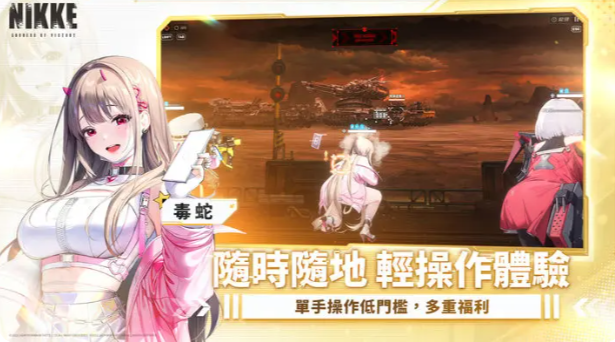
When many players first start playing GODDESS OF VICTORY: NIKKE, they’re drawn in right away by its eye-catching character designs and engaging shooting sequences. But once you get past the early main story and start tackling mid-to-late game content like Special Interceptions, Anomaly Interceptions, Solo Raids, or Arena matches, you’ll realize this is NOT your typical idle mobile game where “high character power lets you auto-clear everything.”
What makes this game fun (and also the part that takes the most thinking) is how you have to coordinate your team’s Burst phases, cooldowns, weapon types, ranges, Burst gauges, heal timing, CD reduction effects, and the Buffs each character brings. Even with the exact same 5 SSR characters, team compositions can be night and day. Some teams can trigger their full Burst chain consistently every 20 seconds, while others get stuck with a 40-second cooldown on their first Burst—making a huge difference when pushing through story stages.
NIKKE has kept adding new content since launch, with Android downloads already exceeding 10 million. Its Google Play Traditional Chinese page still maintains a strong nearly 4.7-star rating. Beyond iOS and mobile Android, there’s also an official Windows PC version to play. The character meta in 2026 is way different from the starter tier lists from 2022, 2023, or even 2025—so this guide will focus on the current game environment, not just copy-pasting old lists that say “you can start strong with Liter + Scarlet.”
From here on, I’ll be talking to you as both a game app reviewer and a long-time player. We’ll cover everything from downloading the game, account registration, first pull choices, the Burst system, all the way to Interceptions, PvP, Guild Battles, and progression paths for different spending levels.
I. What is GODDESS OF VICTORY: NIKKE? Lore and Game Features
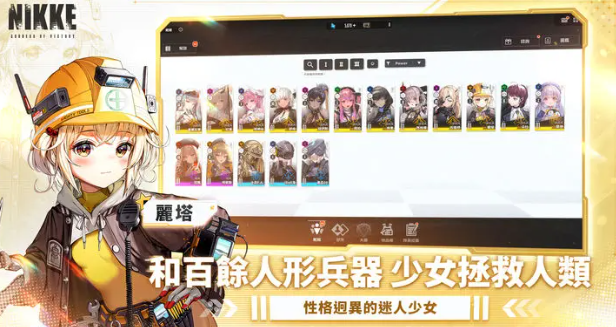
GODDESS OF VICTORY: NIKKE is a post-apocalyptic sci-fi third-person cover-based shooter RPG. The story takes place after humanity is invaded by mysterious mechanical lifeforms called Rapture—most of civilization on the surface is destroyed, and the surviving humans have to hide in the underground city called Ark to stay alive.
The last hope for humanity to take back the surface lies in the humanoid weapons known as NIKKE.
You’ll take on the role of a Commander, leading NIKKEs like Rapunzel, Anis, Neve, and others back to the surface. Through every battle, you’ll uncover the real secrets behind the Pilgrims, the Ark’s three major corporations, the Central Government, Eden, and the Rapture.
One of NIKKE’s biggest strengths in my opinion is that it doesn’t treat its story as just a background prop to make the characters look cool.
The early main story has some light, fun interactions, but as you progress, the story gets more serious and heavy, tackling deep themes like “Are humans even worth saving?”, “Do NIKKEs count as real people?”, and “Can memories and personalities be treated as commodities?”
Battles use a 5-person team setup.
Characters hide behind cover to shoot—you can either aim manually or turn on auto-mode. Each character uses a different weapon type: assault rifle, SMG, shotgun, sniper rifle, LMG, or launcher. That means you’ll need totally different teams for close-range bosses vs. long-distance enemies.
That’s why I think it’s more fun and replayable than your average idle RPG. Power is just the baseline—once you hit hard-mode content, team composition and manual skill become super important.
II. How to Download and Install GODDESS OF VICTORY: NIKKE
A. iOS / Android Download & Installation Steps
Mobile players will have the easiest time going through the official app stores.
For iPhone or iPad users, open the App Store and search for:
GODDESS OF VICTORY: NIKKE
Make sure the developer is Level Infinite or PROXIMA BETA (official sources) before installing. The current App Store version supports Traditional Chinese, and requires iOS 12.0 or newer to run. The initial app listed is around 600MB, but that’s not the full game size—you’ll have to download lots of character data, story, voice lines, and event resources the first time you launch the game.
For Android players, just search for GODDESS OF VICTORY: NIKKE on Google Play and install it.
Google Play also has a Traditional Chinese interface, and it supports phones, tablets, and Windows devices.
If your phone doesn't have much storage to spare, I'd suggest clearing up enough free space before downloading.
Nikke: Goddess of Victory has been out for several years now, and every major anniversary, collaboration, and main story update adds more game assets.
If your phone has less than a few GB of free space left and you force the game to update, you’ll very likely run into issues like failed extraction, endless redownloads, or the game not launching at all.
Also, I really don’t recommend downloading modified APK files from untrustworthy third-party sites.
This is a game that takes long-term investment, so your account is the most valuable thing here! If your login info gets leaked because you used an unsafe APK, the damage will be way worse than missing out on a few SSR characters.
B. PC / Windows Version & Emulator Play Settings
If you want to play Nikke: Goddess of Victory on PC, you don’t need to go for popular emulators like BlueStacks or MuMu first.
The official PC version has been out for a long time already—Windows players can just download the native PC client directly, no need to take the long way around.
I highly recommend the PC version, especially if you’re going to play seriously for:
- Anomaly Interception
- Single Strike
- Alliance Strike
- High Power Gap Main Stages
- Special Bosses
The reason is super simple—aiming with a mouse is way more natural than dragging your finger around the screen on your phone!
Whether it’s sniping core weak points, tapping red circles fast, managing Burst skill charges, or taking cover from attacks, everything is way easier on PC.
If you really have to use an emulator, I’d suggest at least a 4-core CPU, 6GB+ of RAM, and enabling VT virtualization. But since there’s an official native PC version now, emulators are more of a niche option than a go-to for most players.
III. Account Linking & Data Sync Settings
My first tip for new players when they start the game is to set up account security right away.
Nikke’s game account is actually separate from your App Store or Google Play account that you used to download the game~ You can create a Nikke-specific game account using an email, or third-party logins like Google or Apple. The official account system supports PC, mobile, and web services, so you can log in with the same account on different platforms.
Here’s what I do:
Finish the beginner gacha pull → Confirm your selected server → Link your regular login method → Save a screenshot of your Player UID.
If you start with a Guest account, don’t leave it unlinked to a proper account for half a year!
The game’s terms also remind you: if you delete the app or data without setting up a proper game account, your progress might get lost.
Also, if you switch from mobile to PC, make sure you log in with the exact same game account and server.
If you see the beginner storyline starting over, don’t rush through it! Head back to the login screen to check—don’t panic thinking your save was deleted.
IV. Beginner Tips & Early Game Goals
A. Clear Main Stages & Plan For Power Requirements
When you start the game, the most important thing is one thing:
Push the main story.
Don’t dive into the Arena all day long right after starting.
Your main story progress affects the level of your Outpost, which in turn directly impacts the resources you earn from AFK. The further you get in the main story, the more Credits, Battle Data, and Chaff you get per hour.
So even if you hit a wall in the main story, I’ll try adjusting my team, playing manually, or switching characters to see if I can clear a few more stages.
After all, this isn’t just about a few extra Gems—you’ll get more resources every single day later on!
If you run into a power gap, don’t immediately think “I need to spend real money.”
First, check these things:
Character Level.
Skill Upgrades.
Equipment Enhancement.
Collectibles.
Cubes.
Affection Level.
Burst Loop Setup.
Is your team actually running a proper main DPS?
A lot of new players get stuck not because their power is low, but because they only have one Burst III on their team—after the first round, they can’t even trigger full Burst for the second round!
B. Must-Do Daily & Weekly Tasks For Beginners
When I log in daily, I always do these first:
Outpost placement rewards, Dispatch Missions, Friend Point Exchanges, free store items, interviews,
Simulation Rooms, Interception Battles, Arenas, and the current event quests.
Among these, Interception Battles and Simulation Rooms are extra important.
Interception Battles are one of the main sources of equipment, and they also directly tie into T9 Enterprise gear and Overload gear later on. Simulation Rooms, on the other hand, are key for skill books. Both of these resources become super scarce in the late game, so don’t miss out on them every single day if you can.
Make sure you empty out the event shop too!
In most versions, the stuff that’s actually worth trading for isn’t the fancy little materials—instead, it’s:
Premium Summon Tickets, Regular Summon Tickets, Skill Materials, Core Dust Boxes, and event-exclusive resources.
F2P (Free-to-Play) players will need to rely on slowly accumulating resources, picking the right characters, and gradually closing the gap with whale (heavy spending) accounts.
V. First-Time Summon Guidance & T0-Tier Character Recommendations
A. Pilgrim-Class & “Human Rights Meta” First-Time Summon Tips
Let’s start with a super important note:
You should never use 2023’s first-time summon tier lists for 2026 right now!
By August 2026, the game’s stage-pushing meta has updated many times. In recent high-PVE-content evaluations where power gaps matter, Burst 1 Anis: Star, Burst 2 Crown, and Burst 3 Rapunzel: Red Hood, Higan: Shadow are still extremely valuable characters. Even among recent relic-enhanced and event-limited characters, many have made their way into the top-tier strength ranks.
If you’re a brand-new player with a fresh account, here’s how I’d approach picking your first summons:
First Category: Versatile Burst Core Characters
A Burst 2 character like Crown can boost the overall damage of tons of your main DPS units. Generally, they’re way more worth investing in than pulling an extra regular DPS character.
Second Category: Ultra-Strong Burst 3 Main DPS
Characters like Rapunzel: Red Hood and Higan: Shadow don’t just deal great damage in boss fights—they’re also super useful for regular stage clearing.
Third Category: Utility Burst 1 Characters That Cut Burst Cooldowns
As more characters get added in the late game, the ones that are hardest to replace are usually the ones that cut Burst cooldowns, heal the team, or provide massive global buffs.
Also, Rapunzel (Red Hood) is really unique on her own—she can switch between Burst 1, 2, or 3 roles based on what your team needs, so she’s amazing for fixing gaps in your team’s damage or utility.
At the end of the day, the most important part of your first summons is: which characters are actually available to pull right now.
Limited and collab characters—if they’re not in the current banner, you won’t be able to get them even if you grind for fresh starter accounts.
B. 2025 First-Time Summon Account Selection & Starter Account Buying Tips
This title needs a big update for 2026.
The criteria for evaluating starter accounts from 2025 are totally outdated in 2026.
Back in the day, seeing a combo like “Red Hood + Crown + Black Lotus” would make you call it a top-tier starter, but now you also have to consider new releases, relic-boosted characters, limited support units, and whether the account can build a full Burst rotation team.
If I were actually evaluating a ready-to-go starter account, here’s what I’d check for:
Does it have a core Burst 1 character? A core Burst 2 character? At least two swappable Burst 3 units? Any strong Pilgrim characters? Are the regular summon characters getting close to 160 level (the so-called “160 wall”)?
But I really don’t recommend buying starter accounts from unknown sources.
The biggest problem isn’t how strong the characters are—it’s actual account ownership.
If the original owner still has their sign-up info, email, or account recovery details, you could play for half a year only to have them take the account back—and that’s the worst-case scenario.
Grinding your own starter account is slower, but since it’s yours from day one, you’ll avoid way more headaches long-term.
VI. Character Tier Lists & Role Breakdowns
A. Burst 1 / 2 / 3 Character Tier Lists
By 2026, I’d suggest organizing tier lists by Burst stage instead of
Don’t rate every single character using the same criteria.
Burst 1
Right now, the most valuable Burst 1 characters fall into these categories:
Anis: Star: is one of the top core characters for pushing through stages.
Siren: is super versatile with barely any flaws.
Rapi: Red Hood (Burst 1 Role): While she’s not the most common pick, she’s insanely strong in special stages.
There are also old school characters that can shorten Burst cooldowns or heal—they still have their own uses in the meta.
Burst 2
Crown: is still the quintessential hyper-versatile 'meta-defining' Burst 2 character.
Her biggest strength is that you don’t have to completely rebuild your team around her—most of your main damage dealers can benefit heavily from her buffs.
Other top Burst 2 characters on the current tier list include Flora (after upgrading her Bond), Nayuta, and Mast: Romantic Maid.
Burst 3
Burst 3 is always the most hotly contested spot on tier lists.
Right now, the top stage-pushing characters are:
Rapi: Red Hood
Blade: Shadow
Cinderella: Crystal Wave
Don’t sleep on upcoming new characters launching in 2026, or characters that get power boosts from Bond upgrades.
Keep this in mind at all times:
A T0 rating in PVE is NOT the same as a T0 in PVP, nor does it mean a T0 for Solo Assault.
Different tier lists have wildly different criteria—take them separately and don’t lump them together.
B. Roles: Tank, Attacker, Supporter
The core job of an Attacker is to clear mobs in stages and focus fire down big Bosses.
Supporters bring a wide range of buffs—common ones include: boosting Attack, increasing Core Damage, shortening Burst cooldowns, speeding up reload time, adding ammo, raising Critical Rate, or granting Elemental Damage bonuses to the team.
Tanks’ role is to hold the team’s line by taunting enemies, providing shields, or reducing damage to keep your squad alive and prevent teammates from getting taken out.
But don’t box yourself in just because of the game’s 'Attacker', 'Defender', 'Supporter' tags—you can’t fully rely on these to judge a character’s true value.
After all, some characters tagged as Supporters deal massive damage, and some tagged as Defenders actually bring core damage boosts to the team—you have to figure that out.
When actually building a team, I only care about one thing: 'What key value does this character bring to my 5-person squad?'
VII. Burst Skill Rotation & Team Building
A. The 1-2-3 Burst Rotation & 20/40s Burst Timing
This is the core system every new player has to master—don’t sleep on it, or your team’s damage will fall way short.
When your Burst Meter is full, you must activate your skills in this exact order: Burst I → Burst II → Burst III → Full Burst—skip any step and you can’t trigger the final Full Burst.
Also, each Burst skill has its own cooldown—don’t use them whenever you want, or you’ll mess up the entire rotation.
The most common cooldowns are 20s, 40s, and 60s—most characters fit into these ranges.
If the only Burst I character in your team has a 40s cooldown, after your first Full Burst ends, she might still be on cooldown when your Burst Meter fills up again.
When that happens, your entire team’s damage rhythm gets stuck, killing your overall performance and making stages way harder to clear.
So one of the standard team compositions that works best for new players is: B1 (20s CD) + B2 (20s CD) + B3 (40
(with a cooldown) + B3 (40-second cooldown) + Flex slots
That’s the commonly known setup: 1-1-2 + Flex, or the "2-1-2" formation with 2 B1s, 1 B2, and 2 B3s. Both are super reliable.
You need two B3s to rotate because most B3-type characters in the game right now have a 40-second cooldown, so you have to alternate their Burst skills to keep the rhythm going.
A lot of new players ask: "Why did I build a team with five SSR characters that’s higher in power but feels worse to use than my old team?"
9 times out of 10, the answer is a bad Burst Cycle setup—this is the most common thing new players overlook.
B. Weapon Type & Range Pairing Principles
There are six main weapon types in Goddess of Victory: Nikke, each with unique traits and ideal use cases.
SG Shotgun is for close combat—dealing huge, satisfying damage when enemies are right in front of you. But against small, faraway targets, its spread makes it really inaccurate, so damage drops off hard.
SR Sniper Rifle is made for long-range fights, perfect for hitting enemy cores or weak points. Plus, manual play builds up your Burst gauge super fast—great for players who like controlling every move.
RL Rocket Launcher not only charges your Burst gauge quickly but also deals great AoE damage against hordes of mooks, making it super efficient for clearing adds.
MG Machine Gun is for long, sustained damage—perfect for taking down big bosses that you need to chip away at, since it deals consistent damage over time.
AR Assault Rifle is the balanced all-rounder—nothing spectacular, but nothing bad either, perfect for new players to get started.
SMG Submachine Gun is for close-to-mid range, and most SMG characters are support or utility-focused, helping boost your team’s mobility or buffs.
So don’t just pick a team using tier lists—you also have to match weapon types to the stage you’re tackling.
For example, a full Shotgun team will struggle so hard against a long-range boss, even if all characters are T0 tier—you just can’t land shots on them.
A truly well-rounded account will have characters from every weapon type to handle all kinds of stage challenges.
VIII. Resource & Diamond Usage Strategies
A. Banner Selection & Wishlist Setup
Diamonds are the game’s premium currency—never waste them on the standard banner; that’s a huge mistake.
Standard Recruitment Vouchers are easy to grind and the game gives them out for free all the time, so save your diamonds for limited-time banners or key characters that will actually make your account way stronger.
Also, don’t sleep on the wishlist for the standard banner—it’s super important and boosts your chances of getting the characters you want.
Add the characters you want from your favorite companies to your wishlist, and that will make it way more likely you pull them.
IX. Equipment, Skills, and Synchro Device Priority for Growth
The worst mistake new players make is trying to invest equally in every character—don’t spread your resources too thin.
Here’s the order I’d prioritize resources in:
Main Damage Dealer’s Skills > Key Skills of Core Supports > Equipment > Collectibles/Chips > Secondary Characters
Don’t waste resources randomly.
Skill books are especially scarce, so use them wisely.
Don’t just dump all your skill books into every SSR to max all skills to 4/4/4.
Some characters’ first skill is their bread and butter, others are all about their Burst skill, and some only need their second skill up to a certain level to work well.
Figure out a character’s core skills before leveling them up—this saves you tons of precious materials.
The Synchro Device is another key long-term system new players need to understand.
You don’t have to level up every Nikke you own to max level individually.
Put your resources into the core characters in Synchro first—other characters in the Synchro slots share their level, which saves so many resources.
The old 160 Level Wall requires five MLB (Max Limit Break) SSRs to push to Level 200. Once you hit 200, the focus of your account’s level growth shifts to the Synchro Device itself.
Once you go above Level 200, the real long-term thing you’ll run out of is:
Chips
So the Chip Boxes in the event shop,
Don't ever hold back on switching stuff out just because it seems fine right now.
Once you hit later levels, you’re definitely gonna regret skipping those small boxes back when they felt like a hassle to swap.
X. PVE Main Story Progression & Interception Guide
A. Main Story Clearing & Level Gap Management Tips
The #1 priority for clearing the main story is charging up your Full Burst as fast as you can.
Second, you need to focus on taking out the actual threats on the field first.
Don’t just leave your team on auto-battle to mess around randomly.
When you spot suicide enemies, stun units, snipers, or any enemy that can one-shot your characters, take them out manually—this is usually enough to beat stages where your power level is way too low.
When fighting Bosses, make sure you learn to spot their red circle warnings and their breakable parts.
Most of the time you can’t beat a Boss not because your damage is low, but because you didn’t interrupt their critical skills!
If the power gap is really too big, go do these things first:
Collect idle resources
Level up your Synchro Device
Upgrade your characters’ skills
Swap for better gear
Grind other modes to get resources
Come back tomorrow and you’ll probably clear it easily~
B. Interception, Simulation Room & Lost Zone Setups
Interception is the main source of gear progression in this game.
Once you unlock Special Interception, you’ll start getting T9 and Corporate T9 gear, then work your way towards Overload Gear using Corporate Gear and Custom Modules.
Later on, you’ll unlock Abnormal Interception, which is harder but has better rewards, and you can pick the Boss you want to fight based on your needs.
Simulation Room is mainly for skill materials.
Do at least the highest difficulty you can consistently clear every day.
Lost Zone is more puzzle-focused.
Besides battles, you’ll need to move your squad, activate mechanisms, and find treasure chests. It’s not like daily dungeons where you farm nonstop—you unlock it gradually as you progress through the main story, and the rewards are fixed.
XI. PVP, Defense Teams & Union Raid Key Points
You can’t just copy the main story T0 team list for PVP.
What really matters in the Arena is:
Who can activate Full Burst first.
This makes Burst charge speed super important.
Characters of rarities like RL, SR, or those with special skills become really sought-after because they can speed up Burst charging a lot.
There are also a few key details you can’t ignore in PVP matches:
Taunt, invincibility skills, revival mechanics, shield blocking, single-target nukes, AOE burst damage, and more.
Most of the time, characters that are just average for main story progression end up being the absolute core of your PVP team.
When building a defense team, don’t just go for the highest power level.
You need to think about things like:
Which character will the opponent’s first Burst target?
Can my main damage dealer survive the opponent’s attack long enough to activate my Burst?
If the enemy uses AOE damage, do I have a character that can take it?
As for Union Raid in guild battles, it’s all about focusing fire on the Boss.
Later on, you’ll need multiple full teams to fight, which is why veteran players train attribute supports or single-target Boss-focused characters early on—characters you don’t even use for main story progression.
New players don’t need to rush to get 5 maxed-out teams at the start.
Just focus on building and maxing your first main team, then work on a second team later.
XII. Events, Celebrations & 1st Anniversary Minigame Guide Summary
When it comes to Nikke’s event design, I’ve always thought they’re really well-made.
Big events like half-anniversaries, full anniversaries, or summer events don’t just have stages—they come with full story maps, fully voiced stories, minigames, login rewards, and recruitment tickets as bonuses.
Even if you just started playing now, you don’t have to miss out on story content just because you skipped past anniversary events.
The game later added the Event Archive feature, where past big stories are added to the archive, and some old minigames are moved to the Arcade section.
The most notable part of the 1st Anniversary event is:
RED ASH.
It fully fills in the backstory of Red Hood and Goddess Sq
the early story of Goddess of Victory: Nikke, and the one-year anniversary mini-game Memory of Goddess (MOG) has since been made playable.
If it’s your first time playing the MOG mini-game, my advice is not to click on upgrades randomly when you see them.
In the early stages, prioritize building stable enemy-clearing ability, then gradually upgrade movement speed, attack speed, area damage, and overall damage. When enemies become denser in later stages, survivability and clearing efficiency are more important than single burst damage.
For new players, the most valuable part of old events is actually the story.
If you skip content like RED ASH entirely, when you later see storylines related to Red Hood, Snow White, Dorothy, or even Cinderella, the emotional continuity and impact will be greatly reduced.
Therefore, I don’t recommend skipping all stories just for gems.
After all, the story of Goddess of Victory: Nikke is really worth savoring.
XIII. Growth Route Planning for Different Spending Tiers
F2P (Free to Play) Players
F2P players can easily enjoy this game.
But you need to realize one thing first:
Progression is about time.
Clear all daily events, Interception, Simulation Room challenges, and daily quests. Save gems for limited character banners that matter, and use tickets and friend points for standard summons slowly.
Don’t rush to break through the 160 Wall.
Set your Wishlist priority to standard SSR characters you already have heavily limit-broken for, and slowly gather 5 MLB characters.
Once you actually break through, the game’s flow will be much smoother.
Monthly Card / Light Whale Players
I think this spending tier has the best value for money.
They mainly rely on long-term logins to accumulate resources, instead of buying a large number of gems at once to summon characters.
If you have a budget, prioritize these options:
Monthly diamond-related packages.
High-value battle passes.
High-value event packages during anniversaries or half-anniversaries.
Don’t rush to buy big bundles every time a limited character comes out.
Long-term planning will be much more stable than chasing characters last minute.
Mid Whale Players
Mid-tier spenders can start considering character limit breaks and going deeper into Raid challenges.
But you don’t need to go for 3 limits on every character.
Characters that actually need breaking are usually:
Characters you particularly like.
Characters that bring clear account benefits after breaking.
Long-term core characters for Raid challenges.
Standard SSR characters that need MLB to break through the 160 Wall.
Other limited characters are fine as long as you get their base form.
Top Whale Players
At the top whale tier, the focus of competition is no longer just about whether you have the characters.
It becomes about:
Core levels.
Overload gear stats.
Collection content
Progression areas to focus on include character cubes, skill upgrades, core limit breaks, full Raid multi-team lineups, and PVP banner builds.
The most common problem players face here isn’t actually “lack of resources”—it’s spreading skill books, gear, and Custom Modules too thin by leveling up too many characters. Even with a big budget, you still need to set clear progression priorities first.
So even if you’re rich, don’t level up characters randomly—you need to get your priorities straight first.
Let’s Wrap This Up
After playing through everything, I’ve noticed that Goddess of Victory: Nikke is often misunderstood by its outward appearance—this game’s core is team building, and it’s fundamentally a strategy-focused shooter RPG.
In the first few days after downloading, you might think you can auto-battle through everything as long as your power is high enough. But when you hit a wall in the main story, fight hard bosses, join special Interception events, or play PVP, you’ll start to understand why everyone keeps talking about Burst I, Burst II, Burst III, the 20-second cooldown, reducing Burst skill CD, and increasing charge speed—all those small details.
If new players want to avoid mistakes, my top recommendation is to build a standard team that looks like this:
20-second B1 + 20-second B2 + two 40-second B3s
That team composition.
Don’t cling to old tier lists from years ago. In the 2026 meta, characters like Crown, Raphi: Red Hood, Inferno: Shadow, and current top-tier characters are all useful, but rather than forcing five T0-tier characters at once…
When it comes to building a team for Goddess of Victory: Nikke, the real key is whether your account can put together a fully functional, powerful squad. These days, top-tier tier lists already separate evaluations for story clears, Boss challenges, and PVP matches—this just proves there’s no single ranking that fits all gameplay needs.
For resource management, prioritize saving Diamonds for limited-time character banners, focus Skill Materials on your main team, and for regular Recruit Wishlists, make sure to cover both core characters and that annoying 160-level wall cap. Don’t skip buying Dust and Recruit Vouchers from the Event Shop! It’s also super important to push the main story early on—higher Outpost levels mean your account automatically accumulates more resources even when you’re offline, like while you sleep.
Players wanting the PC version should just go for the official Windows edition. The mobile version’s great for logging in daily to collect idle rewards and knock out daily quests, but when it comes to manually fighting Bosses, locking onto red circles fast, or sniping core points? I still prefer the PC’s bigger screen and mouse controls all the way.
As for paying (gacha spending), I actually don’t recommend blindly dumping cash to pull a character just because they’re “T0 right now.” Nikke gets updated really fast, so core damage dealers (main carries) will rotate out constantly. But characters that can support a full Burst Skill rotation—ones that cut cooldowns, boost damage, help with survival, or bring unique mechanics—usually hold their value way better. Whether you’re F2P or a light spender, first get a solid, reliable 5-person team running smoothly. Then slowly expand to a second team, a Raid team, a PVP team… the gameplay experience will be so much more fun than switching characters every day just to chase a tier list.
And once you’ve played for a while, you’ll realize that what keeps people coming back to Goddess of Victory: Nikke might not even be the gacha.
Sometimes it’s a main story chapter that hits you out of nowhere, leaving you quiet for a second. Sometimes it’s that satisfaction of finally beating a Boss you’ve been stuck on for two days with manual controls. Sometimes it’s even an average Nikke from an event—after watching her story, she suddenly becomes your next must-pull character.
It’s how character development, story cutscenes, shooting gameplay, and team building all support each other that’s the real reason Goddess of Victory: Nikke still hooks new players so easily all these years after launch.