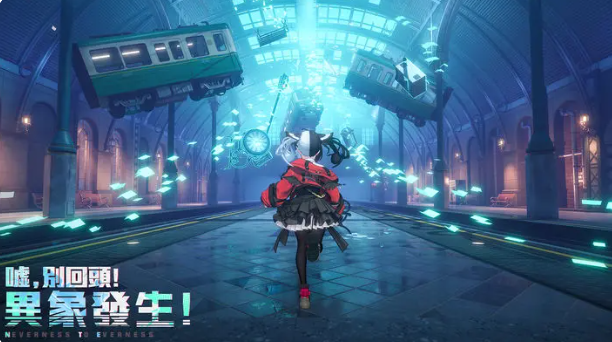
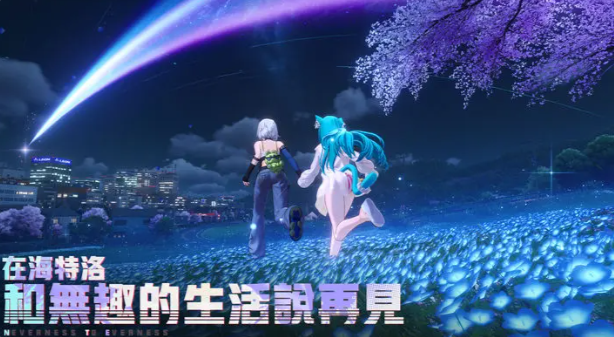


If you’ve been searching for info on how to download Neverness to Everness, now’s the PERFECT time to jump into this game! NTE: Neverness to Everness isn’t just a game you watch gameplay videos for or wait in line for test access anymore—it officially launched globally back on April 29, 2026! You can play it directly on mobile, PC, Mac, and PS5 now, plus your game progress syncs across all platforms, so you never have to restart your adventure when switching devices. And just on August 19, it dropped its big Version 1.3: "Fog’s Synodic Star Return" update, packing in a ton of new stuff: fresh characters, story chapters, exploration zones, and summer limited-time events all in one go!
When I first played Neverness to Everness, the first thing that hit me was how different it is from your typical anime-style open-world RPG. Sure, you can still do main story quests, pull your favorite characters, farm gear, and beat Bosses, but if that’s all you do, you’re missing SO much of what makes this game special. The city of Hetro is packed with tons of cool side stuff: driving around, buying and decorating houses, running a coffee shop, becoming a tycoon, fishing, racing, even playing mahjong! Plus, there are these random "Strange Phenomena" events that are super fun. Sometimes I log in just to burn my Stamina, and end up not farming gear at all—instead I’m picking out furniture or tricking out my car, lmao.
So this guide isn’t just going to tell you where to download Neverness to Everness (duh!). Instead, we’re covering everything new players need to know when they start: installation steps, version details, account cross-play, how to use your starter resources, gacha tips, S-rank character selection recommendations, tier lists, the Arc Disc and Anomaly Ring fusion systems, unlocking city exploration content, and F2P-friendly play routes—all in one place!
1. What is Neverness to Everness? Game Overview & World Setting
Neverness to Everness is a supernatural urban open-world RPG developed by Hotta Studio. The core story revolves around a city called Hetro City. You play as a specialized appraiser with unique abilities—and this is your first time taking on "Strange Phenomena Hunter" work, which is basically like working without a license, super fun!
At the start of the game, you join the Yibowen Antique Shop.
By outward appearances, this shop is just a regular antique store, with business that seems so-so, making you worry the owner might not stay afloat. But in reality, the shop’s real work is handling all kinds of weird supernatural "Strange Phenomena" events in Hetro City!
I personally think this world setup is way more interesting than the typical "otherworld savior" trope most games use!
The big thing is Hetro City isn’t just a map designed for fighting. You’ll see random commuters, all kinds of shops, cars passing by, residential and commercial areas everywhere. Players can not only drive around, but also buy houses to decorate, go shopping, even run their own small businesses! That mix of "normal urban daily life" and "supernatural weirdness" is the best part of Neverness to Everness!
For example, one minute you might be at the coffee shop counting daily sales, and the next minute a mission sends you to handle a totally out-of-this-world Strange Phenomena—this contrast is so fun!
And now Version 1.3 added new exploration zones like Duskmoor, plus the main story chapter "Fogden Game". So Hetro City is way more than just the original map from launch—there’s way more content now!
2. How to Download Neverness to Everness & Installation Guides for All Platforms
(A) iOS & Android Platform Download Steps
Currently, the easiest way to download Neverness to Everness is via the official app stores for each platform!
For iPhone players, just open the App Store and search for the name:
NTE: Neverness to Everness
Once you find it, confirm the developer and publishing info are correct, then you can download it! The initial install package on the App Store is about 3.5GB, but the official recommends keeping at least 20GB free on your phone—because when you first launch the game, you’ll need to download the full map resources, character models, voice files, and other version data. Also, the official minimum recommended device is iPhone 12 Pro Max, but iPhone 14 Pro or newer is recommended for smoother gameplay!
For Android users, the download process is almost identical—just open the Google Play Store, search for "NTE: Neverness to Everness", confirm the details, and install. Similar to iOS, you’ll need around 20GB free space for full game data on Android devices too!
For Android players, just open Google Play and search for the same game name~
Official minimum requirements are roughly: Android 10 or higher, 6GB RAM, a processor at least Snapdragon 855, Dimensity 8000, or equivalent; for a better experience, aim for Snapdragon 8 Gen 2, 8 Gen 3, or Dimensity 9200 — those will run way smoother!
Quick heads up here:
Minimum requirements mean you can launch the game — not that high settings will run smoothly.
The urban environments in 《NTE》 are incredibly dense and polished. Beyond detailed character models, there’s a huge variety of buildings, moving traffic, and rich lighting effects everywhere.
If you’re playing with random teammates and your mid-range phone starts overheating or dropping frames, try turning down shadows, reflections, and render accuracy. It’s way better than forcing max settings and dealing with lag all the time.
B. PC Version & Emulator Installation Guide
《NTE》 has an official PC version, so if you only plan to play on PC, I don’t recommend picking Android emulators first.
For Windows players right now, you can use the official PC client, or play via Steam, Epic Games Store, and Google Play PC. A nice touch: Steam and Epic versions support syncing your original account’s game progress, which is super convenient.
Official PC minimum specs right now are:
- Windows 10 64-bit OS
- Intel Core i7-10700 CPU
- GTX 1660 / RX 5600 GPU
- 16GB RAM
- Roughly 70GB free storage
Recommended specs go up to i7-12700 CPU, RTX 3060 / RX 6700 GPU, and 32GB RAM. Whether you’re updating the game or installing it for the first time, leave extra space. If you can use an SSD instead of an old HDD, don’t hesitate — the speed difference is massive~
If you do have specific needs and still want to use BlueStacks, MuMu, or LDPlayer emulators, the process is pretty similar: install the 64-bit version of the emulator, log into Google Play, search for "NTE", and install it. But since 《NTE》 already has a native Windows client, emulators will take up extra system resources, and their compatibility and update stability might not be as good as the official version.
So my priority list is simple: Official PC Version / Steam > Epic > Android Emulators.
III. 《NTE》 Open Beta Info & Cross-Platform Sync
《NTE》 officially launched globally on April 29, 2026, and supports a full range of platforms right now: Windows PC, iOS, Android, Mac, Google Play PC, PS5, and PS5 Pro. Steam and Epic versions also went live after July.
Cross-save is such a thoughtful feature for this game.
As long as you use the same game account and log into the same server, you can pick up right where you left off on PC after playing on mobile — no need to restart, it’s super convenient!
The main server regions right now are:
Asia, America, Europe, SEA.
Game progress doesn’t sync between servers, so make sure to pick the right one when creating your first character. It would be super awkward later if you find out you can’t switch between servers.
Players from Taiwan and Hong Kong usually do fine with either Asia or SEA servers, but I’d prioritize actual ping. If your friends are already on a specific server, you should definitely join them to avoid any hassle later.
Also, a heads up: don’t mix Google logins, Apple logins, Facebook logins, and email accounts together.
Even if the email looks the same, different third-party login methods might still be treated as separate accounts by the system. For players planning to play long-term, I recommend sticking to one login method, and it’s a good idea to save a screenshot of your UID just in case.
IV. 《NTE》 Newbie Starter Guide
A. 10 Things to Do First When Starting Out
If you’re creating a new account today, I’d...
Follow this order to get started:
- Pick the right server and login method.
- Push the main story first—don’t get distracted wandering around or grinding as soon as you enter the city!
- Unlock daily quests and Stamina System as fast as possible.
- Claim rewards from your in-game mail, daily logins, and version events.
- Use the beginner permanent board discount right away!
- Confirm your first main team before you start spending development materials.
- Unlock the Urban Tycoon System as soon as possible.
- Open the cafe as soon as you can so Fons can start hoarding resources.
- Unlock any teleport points you see on the map right away.
- Don’t throw all your Orb Stones and Limited Dice at every banner you see!
Actually, the 6th point is the most important!
In these kinds of games, there seems to be tons of materials early on, which easily makes you think “I can level up every character!”
When your characters start breaking through from Level 40 to Level 50 and beyond, you’ll suddenly realize you’re completely out of EXP, Ascension Materials, Arc Disks, and Cards!
B. Main Story Progression & Resource Planning
New players, don’t jump straight into “only farming materials” mode too early!
The main story unlocks a ton of game modes, areas, Urban Systems, and development features. If you get stuck on the main story, you won’t even have access to many resource sources!
I’ll first
First build your four main characters, and here’s the recommended priority order for training: Main Carry > Core Support / Sub Carry > Survival Unit > Second Team.
As for “Orb Stones” in the game, it’s recommended to save them all for limited characters first.
While there are plenty of strong S-rank characters on the standard banner, new players get access to permanent boards, selectable rewards, and tons of free resources—you don’t need to waste your most precious limited resources on the standard banner at the start.
V. Another Cycle Redeem Codes & Gift Codes List
Redeem codes are one of the easiest free benefits new players overlook.
Right now, some codes are still reported by the community as working, including these:
COMEBACK
NTEKokushi
NTEMusou
NTENENE
Most of these codes give consumables like Fons, Armor Coins, Dice, etc. However, some don’t have clear end dates, so you’ll need to test them in-game to see if they still work. As for codes like FOGDENGAME, EYEOFDELUSION, SUMMERTIME from the Version 1.3 preview, those were temporary and have now expired.
The steps to redeem codes are roughly:
Main Menu → More options near Character Info → Redeem Code → Enter code → Confirm.
When you get rewards, some go straight to your account, while others need to be claimed from your in-game mail.
The biggest thing about codes announced in version livestreams is that they’re super short-lived—so I always redeem them as soon as I see them, no putting it off till “after I sleep”.
VI. Another Cycle Gacha Mechanic Full Breakdown
A. Orb Stone Acquisition & Pity System
In Another Cycle, character gacha isn’t the usual 10-pull on a basic screen like most mobile games—instead, it’s a unique “dice roll on a board” format.
Use Dice to move around the board, and you get various rewards for landing on different tiles. Limited S-rank characters have their own special pity rules.
The most important point here is:
Limited characters don’t have the standard gacha’s 50% off-banner rate!
On limited banners, after 70 pulls, you enter a stage where S-rank drop rates go up, and by the 90th pull at the latest, you’ll definitely get the current limited S-rank character. What’s more, pity count carries over between different limited banners!
This is super important for free-to-play players!
For example: if you do 60 pulls on a banner and don’t get your target character, then take a break for the next banner, you don’t have to start the pity count over from 0—you can just keep counting where you left off!
Right now, the limited S-rank characters in the first half of Version 1.3 are Zankou with Nanally making a comeback, and these two banner events run until September 9th. Version 1.3
For the second half of the version, we’ll get new content like Linko!
Besides character gacha pulls, there’s also the “Ring Array Research” mechanic.
Think of Ring Arrays as character-exclusive weapons, but they have their own separate gacha system. For S-Tier Ring Arrays, the pity system kicks in at 60 pulls, and Limited Ring Arrays guarantee you one by your 80th pull at the latest. But the Ring Array mechanic isn’t as straightforward as Limited characters, so F2P players who don’t spend money should always calculate if they have enough resources before pulling for a specific Ring Array.
B. Strategies for Choosing Your S-Tier Character Select
The key here is to pay attention to version timelines!
In Version 1.2, they gave away an S-Tier Standard Character Select Box—you could pick one from Zao Wu, Bai Cang, Hasol, Fadia, Dafudier, and Jiuyuan. But this event ended at 5:59 AM on August 19, 2026, so new accounts made now shouldn’t count on this old benefit being permanent!
That said, the Standard beginner-exclusive Ring Arrays themselves are still super valuable.
If you’re building your account for the long haul, I’d recommend picking a character like Zao Wu first—she works with multiple Elemental Ring setups, has great crowd control, and supports the team too.
If your team is missing a Main Carry right now, then go for Bai Cang or another damage-focused character.
If you already have a strong Limited Damage dealer, I wouldn’t suggest picking a duplicate Main Carry just for “5-star rarity”—you don’t need two of the same role!
VII. Game Start & T0 Tier Team Recommendations for Eternity Ring
For Eternity Ring, you don’t need to grind dozens or even hundreds of rerolls like old mobile games!
The reason is simple: you get tons of Dice and resources early on as a new player, plus there’s a wide selection of S-Tier Standard characters. Limited characters are what truly determine your account’s max potential, and you have a hard pity at 90 pulls anyway—wasting hours rerolling isn’t worth it here!
If we go by the stable meta around Version 1.3’s launch, here are the high-value characters I recommend prioritizing:
Nanali is one of the most popular high-value characters right now. She’s an amazing support and pairs incredibly well with Limited characters—perfect for new players to level up first.
This character: She’s a fully developed Main Carry with a great follow-up attack mechanic and solid team synergy.
Requiem: A Dark-element core that deals consistent damage. Her output skyrockets when paired with the right Elemental Ring setup.
Xun: Great burst damage plus team buffs—she deals solid damage on her own and adds huge value to any team.
Iloy: She handles healing, survival boosts, and team buffs all at once—super versatile.
Zao Wu: Even though she’s a Standard character, she has solid crowd control, counter mechanics, and great team support. Her long-term value is way higher than just her rarity suggests.
The new character Can Hong from Version 1.3 just launched, so I’m labeling her a high-potential new core for now—not a “permanent T0” right out the gate. To really know how strong she is, we need to test full team comps, Ring Array synergy, Awakening builds, and her performance in high-difficulty content.
Looking at the current meta before the new version, Nanali, Requiem, Zao Wu, and a few other high-versatility supports have solid high-tier ratings.
VIII. Eternity Ring Character Tier Analysis
I personally hate reducing Eternity Ring characters to a single chart that says “pull T0, ignore T2”.
After all, this game relies heavily on team comps.
If I had to categorize them, here’s how I’d break it down:
T0: Strong on their own, work in almost all team comps, and are valuable across every game mode.
T0.5: Very strong, but need specific teammates, the right Ring Array, or certain play conditions to hit their full potential.
T1: Perform well when built normally, but aren’t as efficient or versatile as top-tier characters.
T2: Only good in specific situations, or have better counterparts that do similar jobs.
Characters like Nanali, Requiem, Xun, and Iloy are all great investments right now. Zao Wu is Standard, but don’t sleep on her just because you can pick her for free.
On the flip side, if a character requires you to pull 2-3 more Limited S-Tier teammates to work, their actual value for a new account might not be better than a versatile support.
So never judge a character's strength on their own—always consider how well they fit your existing account's team setup.
IX. The Detailed Guide to Character Progression in *Phantom Ring*
A. Arc Disc System & Ascension Materials
The Arc Disc is basically the game's weapon system. Every character has a unique Arc Disc type that works best for them. These discs not only give core stats like attack power, but also come with their own passive effects.
My priority for leveling up is:
First, level up your character and their core skills. Next, work on your Arc Discs. Only later start grinding lots of stat rolls.
The worst thing early on is hitting level 40 and blowing all your resources trying to farm "endgame discs" too soon.
Limited-time signature Arc Discs are usually the strongest, but that doesn't mean you need to pull for them on every character.
Free players should especially ask:
How much do free/standard Arc Discs contribute to their strength?
Does the signature weapon give a 10% boost or over 40%?
How long do you plan on using this character?
If they're just a temporary main DPS for your second team, I wouldn't force pulling their signature disc.
B. Echo Ring Synergy Mechanics
Echo Ring synergy is the real key to mastering team building in *Phantom Ring*.
Characters with different elements and Echo types will trigger various combo effects when fighting together. Mechanics like Creation, Discord, Rune, and Dark Star all change your team's damage output, stagger power, or sustained damage style.
This isn't a game where "stacking four T0 characters = the strongest team".
The correct way to build a team is:
What damage does your main DPS handle? → Which characters can trigger the needed Echo combos? → Who handles staggering/buffs? → Who is your healer?
Take Requiem as an example—she's built for sustained damage. Pair her with characters that trigger Discord, Blight, or Dark Star effects, and your team will perform way better than just shoving another main DPS in there.
X. Combat System & Team Building in *Phantom Ring*
A. Skill Combos & Playstyle Tips
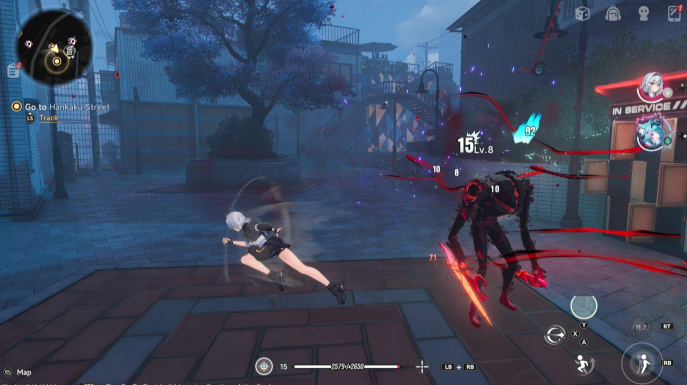
*Phantom Ring* isn't just waiting for skill cooldowns to finish before spamming them.
Combat uses normal attacks, skills, ultimate moves, character swaps, and Echo combos—your actual damage depends heavily on how well you chain all these together.
New players should build these three habits first:
1. Take down enemies' stagger bars first before anything else;
2. Don't spam your ultimate as soon as it's off cooldown;
3. Switching characters isn't for escaping—it's part of your damage rotation.
Many supports only need to be on the field for a few seconds to use their key skills, then switch out. If they stay for 10+ seconds auto-attacking, your whole team's DPS will drop noticeably.
B. Meta Teams
Team Building Recommendations
Don't overcomplicate team building early on; new players can start with these directions.
Nanali Core Team:
Nanali pairs well with Xun or your protagonist Zero, plus either Hayasumi or Kyuwon, and finish with a healer (Eilois works too). This team revolves around Creation effects, extra attacks, and team-wide buffs.
Requiem Sustained DPS Team:
Requiem + Hayasumi, paired with either Fadeya or Daphne, then a healer. The key here is combining multiple Echo Ring sets to stack a full sustained damage rotation.
F2P Transition Team:
For zero or light spenders, prioritize building a team: "Protagonist Zero + Hayasumi + Kyuwon + a free survival-focused character". The biggest perk isn't top-tier damage—it's super cheap to build and extremely cost-effective. Quick tip: always make a full four-person team first, don't waste resources leveling half-baked characters randomly!
XI. Exploration Guide & Map System in *Phantom Ring*
Hetero is by far the most fun city in *Phantom Ring* to explore slowly—don't rush straight to navigation markers at the start. Unlock every teleport point you see, pick up side quests as you pass them, and stop to check out unique NPCs, shops, or weird objects along the way. Seriously, this city isn't just a backdrop: areas have malls, homes, transit, entertainment spots, and city events, with more areas coming in future updates. The devs built Hetero as a full metropolis—finance centers, business districts, natural spots, shopping streets, all kinds of transit—so there's tons to do. Another cool feature is vehicles: you can drive around the city, buy different cars, customize their looks, even enter races to earn resources and rare skins. Version 1.3 will add a new Sirocco car and water vehicles, expanding exploration from "city driving" to more diverse areas, making the whole experience much more immersive.
XII. Phantom Ring Tycoon & Merchant
Urban Tycoon Gameplay
I think the most underestimated system for new players in Anomaly Loop is the "Urban Tycoon" feature. This isn’t just some tiny side function that lets you collect a little cash daily—it’s a whole, separate city life progression line. The Fors you earn from all kinds of gameplay here can be used to buy cars, property, furniture, and run all sorts of unique shops. One big tip: open a coffee shop as early as possible. Running a shop involves things like staffing, menu design, inventory management, and daily operations, and once it’s stable, it’ll generate passive Fors for you. This design makes Anomaly Loop give you two experiences in one: playing a 2D action RPG while secretly enjoying a city life sim, doubling the fun! The Urban Tycoon system keeps unlocking more content too—property, garages, city events, Hunter exchanges, and more business gameplay. Once you hit a high enough level, you’ll even get long-term rewards like free S-Rank characters. The 1.3 update added Stillmeadow House, which requires an Urban Tycoon level of 13 to unlock—so this system isn’t just something you use in the early game and forget. It’ll keep expanding in future versions. My simple advice: jump into the Tycoon system as soon as it’s available, don’t wait until you finish the main story to go back. By then, other players will already be making passive cash from their shops to buy cars and houses, while you’re just starting to save Fors from scratch—you’ll fall way behind!
XIII. Gacha Tips for Anomaly Loop & Free-to-Play Strategies
If you’re playing this game for the first time, don’t blow all your crystals gacha-spamming on launch day. Play for a full week first, make sure you actually love the characters, combat, and city gameplay before deciding what to spend on. For light spenders, prioritize monthly resources that last long-term, then pass-type products. As for buying tons of crystals to pull characters directly—save that for later, it’s not top priority. The #1 rule for free-to-play players is definitely: Limited Character pity beats Signature Weapons (Sig Weps). A new limited character can immediately build you a whole second team, while a signature Arc Disk only raises the ceiling for a character you already can play. Also don’t get hooked on the 50, 120, 200 pull rewards on the banner. Character limited banners come with extra rewards like outfits and car wraps for hitting certain pull counts, but they still require tons of dice to get. Wanting the character is one thing, but grinding to 200 pulls just for a cute outfit is a totally different thing—don’t waste resources on that. The ideal rhythm for F2P players is: build one full team → save resources → see if new characters actually fill gaps in your team → decide whether to pull, not just throw 30 pulls at every banner for luck. That’s how you avoid wasting stuff.
XIV. Anomaly Loop Player Reviews & Game Comparison Analysis
From data on major stores right now, the initial player reception for Anomaly Loop has actually been really good. Smooth combat, great art style, and the mix of RPG and simulation gameplay have all pulled in a lot of players, making its overall performance stand out.
On Google Play, Anomaly Loop holds around a 4.7-star rating with over 100,000 total reviews and 5 million+ downloads; on Steam, among thousands of player reviews, the positive rating is over 80%—pretty impressive.
The first thing this game grabs players with is its strong, immersive city atmosphere.
When comparing it to the well-known Genshin Impact, Genshin focuses on natural landscapes and exploring fantasy kingdoms, while Anomaly Loop is entirely centered around a super realistic modern city setting.
Comparing it to Zenless Zone Zero, another urban-focused game: ZZZ has a strong city vibe too, but its levels and areas are more concentrated. Anomaly Loop is a full open world, letting players drive around every corner of the city—way more freedom.
As for its relationship with Tower of Fantasy: the two dev teams have some history, so Anomaly Loop carries over a lot of strengths from its predecessor. But this time, the dev team clearly shifted focus to city life, immersive solo story moments, and way richer, more complete life simulation gameplay.
Of course, this game has some areas that need work—let’s go over a few small flaws now.
First up: the hardware requirements aren’t low, so mobile players need to pay extra attention here.
Specifically on mobile: when players are in dense city areas, driving fast, or in fights with tons of effects, older phone models tend to overheat. It’s a good idea to check your phone’s cooling status before playing.
The second small flaw: there are so many systems in the game that new players can easily get overwhelmed at first.
Character progression, Arc Disk system, Card Tape collection, E-Soul Ring merging, Urban Tycoon gameplay, property management, car collecting—all kinds of activities get thrown at new players right from the start. In the first few days, it’s super easy to feel like there’s too much random info and not know where to start.
Where do you even start?
Thirdly, aside from gacha characters, there are also cosmetics, vehicles, and all sorts of lifestyle-related purchases in the game, so there’s plenty of flexibility when it comes to spending, depending on what each player wants.
If you’re the collector type, you might find yourself sinking resources faster than someone who only cares about character power, so it’s something you’ll want to plan out ahead.
But personally, I think 《Strange Ring》’s biggest strength is that it doesn’t turn its open world into just an empty shell for running quests.
Players have so many reasons to linger in this city, not just run around for quests all the time.
Let’s wrap this up
All in all, if you’re searching for Strange Ring download to jump in, you don’t have to stress about not getting test access or uncertain open beta times anymore—《Strange Ring》is already officially launched! Right now, it’s fully supported on all major platforms: iOS, Android, PC, Mac, Steam, Epic Games Store, and PS5. You can use the same account across the same server, and cross-platform progress sync is supported too, which is super convenient for players. My favorite way to play is easy quests on my phone during the day, then switching to PC at night to dive deep into the story and explore the whole city.
New players who’ve done their Strange Ring download don’t need to blow all their Ring Stones and Dice on day one. Focus on pushing the main story quests first, unlock the City Tycoon gameplay, get familiar with the Ability Ring system, then decide who to prioritize building for your first team once you understand the game mechanics better. For character building, it’s wise to concentrate resources on four main units first—you can work on a second team once your main team is fully set up, which is more steady.
As for the gacha system, limited characters in 《Strange Ring》 are guaranteed at 90 pulls, the pity system carries over between different limited banners, and there’s no traditional 50/50 rate-up pitfall that gacha games usually have. That’s definitely more friendly for F2P players who plan their resources well. But wait—character skins and limited arc discs are separate purchase systems, so even if limited characters are easy to get, don’t go blowing your resources randomly.
If you’re joining in Version 1.3, Canhong and the rerun Nanali are the limited characters you can pick up when you start the game, but personally, I don’t recommend dumping all your resources into pulls just because new characters are out. First, check if your permanent S-rank characters, Zhaowu, Protagonist Zero, and available support characters can make a full team. Then decide if you need to build a main DPS or supports—this will make your gameplay smoother and save resources in the long run.
What really makes 《Strange Ring》 different from other anime-style open-world games isn’t even the gacha system. Sometimes I log in, barely play any battles, and instead go collect money at the café, buy a new vehicle, drive to the lake to fish, and only remember mid-way, “Oh right, I’m an Aberration Hunter after all.” Having combat, urban exploration, and all these lifestyle gameplay elements blend so naturally together—this is the unique charm of 《Strange Ring》 that players should experience for themselves.