Xenoblade Chronicles 2 Complete Blade Guide: Strongest Blades Rankings, How to Obtain Them & Beginne
When you first step into the world of Alrest in *Xenoblade Chronicles 2*, the thing that trips up new players most isn’t even the main story bosses — it’s who to pair the Blades you pull with! In this game, Summoning Blades is random by nature. You finally get a rare Blade, only to seal it to a Driver that’s totally wrong for them. Then you’re stuck stressing over whether you should waste Overclock Props to transfer them... It’s such a tight, frustrating process that really limits how much you can enjoy the game.
And when looking back at the tier list of top Blades in *Xenoblade Chronicles 2*, you absolutely can’t just go by rarity! Top-tier Blades like Brighid, Pyra, KOS-MOS, Fiora, and Elma all shine for totally different reasons — some rely on a critical hit cycle to grind out massive damage, some have team-wide Buffs that can turn a whole fight around, and some even master the combo system so well that they stop enemies from being able to act at all. Below, I’ll walk you through everything from how to get each Blade, their build paths, Driver pairing, all the way up to a tier list for high-difficulty content. Even players stepping into Alrest for the first time will be able to figure out exactly where to spend their resources for maximum value.
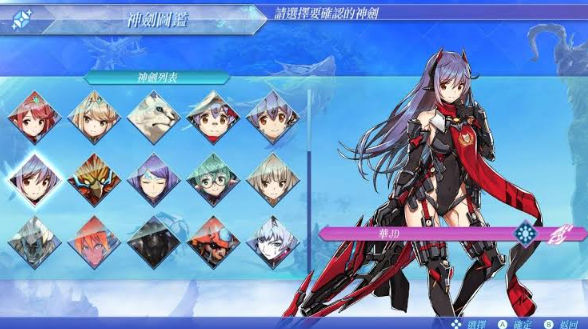
I. Basic Introduction & Guide to the Blade System in Xenoblade Chronicles 2
A. Tutorial on Blade-Driver Bonding Mechanism
In *Xenoblade Chronicles 2*, characters are split into two types: Drivers and Blades. Drivers move around the battlefield, perform basic attacks, and unleash Arts, while Blades provide weapons, elemental affinities, stat bonuses, Special Arts, and all kinds of combat skills. Every Driver can carry multiple Blades, and you can switch between them mid-fight based on cooldowns — giving you tons of flexibility.
So to judge if a Blade is good or not, don’t just look at their Special Art’s damage multiplier. You also need to think about which Driver they’ll pair with — will their weapon animations flow smoothly? Can their Arts’ effects be fully utilized? And most importantly, do their own combat skills fit well with your team’s overall strategy?
B. Blade Types, Elements, & Combat System
Blades are mainly split into three roles: Attack, Defense, and Healing. Their elements include Fire, Water, Wind, Ice, Electric, Earth, Light, and Dark. One of the most important uses for elements is Blade Combos — if you use Special Arts at Lv.I, Lv.II, and Lv.III in the right elemental order, you’ll apply elemental orbs on enemies.
In the late game, many players intentionally manipulate element coverage — they’ll stack multiple different elemental orbs on an enemy, then shatter them all with a Chain Attack to unleash a massive Full Burst. This is one of the core damage techniques for endgame content.
C. Party Building & Blade Pairing
Typically, your party will have 3 Drivers, and each Driver can equip up to 3 main Blades. New players don’t need to rush to fill all 9 slots with completely different elements. Instead, I recommend first making sure your team can pull off the full combo sequence: Break → Topple → Launch → Smash, then you can expand with Blade Combos later.
Being able to reliably pull off Driver Combos early on is way more useful than forcing a fancy 8-element party. It’ll also help new players get through those frustrating roadblocks much faster!
II. Tier List & Recommendations for the Strongest Blades
A. Top-Tier Blade Strength Ranking
If we include the base game, New Game+, and Expansion Pass content, my personal overall strength tier list splits into these tiers:
S+: Brighid, Fiora, Pyra/Mythra
S: Elma, KOS-MOS, Kasandra, Pandoria, Rex, T-elos
A+: Perceval, Haze, Floren, Hinana, Mòrag, Zhuji, Nia, Zeke
A: Ursala, Seventh Ice, Shion, Mizuti, Rinne, Oren, Ibuki, Sarada & More
Among these, Brighid is called a "monster Blade" by veterans because she can self-adjust her core parts, elements, role, and Art effects. Once maxed out, she has almost no glaring weaknesses and works in literally every situation.
Fiora is the core of high-critical hit teams, letting you consistently grind out damage. KOS-MOS has absolutely insane Ether damage, thanks to her critical hit cooldown reduction and super fast Art cycle — she’s been a powerhouse from the moment she joins your team all the way to the end of the game, making her useful the entire playthrough.
B. Recommendations for Attack, Defense, & Healing Blades
For Attack-type Blades, I’d recommend prioritizing Brighid, Pyra/Mythra, KOS-MOS, Fiora, Elma, and T-elos. For Defense-type Blades, go with Pandoria, Hinana, Sarada, and some highly versatile Blades from the DLC.
Healers are a bit special. In the late game, high-efficiency play often relies on crit healing, damage absorption, or taking down bosses fast instead of sticking to the traditional support healer role, so healer Blades drop a bit in tier rankings. But for new players, Blades like Seven, Ushimaru, and Hikari are still really solid, super forgiving, and perfect for practicing the early game.
C. Priority for Raising Rare Blades
If you’re short on resources, I’d suggest leveling up the main story guaranteed Blades like Pyra/Mythra first, then work on the main DPS Blades you’ve already got in your party. Jin is crazy strong, but he needs loads of Tiger! Tiger! or exchange resources to unlock his full potential—don’t grind nonstop to max him out the second you get him early on, he’s way too resource-heavy for that.
If you pull KOS-MOS, you can start raising her right away; Mythra, Yukito, and Wulfric are also great attack-type Blades in the early to mid-game that’ll help new players clear stages faster.
III. How to Obtain and Unlock Key Blades
A. How to Obtain Herald (Ten-i)
First up, let’s clear up the name confusion a lot of players run into when checking guides: “Ten-i” is the Japanese name for this Blade, and players on Chinese versions usually call her Heaven’s Veil, while the English version labels her Herald.
You can’t pull Herald from regular Core Crystals directly. You need to progress the main story to a certain point, then head to the sealed spots around the Temperantia region, gather a bunch of required items to unlock her, and get her “Sealed Core Crystal” to complete her Bond.
Herald is an Ether Cannon-type attack Blade with Thunder affinity. Her Art deals really big burst damage, but the downside is some of her Arts come with self-damage risks. I recommend only going all-in on her once you’re familiar enough with combat mechanics to push her to max damage potential.
B. “Renhuang” Blade Unlock Guide (Note: Not Official Name)
“Renhuang” isn’t actually an official Blade name for Xenoblade Chronicles 2 in the Chinese version. You’ll run into tons of confusion mixing this up with other games or fan translations when looking up info. If you see a guide calling a rare Blade “Renhuang”, double-check its Japanese and English original names first, then follow the guide steps to be safe.
If you actually want to get a specific Blade for sure, prioritize Suzaku, Wulfric, Rinne, Suion, Seiryu, and Juuhachi. They all have clear unlock methods: main story unlocks, direct Core Crystal purchases, or side quests—no need to waste resources gambling on random pulls.
C. “Dihou” Blade Enhancement & Skill Guide (Wulfric)
“Dihou” is also not an official name for Xenoblade 2. If anyone uses this name to refer to the Earth-affinity lance Blade Wulfric, players usually call him Wulfric, yeah.
You can get Wulfric’s Core Crystal in Chapter 3 of the main story, but you can’t bond with him right away back then—you need to keep progressing the story and complete specific battle conditions. Wulfric is an Earth-affinity attack Blade with insane strength scaling. When paired with a specific Driver using a lance, he unlocks super useful Driver Art combos, so he’s totally worth raising even for new players.
IV. Complete Blade Collection & Summon Tips
A. Rare Blade Summon Rates & Tips
Regular Core Crystals, Rare Core Crystals, and Epic Core Crystals can all be used for Bonds, but the summon rates for rare Blades aren’t equal! KOS-MOS is notoriously hard to pull—tons of players finish the game without ever getting her.
There are three main factors that affect summons: Core Crystal quality, Affinity Rank, and Driver’s Luck stat. Crystal quality hits the hardest—Epic Crystals give the biggest boost; the Affinity system increases summon rates for Blades of that matching element; Luck helps a little, but way less than most people think.
So if you want KOS-MOS, stacking Luck alone won’t cut it! You need a ton of high-quality Core Crystals, plus pair it with Justice-related Affinity to boost Light and Dark element summon odds.
B. Limited Blade Unlock Conditions List
Some limited Blades don’t require summoning at all: Rinne can be bought directly from a specific Core Crystal shop; Wulfric comes with the main story; Suion and Seiryu require side quests; DLC Blades Hana and Kamuy unlock if you buy the Expansion Pass.
Shulk, Fiora, and Elma are combat-focused limited Blades—you have to complete specific high-difficulty challenges to bring them back into your Alrest adventure.
The 2026 Nintendo Switch 2 Edition adds a new rare Blade, MOMO. She can switch between two forms, change elements, and has her own exclusive Blade quest. For old players who already completed 100% collection, you’ve got a new goal to work towards!
If you see Core Crystals, Blade, or special quest icons in towns, mark them right away—don’t wait.
Go back and upgrade them after you beat the game.
V. Blade Skill Enhancement & Elemental Optimization Guide
A. Priority Order for Blade Skill Unlocks
The real power of Blades is mostly hidden in upgrading their Affinity Rings. For battle-focused skills, we recommend unlocking Damage Up, Critical Hit Bonus, and Damage vs. Status-Afflicted Enemies first. Next, work on Special Move Multipliers, and finally, level up scenario skills that aren’t urgent right now.
That said, if you need scenario skills like Focus, Super Strength, or Lockpicking for main story exploration, feel free to prioritize those instead.
B. Elemental Weakness & Team Composition Optimization
Xenoblade Chronicles 2 isn’t like traditional RPGs that rely heavily on basic elemental counters. The main purpose of elements here is to link Blade combo chains and create Elemental Orbs.
Early-game, bring Blades with elements like Fire, Water, Electric, or Earth to give you more combo options. Late-game, adjust your element setup based on how you plan to execute Full Burst.
C. Boosting Special Damage & Reducing Cooldowns
For a Blade to use their Special, the Driver needs to build up energy with their Arts first. That means Arts animation speed, attack-canceling techniques, and gear are more important than the Special itself. For example, Mythra can recover Art cooldowns with Critical Hits, creating a smooth cycle of "Art → Crit → CD Reset → Next Art."
Zeke’s fast combo cycle is exactly why his team members are always ranked as top-tier Blades.
VI. Full Guide to Character Party & Blade Combinations
A. Blade Recommendations for Rex, Nia, & Zeke
Rex’s late-game special abilities are actually really strong—don’t rush to dump all your Overdrive Protochips on him. Early-game, use stable damage dealers like Pyra or Mythra, plus weapons like Axes or Lances to fill out the Driver’s combo chain, and you’re good to go.
Nia is the party’s core healer, so she fits perfectly with healing-focused Blades like those that use Gauntlets or Balls. Healing Blades like Umon and Haze will make your whole party more reliable in tough fights.
Zeke works amazingly with Blades that use Greatswords, Ether Cannons, or Axes. Assign high-attack Blades like KOS-MOS, Pandoria, or Murasame to him, and he’ll unlock their full combat potential.
B. Party Balance & Element Coverage Tips
The safest party setup for new players is: Rex as main damage, Nia as healer, plus Melia or Tora to draw enemy aggro. Once you’ve built up your gear and Blades late-game, you can slowly switch to a three-damage dealer party for maximum output.
C. Blade Combo & Switching Techniques
Switching Blades isn’t just about swapping elements. Skilled players plan ahead: they figure out what Art the Driver needs for the next combo step, then switch to a Blade that can land Downed, Launch, or Smash effects.
If you see the "Toppled" status pop up on an enemy in the top-right of the screen, don’t stick to your usual damage cycle. Jump in to land a Downed effect immediately—this will boost your battle efficiency a ton.
VII. Battle Combo System & Topple-Downed Guide
A. Topple → Downed → Launch → Smash Combo Chain
A full Driver combo sequence is:
Topple → Downed → Launch → Smash
Topple is just the start. When an enemy is Downed, they take more control effects, then you hit them with a Launch attack, and the final Smash gives you big rewards.
Once you master this system, many Bosses can be locked in stun the whole fight—they won’t be able to move at all.
B. Maximizing Chain Attack Damage
Before triggering a Chain Attack, have your Blades combo to place Elemental Orbs. Once the Chain starts, use element-aligned Specials to break these Orbs—this not only extends the Chain, but breaking more Orbs will eventually lead to the Full Burst phase.
Late-game, dealing millions of damage isn’t from one super Special—it’s the result of setting up all the combo systems properly before unleashing everything at once.
C. Boss Weakness Analysis & Battle Tips
When fighting a Boss, first check if they are vulnerable to Topple. If they are, land the full Driver combo. If they have high resistance, switch to using Blade combos, Specials, and Chain Attacks for damage.
Never use the same exact damage rotation on every Boss—be flexible and adapt.
VIII. Blade Training Priority & Resource Management Guide
A. Priority for New Players’ Blade Training
My recommended priority for new players to train Blades is:
Pyra/Mythra → Your current main rare Blades → Core Blades for Driver combos → Core healing Blades → Blades only for collection
If you pull KOS-MOS, train her right away and she’ll fit right into your main team.
B. Exp Allocation & Core Enhancement Tips
The truly precious resources in this game are Aux Cores, Overdrive Props, and Affinity Ring materials. You’ll end up swimming in regular EXP later on, so don’t hoard those.
Top-tier Aux Cores should go to your main DPS first—think ones that boost field attacks, Critical Hit rates, Burst Arts, or even ones tailored to specific boss fight scenarios. They’re perfect fits.
C. Tips for Boosting Trust & Avoiding Wasting Resources
Raising a Blade’s Trust Level boosts their stats and makes your combo chains flow way smoother in fights. The easiest way to do this is by using Gift Bags they love, plus completing quests and battling together.
Don’t go shoving those expensive meals on every Blade you get—save them for your main party members first.
IX. Side Quest & Blade Story Collection Guide
A. Unlock Conditions for Blade-Specific Quests
Most Rare Blades come with their own unique Side Quests. Common unlock requirements include: reaching a certain Affinity Ring level, progressing through the main story, completing Colony Quests, or bringing a specific Blade to a certain location.
B. Blade Affinity & Side Story Content
A lot of a character’s true personality is in their Side Stories—like Pyra’s idol backstory, Mythra’s journey to find strong opponents, and the sweet side plots about Water and Ori. These are super memorable.
If you rush straight through the main story, you’ll miss out on so many great character stories in Xenoblade Chronicles 2. That would be such a bummer.
C. Hidden Story Easter Eggs & Lore
Characters like KOS-MOS, T-elos, Shulk, Fiora, and Elma are all Easter eggs from the Xeno series. Longtime fans will definitely get way more of a kick out of seeing them on Alrest than new players.
X. High-Difficulty Challenges & Ultimate Blade Team Build Guide
A. Recommended Blade Teams for High-Difficulty Challenges
High-difficulty challenges are all about speed and efficiency. My go-to team for these is top-tier Blades like Pandoria, Fiora, Mythra, Elma, KOS-MOS, and the Godblade.
If you’re just trying to beat the stage for the first time, don’t force a speedrun team. Bringing an extra character who can reliably heal, dodge, or tank will make things way easier.
B. Unlocking Ultimate Blades & Limit Breaking
Xenoblade Chronicles 2 doesn’t have the SSR Awaken mechanic you see in most mobile gacha games. To unlock and Limit Break an Ultimate Blade (which drastically boosts their potential), you have to do specific Side Quests, gather rare materials, or complete certain battle conditions.
Getting a Blade to UR rank isn’t a real Limit Break—it’s maxing out their Affinity Level with their Driver, their Weapon Core Chips, all their Aux Cores, and every piece of Driver-exclusive gear they need.
And for Pandoria? You also have to manage her "Flower Parts System" on top of that. Her build is way more complex and deep than a regular Blade’s.
C. Hidden Boss & Arena Guide
Hidden Bosses and Arena challenges are where the real skill test happens! Super Bosses and Challenge Modes live and die by how smooth your damage rotation is. At level 99, your stats barely matter—what counts is your gear build, cancel attack rhythm, Critical Hit chain logic, and how you handle break/break resistance.
XI. 20 Must-Know Blade Training Tips for New Players
A. Early-Game Blade Selection & Resource Allocation
1. Don’t rush to pull Rare Core Crystals the second you get them! Wait until your main Driver(s) show up before putting resources into pulls—it’s way more reliable.
2. Don’t waste Overdrive Props on Rex randomly! His unique mechanic late-game will punish you for spamming these early—be careful here.
3. Pyra and Mythra are totally worth prioritizing! They’re both fixed characters you get through the main story and are solid from early to late game—you won’t regret putting resources into them.
4. Don’t just check Star Ranks on new Blades you pull! First, see if their weapon fits your main Driver. How well a weapon pairs with your Driver sometimes matters more for damage than rarity.
5. Prioritize finishing your Driver’s combo chains early on! The sequence Break → Topple → Launch → Smash is way more practical than forcing all 8 elements to line up.
6. Give Aux Cores to your main DPS first! Don’t split resources evenly across Blades you just collect. Your main Carry’s strength is what will get you through fights.
7. Don’t write off common Blades just because they seem useless! Some low-star Blades have huge Luck bonuses, great Field Skills, or even weapon stats that match high-star Blades. Don’t waste these.
8. Don’t just fixate on Blade Special Attack multipliers! What actually determines combat power is the combination of Passive Skills. Many Blades with lower multipliers but strong Passive Skills are actually much more useful.
9. Don’t treat Luck as your only standard for pulling Blades! The quality of Core Crystals is just as important as “Affinity”. Sometimes the bonuses from Affinity are more obvious than pure Luck.
10. Don’t burn all your regular Crystals just to pull KOS-MOS! Later in the game, farming Epic Core Crystals is way more efficient, so there’s no need to rush.
11. Don’t ignore various items in your Inventory! For example, skills that restore Arts or reduce Special Attack cooldowns have a huge impact on combat rhythm and can save you in critical moments.
12. Don’t just stand around waiting for your Basic Attack’s 3-hit combo to finish! Learning attack canceling techniques will completely change your combat rhythm and boost your output by a whole tier.
13. Don’t trigger Chain Attacks the second you meet a Boss! Charge up Elemental Orbs first before activating the Chain Attack—that’s when you’ll unleash real damage. Otherwise, you’ll waste the combo effect.
14. Don’t bind all Blades to the same Driver! Your party needs three characters that complement each other’s weapon attributes and types, so you won’t get stuck in different situations.
C. Must-Do Tasks & Progress Planning for the First Week
15. Prioritize pushing the main story to unlock “Pyra” in the first week! Your combat experience will get way smoother, and the difficulty will drop a lot.
16. Master Driver Combos as soon as possible! This is the dividing line between newbies and pros—once you learn it, your combat will become more structured.
17. Send out your Merc Group as soon as you can! Many unlock conditions for Affinity Charts can be completed quickly via Merc Missions, so you don’t have to waste time grinding them yourself.
18. Don’t discard Blades with Field Skills casually! Skills like Strength, Focus, and Lockpicking will be used constantly for later map exploration—they’re super practical.
19. Check the items in your Inventory every time you enter a new town! Some seemingly ordinary foods actually have strong combat-boosting effects—don’t miss them.
20. Don’t force yourself to collect all Rare Blades on your first playthrough! Finish the main story first. After clearing it, farming Cores and filling out your compendium will be way more efficient, and the whole experience will be smoother.
XII. Blade Strength Tier List Analysis
A. Attack-Type Blade Tier Ranking
If we rank purely by damage output, they can generally be split into:
S+: Jin, Fiora, Pyra
S: Elma, KOS-MOS, Haze, T-elos
A+: Pandoria, Boreas, Voss, Flora, Mikumo
As for why these characters are here: Jin’s strengths are high customization space and an extremely high damage ceiling; Fiora fully benefits from the critical hit system, leading to insane damage once stacked; Pyra is easy to obtain, has a very smooth damage rotation, and is quick for new players to master.
B. Defense & Healer Blade Strength Comparison
For Defense-Type Blades, characters like Kamuy and Kagutsuchi fit into high-damage teams more easily in actual combat—they won’t hold back the damage rhythm. As for traditional shield-hammer type Blades, while they’re stable in survival, their combat efficiency is lower in late-game fights. Healer Blades are great in the early game,
but in the late game, with the mature playstyle of critical-based healing paired with high DPS, these characters’ strategic importance drops. Still, Blades like Nanako and Uzuki can be flexibly chosen according to your party setup.
C. Overall Evaluation & Usage Suggestions
When farming regular maps, bringing Pyra and Mythra will make the whole process super smooth.
In Challenge Mode, the advantages of Blades like Jin, Fiora, and Elma will stand out a lot.
For high-damage Chain Burst situations, high-multiplier Blades like KOS-MOS and T-elos work really well.
For new players in the early game, you don’t actually have to chase top-tier Blades. Just use the Rare Blades you already have that go well with your Driver’s weapon— that’s more than enough.
XIII. Exclusive Tips & Player Tactics for Traditional Chinese
A. Taiwan & Hong Kong Players’ Reviews & Recommendations on Blades
Xenoblade Chronicles 2 has always had a large base of long-time players in Taiwan.
especially when it comes to battle strategies, affinity quests, and discussions about the Blades themselves have always been super popular. Even all these years after release, topics like “Which is better, Brighid or KOS-MOS?” still spark heated debates among players.
B. Differences Between Traditional Chinese Versions and Chinese Language Support
The biggest headache for Traditional Chinese players looking up guides is the differences in translation names. For example, the Japanese term “テンイ” might be translated as “天衣” or “天威”; “ヂカラオ” is sometimes called “Rikiman” or “Rikishin”; as for Pyra and Mythra, different regions use different translations like “焰” and “光” respectively.
So if you’re stuck on a quest and looking for a guide, I recommend searching using both the Traditional Chinese name plus the original Japanese or English name—this way you won’t mix up the characters as easily.
C. Common Guide Sites and Community Resources for Traditional Chinese Players
Taiwanese players mostly discuss on sites like Gamer, PTT, and Nintendo-related community platforms. For content like Affinity Charts, the years of testing and整理 by Traditional Chinese players are actually super complete and useful.
XIV. 100% Blade Collection Walkthrough Guide
A. List of Requirements for Full Blade Collection
Collecting all Blades isn’t just about spamming Core Crystals—their sources can be roughly divided into: Main story fixed unlocks, random drops from Core Crystals, side quest rewards, special Core Crystals, New Game Plus additions, DLC Challenge Mode, and new content added in the Switch 2 Edition.
If you include the Expansion Pass and the 2026 Switch 2 Edition content, the collection roster will expand to include additional Blades like Fiora, Shulk, Elma, Hana, Kamui, and MOMO.
B. How to Fix Missing Blades
For Blades you missed in the random pool, you can farm Epic Core Crystals later; for Blades from side quests you skipped, go back and check if you completed the relevant side quest; for Challenge Mode Blades, you’ll need to purchase the Expansion Pass to get them.
But the one that usually takes the longest to get is KOS-MOS. Once you only have one or two left to collect, don’t waste normal Core Crystals—focus on stacking the relevant “Affinity” and Luck stats, then use Epic Core Crystals, which is way more efficient.
C. Collection Rewards and How to Boost to 100% Completion
The biggest reward for collecting all Blades is the full character stories, merc group options, expanded field skill coverage, and team-building freedom. To hit 100% completion, you also need to finish all Affinity Charts and Blade quests for every Blade—this actually takes way longer than just collecting all Blades.
XV. Game Review Summary and Tips for New Players
A. Overall Game Review and Pros & Cons
The biggest strength of Xenoblade Chronicles 2 is that the Blade system makes every player’s first playthrough unique. You might pull KOS-MOS early on or never see her until the end; some rely on T-elos for damage, while others turn Brighid into a top-tier damage dealer super early.
But the con is also this randomness: rare Blades being bonded to the wrong Driver, never getting the Blade you want even when you’re late-game, and constantly switching party members for field skills—these do feel a bit outdated now.
B. Series Play Order and Best Time to Start
New players who’ve never touched the series can start straight with Xenoblade Chronicles 2, no need to play the first one first. If you want the full story connections, I personally recommend the order: Xenoblade Chronicles: Definitive Edition → Xenoblade Chronicles 2 → Torna ~ The Golden Country → Xenoblade Chronicles 3.
The 2026 Nintendo Switch 2 Edition supports 60fps, up to 4K resolution in TV mode, 1080p in Handheld mode, plus new additions like MOMO and a new Merc Strongarm mode—so right now is the perfect time to jump in.
C. New Player Friendliness and Purchase Tips
If you love collecting characters, massive open worlds, JRPGs, and deep battle systems that you can sink hundreds of hours into, Xenoblade Chronicles 2 is still totally worth playing now.
But new players need to be prepared: the battle tutorials in the first few chapters are super easy to miss or forget. Don’t quit after 10 hours because you think “characters just auto-attack”—once you get core mechanics like Cancel Attacks, Driver Combos, Blade Combos, Orbs, and Chain Attacks, this battle system will go from looking like auto-play to something you can enjoy for hundreds of hours.
If you’re only asking about the Blades ranking in Xenoblade Chronicles 2
Who's number one? Even in the full game with all DLC included, I'll still put the fully awakened Jin at the very top, followed closely by Fiora, Hikari, Elma, and KOS-MOS.
Once you actually get into the game, you'll realize that the so-called "strongest Blade" isn't as crucial as you might think.
Blades like Hikari, which are extremely versatile, are more than enough to get you through the entire main story. For Blades with relatively low recruitment barriers—like Riki, Lora, and Misora—they can handle almost all content in the game without breaking a sweat. What really sets players apart isn't just who they have on their team; it's how you pair your Driver with their weapon, master the rhythm of attack cancels, nail the combo sequence of breaking an enemy, knocking them airborne, and landing follow-up heavy hits, time Blade combos perfectly, and have the judgment to detonate all element orbs at once during a Chain Attack.
So new players don't need to stress out when seeing a Tier List and panic that they didn't pull KOS-MOS. Instead, focus on leveling up the Blades you already have and getting comfortable with the combat mechanics first. Wait until you hit the endgame or unlock Challenge Mode before going for those high-end, min-max focused sets like Jin, Fiora, and Elma. The real fun of Xenoblade Chronicles 2 isn't pulling the top-tier strongest Blade—it's building your own unique battle system from a diverse crew of Blades, each with their own distinct playstyles.