World Flipper: Must-See Complete Guide for Returning Players – Full Explanation of Team Comp Terms f
I’m totally being real with you all: World Flipper is such a game that once you pick it up, you’ll never forget it! The mix of pinball-style controls and action-RPG gameplay feels like a casual pick-up, but once you dive in, it demands way more rhythm than many traditional RPGs. Especially when you jump into co-op or high-difficulty stages, you’ll suddenly realize – wait, this isn’t just pinball! This is a hardcore game where you have to nail damage multipliers, skill rotations, PF rhythm, and Break timing all at once!
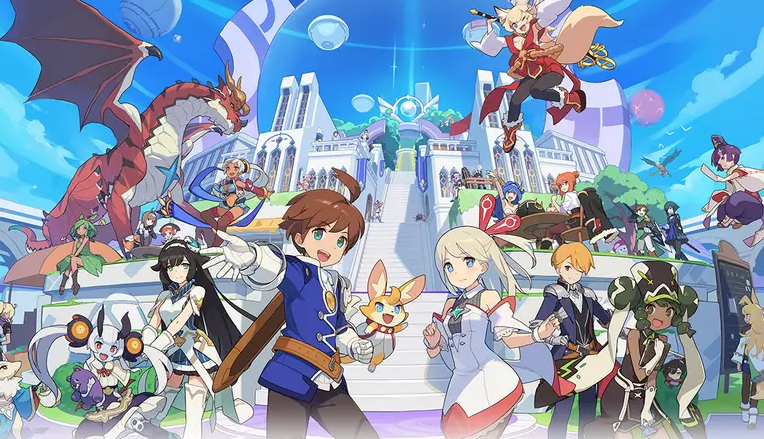
I. Game Overview: What is World Flipper?
A. Game Background & Lore
World Flipper’s lore follows a straightforward, easy-to-grasp isekai adventure route: your party travels through various worlds, encountering different factions, monsters, and events. It doesn’t pile up obscure jargon to build its setting – instead, it feels super down-to-earth:
Every new world you arrive at feels like stepping into a brand-new theme park – each character and event will make you remember that world’s unique vibe.
Plus, the game’s story pace feels exactly like anime storyboarding:
-
Early game: Introduces core characters, gets you familiar with different worlds, and lets you build a basic team
-
Mid game: Starts to throw in twists like “Wait, does this world hide a secret?”
-
Late game: Focuses more on tying up each character’s personal stories and weaving together the overall plot
B. Development & Operations Info
This game was developed by Cygames in collaboration with its subsidiary Citail, and first launched in Japan on November 27, 2019. The Traditional Chinese version for Taiwan, Hong Kong, and Macau was published by Gamania, and it was super hyped when it first came out. As for the later service closure, we mentioned it in the opening: both the Japanese version and the Traditional Chinese version have entered the “service end / offline” phase.
C. Core Features: Pinball Meets Action RPG Gameplay Identity
If we have to sum up World Flipper in one sentence:
It turns the feel of pinball controls into the depth of team building!
When you play, you actually have to keep three layers of logic in mind:
-
Physical layer: Figuring out how to pull the right angle, launch the pinball, and catch the best timing for direct hits
-
Rhythm layer: Mastering how to chain PF combos and trigger FEVER states to boost damage
-
Build layer: Planning how to assign main and sub characters, stack damage multipliers, and keep skill rotations running smoothly
D. Supported Platforms & Versions
The core gameplay of this game is pretty much the same everywhere, but there are a few key differences between versions:
-
Release order of characters and events
-
Service pace and event scheduling
-
Some collaboration events have timing differences across regions
If you just want to study the gameplay, the Japanese version usually has the most complete info; meanwhile, many Traditional Chinese players develop their playstyles based on “team-building habits from Taiwan, Hong Kong, and Macau communities.”
II. Basic Gameplay & Battle System Breakdown
A. Pinball-Style Battle: Aiming, Flipping, Direct Hits, and Skill Damage Concepts
Battle in World Flipper can be split into two main damage dealing logics:
-
Direct Hits: When you launch the pinball, the character itself hits enemies, dealing damage through collisions and combos.
-
Skill Damage: Relies on skills to deal damage – the pinball is just a tool for “charging energy and applying status effects.”
What’s the most common mistake new players make?
Thinking that if you flip accurately, you’ll definitely be strong. But when you actually get to high difficulties, you’ll realize: accurate flipping just lets you “get all the damage you should,” and what really sets the limit is your “team’s damage multipliers” and “how smooth your skill rotations are.”
B. Powerful Flipping (Power Flip) Mechanic & PF1/PF2/PF3 Tiers
PF is one of the core soul mechanics of World Flipper. Simply put: you’ll keep building up your PF level during battles, and when you hit a certain threshold, you can trigger a powerful attack at the right moment.
-
PF1: The basic strong attack, often used to fill gaps in damage output and adjust battle rhythm.
-
PF2: A phase where damage output increases significantly; many teams use it as their main damage period.
-
PF3: Unleashes even more powerful attacks and is the key moment to unlock high damage output.
PF3: Quick heads up! When players talk about a "PF Team," they build the whole squad around the burst damage from PF3.
New to PF? Super simple—think of it as a "reward for your pinball rhythm"! The more consistent your combos, the better you time the hits, and the spot-on your positioning, the easier it is to pull off higher-level PF moves!
C. Core Combat Terms: Combo, FEVER, Break Down, and More
I bet you’ve seen these terms before—let’s break them down in plain gamer speak:
-
Combo: The more your shot pinballs collide and hit enemies, the higher your combo count gets!
-
FEVER: A short-term buff state that triggers when your combo count or other specific conditions are met. Lots of teams time their burst windows around FEVER phases!
-
Break / Break Down: Stun an enemy to break their defense. During Break, you’ll deal way more damage—enemies either get squishier or their annoying mechanics get interrupted, making battles way easier!
The core skill for tough co-op battles is:
Sync up the timing of your skills, PF, FEVER, and Break
Once you nail this sync, you’ll instantly feel like a pro—your power will skyrocket by several levels!
D. Single-Handed Play, Auto-Battle, and Manual Control Differences
One of the coolest things about Pinball World is:
You can totally AFK and chill, or get hands-on and play skillfully—these two playstyles feel drastically different!
-
Stage Progression / Farming Materials: Auto mode works perfectly fine here.
-
Hard Bosses / Co-Op Raids: Most of the time, you’ll mess up hard if you don’t use manual control.
-
Ranking or Speed Runs: Manual control is a must—you need to hit every burst window perfectly.
To sum up:
The later you get in the game, the more valuable manual control becomes
III. Character System & Elemental Weakness Basics
A. Character Rarity & Roles
Roles in this game are super clear—you can tell what a character is for just by looking at their skills:
-
Damage Dealer: Split into Direct Damage, PF Damage, and Skill Damage subtypes.
-
Support: Provides various buffs like damage boost, energy charging, healing, shields, and damage reduction.
-
Tank / Damage Taker: Can survive hits, tank damage, and protect backline characters.
-
Utility: Handles debuff dispelling, purification, crowd control, and speeding up Break effects.
The #1 new player mistake:
Pour all your resources into the "looks like the best attacker" character, ending up with a team that lacks supports, so your damage never gets high enough.
B. Six Elements & Elemental Weakness Relationships
Elemental weaknesses are the foundation of this game. You don’t need to memorize a complicated chart—just remember two things:
-
Same-element teams easily stack multiplicative damage bonuses
-
For hard content, check the boss’s element and mechanics first—don’t just bring your favorite element blindly
C. Resonance Characters & Resonance Bonus Mechanics
Resonance is super important in Pinball World because it affects these things:
-
Passive bonus effects for your team
-
Trigger conditions for certain skills you use
-
Is your team's rotation smooth?
Lots of seemingly average characters turn into amazing powerhouses when their Resonance and passive buffs are properly set up for a specific team.
D. Synergy and Chain Design of Skills, Passives, and Lead Skills
The strength of your team in *World Flipper* never depends on just a single character’s stats—it’s all about the chain of the entire team.
The most common meta team builds look like this:
-
Lead Skills provide core multiplier damage
-
Passive Skills add Energy or extra multipliers
-
Active Skills unleash all damage during the burst window
Here’s the key thing you need to watch for:
Where is this team’s burst window? How does it funnel all its resources into that window?
IV. Team Building & Example Strong Teams by Element
A. Basics of Team Building
5. Basics of Team Building: Roles of Frontline Characters and Support Substitutes
The core unique feature of team building in *World Flipper* is the combination of Frontline Characters + Support Substitutes. To put it simply:
-
Frontline Roles: The core main characters that go straight into the thick of battle
-
Support Substitutes: Characters that don’t fight directly, but provide passive buffs, fill in key skills, stack damage multipliers, or add extra utility
One super important lesson new players must learn early:
Support Substitutes are NOT just extras—they’re make-or-break for getting your team to work consistently!
B. Playstyle Concepts & Core Logic for the 6 Element Teams (Fire, Water, Lightning, Wind, Light, Dark)
I won’t just dump a bunch of character names here—instead, I’ll share core playstyle ideas for each element team, so you can adapt them to your own builds:
-
Fire Team: Most run a fast burst playstyle with focused damage. Common paths are Skill Burst or PF (Perfect Finisher Combos) Burst
-
Water Team: Leans on stability and sustainability, perfect for long fights with a relaxed, unhurried pace
-
Lightning Team: Has a high-energy, fast tempo vibe. Either an all-out fast damage route, or one that demands super precise skill rotations (which can lead to frustrating roadblocks)
-
Wind Team: Focuses on mobility and combo damage, paired with PF or Direct Hit builds—super versatile with tons of fun combinations
-
Light Team / Dark Team: Have flashy, high-multiplier bursts, but rely heavily on key support characters to function well
Before building an elemental team, first lock in your core goal:
Is this team going for PF builds? Direct Hit builds? Or Skill Damage builds?
These three paths will directly dictate which characters you need to assemble your team!
C. Practical Team Templates for Different Scenarios (Story Progression, Boss Fights, Co-Op)
I’ll just give you practical team templates here—using templates is the most reliable, consistent way to build a team:
1) Story Progression Team Template
-
Main Damage Dealer
-
Secondary Damage Dealer
-
Support Character
For Substitutes, prioritize: Energy regeneration, damage multipliers, or survival boosts
2) Boss Fight Specific Team Template
-
Core Damage Dealer
-
Energy/Skill Rotation Support
-
Utility Character
For Substitutes, pick ones that add both damage multipliers and Energy to fill gaps
3) Co-Op Specific Team Template
-
Make sure characters can stay alive consistently
-
Must counter the enemy’s unique mechanics
-
Must land full damage during burst windows
Co-Op missions usually fail not because of low damage, but because of missing dispels, purifies, damage mitigation, or no coordination between players’ skill use
D. New Player-Friendly Low-Cost F2P Team Recommendations
For F2P players building teams
The key to building a good team isn't going for the absolute strongest characters—it's about making a squad that can form smoothly and actually work well.
You don't need to pick the top-tier T0 characters. Instead, go for these:
-
Easy to obtain or free from event rewards
-
Clear function, not a dead weight to your team
-
Works well with your existing main damage dealers
New players, take this advice to heart:
Master one team first before even thinking about building specialized teams for all six elements.
A lot of players quit halfway because they try to fill every team from the start, ending up with half-baked squads that can't do anything effectively.
V. New Player Guide & Early Game Progression Planning
A. Recommended Flow for Day 1 to Week 1 for New Players
The most counterintuitive thing about World of Dive is:
If you only rush through the main story, you'll hit roadblocks way too easily.
The reason is simple: this game's power doesn't just come from leveling up character levels to clear stages. You need to unlock the "Character Enhancement System" before you can actually start growing steadily.
I recommend new players follow this progression path:
-
Day 1: Unlock the system to the point where you can farm materials
-
Day 2: Make sure you have at least one team that can auto-farm materials reliably
-
Week 1: Complete the enhancement nodes for your core damage dealers and core supports
B. Early Game Resource Allocation: Priority Order for Stamina, Gold, and Enhancement Materials
New players will never have enough resources, so allocating them properly is super important:
-
Stamina: Use it first on materials that will significantly boost your combat power
-
Gold: Use it first on your main team
Don't dump all your resources into every possible upgrade! For enhancement materials, I recommend prioritizing things that boost "area damage" or speed up skill cycles.
I won't give you a "must-pull character list"—meta changes fast and there are way too many variables. What I will say is that at the start, you need to focus on three core types: at least one core damage dealer to take on major damage; at least one cycle support to keep your team's skills and damage flowing smoothly; at least one functional character to deal with Boss mechanics and keep your team alive. Get these three parts right, and your early game will go way smoother.
The strongest "weapon" for F2P players isn't pull luck—it's getting the rhythm right: first build a farm team that can reliably get daily resources, so you have a steady income. Farm event equipment whenever you can— a lot of event gear is god-tier in the early game. Don't waste pulls on random characters; only pull to fix gaps in your team's core setup. For low-spend players, I recommend spending your budget on two areas: projects that give steady long-term resources, and characters or gear that fill key gaps in your team.
There are tons of enhancement systems in this game, and new players can easily dump resources in random places. Here's a super useful rule of thumb: Enhancements that boost "area damage" and skill cycle speed are way higher priority than everything else. Leveling up and base stats are linear, but the damage from area multipliers and skill cycles grows exponentially—this gap gets huge later on, which is why they're higher priority. If you have to rank them: first, core damage dealers' key skills and passives; second, systems that speed up your whole team's skill rotations; third, survival-related enhancements; last, leveling up all characters evenly.
For gear, always remember: Event gear is a lifesaver for F2P and low-spend players. Event gear usually has these traits: low barrier to obtain, no need to rely on pull luck; exactly fits your early team's needs; helps you hold your team's combat power together before you get the core characters you need.
Mid-game in this game, you'll hear people talk about things like "Attack Slash"—let me clear up the core concepts: Attack Slash: The area that boosts regular attacks or direct hit damage; Skill Slash: The area that specifically boosts skill damage; PF Damage Boost: The area that specifically increases PF damage; plus there are other elemental area multipliers. You don't need to calculate down to the decimal point—just remember: stacking too many of the same area multiplier will have diminishing returns, while combining different area multipliers will give you "explosive damage". So when building a team, try to make the most of different damage multipliers.
Spread them across different damage multipliers so they stack together—this is how you land massive, bursty damage!
If you’re stuck on a stage, it’s almost always one of these issues: First is Poor skill rotation—your skills don’t come up fast enough, or you can’t chain Perfect Flicks (PF), so you can’t deal consistent damage. Second is Sticking to a single damage multiplier type—you’re only piling attack stats, but skipping skill damage buffs, PF damage boosts, or elemental multipliers. Third is Lack of utility/support characters—you don’t have someone who can dispel the Boss’s buffs, or purge its debuffs, so you can’t handle the mechanics. Fourth is Wrong positioning or skill usage, especially in co-op mode—if you mess up your skill order, it’s totally normal to miss a huge burst window. Whenever you’re stuck, don’t immediately blame your power level. Check these four points first, and you’ll almost always find the problem!
The most efficient way to progress the main story is: Stop once you unlock an important system you need, prioritize leveling that new system up, then keep pushing forward.
Don’t rush the main story! It’s better to lock in a steady source of material and gold quests before pushing further into the story. So many players grind their heads into the wall on main stages only to realize they need to farm materials later, wasting all the stamina they built up earlier—total bummer!
B. Breaking Down High-Difficulty Events Like Assault Quests, Co-Op Bosses, and Black Thunder Ancient Dragon The core logic for these high-difficulty modes is: Mechanics matter way more than raw stats. Even if your power level is higher than other team members, if you lack dispel abilities, you’ll get crushed under the Boss’s buffs. No purge? You’ll wear down from DoT (Damage over Time) effects. No damage reduction skills? The Boss’s ultimate will wipe your whole team in seconds. Before tackling these hard modes, always ask yourself these questions:
-
What negative or positive status effects will this Boss apply?
-
Does my team have support/utility characters that can dispel/purge?
-
When is the best window for burst damage? How do I optimize play during the Break phase?
C. Prioritizing Rewards from Limited-Time Events and Collaboration Events Veteran players know the perks of collaboration events:
-
Some are full of classic nostalgia
-
Some release extremely powerful limited units
-
Some even give away tons of top-tier gear for free
D. Basic Team Requirements and Useful Team Building for High-Difficulty Co-Op To consistently clear high-difficulty co-op, you need to nail three things:
-
First, stay alive long enough to reach key phases
-
Your team must solve the Boss’s mechanical challenges
-
Deal enough damage during critical burst windows
VIII. Practical Guide to Advanced Combat Skills and System Terminology A. Ideal Scenarios and Team Building for Core Playstyles: Crit, Skill Damage, and PF We recommend picking one playstyle to master first instead of jumping around randomly—you’ll be way more efficient this way:
-
Critical Hit (Crit) Build Team: Relies heavily on control feel, character positioning, and mastering the rhythm of flick collisions
-
Skill Damage Build Team: Depends on skill cooldown speed, energy management, and planning skill cast order
-
PF (Perfect Flick) Build Team: Focuses on stable chain combos, whether you can pull off PF3 smoothly, and the damage bonus mechanics from PF multipliers
B. Practical Tips for Skill Rotation, Fever Gauge, and Chain Attacks in Co-Op When veteran players tackle co-op, they almost always do one key thing: Stack all possible damage-boosting effects to trigger them all at once. Here’s a quick example:
-
Fill the Fever Gauge and activate it
-
The Boss enters its Break weakened phase
-
All characters’ skills are off cooldown and ready to use
-
PF stacks are maxed out
Right here, unload all your burst skills at once—your damage will literally double, like you swapped your entire team.
C. The Critical Role of Skills Like Dispelling and Cleansing vs. Certain Bosses
Missing these two support skills will leave you getting destroyed in high-difficulty runs:
-
Dispelling Ability: Removes buffs from the boss, stopping it from stacking too many stats that crush your team.
-
Cleansing Ability: Wipes away negative status effects on your team, so you don’t take constant damage or get debuffed.
To make your high-difficulty runs way more consistent, the biggest improvement isn’t swapping for a stronger DPS—it’s adding a support character with dispelling or cleansing skills.
D. Small, Key Details to Boost Co-Op Clear Consistency
These are the "small things that make a huge difference" kind of tips:
-
Don’t hit skills the second they’re ready—wait for the perfect window to use them for max effect.
-
Don’t run around aimlessly—position yourself to help your main DPS land critical hits or chain PF (Perfect Firing) combos smoothly.
-
Manually adjust your character’s firing angle—get it right once in some stages, and your whole team’s attack rhythm will flow super smoothly.
IX. Game Platforms, Emulators, & Tips to Optimize Your Play Experience
A. Mobile Hardware & Frame Rate Optimization Tips
World Flipper’s frame rate is crucial when tackling high-difficulty content:
If your phone lags for even a second, or your firing angle is off by a tiny bit, or your skills take a split second to cast—you’ll immediately notice your damage drop hard, and your entire battle rhythm will break.
So here’s my advice:
-
Stick to 60fps if you can—don’t let your frame rate drop and mess up your flow.
-
If too many visual effects cause lag, it’s totally okay to turn a few off.
B. Emulator Installation & Setup
Emulators have these great perks:
-
More precise control when adjusting firing angles.
-
Way more consistent for farming stages than mobile controls.
But watch out:
Emulators are just tools to make playing easier—never try anything risky with them, there’s no need to waste your effort.
C. UI Adjustments & One-Handed Play Optimization
For comfortable one-handed play, focus on two main points:
-
Can your thumb smoothly adjust the firing angle?
-
Do your skill buttons block critical parts of the screen?
Tweak your UI so both firing and skill casting feel smooth and don’t block your view—your gameplay will level up instantly.
D. Auto-Farming Setup & Tips to Boost AFK Efficiency
To max out farming efficiency, do these things:
-
Stick to one consistent, reliable auto-team.
-
Prioritize stamina on stages that give the best rewards.
-
Focus resources on event stages during events.
X. Common FAQs & Advanced Strategies
A. New Player Questions
Q: Am I stuck because of bad gacha luck?
A: Not always. Most of the time, it’s because your skill rotations don’t line up, your multiplier stacking is messy, or you’re missing support roles. Fix your basic team template, and you’ll clear most stages easily.
Q: I never have enough resources—what should I do?
A: This is super normal. The key is to focus on leveling ONE main team—don’t spread your resources across every character, or you won’t be able to strengthen anyone properly.
Q: Can I play if I don’t have all characters?
A: Absolutely! One of the best parts of World Flipper is that you can make solid teams with lower-rarity units. Especially once you get event gear and support roles, even a free-to-play team can do really well.
B. F2P Players: Grind & Time Management Tips
For F2P players to play comfortably:
-
Daily Missions: Grab the most stable rewards in the least time possible.
-
Events: Focus on grinding key event rewards.
-
Gacha: Save your pulls until your team is "roughly finished"—don’t waste resources on random pulls.
Your goal is to play consistently long-term, not burn out from grinding too hard too fast.
C. Returning Player Quick Refresh & Current Meta Overview
The fastest way for returning players to get back into the groove:
-
First, confirm whether your main team back then was a direct attack, PF, or skill damage build
-
Revisit the skill rotations and multiplier zone rules for that specific build
-
Next, fill in the utility characters you need.
Don’t try to rebuild every single attribute team right away — that’ll be way more frustrating than it needs to be.
D. Topics to Explore to Master World Flipper
If you actually want to reach the point where you *truly get this game*, here are some areas to dive into:
-
Optimized multiplier zone setups for attribute-specific teams
-
PF battle rhythm and manual angle control practice
-
Co-op Boss mechanics cheat sheets
-
Damage breakdowns: Which multiplier zone is your team lacking the most?
World Flipper has always been a special game to me: With its seemingly casual pinball-style vibe, it quietly draws players into the deep end of “team building + battle rhythm.” Early on, you might just think flipping is super satisfying and stress-relieving, but later you’ll realize —
What you’re really training here is rhythm, judgment, and turning your whole team into a perfectly running, well-oiled machine.
Even with all servers having reached their current content stage, this gameplay design is still worth breaking down, understanding, and revisiting. If you treat this as your permanent World Flipper guidebook, this is your “get back up to speed quickly” map written from a fellow player’s perspective:
Where to use manual control, where to stack multipliers, where to pick up utility characters — follow this path, and at least you won’t get bogged down by a mountain of game jargon.