Alchemy Stars: Newbie to Veteran Guide - Beginner Pulls, Stats, Team Building & Character Developmen
Seriously, when I first jumped into the Alchemy Stars bandwagon, my entire reaction was "Wait, this isn't a tactical RPG? Why does it look like a match-3 game?" I was so shocked! Only after playing for a while did I figure out the real fun isn't about how fast you tap, but whether your team is properly built, how well you lay down those tile boards with color-switchers, and whether you time your burst attacks correctly.
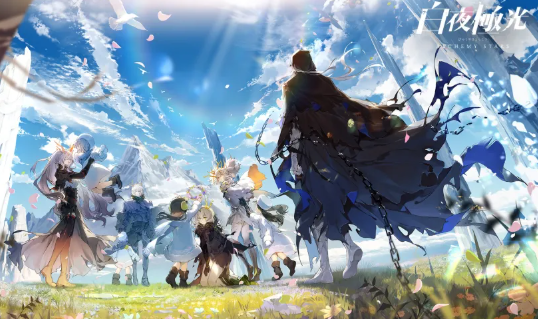
1. Opening Guide & Game System Breakdown
A. Core Introduction
The key to winning in Alchemy Stars isn't "what characters you pull", but "how you use color-switchers to lay down a full board of tiles so you can burst damage in one turn" — the starter pull is just a ticket to get in. The real key to clearing stages is team-building strategies and upgrade order.
B. Game Background & Unique Features
On the surface, Alchemy Stars is a turn-based, grid-based game where you move on tiles to fight monsters, but after playing for two days, you'll get it — its real core is these three things:
-
Link Movement = Your Attack Turn
Every time you move on a tile of the same color, it's like extending your attack turn! The longer your path, the more combos you get, the flashier your skill effects, and the more outrageous your damage will be.
The biggest mistake new players make is: moving around randomly when they see available tiles, ending up with a super short path. Not only will you fail to kill the monster, but you also won't save your color-switcher skills for a fix, getting one-shot back by the monster and wiping. -
Color-switcher Characters Are The Tile Designers
The coolest part of this game is not just stacking damage dealers, but designing your movement path first, then bursting damage along that path.
That leads to super counterintuitive situations:
A team full of damage dealers will actually be way slower; but if you bring two good color-switchers, you can clear all enemies on the screen in one burst turn.
-
Teams Are Functional Puzzles, Not Rarity Puzzles
Many people think getting a 6-star character from the starter pull means they're set, but end up stuck on the main story and frustrated. The problem isn't that their 6-stars are weak, but their team is missing:
-
Color-switchers that can lay out movement paths
-
Sub-DPS that can add damage or adjust playstyle
-
Supporters that can handle survival pressure
In the mid-to-late game of Alchemy Stars, it feels more like "using a set of tools to solve puzzles" than just brute-forcing with stats.
C. Quick Starter Guide for New Players
If you're a new player just starting out, I recommend figuring out the things that most impact your game experience first:
-
First, understand the logic of the four elements and same-color teams
-
Then, get familiar with character roles: Color-switcher / DPS / Support / Displacement
-
First, build a team that can reliably clear the main story using a template
-
Finally, check tier lists and character strength rankings
Many people do this backwards: they pull characters after looking at tier lists, but don't even understand team-building logic. Even if you get a strong character, you'll make them weak by putting them in the wrong spot.
2. Starter Pull Guide & Initial Character Recommendations
A. Detailed Starter Pull Process
Let's be real: You don't need to roll the absolute best character in the starter pull to start Alchemy Stars. The "team framework" is way more important than a single character.
What you should do in the starter pull: get a core character that can carry you through the early game, then use the beginner banner's pity system and subsequent resources to fill out your team.
My recommended starter pull process:
-
Finish the beginner tutorial before you start pulling: Don't rush, a lot of resources unlock as you progress through the main story.
-
Figure out the beginner pool and pity system: Make sure you know exactly which banner you're pulling from, which one has pity, and whether the pity is guaranteed to give the character you want.
-
Set your early roll goal to being a "starter core"—you don't need to chase the absolute strongest unit:
What you need is a unit that works smoothly through the main story, clears minions fast, is usable against bosses, and ideally doesn't require too many specific teammates.
Start immediately when you get a good early roll—don't waste too much time rerolling: If you spend three days rerolling, you'll fall behind on progress, have way less resources, and miss out on events, which is way more costly in the long run.
Honestly, I have a super straightforward rule of thumb for new player early rolls:
If you get either a "solid main DPS" or a "great color-shift unit" in your early roll, that's a good enough start—don't overthink it.
Even if you don't get either, don't panic—new player banners, permanent banners, event banners, and the exchange system will slowly fill in the units you're missing, so no need to rush.
B. Recommended 6-Star Units from the New Player Banner
The units available in banners change over time, so I won't tell you any "this unit is always must-pull" kind of absolute. I'll categorize the 6-stars in the new player banner into four types that new players will notice the most help from, to make it easier for you to pick what fits your playstyle.
1) Starter-Focused Main DPS
The reason you absolutely need this type of main DPS is super practical: main story stages have dense minion waves, stages are fast-paced, and you want that smooth experience of pushing through maps without getting stuck, no need to waste time retrying. Common traits of this type of main DPS:
-
Their chain skill has a large enough area to clear whole groups of enemies quickly
-
They have good clear potential with either normal attacks or active skills, no need to wait too long for cooldowns
-
They don't rely on specific color-shift units, can deal decent damage just by normal pathing, giving them high flexibility
2) Boss-Focused Main DPS
If you care more about efficiency in hard-mode dungeons, boss fights, or resource stages, this unit will make those way more satisfying—their damage is really noticeable. Common traits:
-
They have extremely high single-target attack stats, made specifically to handle bosses with huge HP pools
-
Their burst windows have clear damage pressure, so they work best when paired with other units' burst skills
-
When paired with specific color-shift units, their damage gets ridiculously strong, super satisfying to play with
3) Strong Color-Shift / Strong Pathing
In Alchemy Stars, the units that change your game experience the most are usually these color-shift units. Once you have two good color-shift units, not only do you have longer paths to move, it's way easier to line up chain skills, and your damage becomes much more consistent—pushing through maps goes from like riding a bike to driving a motorcycle, that's how big the difference is. If a 6-star in the new player banner can directly shift multiple tiles of a color, or adjust the floor to the color you want, it's almost always worth picking first, super helpful for new players.
4) Versatile Support
During the new player phase, you might feel like support units don't do much, have low damage, and seem useless—but once you hit stages where a boss can one-shot half your HP, you'll fall in love with these units. If you prefer casual play and want to clear stages consistently, support-type 6-stars are actually really good, especially once you hit the mid-new player phase of harder stages.
The ideal team skeleton from the new player banner is roughly:
1 Main DPS + 2 Color-Shift Units + 1 Sub-DPS/Functional Support + 1 Core Support
Even if your early roll only gets one of these core units, it's super easy to fill in the rest later, don't worry too much about team completeness—just take your time playing.
C. Limited Banner Unit Recommendations
Limited banners are super tempting to pull on, I totally get it—after all, limited units are usually really cool designs, have unique mechanics, have collectible value and fun playstyles. But before you pull on a limited banner, it's best to ask yourself three questions, don't impulsively waste resources:
-
Are you missing a Main DPS or a Color-Shift unit?
Pick what you're missing first—don't pull a unit just because it looks cool if you'll never use it, wasting quartz is such a shame. -
Is this limited unit's strength from its mechanics or its stats?
-
Units strong from mechanics are usually
-
Value retention: Because it addresses core gameplay pain points, making it easy to build teams around later.
-
Characters with high stat values deal massive damage but can easily be replaced by new units released later. That said, they’re super fun to play with in the short term, perfect for players who love trying fresh units.
-
Do you have supporting characters?
In *Alchemy Stars*, many of the strongest characters only reach their full potential when paired with specific tile converters or same-element teammates. If you pull a limited-time unit but your team’s core structure is incomplete, you’ll end up thinking, "Wait, why isn’t this as impactful as I expected?"—and that leads to disappointment.
III. Element System & Weakness Mechanics
A. Basic Mechanics of the Four Elements
*Alchemy Stars* has four main elements: Flame, Water, Wood, and Lightning. New players rarely get confused about the element weakness rules—what they struggle with most is deciding whether to build a same-element team or a mixed-element squad. I’ll cut to the chase with a super practical conclusion so you don’t have to overthink it:
-
Early to mid-game: Stick to a same-element team, using mixed-element characters only as supports or utility units.
-
Late-game: Once you’re familiar with the mechanics, you can experiment with dual-element or mixed-element setups—they’re not only more efficient, but also require a deeper understanding of the game.
Why is that? Because *Alchemy Stars*’ movement mechanics rely entirely on same-element tiles. The more complete your same-element team is, the smoother your flow of "move → chain skill → damage output" will be, with no reduction in damage. The most awkward thing about mixed-element teams in the early game is this: you’ll make a perfect path of Flame tiles, but three of your team members aren’t Flame-element, so you can’t trigger your chain skill at all—cutting your damage by a huge margin and leaving you stuck on stages way longer than you’d like.
B. Element Combination Logic
When it comes to element combinations, I only look at two super straightforward things:
-
What’s your main element?
Your main element decides which color of tiles you’ll move primarily, and also determines which color you should prioritize converting with your tile converter skills—it’s the core foundation of your team’s damage output.
Does your team have enough tile conversion support?
One of the most frustrating things about *Alchemy Stars* is: if you want to build a Flame main-element team, but only have one average tile converter at your disposal, you’ll never get enough Flame tiles. Your Flame team will be like someone searching for water in the desert—you just can’t make it work as intended.
So the core of element combination is actually:
-
Main Element
-
Tile Conversion
-
Sub-element / Utility Functions
The most reliable strategy for new players:
Build a full same-element team first, clear the main storyline smoothly, then work on teams of other elements later.
IV. Character Roles & Team Building Basics
A. Character Role Classifications
In *Alchemy Stars*, a character’s strength doesn’t usually depend on their star rank—it’s all about their role in the team! I generally split roles into six categories:
-
Main DPS: The primary damage core, responsible for most of the team’s damage output, and the center of your team’s firepower.
-
Sub DPS: Adds extra damage, sometimes handles area-of-effect damage, helps adjust the team’s rhythm, and might have additional utility functions.
-
Tile Converter: Turns floor tiles into the element color you need, or rearranges tile patterns—they’re the key support for your team’s damage.
-
Teleport / Movement: Lets characters teleport to other positions, extends attack lines, and saves turns. Many "god-level plays" in stages rely heavily on these units!
-
Support: Boosts damage, heals, puts up shields, reduces damage, removes debuffs—so you don’t get crushed by enemies.
-
Control / Debuff: Like stun, defense down, poison, burn, freeze, etc.—makes clearing hard stages way easier.
New players’ most common mistake:
-
Seeing a six-star character has high damage and shoving as many damage-focused units into their team as possible
-
Resulting in your team having zero color converters, zero displacement, and zero survival tools.
-
Then when you get stuck, you blame yourself for not pulling good characters, but that’s not the case at all – your team is missing the "key tools".
B. Team Composition Standards
The standard team in Alchemy Stars has 5 members. For newbies, I highly recommend starting with this all-purpose lineup:
-
1 Main Carry
-
2 Color Converters
-
1 Sub Carry/Utility Role
-
1 Support or Displacement
To sum up: 2 Color Converters are the minimum – you’ll definitely hate how your team performs if you have less than 2.
V. Newbie Team Building Guide & Lineup Combinations
A. Must-Know Team Building Rules for Newbies
-
Prioritize same-element teams: Putting together a full team with characters of the same element is the most reliable way to clear the main story.
-
At least 2 color converters: To pull off long-range attacks consistently, you can’t do without at least 2 color converters.
-
Your main carry needs to clear mobs: Early game stages are packed with enemies, so a single-target damage dealer will make things way more painful for you.
-
Add supports if survival is an issue: You don’t need a healer for every stage, but if you’re stuck, a healer or shield can be a lifesaver.
-
Displacement is a "turn-saving trick": When you can’t find a good attack path, displacement can turn a lost battle into a winning one.
B. Element-Based Team Recommendations
Here, I’ll break down the most common team setups for Fire, Water, Wood, and Thunder elements. Since everyone pulls different characters, I’ll go by roles so you can swap in any characters you have.
1) Fire Element
-
Main Carry: AoE mob clear
-
Color Converter A: Consistent color conversion
-
Color Converter B: Backup color conversion type
-
Sub Carry: Fill in AoE or single-target finisher damage
-
Support/Displacement: Adjust based on stage difficulty
The Fire team’s typical playstyle is: color converters lay the groundwork → Extend the turn as far as possible → Blow up chains → Done. Newbies playing Fire teams often run into issues early on where lacking enough color converters leads to broken damage, so make sure you have enough color converter characters to unlock the Fire team’s full damage potential.
A common pain point that gets you stuck here is: The burst damage feels amazing, but if your team lacks survival tools, you’ll get one-shot by high-damage enemies easily.
2) Water Element
-
Main Damage Dealer: Steady damage line
-
Color Converter A/B Role: The more consistent, the better
-
Sub Damage Dealer: Cover single-target Boss damage or AoE damage
-
Support Role: Water teams work great with healers or shields, making the gameplay super smooth and easy.
My favorite thing about Water teams: Once you nail the color converter roles, clearing stages feels like cruising on autopilot. The downside is obvious too – if you’re going for max burst speed, Water teams aren’t the fastest, but you rarely get wiped out.
3) Wood Element
-
Main Damage Dealer: Depends on the core character you pulled
-
Color Converter A/B Role: MUST have them – without them, even a ton of support tools won’t make Wood teams run smoothly
-
Utility Role: Apply debuffs, lower enemy defense, control foes
-
Support/Displacement Role: Adjust based on stage needs
Wood teams’ strength lies in their "problem-solving ability": Weird stage mechanics? Wood team supports can handle most of them. The downside is, if your team is incomplete, you’ll feel like Wood teams "look strong but have slow damage output".
(4) Thunder Element
-
Main DPS: Burst-focused or high-efficiency chain damage dealer
-
Colour-Switcher A/B Role: Thunder teams heavily rely on tile lines; bad colour-switching makes runs really frustrating
-
Sub DPS: Supplementary damage or area coverage
-
Movement/Support Role: Thunder teams often need movement to connect long paths, making gameplay super satisfying
The biggest issue with Thunder teams: When they work, they’re absolutely thrilling—but if the tile lines are terrible, you’ll wanna throw your phone. That’s why Thunder teams demand really high-quality colour-switching.
C. Advanced Team-Building Strategies
Once you get past the beginner phase, you’ll start chasing two things: faster clears and more consistency. That’s when you’ll dive into advanced team-building tricks:
(1) Dual Colour-Switchers + Movement
Dual Colour-Switchers + Movement Combo: Dual colour-switchers ensure you have more main-colour tiles, and movement helps you connect the paths you need. This is the most versatile "high-consistency" team build.
(2) Stagger Colour-Switcher Cooldowns
New players often burn both colour-switchers in the same turn, leaving you with none for the next turn, which breaks paths and cuts off damage.
Advanced approach:
-
Colour-Switcher A lays down paths for your small burst
-
Next turn, use Colour-Switcher B again for full burst
This way, you have paths to follow every turn, keeping the rhythm smooth.
(3) Level-Specific Utility Roles
Some stages have enemies that apply debuffs, others need shield breaks, some demand high mobility.
Advanced players’ core rule: The team’s core stays the same, but the 5th slot can be swapped often.
Keep your main DPS and dual colour-switchers fixed, and swap in utility or support roles as needed to handle tons of stages.
VI. Character Tier List & Evaluation
A super important note:
"Strength" in Alchemy Stars is highly tied to your account’s progress.
A character that feels like a god to new players might become mid-tier later; top-tier late-game characters may not shine for beginners at all.
So I split evaluations into three tiers:
-
Beginner clearing strength
-
Mid-game damage efficiency
-
Late-game top-tier strength
A. 6-Star Core Character Tier List
I won’t just list random names—instead, I’ll use a long-term reliable approach: sorting by top-tier characters for each role.
T0
- Top-Tier Colour-Switcher
-
Features: Switches a ton of tiles, short cooldown, super consistent path-laying, can even make "specific tile shapes" if needed.
-
Feeling: You’ll suddenly notice paths you couldn’t reach before are open, and enemies you couldn’t kill get wiped in one turn.
-
Why T0: It boosts your whole team’s ceiling, not just a single DPS’s damage.
- Top-Tier Movement/Mobility
-
Features: Large-range teleports, refreshes paths, gets you out of bad jams.
-
Why T0: A lot of Alchemy Stars’ hard stages don’t lack damage—they lack good positioning or path planning. Movement turns "no path" into "whatever path you want".
Play whatever you’re into!
- Top-Tier Main DPS
-
Core features: Ultra-wide chain attack coverage, solid damage multipliers, and most importantly, low investment—you don’t need super strict conditions to make them work.
-
Why T0: They don’t need teammates to shine—they can hold the DPS spot alone, friendly for both new players and returning veterans, zero pressure to pick up.
T1
-
T1 Tier
-
Some characters are really strong, but you need to pair them with specific color-conversion support units or battle-specific environments to reach their maximum damage potential.
-
Support characters are powerful too, but you usually won't feel their team buffs clearly until mid-game.
-
Utility characters are great as well, but they can't shine in every single stage.
T2
-
Many 5-star characters become surprisingly practical in terms of damage once you max out their limit breaks.
-
Some 6-star characters might not stand out at first, but once you find the right team comp, you'll realize they're actually quite capable.
Here's a key note: Never underestimate "usable" characters—after all, *Alchemy Stars* is a game that emphasizes team strategy, not just card collection.
B. 5-Star & Other Unit Evaluations
One of the thoughtful things about Alchemy Stars is that many 5-star characters play key roles in specific functions, especially these types:
-
Color-conversion Characters: If you can't pull a 6-star color-conversion unit early in the game, a 5-star one will be your lifesaver for clearing stages.
-
Single-target Kill/Finisher Characters: They're super useful for taking down bosses or finishing off enemies.
-
Support Characters: Some 5-star healers or tank characters can make your stage-clearing journey much more reliable.
New players, always remember:
What you need is "function," not star rarity
Having a 5-star color-conversion unit that lets you smoothly clear stages is way more useful than having a 6-star damage dealer that can't set up the right plays.
C. Tier Lists & Meta Environment
A lot of players make two common mistakes when looking at tier lists:
-
Treating the tier list as gospel
Tier lists are usually categorized by different scenarios like PVE, PVP, or high-difficulty battles. If you only look at the overall tier list, you might end up pulling characters that are totally useless for your current account stage. -
Not considering your account's gaps at all
If you're missing color-conversion units, prioritize getting those; if you need a main damage dealer, focus on getting one. Don't just pull a highly-rated character from the list to force into your underdeveloped team—you'll end up thinking, "They're not that strong after all."
My own method for checking tier lists is super simple:
-
First, check what roles your current main attribute team is missing.
-
Then, look at which characters on the list can fill that gap.
-
Finally, consider "which character is stronger."
This way, every unit you pull will immediately improve your gameplay and won't just sit in your inventory collecting dust.
VII. Quick Start Progression & Development Plan
A. Quick Start Tips for New Players
-
First, build a full team of the same attribute
-
Push through the main story first to unlock more resource stages and game systems
-
Prioritize daily quests with the best value every day
One of the biggest pitfalls for new Alchemy Stars players is wasting resources randomly early on, leveling up a bunch of characters evenly so none of them are strong enough to perform well in combat.
The right approach is: First, train one main team until it can handle most battles, then gradually develop teams for the second and third attributes.
B. Character Development System
From a player's perspective, I break down character development into four core stages:
Alchemy Stars players will realize after a while that this game isn't about "getting a 6-star to clear everything"—it's more like a puzzle game where you use the characters you have as tools to solve each stage's challenges. The first-pulled character does have an early-game advantage, but what really keeps your progress smooth later on is building the core structure of your team: Main damage dealers handle kills, dual color-conversion units set up the right attack attribute paths, and support or mobility characters can turn the tide when a stage hits a dead end.
Follow the strategy laid out here: build a team of the same element first, prioritize leveling up dual-color-switchers, plan your burst attack turns in advance, and focus resources on core characters. Whether you’re a F2P player, a light spender, or a hardcore player tackling tough challenges, you’ll be able to play smoothly without constantly getting stuck and tilting.
If you want a plan tailored to your situation, I can use the same guide to create a custom early-game plan for you: Just list the 5-star or 6-star characters you’ve pulled so far, and I’ll help you make the best main team template for your account, the leveling order for your second element, and which skills to level first for the most noticeable effects, so you can avoid wasting time and progress faster.
-
Level/Breakthrough: Make sure your characters are “stable enough to field”
First, bring your main team’s level/breakthrough up to the threshold where they can handle battles. Don’t waste resources by getting stuck in a state where “they’re just missing a tiny bit more damage to be viable” -
Equipment/Modules: Make your characters’ damage “more balanced”
A lot of players only level up their characters and completely ignore equipment and modules, which leads to their damage being way lower than players at the same stage, making them feel weak in actual battles -
Skill Leveling: Make your characters “hit a big power spike during burst turns”
In Alchemy Stars, a lot of characters’ true strength only shows up after raising their skill levels, especially the color-switcher tools and main carry characters -
Breakthrough & Awakening: Unlock a character’s “max potential strength”
This stage usually requires more resources, but once you get your core characters’ breakthrough and awakening right, their performance in actual battles will improve a lot.If you breakthrough a key element to its critical node, your entire team’s strength cap will go up too!
The most practical resource allocation tip for new players:
Max out the key skills of your main carry and dual color-switchers first, then invest in sub-carries and support characters.
After all, if you can’t clear the path, you have no damage, and no damage means you can’t push the main story forward!C. Training Efficiency Optimization
-
Never level two different-element main teams at the same time
You’ll definitely run out of resources, and end up with two half-baked teams. Remember to level one full team properly first, then work on a second team. -
Color-switching priority beats flashy damage skills by a mile
Even if a damage dealer has super high damage, if the path they lay isn’t long enough, they can’t deal full damage. Conversely, as long as the path is long enough, even an average damage dealer can perform well. -
You can swap out the fifth member often to adjust, but don’t mess with the core team skeleton
Don’t rebuild your entire team every time you get stuck on a level – just swap in a character that fits the specific stage!
VIII. System & Gameplay Detailed Explanation
A. Main Story & Dungeon Systems
In Alchemy Stars, besides advancing the story, the main story also forces you to master two core skills:
-
Learn to use color-switching characters to lay paths
-
Learn to deal with special mechanics on different stages
My suggestion for the main story progression rhythm is:
-
When stuck on a stage, check first: Is the path I’m laying not long enough
-
Next, check: Are my characters positioned poorly
-
Last but not least: Is my damage actually insufficient
Dungeons and resource stages are the main sources of training materials. To level up fast, the key is definitely not to grind like crazy every day, but:
-
Use your most reliable team to clear the highest efficiency difficulty you can beat consistently
-
Just clear these stages at a fixed time every day
B. Featured Gameplay Introduction
In Alchemy Stars, there are some periodic or event-limited gameplay modes. For new players, the most important things to prioritize are:
Start by doing activities that give core resources first.
C. Battle Mechanic Depth
Here are some core tips you'll definitely run into the longer you play.
1) The Concept of Burst Turns: You Don't Need to Use Your Ultimate Every Turn
New players often panic and click their skills as soon as they light up, only to end up with a bad board state the next turn, leaving their skills on cooldown, making their damage fluctuate like an ECG. Correct approach:
2) More Color-Converting Characters Isn't Better—What Matters Is Staggering Their Cooldowns
It feels great to pop two color-converting skills in one turn, but you'll be left with a cooldown gap afterward.
Learn to stagger their use, and your paths will be more stable—fewer mistakes too.3) Movement Skills Are Lifesavers
When you can't make a path on the board, a movement skill lets you go from "can only move 3 squares" to "suddenly connect a path of 10 squares".
That's why many veteran players would rather bring fewer damage dealers and pick up movement-focused utility characters instead.IX. Common Questions & Newbie Tips
A. Reroll-Related Questions
Q1: Do I Have to Reroll for a Top-Tier Start?
A: Not necessarily. You can start once you get a good main carry or a strong color-converting unit. Rerolling for too long will make you miss progress and event resources, which is actually more of a loss.Q2: Should I Reroll If I Get a Support 6-Star From the Start?
A: It depends on your playstyle. If you want to progress steadily with fewer mistakes, supports are super valuable. If you want to rush through the main story quickly, a main carry or color-converter will feel more impactful.B. Team Building & Leveling Questions
Q3: Does My Team Need To Be All The Same Element?
A: For new players, it's highly recommended to build a team around one element. You can have a mixed-element unit as a utility 5th member, but your core should be same-element—otherwise, you'll keep feeling like the paths on the board are all messed up.Q4: How Many Color-Converting Units Should I Run?
A: For new players, 2 is the safest number. If you only run 1, you'll get stuck on so many levels you'll question your life choices.C. System & Gameplay Questions
Q5: I Keep Getting Stuck On Main Story Levels
Do you feel like you're hitting a wall every time you fight? Is it because your characters are underleveled or because you picked bad units?
Actually, this is rarely the fault of the characters themselves. Check these three things first:
Fix these three small things, and you'll almost definitely get through the level smoothly.
D. Common Newbie Mistakes That Cost You
X. Game Resources & Benefit Systems
A. Gacha Resource Planning
Alchemy Stars' gacha resources are super important for F2P players. Here's my personal priority recommendation:
-
-
Stuff like appearances, titles, collections—you can come back to fill those in once your main team is formed.
-
Regular Turns: Use small skills or basic attacks to clear enemies, while positioning your characters properly.
-
Burst Turns: Wait until your color-converting characters set up the path, then unleash your ultimate to clear all enemies at once.
You'll notice battles feel more like planned steps instead of mashing buttons randomly.
-
Is your character's movement path long enough?
-
Do you have a unit with movement skills or a support that can turn the tide?
-
Have you maxed out the skill levels of your core characters?
-
Leveling a bunch of random characters halfway, so your main team can't hold up at all.
-
Ignoring how important color-converters are, thinking more damage dealers make a stronger team.
-
Mashing skills as soon as they light up, never saving them for burst turns to maximize damage.
-
Pulling characters just because they're on tier lists outside the game, wasting rare resources on units that are "strong" but don't fit your current team setup at all.
-
First, fill out your main element team's core so your main team runs reliably.
-
Then consider pulling limited units or characters you want to collect for fun.
-
-
Don’t dump only a tiny bit of resources into every single banner—you’ll end up getting nothing and wasting all your pulls
-
B. Hidden In-Game Rewards
A lot of new players only focus on clearing main story stages and completely forget to collect all free rewards:
-
Newbie quest rewards
-
Achievement system rewards
-
Login rewards during events
-
Rewards given when various game systems unlock
These rewards are arguably your biggest source of gacha pulls and upgrade resources in the early game! Just spend a few minutes every day checking for the little red dots in the game, claim those hidden rewards, and you’ll notice a huge difference in your resource count—your character growth will be way faster too.
C. Practical Tips for F2P Players
-
Concentrate resources on your main team only—don’t spread them too thin
-
Prioritize training dual-color shift characters—they’ll significantly boost your team’s damage
-
Plan burst damage timing ahead of every turn—don’t waste your skills
Follow these three tips, and even F2P players can clear stages smoothly without nonstop grinding every day.
XI. Meta and Advanced Guides
A. Current Version Features and Trends
Alchemy Stars’ meta shifts with every version rotation, and generally evolves along these lines:
-
Newly released characters bring new status ailments or unique mechanics
-
Old characters can return to the meta if paired with suitable gear
-
High-difficulty stages will require support utility units instead of full-damage teams
If you want to play long-term, invest in characters with strong mechanics and high utility—these units are less likely to get left behind by the meta and can handle various stage requirements.
B. Tips for Advanced Players
-
Start preparing a second-element team
After finishing the main story with your primary element team, you’ll need other element teams to counter stages or special gameplay modes with element weaknesses -
Deeply study color-shift “path design”
“Path design” for color shifts means planning your character’s movement path in your head first, then activating your skill—this is the key line between new players and veterans -
Replace the fifth character based on stage needs
Advanced players don’t stick to the same five characters all the time. They build a core team first, then swap the fifth member to fit different stage demands
C. Long-Term Development Focus
The most important thing for long-term play isn’t pulling as many characters as possible—it’s doing these things:
-
Level core characters to key level thresholds to unlock their full potential
-
Build out color-shift team skeletons for every element to handle all stage requirements
-
Keep the right utility characters ready for any event or high-difficulty stage
The more complete your “game toolbox” is, the less you’ll feel stuck because you can’t pull a specific character.
XII. Community Resources and Additional Notes
A. How to Find Official Information
A lot of important Alchemy Stars info is actually inside the game, including:
-
Detailed character skill descriptions
-
Event rule explanations
-
Stage mechanic hints
Developing the habit of reading in-game descriptions on your own is way more reliable and accurate to the game than relying on random player comments.
B. How to Judge Player Community Info
When checking game info from player communities, you can use these criteria to decide if it’s worth referencing:
-
- Does the person clarify the use scenarios of this character—like which stages they work best in?
- Do they explain the core team build for pairing with this character, the team’s main configuration?
- Is it just a line like “This is a T0 unit, you must pull it” with absolutely no actual reasons behind it?
- Only content that has logical and practical justifications is worth your time. Unsubstantiated remarks are usually just personal frustrations, so be careful to tell the difference. Blindly pulling characters based on others’ takes will easily lead to leveling useless units and wasting your resources.
- Color-Shifter Unit Key Points: Number of cells shifted, Skill Cooldown (CD), and whether you can target specific attributes for conversion
- Main Damage Dealer (Main DPS) Key Points: Chain Attack range, damage multiplier, and how strict the burst requirements are
- Support Unit Key Points: Range and reliability of damage buffs, debuffs, and healing
Once you get these points down, you won’t need to wait for official or blogger-made tier lists anymore. You’ll be able to judge which characters are worth training on your own, instead of blindly following others’ evaluations.