Complete Guide to Void Ring: Idol Strategy, VTuber Elements – Is This Game Worth the Hype?
If you’ve been keeping up with new anime-style game trends lately or scrolling through VTuber community hot takes, you probably saw the PV and 21-minute gameplay demo for *Virtual Circle* (also known as "Void Loop") and went, “Wow, this game is crazy bold!” It’s not just a generic mobile game with a VTuber skin slapped on—this is clearly a project that’s leaning into V-tuber culture, idol storylines, team building, and tactical combat, four areas that require serious planning to pull off, to make something totally unique. From what’s been revealed so far, *Virtual Circle* is set in a parallel world called the "Void Loop" (Virtual Circle). Popular real-world VTubers that enter this world don’t just stay as regular streamers or content creators—they transform into battle idols competing in the VFC super league. That premise is weird, super anime-obsessed (in the best way), and really attention-grabbing.
Even better, what players are seeing right now is a perfect mix of Uma Musume-style training + VTuber battles + turn-based tactical combat. Yahoo Kimo Games described it as a training-focused game similar to *Uma Musume*, with card and battle mechanics in their delay announcement. Gamebase and GamerBraves added another angle—this isn’t just a text-based training game; it actually has team building, time progression, battle formation, and flashy combat sequences. In other words, what makes *Virtual Circle* stand out isn’t just “it has VTuber characters”—it seems like they’re building a system where V-tuber characters are the core of the gameplay, not just fan service to sell skins.
That’s why I’m not gonna do a dry, list-style breakdown for *Virtual Circle*. I’ll talk to you like a fellow gamer: what kind of game is this, what’s the world about, which characters are shown so far, does the gameplay look fun, is the training system casual or super grindy, can you play it yet, where’s it at in testing, and if you’re a VTuber fan or an anime game player, is this worth checking out first? Quick heads up: since *Virtual Circle* is still in the phase where info is slowly rolling out around testing, some stuff is just based on the PV, gameplay clips, and news that’s out right now. I’ll do my best to separate confirmed facts and my own player takes, and won’t treat guesses as solid info.
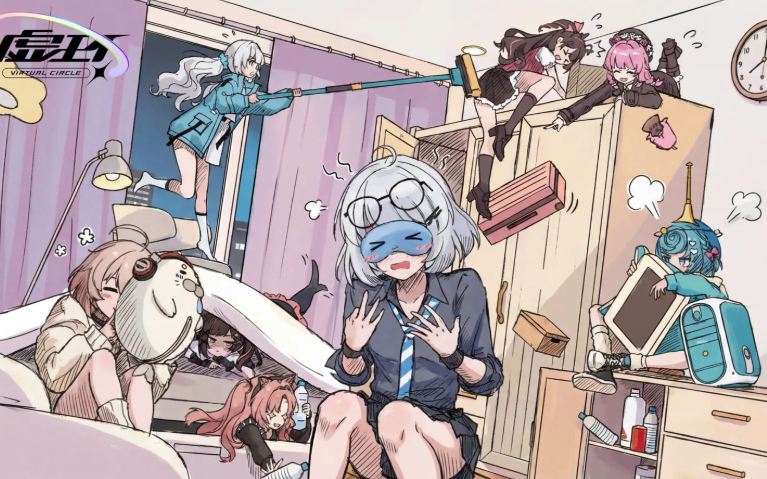
1. Intro: What is *Virtual Circle*? A New-Gen Mobile Game Combining V-Tuber Culture, Idols, and Tactics
2. *Virtual Circle*: Basic Info & Platforms
Let’s start with the basics. *Virtual Circle* is currently positioned as a tactical training game centered on VTubers. Gamebase and Nox Taiwan both note that the game is developed by CDD, has a VTuber theme, combines tactics and training, and released a ~21-minute gameplay demo. GamerBraves classifies it as a strategy training game, adding that the game’s focus is V-tuber community-oriented combat sequences and team building. In other words, this isn’t a lazy idol idle game that just sells character art—it’s a project that’s built around tactics and training from the get-go.
As for platforms, I gotta keep this cautious. From public reports and test info players have access to, we can confirm that the first round of testing and initial info are focused on Android. Yahoo Kimo Games’ January 2026 report directly states that the first test after the delay is scheduled from March 24 to March 30, 2026, and it’s still on Android. On the flip side, Nox and some overseas media group it as a mobile game or emulator game, so the safest take right now is: mobile is the core platform, PC is at least something you can check out via an emulator, but official iOS/native PC info isn’t fully confirmed like it is for fully released games. This is super common, especially before early testing is totally settled—platform stuff usually doesn’t all come out at once.
So if you’re asking me right now: “Is *Virtual Circle* a mobile game or PC game?” here’s my answer: Right now, you
Think of this as a VTuber-themed mobile game that's heavily focused on strategy and character training, with no plans to rule out expanding support for more platforms later on. This aligns perfectly with all the currently available info and avoids making judgment calls that could be off-base.
B. V-Community Virtual Idol Brawl + Strategy-Training Gameplay Introduction
From the official materials released so far, the core logic of Void Ring can be summed up in one sentence: Take VTubers who've already amassed huge popularity in the real world, send them to a parallel world where they can fight, compete, and alter fate's branches, then it's your job as the team leader to build a squad, train the characters, and plan all the battles. Gamebase and Nox's descriptions overlap a lot—both mention that these girls are super popular VTubers in the real world, but in the parallel world called the Void Ring, they transform into battle idols and become active. GamerBraves adds further that the game's core gameplay is about building a team, designing lineups, and traveling through various "hypothetical" timelines to face off against legendary idols from different factions.
What makes this design extra fun is that it's far more than just "V-characters fighting" on the surface. At its core, it's about exploring: What kind of chemistry will spark when these characters, who originally built their popularity through live streams, projects, meme-making, singing, and fan interactions, are thrown into a world that's turned into a competitive, stage-like place with tangled fate branches? The key to your play isn't just the characters' stats—you also need to consider their relationships, the team's exclusive stories, timeline differences, fan-oriented Easter eggs and memes, and even details like "what kind of drama will happen if two specific characters team up to fight." That's why Void Ring doesn't look like a pure chess-based battle game, nor a pure idol management game—it's clearly trying to create an experience where community culture is tightly tied to gameplay.
C. Why It's a Hybrid of "Uma Musume-style Training" + "VTuber Competitions"
Many people instinctively associate Void Ring with works like Uma Musume at first glance, and this isn't a random comparison at all. Yahoo Kimo Games clearly stated in its delayed announcement report that Void Ring's core gameplay is "a training mode similar to Uma Musume plus card battles"; this statement might not cover everything, but at least it lets players quickly grasp the direction of play: It's not a game where you only win by manual control, nor a stats-based game where you auto-clear stages by pulling high-star characters from gacha. Instead, it's a game that requires long-term management, character training, resource allocation, and team strategy planning.
However, Void Ring definitely isn't just copying the Uma Musume template word for word. Its biggest difference is that it replaces the "competition objects" from horse racing, race schedules, and stat performances with VTuber team formation and idol battle performances. GamerBraves mentions that the game emphasizes high-impact battle scenes and team combinations, while Gamebase and Nox also pointed out this gameplay layer of 3vs3 or small team matches. So to sum it up in one sentence: Void Ring takes in the "training rhythm and character development logic" but wraps it in a more over-the-top V-community-focused competitive world centered on idol battles.
II. Worldview & Story Setting: Parallel Timelines and VFC Super League
A. "Void Ring" Timeline & Parallel World Setting, Urban Fantasy Background
From the publicly available info so far, "Void Ring" isn't just the game title—it's also the core concept of a parallel world. Gamebase, Nox, and GamerBraves all agree highly: VTubers who've already gained huge popularity and recognition in the real world, after arriving at the parallel world called "Void Ring," will be redefined as a new identity—battle idols. This means the core worldview of Void Ring isn't the typical fantasy continent adventure model, but rather a mixed narrative style closer to urban fantasy + parallel plane competition + idol chronicle.
One thing I personally love about this setting is that it gives dual meaning to "the VTuber themselves and their character image" in the game. They might be familiar streamers, singing event experts, project managers, or meme masters that players know in the real world, but in the Void Ring world, they become team members, league players, and key characters in the timeline. This dual identity is actually perfect for story design, because it naturally has a sense of contrast, and can create many fan-oriented Easter eggs. For players, this kind of worldview is definitely more memorable than typical works where "idols go to fight monsters."
B. VFC Super League, The Story Focus of Virtual Idol Battle Tournament
Among the publicly available info, VFC stands for Virtual Fighting Championship, which can be understood as the core stage of the entire worldview. GamerBraves summarizes the entire battle structure as "opposing factions," "legendary idols," and "battles in different timelines"; Gamebase emphasizes that this is where battle idols are active,
The setting of this story is all about competition. That means the main storyline of *Void Ring* will likely not follow the classic RPG trope of "starting in a village and fighting your way to the demon king's castle"—instead, it will revolve around leagues, teams, rival relationships, timelines, and stage competitions.
For gamers, there's a huge upside to *Void Ring*'s story structure—characters don't need to be forced into generic relationships. They naturally develop conflicts and bonds simply from being part of leagues, teams, rivals, teammates, bench players, or legendary idols. That means if the writing is solid, players will easily get that immersive feeling of "pushing the main story while binging a hot-blooded sports anime". Compared to the usual "world is ending, save the world" trope, this structure fits the VTuber community perfectly because it balances character charm and competitive storytelling seamlessly.
C. Main Story Chapters, Key Events, and Timeline Overview
When it comes to main story chapters, key events, and timelines, we're still in the "keeping it real" phase right now. After all, *Void Ring* hasn't hit full public testing or official launch yet, so the full chapter list, specific events for each chapter, and official timeline details aren't laid out like they are for big, released games. But there are a few concrete bits of info to go off: GamerBraves noted that the gameplay will jump between different timelines, facing all kinds of "what if" scenarios; Gamebase also mentioned that parts of the story mode were shown in a 21-minute gameplay demo. That means timelines aren't some tiny afterthought—they'll likely directly shape how the main story is structured and how characters are split into teams.
To sum up what we know so far about *Void Ring*'s main story, here's my take: You won't be following a fixed path of fate—instead, you'll get to see how the story changes depending on different team lineups, different league outcomes, and different character relationships. This design fits VTuber content so well because fans love debating hypothetical stuff like "what if X and Y were on the same team?" or "what if my favorite idol didn't win the championship?"—*Void Ring* looks like it's turning those fan-favorite discussions into the core of its world.
III. Roster & VTuber Lineup: Full Battle Idol Index
A. Popular V-Character Profiles: Xing Chong, Yuna Tohiru, Airi Higashi, and More
The character roster is definitely one of *Void Ring*'s biggest draws. According to public info from various Taiwanese media and game news outlets, this game's characters are actually adapted from real, super popular VTubers/VUPs. A 2024 Yahoo! Kimo Games report summary mentions that characters like Tian Dou Fayafa, Nanami, Shizuku Ruru, and Shan Bao show up in the first PV, and the article notes that well-known VTuber names like Yuna Tohiru, Airi Higashi, and Haru Shirokami are all in related discussions; Gamebase and Nox have specifically mentioned that at least Shizuku Lulu, Nanami, and other characters will appear in the game. In other words, *Void Ring* isn't making original characters that "look like VTubers"—it's jumping straight into the actual, popular VTuber ecosystem.
The most obvious effect of this approach is that characters will be super recognizable. Take Yuna Tohiru, for example—she already has a huge personality, unique catchphrases, and shared memories with her fanbase. Once she's in the game's story, players don't have to get to know her from scratch at all. They'll just pick up on her speech style, the way she roasts people, her team choices, and immediately think, "Ah, that's the familiar vibe I love!" That character-driven feel is actually *Void Ring*'s biggest chance to stand out in the market—after all, unlike pure original games, it doesn't need to build up player connection to characters from zero.
B. Teams & Roles: Tian Dou, Nanami, Shizuku Ruru, Shan Bao, and More
From what we've seen in official footage and media info, Tian Dou Fayafa, Nanami, Shizuku Ruru, and Shan Bao are pretty much the first set of characters that'll stick with players in *Void Ring*'s early phase. The Yahoo! Kimo Games summary says these four are the main characters in the first PV; Gamebase and Nox add that at least Nanami and Shizuku Lulu were key characters in the 21-minute gameplay demo. That means no matter if you hopped on board from the first PV or started with the 21-minute gameplay clip, these names are basically unavoidable.
As for character roles, the official team hasn't revealed final stats or positions for anyone yet—but based on the demo footage and the game's overall vibe, we can guess that teams will have clear roles like Damage Dealer, Support, Frontline, and Utility. This isn't just a random guess, because official info has repeatedly emphasized that this is a strategy-focused fighting game that cares a lot about team building: you'll need to make battle squads, line up your team, and match different opponents across various timelines. In other words, even if character charm is the big draw for getting players in the door, whether they'll stick around long-term will still depend on the characters
Is there a clear in-team role definition? From a player’s perspective, I actually hope the game does a better job of clarifying character roles—this makes team building way more fun, instead of ending up with a situation where “everyone can fight, but no one stands out.”
C. VTuber Crossover Characters, V-Tubers Community Memes, and Fan-focused Easter Eggs Compilation
Another innate advantage of *Void Ring* is that it’s almost guaranteed to be packed with all kinds of V-Tuber community memes. You don’t even need to wait until the official release to notice this—just looking at its current theme makes it pretty obvious. Since many of its characters originate from VTubers that already have established fan cultures, unique speech quirks, and shared community memories, even if the main storyline is serious and the league content is intense, the game will almost never fully ditch meme culture. This stuff might just feel funny to outsiders, but for people in the V-Tuber community, it’ll hit like “that’s me!”
They’re here for exactly that.
Actually, what I’m most looking forward to isn’t that *Void Ring* will pair up with a bunch of celebrity crossovers—it’s whether the existing characters can integrate V-Tuber memes and culture naturally enough. After all, if a game like this uses memes too awkwardly, it’ll feel like it’s just regurgitating memes; but if they get the balance right, it’ll be a design that makes fans smile knowingly, and won’t alienate players outside the community at all. Getting this right could make or break whether *Void Ring* goes from a temporary viral hit to a truly long-running, popular title.
IV. Core Gameplay Systems: Tactical Combat and Team Building
A. Turn-based Tactical Combat Rules, Dynamic Battle Animations, and Skill Mechanics
From what’s been confirmed publicly so far, *Void Ring* isn’t purely an auto-idle game, nor is it just a simple action slash-and-hack title. Its core is tactical squad formation + dynamic battle animations. GamerBraves put it bluntly: its gameplay focus is on building custom squads and engaging in strategic battles across different timelines. Gamebase and Nox mention the game will also have 3v3 and squad match-up PvP modes. Putting this all together, we can at least tell it’s going for a system that requires careful team planning while also delivering flashy battle sequences.
From a player’s perspective, the most important thing for this kind of system isn’t how flashy it looks—it’s that it’s both visually impressive *and* has enough tactical depth in its gameplay. If the only thing in the revealed gameplay footage is non-stop flashy animations, people will get bored really fast. But if there’s actual strategic space to work with, like skill timing, character positioning, squad setup order, support windows, and burst phases, then it’s going to be way more fun and long-lasting than the average idol-themed game. That’s why what I’m looking forward to most about *Void Ring* isn’t how cool its moves look—it’s whether it can pull off that vibe where it feels like you’re watching a V-Tuber concert, but actually playing it feels like pulling off a precision strategy game.
B. Team Composition, Squad Synergy, and Character Roles
Since *Void Ring* keeps emphasizing the importance of squads and team composition, that means it shouldn’t be a game where a single OP (overpowered) character can carry everything. GamerBraves talked about building custom squads and crafting your own unique team; Gamebase and Nox mention squad match-up PvP modes. That means when you play, you’ll definitely have to think about stuff like “who pairs best with whom, who’s for early game, who’s for supporting, and who’s the core of the team.”
So it’s only natural that I think there are at least three main character roles in the game: DPS (damage dealers), supports, and frontline survival/control units. Of course, they might not use the most traditional terms like “tank,” “healer,” or “DPS”—but if a tactical game focused on team composition doesn’t have clear role distinctions, then the squad system is just surface level. From what’s been revealed about the game so far, I actually think *Void Ring* has a great chance of combining the characters’ “stage roles” and “combat roles” together—like some characters being natural Ace vocalists, others being behind-the-scenes controllers, and some handling the rhythm flow. That way, the gameplay ties directly into the characters’ charm.
C. Memory Cards, Core Boxes, Equipment, and Power Progression Paths
Right now, there’s no full official announcement for this part, so I won’t say any system is 100% confirmed. But based on the leaked outlines and the common structure of modern mobile gacha games, *Void Ring* will probably use a multi-layered progression logic: base character + something like memory cards, core boxes, or equipment modules to support long-term growth. After all, as a tactical gacha game, it can’t just rely on simple character leveling to keep players engaged—it’ll almost definitely have sub-progression systems that change skills, stats, and squad effectiveness.
What players need to care about isn’t whether these systems exist—it’s whether they’ll be too clunky or overwhelming. If a progression game makes every part of grinding into a “must farm” “must pull” “must max out,” it’ll just scare off players who want to watch VTuber interactions in the first place. Personally, I hope *Void Ring
The only path forward is to keep character building as the core, with equipment and cards only meant to reinforce your team's style—not drown players in a sea of menus. That's how it can find a sweet spot between VTuber community players and strategy gamers.
V. Character Building & Daily Life: Idol Training & Lifestyle System
A. Idol Training System: Stat Boosts, Skill Enhancement, and Affection Levels
Since many are comparing *Virtual Ring* to games like Uma Musume or other idol raising titles, its character building isn't just the usual "level up + break limit" grind. As Yahoo reports, the game has actual character growth vibes—not just mindless combat and map pushing. Plus, as a VTuber-themed idol game, each character's personal charm and development journey are definitely core to the experience. That means *Virtual Ring* will likely make players invest time into boosting stats, strengthening skills, and building bonds, not just stopping at pulling a character.
I'm actually super curious how *Virtual Ring* will handle "affection levels." For VTuber-themed games, if affection is just giving gifts for a tiny bar, that's such a waste. But if it's more like real interactions between fans and their favorite VTubers, emotional bonds between your team, stage sync moments, and even unlocks for inside VTuber memes? That would be so immersive. Players don't just want to grind numbers,
Let's be real—the most appealing part of *Virtual Ring* should be growing alongside your characters: from just popular VTubers to actual VFC battle idols. If they nail that whole journey, that's definitely the core thing that hooks players and keeps them coming back.
B. Room Decor, Social Interactions, Daily Quests, and Affection Events
Right now, devs haven't revealed all the lifestyle system details, but since the game's core is idol and character building, daily gameplay won't just be filler between fights—it's key to showing off each character's charm. For a VTuber-themed game like *Virtual Ring*, it's perfect for designing member rooms, team bases, daily interactions, off-day stories, and small side life moments. If characters only ever appear on battle stages, their charm is probably only half as strong, y'know?
From a player's perspective, I really hope the room or interaction system adds little details that make VTuber fans smile—like pro streaming gear, hidden easter eggs, chat room-style UI, or small clips of characters hanging out off-camera. These might seem unrelated to the main story, but they're exactly what makes players log in every day just to check on their characters and see daily events. The best idol games don't hold players with super long main stories—they use these small, everyday moments that build feelings fast.
C. Character Building Resources: Stages, Events, Shop, and Pre-Registration Rewards
Right now, the game's still in the testing recruitment phase, and the full economy system for the official version isn't out yet—so I won't guess randomly about shop prices or pre-reg rewards. One thing's for sure: since it's still in testing, the way character building resources are split will definitely get adjusted later. As Yahoo reports, one reason for the delay was a ton of negative feedback on gameplay, art, and story from early access—so the dev team is still tweaking game system details.
So right now, I'd suggest players still on the fence to wait and see how the team optimizes things, instead of jumping to conclusions about the final gacha model. For a character building game still being adjusted, locking in all the gacha pressure, resource sources, and event pace too early is usually not healthy. From that perspective, *Virtual Ring* still has room to fix new player resources and long-term gameplay pacing—something that's definitely good for the upcoming open beta.
VI. Visuals, Voice Acting, and Hands-On Gameplay
A. 3D Models, Character Art Style, and Battle Effects
Just looking at visuals, the most eye-catching part of *Virtual Ring* is clearly the team's ambition to mix character art, stage vibes, and battle performances. Gamebase and Nox Taiwan site both noted that devs dropped a 21-minute long hands-on gameplay video—full of not just battle scenes, but also story mode content. Dropping a video that long? That alone shows the team's confident in their visual performance.
From a player's perspective, the first impression isn't that cobbled-together rough feeling—it's full of that "we really want this to look good" energy. Sure, we'll have to wait for the official version's optimization, but at least from the materials out now, the character models and battle effects are clearly designed to feel like serious idol battles, not just cheap chibi models. For a VTuber-themed game, that's super important—if the performance isn't on point, fans won't buy it.
B. Stream-Style UI, VTuber Meme Voice Acting, and Immersive Design
*Virtual Ring* wants to...
To really win over V-Tuber fans, it’s not enough to just have famous characters—the game’s UI interface, voice acting, camera work, and quest writing all need to be packed with that authentic "V-Tuber content" vibe. While the full UI menu hasn’t been released yet, based on the setting and what media has shared, this game clearly doesn’t treat VTubers like just regular character skins—instead, it’s built its entire world around V-Tuber culture. Because of that, capturing the feel of live streams, the vibe of chat rooms, the interaction between viewers, and even the characters’ signature phrases becomes super important.
If all these details are done right, Void Ring delivers a really unique kind of immersion: you’re not just playing a casual mobile game with VTuber-like characters—you’re actually stepping into a competitive world built entirely by V-Tuber culture. This kind of immersion might not hit the same for people who don’t follow the V-Tuber scene, but for players who already care about VTubers? It’s going to be incredibly appealing.
C. Breakdown of PV1/PV2 and the 21-Minute Gameplay Showcase
Right now, the most notable released materials are definitely the debut PV, the later PVs, and that 21-minute gameplay demo. Gamebase and Taiwan’s Nox both covered the "21-minute gameplay showcase" as a big milestone, and GamerBraves called it an "extended gameplay showcase"—highlighting that this is the most complete look at actual gameplay we’ve gotten so far. This means the devs aren’t just making a concept trailer; they actually want players to get a real sense of what the game is about ahead of time.
For me, the best parts aren’t just the cool combat animations—what matters more is the in-game moments that show you what you’ll actually be doing in this game long-term. If the demo includes combat, story progression, character debut scenes, team setup interfaces, and daily interactions, that means the game has enough content to keep players busy for a long time.
This shows that Void Ring isn’t designed to be a short, flashy experience—they’re actually trying to build a full, recurring content loop. For a new game that hasn’t started its official public beta yet, this kind of design is way more likely to keep players checking in than just releasing a few pretty character artworks.
VII. New Player Guide: Full Process from Pre-Registration to First Gacha Roll
A. Pre-Registration & Test Updates: Current Status of Open Recruitment
Let’s get this clear first: even though the outline mentions pre-registration on TapTap and Bilibili, since we’re excluding information for Mainland China, I won’t walk you through step-by-step how to make accounts or pre-register on those platforms. The info I have from non-Mainland sources is more reliable: reports from Gamebase and Taiwan’s Nox back in August 2025 said the devs originally planned to launch the China closed beta in January 2026. Then a January 2026 report from Yahoo Kimo Games mentioned that the first test was delayed to March 24–30, 2026, and only Android devices were supported. Basically, Void Ring has now entered the phase before and after its first closed beta, and the test schedule has indeed been delayed and adjusted midway.
If you’re based in Taiwan and don’t want to use Mainland Chinese platforms, my best practical advice is: follow the official game videos and related info from local Taiwanese media first, and wait for more details on a larger-scale test or the official public beta before jumping in. The current test access is clearly geared toward the Chinese region’s ecosystem, and there’s no low-barrier, full path set up for overseas players yet.
B. Must-Dos for New Players: First Gacha Pull & Early Team Building
Void Ring hasn’t officially revealed the full first-gacha rules and pool mechanics yet, so I won’t guess which character is definitely top-tier (T0). But based on the game’s theme and gameplay direction, here’s a tip that works for new games and fits Void Ring perfectly: If this game is really a team-building strategy-focused RPG, new players shouldn’t just go for popular characters—they need to make sure each one has a key role in the team. The devs have emphasized multiple times that this game is all about team formation and timeline-based combat, so the safest early move is to put together a team that can get you through the main story, instead of dumping all your resources on one super popular character.
If I had to suggest an early game plan, I’d say focus on three things:
1. Figure out who your main damage dealer is early on;
2. Keep at least one reliable support or utility character;
3. Don’t ignore your team’s overall strength just because you like a character.
This sounds basic, but for a game like Void Ring where character popularity can skew judgments, it’s extra important. You’ll probably want to stuff all your favorite characters into your team, but can you actually make that team work?
Ultimately, whether you can push stages smoothly boils down to how viable your team composition is.
C. Resource Allocation & Early Power Growth for Free-to-Play / Low-Spend Players
For F2P and low-spend players, one of my biggest concerns is that you might assume this game requires massive whale spending to get strong characters, before even grasping its actual economy system. Based on official info so far, the game is still in the adjustment phase—one of the reasons for the delay is the dev team’s dissatisfaction with the quality of game content. That means growth pacing, resource distribution methods, and overall player experience are all being tweaked. The best strategy isn’t to jump into spending tons right away, but wait until beta testing or early release to observe the game’s resource distribution, character progression depth, and future character needs, then decide if you want to invest resources.
If this game leans towards a raising sim genre, my classic advice for F2P and low-spend players still holds: build up a main team first, clear the main story, lock into the daily resource loop, then decide if you want to expand to a second team or chase limited characters. Don’t forget—one of 《Void Ring》’s selling points is that many characters already have solid fanbases, so you’re more likely than in typical idol games to spread your resources too thin just because “I love all these characters.” Establishing good resource allocation habits early on is way more important than mindlessly following rankings.
VIII. Advanced Tactics & Team Compositions
A. Core Teams by Attribute / Gameplay: Examples of Main DPS + Support + Frontline Setups
Since the game isn’t officially out yet and there’s no full character stat pool, I won’t give a rigid “must bring this, that’s replaceable” list. But if we look at this strictly as a strategy team game, the most logical advanced team setup will likely follow a core formula: one main DPS, paired with 1-2 functional support characters, plus a frontline or control character to keep the pace steady. This isn’t just standard for all strategy raising games—it’s also the natural outcome of official info about “building custom teams” and team formation.
I even think that if 《Void Ring》 is creative enough, it’ll add strong “fan-focused team-up bonuses” for certain characters. For example, characters often discussed or compared in the V-tuber community—if they’re on the same team, there’ll be extra events, interaction voice lines, or tactical synergies. That would make team formation more than just a stat calculation; it’d add fun cultural depth. If done well, this design will make 《Void Ring》 more charming than other idol raising games.
B. Meta Team Ideas for PVE Stage Pushing / Event Stages / High-Difficulty Challenges
From my experience with these types of games, 《Void Ring》 will definitely have three distinct meta team ideas in the future. The first is a reliable stage-pushing team, balanced for both damage and tankiness, perfect for main story and daily tasks. The second is an event efficiency team, focused on fast clear speed and smooth battle flow. The third is a high-difficulty counter team, prioritizing crowd control, sustain, and skill rotation synergy. Even though official info hasn’t detailed these playstyles yet, since the game is a strategy team title with battles across different timelines, difficulty tiers and playstyle differences are basically guaranteed.
Players serious about 《Void Ring》 should prepare themselves: this won’t be the type where pulling the strongest character lets you breeze through everything. You’ll definitely need to adjust your team composition constantly later on. For strategy game lovers, this is good news since the game will have great depth; but for players who just want to collect characters and have a casual experience, it’ll depend on how the full release balances difficulty and casual-friendliness.
C. VFC Competitive Mode, Ranked Team Building & Countering Opponents
Since the game’s lore core is the VFC Premier League, I’m almost certain the full version will have a competitive, ranked mode focused on player vs. player battles. That doesn’t mean it’ll be purely PVP, but based on the league’s story setting, there will definitely be gameplay that lets you experience “team battles” rather than just pushing the story. GamerBraves also clearly mentioned the game will pit you against legendary idols from different factions—this is basically setting the stage for the competitive mode.
If leagues or ranked matches launch later, team building will get way more in-depth. It won’t be about your favorite character anymore; it’ll be about adjusting speed based on your opponent, reading the environment, and timing crowd control well. This will be a key turning point for 《Void Ring》: will it lean towards fan-focused entertainment, or become a competitive strategy game where you can truly study the environment and break the meta. Based on the game style we’ve seen so far, I think the dev team wants to balance both, but how well that balance works will depend on player feedback from future tests.
IX. Test, First Close Beta, and Global Open Beta Information
A. How to Obtain First Beta & Internal Beta Access, and Timeline
Right now, the two most talked-about milestones for Void Ring's testing schedule are: the release of a 21-minute gameplay demo around August 2025, alongside the official announcement of a January 2026 beta test plan, and the January 2026 announcement that the first beta was delayed, rescheduled for an Android-exclusive test from March 24 to March 30, 2026. The first piece of info comes from reports on Gamebase and the Taiwanese version of Nox, while the second was an update Yahoo!奇摩 Games later followed up on. In other words, the rumors about the first beta aren't groundless—they just initially announced an earlier time window, but pushed it back due to quality issues later on.
This actually reflects the current state of the development team well: they're ambitious and willing to show players the progress of their work, but they chose to fix quality issues properly before letting players actually experience the game. From a player's perspective, delays like this might be a bummer, but it's way better than rushing out a bug-ridden version.
B. "Revival Round", Test Server Launch Time, & Key Player Feedback
When it comes to player feedback, Yahoo!奇摩 Games' report lays it out clearly: after the team invited VTubers to do an early test, they received a ton of negative feedback about gameplay, art, and story—even with specific issues revealed, like character freezes mid-battle, animation glitches, game crashes, flickering sprites, loading lags, skill value abnormalities, bugs that skip story sequences, disconnections, etc. These are all pretty serious issues, and they just go to show that Void Ring is far from a perfect game that can be hyped up casually right now.
On the flip side, this attitude of being willing to openly admit the game isn't perfect yet makes the delay easier to understand. As a player, what I care more about is whether these issues will be fixed properly later—at least to the point where it plays smoothly and comfortably. Because no matter how appealing the theme is, if the technical foundation is too weak, the game will ultimately be a flash in the pan. Right now, the most important thing for Void Ring isn't releasing more concept content, but nailing the reputation of its first test round.
C. Expected Open Beta Timing, Server Plans, & Operational Direction Outlook
This part can't be finalized right now. Because so far, the only non-China Mainland sources we can find only confirm the time window after the first beta delay, but the official open beta date, global/traditional Chinese/multi-server plans, and long-term operational regions are all still not finalized. Gamebase and Nox initially wrote that a January 2026 beta test for the Chinese region was planned, and Yahoo later added the delay news—this means there's still room for changes to the current schedule.
So my take is: if the player feedback from the first beta is rich enough, and the development team makes big enough fixes, then Void Ring's official version should turn out pretty well. After all, right now the team seems willing to listen to players' feedback and prioritize fixing quality issues—something super important for a strategy game. There should still be at least one round of optimization and polishing before a more complete official version launches. For players, instead of rushing to ask "when can I play it right away", we should care more about whether it can improve the first impression it's making now enough to keep us invested long-term.
V-Tuber Circle Culture & Fan-Focused Highlights
A. Void Ring & VTuber/VUP Cultural Context: V-Circle Memes, In-Game Easter Eggs, & Collaboration Potential
What makes Void Ring most different from others has never been "adding virtual idols"—it's that it dives straight into the V-Tuber/VUP fan ecosystem itself. It didn't create a bunch of original characters that look like VTubers, but instead brought in real-world characters that already have existing fan bases, unique topic cultures, and insider knowledge of V-circle memes. This gives it a one-of-a-kind advantage that other games can barely replicate: players' existing memories and emotional connections to these characters.
As long as players come into the game with that familiar memory, many small details inside will become extra fun. A line of dialogue in the game, an action, a scene of two characters teaming up, even UI elements that look super similar to live stream chat rooms—all of these can instantly make players think "this team totally gets the V-circle", creating that special resonance. The strength of this resonance will directly determine whether Void Ring is just a flash-in-the-pan trending topic, or a real representative work that can integrate into fan culture.
B. Differences & Advantages Compared to Umamusume & Other Idol Gacha Games
Void Ring gets compared to Umamusume a lot, but its real advantage isn't in being similar to it—it's in being different. Umamusume is based on...
It relies on esports culture, character development, and nurturing loops. If *Void Ring* hits the mark, it’ll stand on existing VTuber culture + esports team worldview + pre-planned timeline-driven storytelling. With all three elements working together, it can deliver the emotional investment of an idol franchise, plus the team-building depth of a strategy game, plus the natural community buzz that comes with VTuber content.
This is a rare set of benefits very few games can tap into at once. Most idol sims need time post-launch to make players grow attached to characters, but *Void Ring* has a shot to lean on existing fanbases for some characters right out the gate. Flip side? That brings bigger risks—fans will spot instantly if it’s good or not. This genre’s never low-risk.
C. Fan-Focused Gameplay: Chasing Your Favorite, Cheering, Streamer Reactions, and the Potential for a Fan-Made Ecosystem
If *Void Ring*’s official release adds cheering, favorite character tracking, in-game interactions, and team bonds, it’ll likely spark a huge secondary ecosystem: Fans won’t just play a game—they’ll use it to keep their connection to their "main" character alive. This feels similar to loving specific characters in gacha games, but not exactly the same—many of these characters already exist and interact with fans in other spaces.
This trait easily fuels fan content, streamer reaction videos, memes, edits, matchup talks, and even fun fan interactions like "Should my main and yours be on the same team?" As long as devs don’t kill this cultural vibe with bad updates, I think *Void Ring* has way more fan content and community potential than your average new gacha.
XI. Player Reviews & Common Questions (FAQ)
A. Taiwan Players’ First Impressions: Is It Fun? How Are the Graphics and Gameplay Feel?
If I sum up Taiwan players’ first thoughts on *Void Ring* right now, it’s: It’s getting tons of buzz, but everyone’s still on the fence. The fact that Taiwanese/Traditional Chinese news sites like Gamebase, Nox, and Yahoo are covering it shows how appealing the concept is. But Yahoo’s delay announcement also shows the flip side—players aren’t blindly hyping; they know there are still solid quality issues.
So if someone asks "Is it fun right now?" I won’t say yes or no outright. I’ll say: The most exciting part is the chemistry between the concept and its characters, but actual gameplay feel and long-term experience depend on how well devs optimize future tests. That’s more honest, closer to the real status quo.
B. Analysis of Gacha Spending Tendencies, Development Pressure, and Long-Term Playability
It’s way too early to call this. The game’s official economy model, gacha pool schedule, character development depth, and equipment importance haven’t been fully revealed. So saying for sure what spending requirements, grind, or pressure will be would be irresponsible. What’s clear: this is a strategy/development type, not a single-player you can beat in a week and delete. So long-term player retention will depend on daily loops and resource design.
From my experience with these games, the real key isn’t spending—it’s whether players can comfortably build a character team, progress at their own pace, and feel development rewards even without spending. If *Void Ring* pulls that off, it can win over both VTuber fans and strategy players. Flip side: tying character popularity to a high-pressure gacha will make hype come fast and die fast.
C. Common Questions: Platform Differences, Language Support, Future Update Predictions
For platforms, the only confirmed thing right now is testing/launch plans focus on Android. Not much news on the PC version yet.
You can guess a bit from emulator info, but the iOS version and full international server details aren’t finalized. For language support, most official info targets Chinese region communities, so we can’t promise Traditional Chinese or global versions yet. For updates, devs’ top priority shouldn’t be adding new characters—it should be fixing stability, performance, and gameplay bugs they already showed. That’s probably why the delay happened anyway.
If you’re thinking about following it, my advice is simple: Keep an eye on it, but don’t go all in like it’s a guaranteed hit. You want to see if they turn this hype concept into a fun game, not just rely on the concept to win early.
To sum up, *Void Ring* stands out right out the gate not just because it’s "a gacha with VTubers"—it’s that it
It’s actually attempting something a lot of people don’t dare take seriously: shoving VTuber culture, idol competition, team strategy, parallel-world storytelling, and fan-centric character charm all into one single game. From all the info revealed so far, this direction isn’t a gimmick – the 21-minute gameplay demo, parallel-world setting, VFC League, team compositions, and the already teased VTuber roster all line up perfectly to hit that goal.
But I’m not gonna force myself to gush that it’s fully stable right now. Yahoo’s delay report spelled it out super clearly: the game’s biggest problem right now isn’t that its theme is unappealing, but whether its quality can live up to its ambition. Early access testers have already brought up issues with gameplay, art, story, and tech – that means what it needs most isn’t more hype, but a real, thorough playtest and fixes that’ll actually make players happy.
So if you’re asking if "Virtual Ring" is worth keeping an eye on? My answer is: Absolutely worth it.
If you’re asking if you should blindly hype up "Virtual Ring" right now? My answer is: Hold off for now.
Treat it as a game that’s super distinct in its theme, has insanely buzzworthy characters, and an ambitious gameplay direction – but it’s still in the critical polish phase. That’s the most reasonable, accurate take on its current state.
What will really decide if "Virtual Ring" succeeds in the end might not be how many big-name VTubers they landed, or how flashy the PV is – it’s whether they can actually deliver on that most enticing promise: not just letting VTubers appear in the game, but making you want to spend a long time grinding through that VTuber community’s super league in that other world with them.