Super Robot Wars DD Beginner's Guide – All You Need to Know About T0 First-Pull Units & Version
If you’re the kind of person who gets hyped just seeing *Mobile Suit Gundam*, *Getter Robo*, *Mazinger*, and *GaoGaiGar* all together, then Super Robot Wars DD is basically a mobile game you can’t skip. It’s not just a port of the classic SRW series to phones—instead, it takes the series’ signature strategy RPG core, cross-series storylines, and flashy battle sequences, and reworks them into something perfect for playing in short bursts. The official positioning is still clear today: this is a free-to-play, partially gacha-based mobile simulation RPG that emphasizes being playable in short sessions, with an auto-battle feature, while still keeping the series’ signature battle flair and strategic depth.
As of early April 2026, SRW DD is already in its 6.5th anniversary period—both the Japanese and worldwide Google Play store pages explicitly mark this. Between February and March 2026, the official ran the “6.5th Anniversary Winter Mission & Gacha Festival” event, where you could redeem limited mission tickets for gacha medals, special gacha tickets, character upgrade materials, and regular tickets. This means the game is no longer in the early days where everyone was still figuring things out; now there are tons of systems, mechs, and long-term character/unit progression lines, plus way more generous benefits and anniversary resources than in the game’s early days.
I. Opening: SRW DD New Player Guide & Current Version Overview
A. Basic Introduction to Super Robot Wars DD / SRWDD
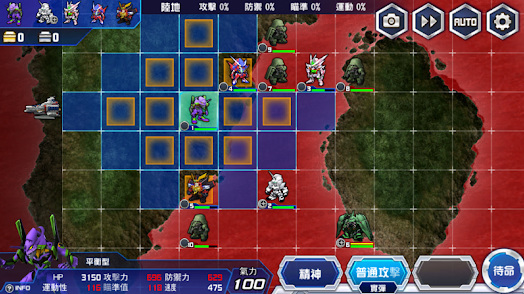
Super Robot Wars DD is a mobile simulation RPG, and its official About page puts it plainly: it focuses on strategic gameplay on maps, eye-catching battle animations, and fun experiences even when you have limited time. That line really sums up DD’s core vibe. It keeps the SRW series’ cross-mech roster, flashy attack animations, and grid-based strategy RPG foundation, but makes the whole flow more fragmented than console SRW games—perfect for logging in daily and playing in small chunks.
What’s also important is that DD’s battle rhythm is totally different from classic SRW games. The official System page clearly states that it doesn’t use the traditional turn-based system where your entire team moves first, then the enemy’s turn—instead, actions are ordered by unit speed. This might look like a small change, but it massively impacts how the game feels to play in real battles: mechs with high speed, abilities that let them act faster, or intercept first are often way more powerful than units with just high raw stats in DD. That’s why so many of the meta’s top-tier (T0) units right now have high speed, multiple attack chances, or map-control/intercept abilities.
Also, DD’s unit progression isn’t just about the mechs themselves. The official page says every unit can equip “unit parts” (what everyone calls mech parts or unit parts); equipping them not only makes the unit stronger, but also unlocks special attacks, and in some cases, even support character battle animations. From this, you can see that DD’s gacha isn’t for pulling full characters—instead, you’re pulling core parts and abilities for mechs. You might love a specific mech, but if you don’t get the right SSR attack parts, it’s going to be really hard to make it work in battle.
B. Differences Between Taiwan Server, Japanese Server, Worldwide Server & Current Version Highlights
First, a common mistake people make: the only official, clearly distinguishable main versions right now are the Japanese and worldwide store builds, not a separate official Taiwan server system. On Google Play, you can see two package names: com.bandainamcoent.srwdd_jp and com.bandainamcoent.srwdd_ww, both marked with the 6.5th anniversary; on App Store, the main entry is based on the Japan region page. This means what players call the “Taiwan server” or “international server” right now are basically the Japanese and worldwide versions when it comes to downloading the game.
From experience, the Japanese server’s perks are that news comes out first, there’s way more community content, and guides/discussions are the most complete. The worldwide server’s perks are that downloading and payment processes are more straightforward for some players. But no matter which server you play on, the core content on the official About, System, and Character pages is exactly the same: same gameplay, same cross-series mech roster, same core systems. The real differences are usually in-game shop details, event time zones, community content volume, and which guide communities you can easily access.
When it comes to the current version highlights, here are the most notable things and key points that many players should prioritize learning.
It's not just about one new mech dropping—the entire anniversary series of events is firing on all cylinders. On August 21, 2025, the official 6th anniversary of *Super Robot Wars DD* kicked off, with events including a 6th-anniversary SSR Selector, SSR Support Selector, max-level special skill upgrades, exclusive quests, and even a daily free 10-roll SSR gacha pull. By February 2026, the 6.5th-anniversary winter-themed quests went live, adding 100 D Crystals via the Web Store, return player login bonuses, and winter exchange vouchers. This shows the new player experience these days is way more welcoming than when the game first launched—Bandai Namco really knows how to use anniversary events to lower the barrier for old systems, making it way easier for new players to jump in.
C. The Timeline of the 6th, 6.5th Anniversaries & Future Updates
Let’s break down the 6th anniversary details first. According to Den Fami’s summary, the official 6th anniversary of *Super Robot Wars DD* launched on August 21, 2025. The big draw here was the SSR Selector event, which let players pick two mechs, pilots, plus a full set of SSR special attack parts—not to mention SSR Support Selectors, max special skill unlocks, special challenge quests, and a daily free 10-roll gacha guaranteeing an SSR. These types of events are huge for new and returning players, because they bridge that awkward gap where you have a bunch of mechs but lack core parts, so you won’t get stuck hoarding resources too hard in the early game.
Next up, the 6.5th-anniversary event plan. The winter quests that went live on February 18, 2026, included limited-time challenge quests, an exclusive exchange shop, special gacha tickets, and giveaway events. The official press release from the same timeframe also mentioned that 100 D Crystals would be added via the Web Store, and return player login bonuses would run through April 15, 2026—all to make it easier for returning players to catch up. This means the 6.5th anniversary isn’t just a meaningless "half-anniversary" gimmick; it’s a real milestone with free resources, challenge quests, and growth fixes—total great goodwill from the devs.
So how do you track future updates? I’d recommend keeping an eye on two core lines. First, the official website and Google Play Store game descriptions—those will have the latest anniversary progress, direction, and other public info. Second, official programs like *Super Robot Wars Series Info Bureau*. A Gamer trailer from August 2025 already teased that the main content was the latest 6th anniversary DD news, plus future plans. For long-term players, these programs are way more worth following than random forum leaks—they usually bring new chapters, new mechs, new systems, and the next few months’ operation schedules, so you can prep ahead of time.
II. Starting Pulls & Early Game Strategies
A. Recommended Starting Mechs & SSR Parts for New Players
First and foremost: When you do your starting pull in *Super Robot Wars DD*, you’re going for "SSR special attack parts" that will carry you through the early game—not just for a cool art look. According to the Altema starting pull tier list updated on April 1, 2026, the current SS-tier parts (meaning you can "graduate" right after getting them) are the Double Barrel Funnel (MAP) for Hi-Nu Gundam/Nightingale, the super powerful Super Dragon Rider (MAP), and the Palm Fiocina and Full Armament Combination Attack for Destiny Gundam. These parts are ranked SS not just for cool names, but because they cover attack range, speed, buffs/debuffs, penetration, survival, and versatility—perfect for blowing through early stages fast.
MAP-type weapons are really useful for new players in DD. The biggest pain points for newbies aren’t beating a single boss, but slow stage clears, limited movement, inconsistent damage, and falling behind the pace. Parts like Double Barrel Funnel, which have area suppression plus buff/debuff effects, work for main story, limited-time events, and clearing hordes of enemies—so it makes total sense that it’s SS-tier for starting pulls.
If you don’t get lucky with SS-tier parts, S-tier picks are still solid. The Altema S-tier starting pull list includes Courage One-Slash Style Secret Technique, Hammer: Hell and Heaven, Balamu・Kare, and High-Speed Shooter (MAP)—all strong parts to carry your early game. Their biggest shared perks are high single-target burst, plus movement bonuses, awakening skills, spirit growth, speed boosts, area suppression, or survival gains—perfect for DD’s current meta, so new players can jump in fast.
B. Popular Early Game Picks: Protagonist Units, GaoGaiGar, Thunder Five, Gundam Barbatos
The Protagonist Units, GaoGaiGar, Thunder Five, and Gundam Barbatos you mentioned—let’s break down each of these paths separately.
Starting with the Protagonist Unit. The original protagonist line in Super Robot Wars DD has been consistent in long-term performance. Original units often get advantages from main story progress and official additional content, and you can also see from version tier lists that their strength stays stable, making them highly worth investing in for the long run.
As for the leveled-up Dydalion Zaanm, it’s currently categorized in Altema’s S-tier top powerful units. It has a Spirits skill that triggers when HP conditions are met, combining self-preservation and frontline damage output—it’s definitely not just an original unit for nostalgia collection.
Moving on to the Bravery Series, the GaoGaiGar branch has always been super popular. Especially in this current version, Star GaoGaiGar stays firmly in S-tier on Altema’s unit rating list for a straightforward reason: it has high-damage special moves, a revival ability, extremely high survivability, plus a full set of ultimate skills and team support system. The corresponding part from the starter pull list, “Hammer Hell & Heaven”, also gets high marks. Simply put, if you already love the GaoGaiGar IP, using this unit not only satisfies your preference, but its actual strength also fully keeps up with the meta.
Also, regarding the Thunder Five you mentioned, if you want to highlight the vibe of a “super popular classic Super Robot early game starter”, I suggest replacing it with several units that are more often mentioned in official and guide circles now, such as Interstellar Bravery Series, Hi-ν Gundam, Destiny Gundam, Strike Freedom Gundam, Awaken Human No.1, Kuroyuri, and Mazinger Emperor G. From current community discussion heat and official participation lists, these are the units actually getting lots of attention now. If you insist on writing about a unit with obviously low hype right now, the article will look like outdated info.
As for Gundam Barbatos, that’s from the Iron-Blooded Orphans series. The official character list does include Mobile Suit Gundam: Iron-Blooded Orphans, but looking at Altema’s unit list from March 2026, the one that actually made it to the top ranks is the late-stage form Gundam Barbatos Lupus Rex, not just using “Gundam Barbatos” to cover all its performance. This also reflects a feature of DD: for units from the same work and piloted by the same character, the strength difference between different unit forms or corresponding parts is really big.
C. Starter Pulls, Initial Accounts, and Resource Allocation Advice
When it comes to starter pull efficiency, Altema’s current advice is practical: The ideal scenario is to get one SS-tier Special Move Part; a reasonable fallback is 2~3 S~A-tier parts. This standard is logical because DD’s SSR pool is already pretty large. If you’re trying to grind for three or four designated top-tier parts in a non-Pick Up environment, the time cost is usually super high.
As for whether to buy an initial account or spend time rerolling? My advice is: if you plan to play by yourself and manage the account long-term, then getting a usable SS-tier or double S-tier start is enough—don’t waste too much passion on starter pulls. The real place where you need to invest resources in DD is the training line; you won’t get a huge difference just from rerolling a few more days. On the other hand, if you’re too fixated on starter pulls, you’ll often get impatient before even finishing the main story or figuring out the resource system.
As for D-Crystal allocation, the early stage principle is simple: Prioritize pulling Special Move Parts that clearly change the pace of stage clearing; don’t try your luck on every single banner. Especially at times like anniversaries, half-anniversaries, free SSR, and Select events, the official releases way more benefits. If you pull randomly usually and have no crystals for anniversary events, that’ll be super disadvantageous.
III. Core Game Systems Newbies Must Know
A. What are SSR Unit Parts, Special Move Parts, and Support Parts?
The “gacha core” of DD is actually Unit Parts. The official SYSTEM page directly states: every unit can become stronger by equipping “Unit Parts”; after equipping, it may unlock Special Moves or trigger support character’s appearance cutscenes. You can simply understand this as two categories:
The first is Special Move Parts, which determine your main offensive loadout, attached effects, range, MAP combat power, Awaken ability, survival rate, Spirit gain, and other attributes.
The second is Support Parts, which mostly provide Buff effects, assist in battles, grant special passives, bring cheer cutscenes, or fill gaps in the team’s support system.
New players tend to make the mistake of treating every SSR unit as equally rare and worth prioritizing for training. That's not the case at all. In *Super Robot Wars DD*, the most valuable SSRs are often special parts that completely change a mech's playstyle and identity, or powerful support parts that work across different teams. If you get an SSR and just dump resources into it without checking if it's a core weapon or has key abilities, you'll probably regret it later.
B. Spirit Commands, Modification Systems, Character Leveling & Mech Training
*Super Robot Wars DD* has a somewhat scattered training system, but because of that, mastering the right order of operations can drastically boost your efficiency. Let's start with Spirit Commands. Spirit items are relatively rare in the game, and the community FAQ specifically notes that when trading for Spirit items, you should prioritize high-value limited-exchange items instead of wasting book codes randomly. That means Spirit training isn't as unstructured as it seems.
Don't dump all your resources into every character you want to use—prioritize those that will be your mainstays long-term, or characters you'll bring back repeatedly for hard stages.
The modification system works the same way. Early on, you might think "as long as it can survive and attack," but mid-to-late game, factors like modification level, part limit breaks, ability upgrades, and SSR+ ascensions will create huge gaps in power ceilings. The community FAQ clearly states: For SSR parts, using SR materials for the first three limit break stages is less wasteful, and switching to SSR materials for the fourth stage and beyond is more cost-effective. These details are easy to miss for new players, but they make a massive difference in how quickly you burn through resources.
Skill books for character training come from character usage quests, event rewards, shop exchanges, and training stage drops—this is important: don't "spread yourself too thin" too early by training every pilot you like. While *Super Robot Wars DD* has a large roster of characters, the only ones worth pouring resources into in the early-to-mid game are those that come with core parts, and whom you plan to use long-term.
C. AUTO, Turn-Based, Tactical SRPG & Strategy Chess Play Analysis
The official System page already outlines *Super Robot Wars DD*'s core mechanics: it's a mobile tactical SRPG where speed determines turn order, with Auto Battle support. New players need to understand this: Auto Battle (AUTO) is NOT the same as mindless AFK grinding—it's just a tool to save you from tapping, and you still need to solve your squad's strength issues yourself. If your team is messy, turning on AUTO will just get you wiped faster.
As for the turn-based aspect, *Super Robot Wars DD* is actually a mix of "speed bar mechanics plus chess-style positioning." You need to pay attention to details like range, positioning, speed, map control, spirit points, and boss action windows—it's not just lining up your team and watching the cutscene. Many highly-rated mechs are strong because of their high attack count, mobility, area-of-effect pressure, early turn priority, and useful awakening skills, not just raw damage multipliers. The sooner you get this, the less you'll waste resources on mechs with cool animations but no real combat use.
IV. Mech Rankings & T0 Recommendations
A. T0 Mechs, Strongest Units, SSR Ranking Overview
If you want to know the "meta picks" for Spring 2026, check the strongest unit list published by Altema in March 2026. This list places Strike Freedom Gundam, Destiny Gundam, 00 Raiser in the SS tier, with reasons that hold up: high speed, consistent hit rate, high attack count, great survival, and strong ability to engage in battles. These three units are, in a way, the perfect example of what's strong in *Super Robot Wars DD* right now: not just high damage, but also fast movement, lots of operational space, and good survivability.
S-tier units include Hi-ν Gundam, Nightingale, Star Getter Robo, Devilman, Didalion Zam, Mazinkaiser G, Awakened Human 1, Black Sarena, Burning Braven, etc. This tier can be understood as "not as universally broken as SS-tier, but still extremely valuable in their dedicated teams, specific stages, or when used by skilled players." Especially units like Hi-ν Gundam and Nightingale, which come with built-in Area of Effect (MAP) attacks, are super useful for both pushing through stages and farming.
But here's a real talk point for players: Ranking lists are just references, not absolute rules. *Super Robot Wars DD*'s combat power depends heavily on the parts you have, support characters, spirit points, modification level, and the needs of specific stages. Some A-tier units on the list will feel better in your team setup than some S-tier units. The flip side is also true—even if you get a T0 unit, if you don't have the right key parts or support, it won't automatically be strong in combat.
B. Practical Combat Value of Strongest Pilots & Support Characters
*Super Robot Wars DD* has strong mech presence, but combat performance is often determined by a combination of "pilot + parts + spirit points + support characters." Top-tier mechs like Strike Freedom, Destiny, and 00 Raiser are particularly powerful because their pilots blend seamlessly with their mechs' strengths.
To be strong, it’s not just the unit’s base stats that matter. The corresponding pilot’s speed, first-strike ability, hit rate, Spirit Points, and exclusive growth also need to hold up. Altema has mentioned multiple times in their rankings that some units have “well-developed Orbs” and that “a certain pilot’s Orb can reach 100% First Strike” – this proves that pilot builds in DD are never just for show.
Support pilots are more like the lubricant of your team. The official SYSTEM page even lists making good use of support pilots as one of the game’s key features; and the community FAQ notes that for support-type parts, instead of upgrading their abilities right away, you should first keep multiple copies and assign them to different units. This line is super crucial because it directly reflects the versatility of support parts: many support parts aren’t just for a specific team, but something you’ll want to rotate between different units across your account long-term.
C. How to Evaluate All Types of Weapons & High-DPS Units
When I evaluate units in DD, I usually look at five aspects.
First, check Speed, because speed is absolutely critical in this game.
Second,
When choosing a unit, first confirm whether it has a MAP (Area) skill – this is super noticeable in early to mid-game stages when clearing stages and farming resources.
Next, pay attention to its traits: can it Awaken, First Strike, Counter Cut-In, or Link Skills shorten cooldowns?
The fourth key point is Survivability – effects like Revive, Tenacity, Perfect Evasion, and HP recovery after taking damage are all important.
Fifth, observe the completeness of its supporting framework, including support pilots, other pilots, and your overall parts pool planning.
By combining these five factors, you won’t just be fooled by raw high attack stats. After all, the units that hold top spots in DD now are mostly not just one-hit wonders – they excel at managing overall action resources. Units like Destiny Gundam, Strike Freedom Gundam, 00 Raiser, and Nightingale are perfect examples of this.
V. Lore & Featured Works
A. The 4 Major Universes & Time-Space Jump Settings of Super Robot Wars DD
You mentioned “4 major universes” when outlining earlier – this term feels very much like a signature of players from the game’s launch period. Because the official “About the Game” page now clearly states that at the start, you choose from several worlds assigned with featured works, and the page lists WORLDS from WORLD01 to WORLD06. In other words, writing about only four universes in an article now would feel outdated.
However, many veteran players still call them “Four Major Universes” – the reason is easy to understand: at launch, Worlds 1 to 4 were the only main ones available for players to choose. Later, according to the community FAQ, Worlds 5 and 6 were added after progressing through the main story, so they are placed in the middle of the main story timeline. The FAQ even gives a recommended story order: Worlds 1–4 → Main Story Chapter 1 Parts 1–3 → World 5 → Main Story Chapter 1 Parts 4–13 → World 6 → After Main Story Chapter 2. This means that new players now, if they want to enjoy the story smoothly, shouldn’t just jump into any world they want right away.
B. Popular Featured Works like Gundam, Mazinger, Getter Robo, and Brave Series
The official character page has an extremely long list of featured works. The Gundam series includes Z Gundam, ZZ Gundam, Char’s Counterattack, Gundam F91, Gundam 0083, Gundam W, Gundam SEED, Gundam SEED DESTINY, Gundam 00, Gundam Unicorn, Iron-Blooded Orphans, and Gundam SEED FREEDOM. The Super Robot series includes Mazinger Emperor, Shin Getter Robo, Getter Robo Arc, King of Braves GaoGaiGar, Magic King Granzort, Combattler V, Borot V, and Danguard Ace. Additional modern works include Code Geass: Lelouch of the Rebellion, Full Metal Panic!, Evangelion, Gridman, Gridman Knight, and Brave Bang Bravern. This vast range of works is the core reason why DD remains so engaging today.
Even better, the list of featured works isn’t set in stone. The official page’s copyright notice extends to 2025, and it also references Brave Bang Bravern and the production committee of “I’m the Evil Lord of an Intergalactic Empire! 2025”. Pair this with a 2026 Dengeki article mentioning Brave Bang Bravern’s debut in Chapter 4 Part 6, and it’s clear that DD is still slowly adding new-gen works. This hits home for long-time fans too – DD isn’t just relying on classic Super Robot Wars nostalgia, it’s actively branching out into newer mech series.
C. Original Protagonists & Cross-Work Units’ Plot
Story Direction
The story of SRW DD has that classic SRW vibe: Crossovers between different works, plus original protagonists serving as the story's stitching point. The official "About the Game" page explicitly states it's "a crossover story where multiple works intertwine" – this is one of DD's core charms. You're not just replaying the original works; you get to see these pilots and mechs recontextualized in different worlds, interacting with one another in brand-new ways.
The original protagonist storyline is more important than many players might think. Unlike standalone SRW games where original characters only serve as cameos, the original mechs and pilots often play key roles in actual combat later on. The aforementioned Ditadilion Zaam is a perfect example. This design is very friendly for long-term players; you won't feel like the original characters are just disposable plot devices.
VI. Resource Allocation & Growth Path
A. Priority Order for D Crystals, Scout Vouchers, and Enhancement Materials
SRW DD has a ton of resources, but what will always trip you up is "which resource I used incorrectly today." My personal priority order is:
D Crystals > Anniversary/Limited High-Value Banners > Core Parts Enhancement > Spirit Stages > General Growth Materials.
The reason is simple: D Crystals are hard to come back once spent, so pulling random banners is a real drain. But as long as you're willing to farm, growth materials will gradually accumulate over time.
When it comes to Scout Vouchers, newbies mustn't have the mindset of "I'll pull whatever's not a stone." Many of DD's...
Activities Vouchers, Special Vouchers, SSR Vouchers, etc., are mostly tied to game anniversaries or specific missions. It's recommended that you first figure out which Scout Banner they correspond to, and whether they can fill the gap in your current main team's parts – only then decide whether to use them right away, to play it safe.
B. Parts Enhancement Sets, Guaranteed SSR Vouchers, and Early-Game Investment Advice
How should you invest resources early on to maximize value? It's not about maxing out all your SSRs evenly; the key is to get the core parts of 1-2 main mechs fully developed first. The game community's FAQ has super valuable advice on handling duplicate SSRs: Support Parts are usually better split up and added to different teams as accessories. As for Attack Parts, you need to check if they have suitable sub-effects before deciding whether to stack duplicates. This means, early on, your priority shouldn't be just "leveling every card," but figuring out whether that card or part is a core piece for your account or a disposable accessory.
As for Guaranteed SSR Vouchers, Anniversary Selective Vouchers, etc., it's strongly advised to use them to fill key gaps in your collection, not just to satisfy your desire for completionism. For example, if you already have a Strike Freedom main part but lack a secondary core mech that can hold its ground reliably, picking a more versatile S or SS rank mech with the selective voucher is usually more valuable than grabbing a nostalgic unit you can't even use in the current meta.
C. How to Quickly Boost Combat Power with Limited Resources
What really makes your combat power take off quickly isn't even investment – it's focused investment + avoiding waste. For example:
-
First, lock in 1-2 main damage dealers.
-
Priority-fill their core attack parts, upgrades, pilot spirits, and skill books.
-
Then, add 1 tank/taunt/control character.
-
For support parts, prioritize versatility over maxing everything out.
This way, your combat power curve will be much smoother than if you spread resources thin on every unit.
VII. Story Progression & Main Quest Guide
A. Main Quest Order & Unlocked Content
If you're a story-focused player and don't want to get lost, the most reliable order is already organized in the community FAQ:
World 1-4 → Main Story Chapter 1 Parts 1-3 → World 5 → Main Story Chapter 1 Parts 4-13 → World 6 → After Chapter 2 of Main Story.
This order is important because Worlds 5 and 6 were added later; it's not like the original launch's pick-4-from-parallel-worlds concept.
Pushing the main story also has a practical benefit: as the FAQ notes, many mechs are actually obtained automatically by progressing through the main story. That means newbies don't need to panic early on about "why don't I have this mech yet?" – most of the time, it's not that you missed it, it's that you haven't pushed far enough in the story.
B. World Unlocks, Support Mechs, and Efficient Farming Tips
Unlocking new Worlds isn't just for the story; it also opens up more mech sources and growth nodes. The FAQ mentions that besides the main story, you can get mechs from Scout Scenarios and Suppression Battles; even regular Scout pulls...
When you pull an SSR special move, the corresponding mech that can use it is also included. However, this rule is clearer for the "Normal D Crystal gacha pool". When you get it via tickets, you may not receive the mech right away. This is something many new players get confused about.
For farming strategies in the early game, don't chase the flashiest team comps at first. The key is to build a team that can farm reliably with Auto mode. A team with MAP weapons, high speed, stable accuracy, and Spirit Commands will make farming materials and clearing story missions way more satisfying. On the flip side, if your whole team is just single-target heavy hitters, it often feels less effective than having one versatile main unit with range attacks.
C. Early Game Clear Strategies & How to Get Unstuck
The most common reasons for getting stuck in the early game aren't actually that your level is too low, but these:
-
Your main damage dealer isn't built properly.
-
Your Spirit Commands and pilot training are spread too thin.
-
Your Auto team is set up poorly.
-
You don't have a good grasp of range and positioning.
So when you hit a roadblock, don't immediately think you have to pull gacha. First, go back and check these things:
-
Did you forget to upgrade your main unit's parts?
-
Are Spirit Books being assigned randomly?
-
Are you only upgrading Support Parts' traits and not keeping any versatile secondary parts?
-
Are you pushing the main story in the wrong order?
Most of the time, adjusting these small things will make clearing stages way faster than rolling 10 more times.
VIII. Suppression Battles, Extra Stages, & High-Difficulty Missions
A. Suppression Battles: Entry Requirements & Rewards
Suppression Battles are super important in Super Robot Wars DD, because not only do they...
These stages are known for their high difficulty, and they’re tightly tied to mech acquisition routes, story mission planning, and long-term training systems. The community FAQ even lists common issues like "can’t join Suppression Battles", which shows this is a key challenge new players face right after starting. Plus, during the 6.5th Anniversary Winter event, some missions required clearing the 25th Suppression Battle, and when you switched to the 26th, progress reset to unlock new rewards — this indirectly proves that Suppression Battles are one of the core features the devs use to drive the game’s version content rhythm.
As for rewards: The community FAQ notes you can get certain mechs from Suppression Battles, and the "Select" tab on event pages even lists "mechs obtainable from Suppression Battles" in its exclude list. This shows the system isn’t an afterthought — it’s one of the official, legitimate ways to get mechs in the game.
B. Extra Stage Material Farming & Efficient Reruns
Strictly speaking, the core of efficient material farming in Extra stages is having a versatile team that can run Auto reliably. After all, material training in DD heavily relies on how many times you rerun stages — you don’t just clear them once or twice and move on. If you play manually every time and drag your feet, your efficiency will tank. That’s why we kept emphasizing MAP weapons, high speed, and stable accuracy earlier — those make a massive difference in Extra stages. Also, since the devs added Auto mode and the FAQ even has a dedicated section for Auto-related questions, it’s clear they see "Auto farming materials" as a normal part of gameplay. What new players should do isn’t stubbornly forcing manual play, but building the bare minimum team that can clear stages reliably first.
C. High-Difficulty Challenges & Boss Battle Team Building Tips
The biggest difference between high-difficulty stages and regular ones is that you can’t just focus on damage numbers. You need to start considering functional elements like taunt, damage reduction, weakening effects, Break, action shortening, and speed control. For example, the Altema Mech Tier List rates units like Black Lily, Awakened Human Unit 1, Nightingale, and Guren Seiten Hachigyoku Style not just on their damage, but their taunt ability, Break effect, speed boosts, Awaken skills, and damage reduction mechanisms. That means team building for high-difficulty is way more layered than just pushing through story. So when I do high-difficulty stages, my team logic is:
-
1 main damage dealer, to finish off enemies or chip the boss’s HP.
-
1 sub-core unit, to clear mobs, add extra damage, or cover with MAP attacks.
-
1 tank or taunt unit, to draw enemy fire and protect your damage dealers.
-
1-2 units with support and crowd control, to keep the battle flow steady.
If you just stack 3 fragile damage dealers, you’ll struggle hard with most high-difficulty stages.
IX. Auto Reruns & Daily Efficiency
A. Red/Blue Reruns, Sweep Tickets, & Material Collection
In DD, daily
The key to efficiency isn't how many stages you clear in a single day — it's whether you consistently fill up all resource-related content. From the developers' design, this is a mobile game made for casual play with fragmented time; and looking at the community FAQ, players often ask questions like how to get more funds, how many stages to clear, and when to use Skip Tickets, which shows that this game's long-term combat power relies heavily on "small daily accumulations" rather than occasional grinding marathons. Systems like Sweep, Skip Tickets, and Re-run are most suitable for material stages you can already clear steadily — not for stages you barely squeaked through once. Build a foundation of consistent clears before optimizing efficiency, so you don't end up saying, "I tried to save time, but I spent forever grinding and got terrible drop rates and clear rates."
B. Auto Combat Setup & Low-Rarity Clear Tips
If you want to clear stages with Auto combat at low levels, there are three key points:
First, the unit's range shouldn't be too short; second, movement speed can't be too slow; third, survival capabilities can't be completely nonexistent.
That's why many meta units feel so great to new players — they're not just strong, they're strong in a way that's stress-free. Units like Strike Freedom, Destiny, 00 Raiser, and Hi-Nu Gundam are classic examples of Auto-friendly units. Another tip for low-level clears is to make full use of support and sub-equipment parts instead of only focusing on main weapons. The FAQ explicitly mentions that some special attack parts have very practical effects when used as sub-equipment, like increased range, so don't treat every piece of equipment only as a main weapon. New players who understand this often have a much smoother early game than those who just copy tier lists blindly.
C. Utilizing Daily Quests, Event Quests, and the Friend System
I don't need to tell you much about Daily and Event Quests — looking at the Anniversary and 6.5 Anniversary Quest pages, the devs love shoving resources into logins, limited-time quests, and the Exchange Shop. If you're F2P or a light spender, these things are way more important than pulling the regular gacha once or twice.
The Friend System isn't the most flashy feature, but it's the same in many mobile strategy games: it lets you borrow allies, get support, and solve some low-level transition issues. SRW DD's long-term growth also relies heavily on community data and friend interactions, especially right before you enter high-difficulty challenges — referencing others' team builds and borrowing strong allies is super valuable. Even though the official page doesn't emphasize this much, from the community guide sites and player gameplay, this is definitely a key content new players should make good use of.
X. Events, Gacha Pools, and Limited Units
A. Judging Current, Rerun, and Limited Gacha Pools
This game has so many gacha pools that it can make new players dizzy. The real dilemma isn't "there are no pools to pull," it's feeling like every pool is worth trying. My super simple decision-making method:
First confirm if this pool can fill a core gap in your current main team, then check if it's a big event node like Anniversary or Half Anniversary, and finally see if you love the unit from that series.
This isn't asking you to forcefully skip units you love — it's about building your base combat power first, then going after your favorite units later without rushing.
The SSR gacha pool is really deep now. If the Featured units this time don't exactly fill a gap in your main team, pulling hard is basically wasting Orbs with no noticeable power gain. Instead of pulling randomly, save your Orbs for the Anniversary Selective Pool, free SSR Event, or pools that the devs explicitly mark as strong — that's way more stable.
B. Anniversary Events, Login Rewards, and Free Unit Claims
The reward rhythm of the 6th and 6.5th Anniversaries is actually a great beginner's planning template. The 6th Anniversary gives an SSR Select Ticket, Support Unit Select, Max Special Skill, Limited Quests, and a free 10-pull for SSRs; the 6.5th Anniversary has Winter Quest Tickets, Unit Exchange Shop, Special Tickets, returning player login rewards, and 100 D-Crystals from the Web Store. The best part for new players is not just the number of pulls, but also that it fills in the training materials you're always short on, plus the most important thing: the freedom to choose your own units.
C. Tracking Update and New Unit Info from Participating Series
Want the most efficient way to track new unit info? I suggest new players lock onto three reliable lines:
-
The official website and game store pages.
-
The official "Super Robot Wars Series Info Bureau" program.
-
Summaries from Japanese pro gaming media like Dengeki and Gamer.
Like the 6th Anniversary in August 2025 and 6.5th Anniversary in February 2026, the devs and media drop news at the same time. As long as you keep an eye on these three lines, you'll basically never miss important updates.
XI. Tips for Casual & F2P Players
A. Core Ideas & Team Building Directions for F2P Players
Let's be real: F2P players can definitely play, but they can't mess around. Some App Store reviews even complain that if there's no plan at all, it takes a very long time for F2P players to put together a viable full team. Although
This is just a player's personal take, not some absolute rule, but it does show this game isn't the kind you can breeze through casually by dumping resources into it.
The core strategy for F2P (free-to-play) players is straightforward: funnel all your resources into building a solid core team that can actually fight. Don't level up one unit today, switch to another tomorrow, and get swayed by new units from event campaigns to pull randomly. The more you're a free player, the more you need to learn restraint. This game is totally playable—you just can't be half-hearted about it.
B. Progression Rhythm That Works Even Without Gacha Pulls
Going zero pulls is unrealistic, but avoiding random pulls is totally doable. The main story gives out units straight up, events and Select pools have ways to strengthen your roster, and as the FAQ clearly states, many units can be obtained through main story, Scout banners, or Suppression battles. That means you don't have to rely on paying for anything to progress through the early main story.
If you prefer a more conservative playstyle, here's what I'd recommend:
- Work through the main story first to unlock content and get basic units from the system.
- Wait for anniversary, half-anniversary, Select, or official advertised rate-up banners.
- Pull only at points where it will noticeably boost your power.
This approach is slower, but it builds a way more stable foundation for your account.
C. F2P Resource Planning & Long-Term Management Tips
The two biggest pitfalls F2P players fear when playing long-term are wasting Crystals on useless banners and splitting upgrade materials across too many units. Avoid these two, and you can totally make progress in this game over time. Plus, there are big benefit events like the 6th and 6.5th anniversary—Bandai Namco regularly gives you chances to power up your account so you don't fall too far behind.
My long-term tip is super simple:
Stick to 2 main power units, 1-2 support units, slowly save up on Support Parts, and NEVER spend anniversary event resources lightly.
As long as you follow this rule, you can work through any content at your own pace.
XII. Common Questions & Quick QA
A. When to Pull & When to Save Resources
There are three good times to pull:
- Big, high-benefit events like anniversaries or half-anniversaries.
- Pick-up banners that fill a key gap in your main team.
- You already have a full team, and one unit will complete the set perfectly.
At all other times, it's smarter to save your resources.
B. Which Units to Prioritize & Which to Skip First
Right now, the top priority units are the ones on the upper tier list: Gundam Destiny, 00 Raiser, Hi-ν Gundam, Nighthawk, Star GaoGaiGar, Black Albatross, Awakened Human No.1, Mazin Emperor G, and the upgraded original protagonist units. A lot of players avoid certain units just because their source works aren't super popular, but most of the time the issue is you don't have their core parts, lack matching support combinations, or they just aren't that versatile in the current meta.
C. Common Newbie Pitfalls & How to Avoid Them
The most common reasons players get stuck are:
- Going through the main story in the wrong order and not understanding the plot flow.
- Wasting resources on SSR units that aren't core to your team.
- Using Spirit Points carelessly and burning through rare materials.
- Immediately stacking traits on duplicate Support Parts, wasting rare items.
- Thinking Auto Battle will handle team building and completely ignoring team mechanics.
The solutions are super simple—just stick to these basics:
Sort out your main team first, confirm the correct order to progress the main story, keep versatile Support Parts for later, and don't rush to pull on new banners.
Most of the time, getting stuck isn't because your account is weak—it's because you took a lot of unnecessary detours at the start and didn't plan ahead.
The biggest draw of 《Super Robot Wars DD》, at the end of the day, is that feeling of "cross-over collabs" only SRW fans get: you know these units would never appear in the same story in real life, whether they're from the Gundam series, Getter Robo, Mazinger, Brave series, or even titles like Code Geass, Full Metal Panic!, Gridman the Hyper Agent—they all fight together on the same battle map with that signature SRW excitement. The official About page calls this "Crossover Story," but I think it's way simpler: that's why die-hard SRW fans can never quit the series.
But for 《Super Robot Wars DD》...
Super Robot Wars DD isn't just a game clinging to nostalgia. By its 6th and 6.5th anniversaries, it has evolved into a well-polished mobile SRPG with a deep progression system and super consistent anniversary events that offer solid rewards. If you just want to jump in and enjoy the epic battle animations of all the mechs, you'll have an absolute blast. But if you plan to stick around and build up your account long-term, this game actually demands a lot of advance planning. Things like choosing your first gacha pull, allocating resources properly, putting together a strong main team, and saving up your in-game stones during anniversary events will directly determine how smooth your future gameplay goes and whether you can have a great overall experience.