Holy Tree Chant: Complete Beginner to Mid-Game Guide – No Mistakes, Reroll Tier List & Resource Plan
If this is your first time playing *Sacred Tree Chant*, let’s be real—9 out of 10 new players hit the exact same wall: You’re blasting through stages smoothly for the first few days, then suddenly get crushed hard by a single level. After that, every resource you spend feels wasted, and you start panicking, like “Did I level the wrong characters?”
Don’t panic! This game’s core is basically idle card collecting plus faction growth. Once you figure out “when to pull gacha, the order to level your main units, where to spend diamonds, and what to check when stuck,” you’ll breeze through the mid-game and grow steadily even without spending real money.
This guide has a clear outline—no confusing jargon, no random character lists without explaining why they’re good. After reading, you’ll get: What counts as a solid starter pull to carry you late-game, a budget-friendly “meta” team for f2p players, whether mythic/demonic characters are worth chasing, and what to adjust first when you get stuck on a level.
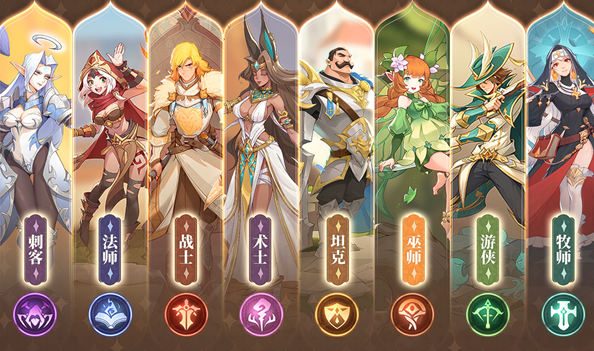
I. What *Sacred Tree Chant* Is: Its Unique Features & Critical Mechanics New Players Must Know
A. Basic Intro to Idle Card Gameplay & Faction System
At its core, *Sacred Tree Chant* boils down to 3 key things:
-
AFK Resource Collection: You earn rewards even when you’re not logged in, and the rewards get way better later on. So in this game, “collect all your daily AFK rewards” is way more important than grinding nonstop on dungeons.
-
Card Leveling & Star Ascension: How strong a unit is depends on their star rank way more than their level. A lot of new players think getting a rare character = winning, then get stuck because they don’t have enough materials to ascend their stars.
-
Faction Bonuses & Team Synergy: You don’t just stuff your team with the 5 strongest characters. This game cares a lot about the front line taking damage, back line dealing damage, and supports providing CC (crowd control). Faction bonuses also make a huge difference in how consistent you are at clearing stages.
Put in simple terms for players:
This is an idle card game where you use time to get resources, use those resources to level your core units, and use team builds to beat stages.
B. Why *Sacred Tree Chant* Is Often Compared to Other Idle Mobile Games
It’s a very typical example of an idle card game, and it puts a lot of focus on the basics:
-
Idle games of this type often hit “star ascension walls”: when you get stuck, it’s not your skill—it’s that your main units don’t have enough stars.
-
They also have “resource traps”: if you waste diamonds or spread materials across too many units, your overall growth will be way slower than others’.
-
The most important thing for idle games like this is “long-term planning”: save a little resources today, and you might breeze through a whole future update.
It gets compared because it hits all the points players care most about: Is it f2p-friendly, is gacha not a scam, can you easily build a “meta” team, and do events give enough resources to level your main units?
C. Key Things New Players Need to Know Before Starting
Before you start, I recommend memorizing these 3 rules—they’ll save you a lot of headaches:
-
Don’t level all 5 units equally: This game’s early game hates spreading resources thin—if you do, all your units will be weak, and you’ll get stuck on stages.
-
Quality over quantity when pulling gacha: You need core units to build a solid team, not a bunch of rare units that don’t fit together.
-
Check your team composition first when stuck—don’t blame power: A lot of stages don’t require more power—they need CC, supports, or a front line that can take damage.
II. *Sacred Tree Chant* Newbie Starter Guide
A. Most Important Goals for the First Few Days
My advice for the first few days is to set a clear goal: Build a solid team that can clear stages automatically.
The most common and reliable team compositions are:
-
A Main DPS: Ideally, their skills deal area damage or consistent sustained damage—this will make stage clearing way more efficient.
-
A Tank: Needs to be able to take hits and reduce incoming damage, ideally with some crowd control or shield skills too.
-
A Healer or Support
When clearing stages, consistency is key—getting the right mix of roles (like adding more damage absorption or damage reduction) is way more useful than chasing extra damage numbers.
How to fill the remaining two roles: It all depends on which characters you pull to cover gaps in your team. If you’re missing crowd control, pick a CC character; if you need armor penetration, go for an armor pen unit; if you want area damage, add an AOE unit—no need to stick to a rigid formula.
Stick to this basic team setup early game, and you won’t go too far wrong.
B. Early Game Stage Clearing, Stuck Levels, and Power Up Tips
Clearing stages smoothly gives such a good feeling, but idle games always hit their first wall early on. If you get stuck on a level, follow this priority order and you’ll fix it every time:
-
First, level up your Main DPS and their skills
-
Next, boost the survival of your frontline unit (tank)
-
Only then think about boosting your whole team’s stats evenly
A lot of new players panic and swap their whole team when stuck, which just makes things worse. You don’t need to overcomplicate it—just level up your Main DPS and tank, and most stuck levels will fix themselves.
C. Common Newbie Mistakes Wasting Resources
Here are some super common pitfalls to avoid—skip these, and you’ll progress way faster than other players on your server:
-
Spending Gems Willy-Nilly: Don’t waste gems on stamina, random packs, or tiny shop offers—you’ll feel good for 3 minutes, then realize you have zero left for summons!
-
Randomly Upgrading Gear: Gear changes super fast early game, so maxing out low-level gear is just wasting materials down the drain.
-
Spreading Materials Too Thin: Don’t level and ascend all 5 characters evenly—you’ll end up with none that are actually strong enough to carry.
-
Chasing God-Demon Characters No Matter What: If you don’t have enough resources to ascend that God-Demon character, you just pulled a “rare-looking shelf ornament” that’s useless in actual play.
III. The Chant of Sacred Tree First Summon & Reroll Guide
A. The Difference Between First Summon and Reroll
A lot of idle card games have a “newbie first summon” or “reroll system”—here’s the general idea:
-
First Summon: Your very first summon has a guaranteed solid character (great quality, no risk).
-
Reroll (Unlimited Summons): You can keep re-summoning over and over until you get the character you want, then confirm—no resources wasted!
The key differences are:
The reroll is basically the game’s gift to give you a perfect start—use it for what matters most: getting a Main DPS that can carry you, or a core support/healer that your team can’t live without.
B. Best Character Types to Keep From Your Reroll
No matter what the character names are, stick to these types when rerolling early game—they’re the best bang for your buck:
-
A Main DPS that can carry you through all stage clearing: You’ll rely on them for everything later, so putting all your resources here is never a waste.
-
A core support or healer that holds your whole team together: These get way harder to get mid-game, and you’ll need them for boss fights, tower runs, and arena—without a solid one, you won’t get far.
-
A utility unit with strong CC, crowd gathering, or armor pen: These units let you clear stages way higher than your current combat power would suggest—
It’s more than enough to win — super useful.
Conversely, the infinite gacha pulls at the start are definitely NOT recommended for these scenarios:
-
Late-game units that only get strong after ascending (starring up) — they just can’t hold their own in the early game
-
Specialized units that only shine in very specific situations (they’re useless early game) — wait until you need them later
-
A "second main DPS" that looks cool but your team doesn’t need — focus resources on your core carry instead
C. F2P Player Summon Resource Planning
The #1 rule for F2P players is pull smart, not often — follow this rhythm:
-
Early-game pull goal: Get a stable 5-person team that can clear stages consistently
-
Mid-game pull goal: Bring your main DPS and core supports to key star levels
-
Don’t chase every new banner: Gacha games live and die by this — "pull a little on every banner" leads to nothing being fully built, and wastes all your resources.
My advice is straightforward:
Either pull a key unit that upgrades your team OR duplicate units to star up, OR just hold back and wait until you have enough resources to get exactly what you want. Don’t waste resources on random pulls.
IV. 《聖樹喚歌》 Character Recommendations & Tier List
One of the biggest mistakes players make when looking at tier lists is: only caring about who has the highest damage numbers!
A true T0-tier unit usually needs to meet at least two core requirements:
-
Versatility is key: Works for clearing stages, beating bosses, and is still useful in Arena/PvP
-
Useful at low star levels: You don’t need to max their stars to get value out of them — they perform well even at 1 or 2 stars
-
Mechanics matter more than raw stats: Like built-in armor break, damage boosts, crowd control, invincibility, shields, or lifesteal — abilities that change how the game is played
As for T1-tier units, they usually fall into one of these categories:
-
Only become strong when paired with a specific team composition
-
Or only start being useful after they breakthrough/star up enough
-
Or only excel in one specific game mode
So for F2P players, prioritize units that are good at low star levels — these are the real budget kings and won’t waste your resources.
Since character names might differ between servers and versions, I’ll frame this around "should you build this unit after pulling it?" — it’s the most practical way to put it:
1) What to look for in DPS units:
-
Has consistent AoE damage or sustained, repeated output
-
Can survive on their own, not easy to get one-shot killed
-
Skills don’t have super restrictive conditions to use
2) What to look for in Tank units:
-
Can block the first big burst damage at the start of a fight
-
Has taunt, shields, or damage reduction effects
-
Best if they have "anti-control" or invincibility mechanics
3) What to look for in Support units:
-
Can boost damage for your whole team
-
Can lower enemy defense or apply armor break
-
Has crowd control effects
Some supports look unimpressive at first, but once you build them, you’ll notice: your team feels way more stable, like playing a whole different game.
4) What to look for in Healer units:
-
Steady heals, no random spikes in healing power
-
Has AoE heals or shields for the whole team
-
Best if they also come with purification or damage reduction
In idle games, a healer’s biggest value is letting you AFK clear stages — that’s where the real efficiency comes from.
C. F2P Players: Choosing Between Must-Build Units & High-Rarity Characters
The only right rule of thumb for F2P players is:
A unit that can be starred up, broken through, and fully built is the real deal.
If you pull a high-rarity unit but can’t get duplicates to star them up anytime soon, dumping resources on them will just grind your progress to a halt. On the flip side, if you pull a strong unit that’s easy to pull from the standard banner and star up fast? That’s an absolute F2P staple (you *need* them on your team).
So here’s a quick checklist to help you decide:
-
Can I get them to their key core star tier in 2 weeks or less?
-
Can they hold their own in combat even at low star levels?
-
Do they fill a critical gap in my current team?
The more boxes you check, the higher priority they are to build first.
V. The Best Teams & "Standard Team" Combos for Ode to the Sacred Tree
A. Why the "Standard Team" Works Perfect for New Players
For context, the "Standard Team" in the community is just:
A solid team that doesn’t rely on meta hype, is easy to build, wastes zero resources, and works for *everything* in the game.
It’s perfect for new players for a few simple reasons:
-
You don’t have to switch up teams all the time and waste resources
-
Focusing your resources on them is never a bad move
-
They work consistently for story stages, bosses, and event quests
The worst thing new players do is copy a team for story today, swap to a boss team tomorrow, then switch to an Arena team the next day — ending up with half-baked units across the board. The Standard Team is the perfect all-in-one fix for this problem.
B. Differences Between Teams for Story, Bosses, & Arena
First, know this: the same Standard Team works for almost every mode, but if you want to tweak it, here’s the fixed focus for each:
Your core priorities are clear-cut:
-
Story Stages: Prioritize area-of-effect (AoE) damage, crowd control, and survivability
-
Story stages have tons of mobs — if your frontline can’t take hits and your team can’t stay alive long, you’ll get worn down slow and steady.
-
Challenging Bosses: Focus more on armor pen/defense down, high single-target damage, and damage boost effects
-
Bosses have insane HP, so you need fast, efficient damage to take them down quick and save time.
-
Arena Matches: Prioritize fast crowd control (getting the first move), burst damage (one-shotting enemies), and self-survival skills
-
Arena moves fast — there’s almost no time to wear enemies down, so one good burst can win the whole fight.
To wrap it up:
Play story safe, kill bosses fast, and win Arena by controlling the pace.
C. How to Build a Flexible Team With the Units You Pull
Here’s a player-tested team-building formula that works great — just fill in the blanks with your units:
-
Main Damage Dealer (Main C): Pick the strongest, easiest-to-star-up damage unit you’ve pulled
-
Sub-Damage/Utility Damage: Handles extra AoE, armor pen, or follow-up attacks to make your team’s damage more flexible
-
Tank: Just needs to survive the first big hit — don’t waste resources on over-the-top survivability
-
Healer/Shield Support: The key to keeping your team’s HP up — you need them to auto-battle without panicking about wipes
-
Crowd Control/Damage Boost Support: Fill gaps — if you lack CC, grab a CC unit; if you need more damage, pick someone with defense down or damage boost effects
You don’t have to force yourself to build a complete team all at once
Having a perfect team— once you cover all the necessary roles your team needs, your stage progression will become way smoother!
VI. Analysis of Faction Traits in *Song of the Holy Tree*
A. Characteristics of the Silver Empire & Recommended Picks
Generally, characters from the "Empire" faction are designed to have these features:
-
Solid positioning and very reliable stats
-
Extremely solid frontline defense line
-
Support characters mostly lean toward stable buff effects
From players' actual experience, this is what it feels like: easy to get started with, high room for error, and perfect as your core foundation in the early game.
If you pull a tank or healer from the Empire faction, it will often make your stage progression super consistent— that's the most direct advantage they bring.
B. Guide to Choosing Between Wasteland, Nature's Echo, and Starfall City
I'll summarize these based on your preferred playstyle:
-
Wasteland: Focuses on high burst damage and aggressive play, fights feel snappy, but you need to get the timing right
-
Nature's Echo: Focuses on sustain, recovery, and long battles, makes stage progression way more comfortable— you don't have to worry too much about HP not keeping up
-
Starfall City: Focuses on crowd control and unique mechanics, deals super high damage when played well, but new players might need more time to figure out their skill effects
You don't have to force yourself to pick the "strongest" faction— here's the key point:
If you want smooth early game stage progression, prioritize building "sustain + reliable" characters. If you want to compete in the Arena and climb the rankings, then go for burst and control type characters later.
C. Should You Prioritize Building Gods and Demons?
Let's answer this with answers that are close to real players' actual experience:
-
F2P (Free-to-Play) or small spenders: Gods and Demons aren't completely unbuildable, but first check if you can ascend (star-up) them easily. If ascending is too hard, don't rush to dump core resources into them— this will slow down your main team's growth.
-
Mid to heavy spenders: Gods and Demons usually help you reach your team's power ceiling easier, since their mechanics are more polished and they have stronger damage or utility functions.
Many new players fall into this trap: they get super excited when pulling a God or Demon, dump all resources into it, then hit an ascending wall, which instead delays their main team's growth pace.
The correct strategy is:
First get your "national team core foundation" fully developed, then treat Gods and Demons as an investment to boost your team's power ceiling later.
VII. F2P & Free-to-Play Player Progression Guide for *Song of the Holy Tree*
A. Top Characters to Invest In Early Game for F2P Players
The three core characters F2P players should prioritize investing in early on are:
-
Main Carry (Main DPS)
-
Tank
-
Healer / Shield Support
After you get these three core ones to a solid level, use utility characters to fill the remaining slots. A common mistake F2P players make is trying to take everything, leading to a loose team that can't perform well in any area.
B. How to Spend Diamonds, Summon Tickets, and Event Resources Most Wisely
For F2P resource planning, I suggest following this priority order:
-
Use summon resources on banners that fill gaps in your team
-
Trade event-earned resources for items that strengthen your core characters
-
Don't waste diamonds on resources you can earn by playing the game
Many games use tons of "super attractive small packages" to push you to spend, but for F2P players, the most valuable uses of diamonds are:
-
Pulling duplicate characters that can ascend your core characters
-
Or pulling characters that fill gaps in your team
C. How to Avoid Wasting Resources on the Wrong Characters & Slowing Down Your Campaign Progress
The easiest way to avoid this mistake is:
Focus on leveling up only one Main Carry at a time.
As for Tanks and Healers, just make sure they meet the basic requirements to hold their own in battles—don’t force them to be fully maxed out with top-tier gear from the start.
Every time you get stuck on a campaign stage, first check if your Main Carry is dealing enough damage… that’s almost always the reason.
After all, in idle card games, how fast you progress through the campaign mostly depends on your Main Carry.
VIII. Character Development Priorities in Sacred Tree Chant
A. Which to Prioritize First: Ascension, Breakthrough, Level Up, or Gear?
New players always ask: “Which should I upgrade first?” Here’s a general priority list:
- Level up your character first
- Then upgrade their skills
- Get gear that’s good enough to handle battles
- Only focus on Breakthrough or Ascension last
Ascension is indeed important, but you won’t see immediate results from investing in it early on. Think of it this way:
-
For short-term fights, use Level and Skill combos to get through stuck stages
-
For the long run, Ascension and Breakthrough are what’ll set you apart from other players
B. Resource Allocation Rules for Main Carry, Tanks, and Supports
The safest resource split we recommend is:
- Put the most resources into your Main Carry: Around 50% to 60% of all resources should go here
- Tanks + Healers get the second biggest share: About 30% total, just enough to keep your team alive in battles
- Utility characters take the remaining resources: Around 10% to 20%—just enough to do their job
If you split resources evenly across all characters, your campaign progress will slow to a halt—you’ll get stuck hard.
C. How to Adjust Your Main Team From Early to Mid-Game
The rule for adjusting your main team is simple:
- Only consider replacing a character if you pull a stronger one that can fully replace your existing main
- Before swapping, make sure you can level the new character up to a similar level and power as your current main
- Otherwise, you’ll just waste resources tearing down your already built main team for a new under-leveled character—totally not worth it
Here’s what I recommend:
Stick to one main team in the early game to push through stages. In the mid-game, you can slowly build a second team or adjust your existing one—don’t switch teams randomly and waste precious resources.
IX. Key Tips for Using Diamonds & Managing Resources in Sacred Tree Chant
A. Should You Use Diamonds for Summons or Character Development First?
The general rule is: Prioritize Summons to fill gaps in your team during the early game; shift focus to Character Development in the mid-game.
Here’s how players usually do it:
- If your team is missing key core characters → Use Diamonds for Summons first to fill those gaps
- If your team is already set but you’re stuck on stages → Use Diamonds on key items that speed up development
But a quick reminder:
In most idle card games, if you waste Diamonds on buying development items, you’ll regret it later—these resources are often free from events.
B. The 3 Biggest Diamond Mistakes New Players Regret
The top 3 Diamond purchases new players will regret:
- Wasting Diamonds on low-value random packs with minimal benefits
- Wasting Diamonds on instant stamina refills when you should save for Summons
- Wasting Diamonds on temporary cosmetic items or tiny stat boosts that don’t help campaign progress
Don’t fall for these traps to keep your campaign moving without hiccups.
First, avoid the 3 most common resource-wasting mistakes new players make: wasting upgrade materials randomly, pulling gacha cards aimlessly, pouring resources into non-essential things. If you steer clear of these three things, your resource management will already be better than half of the new players.
Resource Hoarding & Spending Rhythm for Long-Term Players
Long-time players who’ve stuck with the game for a while usually follow this resource plan:
-
Stockpile all types of resources steadily during normal times
-
Focus resources only when events go live
-
No need to chase every small version update – but seize key milestones that let your main team fully form
Putting resources into spots that help your team make step-by-step progress means you’ll keep feeling like you’re moving forward, and won’t get stuck going in circles.
Sacred Tree’s Call: Tips for Clearing Stages & Handling Stalls
What to Check First If You Get Stuck on Early Stages
Don’t rush to restart if you get stuck in early stages – do these 3 checks to find the problem:
-
Is your main character’s level and skills not keeping up with the pace?
-
Can your frontline tank take the enemy’s first round of hits?
-
Does your team lack crowd control or sustain power?
Many players get stuck not because they don’t have enough damage, but because their frontline dies too fast or the whole team is CC’d into being unable to act. Fix the specific issue and your efficiency will jump way up.
How to Adjust Positioning, Crowd Control & Damage Timing
When clearing stages, positioning is just as important as your total power – especially in these scenarios:
-
Enemy assassins are targeting your backline
-
Enemy has big AOE blasts that hit your entire team
-
Enemy’s CC chain is locking your team down completely
The core idea for adjustments is simple:
-
Don’t put your main character in spots where assassins will target them first
-
Position your frontline tank where they can take the most damage
-
Crowd control characters should focus on the enemy’s core units first
With just small tweaks to positioning, you can sometimes clear 2 or 3 stages ahead even with the same power level – that’s the power of paying attention to details.
High-Efficiency Characters & Team Comps for Stage Clearing
Top-tier teams for fast stage clearing usually have these traits:
-
Main character has AOE or damage-spread abilities
-
Team has reliable crowd control
-
Team includes healers or shield capabilities
If you want to go the “relaxed AFK route”, remember this rule:
Stability is way more important than burst damage – burst is fun for a little, but stability ensures you can collect all your resources every single day.
Sacred Tree’s Call: Codes, Serial Numbers & Event Rewards Rundown
Early Advantages From Codes & Serial Numbers
For idle games like this, codes usually give resources like these:
-
Gacha pulls or recruitment tickets
-
In-game diamonds
-
Upgrade and ascension materials
-
Gold or EXP items
The advantage of getting these resources early is huge – if you use them a bit earlier...
By leveling up your main character, you can get into the higher-earning idle phase sooner. That means you’ll earn a bit more resources every day than other players, and the gap between you and them will only keep growing.
How to Maximize Launch Events and New Player Rewards
Here’s how to allocate launch events and new player rewards as a beginner:
-
Prioritize using your gacha tickets to complete your team’s core roster
-
Focus all your training materials on your main character and your tank first
-
Spend event shop currency on limited, rare items first
Many players make the mistake of buying all kinds of common materials from the event shop, which is a total waste of your event currency.
Which Free Resources Should F2P Players Prioritize?
F2P players should prioritize getting these three free resources above all else:
-
Recruitment Resources: These help you ascend characters and are the game’s undisputed hard currency.
-
Awakening and Level-Up Materials: Any player who’s ever had their main character stuck on an awakening stage knows how frustrating that is.
-
Idle Productivity System Resources: These give the highest long-term return of any free resource in the game.
Common FAQs for Sanctuaries of the Whispering Tree
Newbie Training FAQ
A. Who should new players focus on first in Sanctuaries of the Whispering Tree?
When you start the game, your priority order for training is: Your strongest main DPS character in the current version, and the one easiest to ascend.
Second priority: A frontline tank character.
Third priority: Healers or support characters.
Don’t rush to make all your characters top-tier at the start. Focus on building a team that can progress through stages consistently, and resources will accumulate naturally over time.
B. Which characters from the first roll are good enough to start with?
I won’t list specific character names, since character strength can change with patches or server adjustments. But here’s your “start check” guide:
If you get a main DPS character → You can start the game
If you get a core healer or support character → You can start the game
If you get a character that only becomes strong later in the game (no obvious use in early gameplay) → Don’t rely on them as your only starting core
The ideal starting team is: A consistent main DPS + A frontline tank that takes damage, or a support that protects your team. This will give you the most stable start.
C. Is the “National Team” best for F2P players?
Absolutely. The core benefits of the National Team are:
Fast to build
Highly versatile
No wasted resources
The biggest fear for F2P players is wasting resources on the wrong characters. The National Team minimizes that risk.
D. Are Demon/God characters worth chasing early on?
The conclusion is clear:
If you don’t have enough resources to ascend a Demon/God character → Don’t prioritize them early. Treat them as a bonus if you pull them, not a main investment.
If you can get them to their key ascension star → They’re worth it. Demon/God characters usually have higher overall ceilings.
Remember: Idle card games aren’t about “winning by pulling”; the real win is making your team work smoothly through training.
Sanctuaries of the Whispering Tree isn’t a game based on luck. It’s more like an idle card game where “the better you plan your resources, the more fun your playthrough is”.
If you just do three things: Focus resources on one main DPS, build a solid tank/support core for your team, and use your diamonds with a clear gacha target instead of wasting them—you’ll avoid 90% of new player mistakes. You’ll also notice, as a F2P player, your progress will be way faster than others, and you’ll feel more satisfied and happy when collecting resources every day.