Shenzhou M Players: From Noobs to Martial Arts Masters – Complete Strategy Guide & Tips
Hey there, fellow warriors ready to step into the wuxia world! I’m your go-to buddy for all things in this jianghu—recently I’ve been playing **Shenzhou M** (shortened to Shenzhou M), and this game totally brings back that thrilling feeling of ‘holding your sword and conquering the world’ I had back in the day! Today, I’m here as a regular player, no corporate fluff, to give you the real scoop on this game: what it’s all about, if it’s fun, how to get started, how to pick your class, how to level up your character, what to do daily, how the in-game economy works… Whether you’re about to jump in or still on the fence, I’ll break down every detail you want to know for you.
If you’re looking for a wuxia MMORPG that lets you grow your character, make friends, AFK grind, and also take on challenging manual battles, this guide is perfect for you! Grab a cup of tea, sit back, and let’s dive into jianghu together~
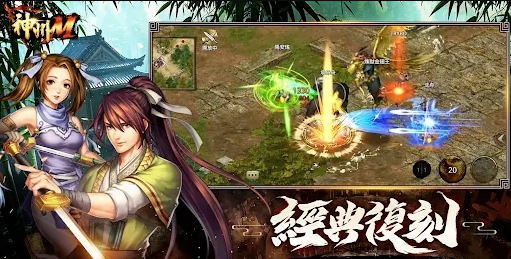
1. Preface & Game Introduction
A. Shenzhou M’s Game Identity & Key Features
Shenzhou M is a game published by a Taiwanese developer, and it carries forward the core content of the classic IP *Shenzhou Online*—you can tell that right from the official game description: this isn’t just a lazy mobile port of the old game, it’s the official sequel to *Shenzhou Online*! The game’s official website states: “All Spirit Weapon, Deity Summon, and Beast Sealing systems return, and cross-platform play between mobile and PC is supported.” After playing it myself, here are some super appealing features I noticed:
-
Cross-platform functionality: AFK leveling on mobile, playing on PC with a bigger screen—for players like me who like switching devices sometimes, this is a huge plus!
-
Versatile game systems: The three core systems—Spirit Weapons (summoning special souls to strengthen yourself or use as support skills), Deity Summon (powerful god-tier support system), and Beast Sealing (raising pets or summoning beasts to aid in combat)—prevent the game from being the monotonous “quest → level up” loop many mobile games have. Plus, the free-trade economy system is a real standout: you can trade dropped equipment freely, which is rare in today’s mobile games, making your character progression, the gear you get, and the in-game economy feel genuinely rewarding. So if you’re after a wuxia game that’s long-lasting, deep, lets you make friends, and has great progression fun, Shenzhou M is definitely worth adding to your list.
B. Innovations & Breakthroughs for Xianxia MMORPGs
Even though there are tons of wuxia or xianxia games out there, I think Shenzhou M has some great breakthroughs that set it apart from the rest:
-
As a classic sequel, it has smooth, intuitive controls: it’s not just a lazy mobile adaptation of the old game—they optimized the interface, so new players can pick it up quickly, and veterans will get that nostalgic feel from the original. The official game description also mentions: “Classic controls return, back to the pure jianghu experience”
-
Dual AFK and manual gameplay: For players like me who log in but don’t want to stare at the screen 24/7, you can AFK level up and earn EXP + rare items even offline, while still getting to play manually when you want to take on tough challenges—super flexible! The official site even says: “Earn EXP and rare items even when AFK offline”
-
Highly integrated systems: Classes, Spirit Weapons, sects, gear, AFK, progression, trading—all these features are connected, so you don’t feel like some games that only rely on gacha or AFK grinding. You get fun from actively participating, plus the satisfaction of passive rewards. For me, this game is the type that’s “easy to pick up but deep to master”—perfect for players who want to stick around long-term.
C. Community Size & Engagement for Taiwan & Hong Kong Players
After checking out communities and discussions, I noticed Shenzhou M has really strong engagement in Taiwan and Hong Kong:
-
Google Play and App Store both have Traditional Chinese versions, which is super friendly for Taiwan and Hong Kong players—no need to worry about not understanding the content.
-
The official team also has Facebook fan pages and LINE communities, which are exclusive support channels for Taiwan and Hong Kong players—you can ask questions there and chat with other players.
-
The pre-download and pre-registration events before launch had tons of Taiwan and Hong Kong players joining, which means the game has strong local support here.
What does this mean for you? It means once you get into the game, you probably won’t run into situations where “no one’s playing” or “can’t find a team”, plus the language and time zone match perfectly—no need to worry about coordination issues. For players who want to stick around long-term and make friends, the community is super important. All in all
Shenzhou M is a well-defined, feature-rich large-scale wuxia MMORPG that’s super friendly for players in Taiwan and Hong Kong. If you’re ready to dive right into this martial arts world, keep reading for all the download and initial setup tips!
2. Game Download & Initial Setup
A. Supported Platforms & System Requirements
1. Download for iOS & Android Versions
Just search for "Shenzhou M" in the App Store or Google Play, and you’ll find the game right away. The game’s description clearly states it officially launched at 12 PM on June 18, and it supports cross-platform play. As for system requirements, we recommend at least 4GB of RAM on your phone, plus as much storage space as you can spare—this game has pretty big files and resources. The official specs also note "Android version 9.0 or higher (4GB RAM)
We recommend using a basic configuration of at least 4GB of phone RAM and 6GB of internal storage to run the game smoothly.
If you have an older phone model, or your device is low on RAM/storage, make sure to check beforehand if it can handle the game to avoid laggy experiences.
2. PC Emulator Support
This game supports cross-platform sync between mobile and PC—total win for players who prefer big-screen PC gaming or like to run multiple instances at once.
If you’d rather play on PC or with an emulator, we suggest installing a popular emulator first (like BlueStacks or NoxPlayer), setting up your keyboard/mouse controls, game resolution, and input logic ahead of time. That way, you’ll have a way smoother experience once you dive in. According to gaming media reports, the game devs also explicitly support playing on emulators and the PC version.
B. Account Creation & Login Process
When you first boot up the game, we recommend knocking out these must-do steps first:
-
Server Selection: Go for servers in Taiwan, Hong Kong, or Asia first. The language will match, and you’ll get lower ping for a way smoother playthrough.
-
Create or Link Your Account: You can log in directly with Google/Apple accounts, or sign up for a game-specific account. Make sure to link it properly—this will save you from losing all your progress if you switch phones or reinstall the game.
-
Claim Launch Bonuses: When the game first launches, there are usually pre-order rewards and login bonuses for new players. The earlier you jump in, the more exclusive launch loot you’ll get.
-
Create Your Character: Pick a character name and class you love (we’ll break down the classes in the next section!), and if the game has sect choices, pick that too—your name, class, and sect will shape your playstyle and your journey in this martial arts world.
C. First Launch & Newbie Tutorial
Once you launch the game, a detailed new player tutorial will automatically pop up, teaching you movement, combat/skill controls, how to unlock dungeons, and basics of core systems like gear, spirit weapons, and avatar summons. We recommend not skipping the whole tutorial—this game has a lot of core systems, so getting familiar with them early will make your later play way smoother.
During the newbie phase, you’ll get "newbie quests and login rewards"—we suggest knocking these out first to grab tons of in-game resources, giving you a huge head start over other players.
When I first played, I went through the tutorial, claimed all newbie packs, then focused on main story quests and explored other systems slowly. My progress was way faster than players who skipped the entire tutorial, and my experience felt way more seamless.
III. Class System & Character Selection
A. Full Breakdown of the 5 Classes
Shenzhou M has 5 unique classes for players to choose from: Swordsman, Warrior, Mage, Taoist, and Monk. Each class has its own style and role that’s detailed in the game’s lore.
1. Swordsman & Warrior Class Breakdown
-
Swordsman: A close-range damage dealer with great mobility, super fun to play—perfect for players who love charging in with a sword and enjoying flashy combat hits.
-
Warrior: A balanced tank-damage hybrid with high durability—ideal for players who like taking hits on the frontline and protecting their team.
2. Mage and Daoist Class Features
-
Mage: Focuses on long-ranged magic damage output, boasting huge damage potential but very low defense—you gotta watch your positioning at all times.
-
Daoist: A hybrid role combining control and strategy, this class relies heavily on skillful play. It’s perfect for players who love planning skill combos instead of just charging headfirst into battles.
3. Cleric Class Role
-
Cleric: The game’s support role, dedicated to healing allies, buffing their stats, and providing tactical backup. Ideal for players who prefer working behind the scenes to keep their team alive.
B. Class Pros & Cons Comparison
-
Swordsman: Pros: Super satisfying playstyle that gives a massive sense of accomplishment once you master it. Cons: Low defense, easy to get taken out, so you need solid skill to pull it off.
-
Warrior: Pros: Insanely durable, a well-rounded class that excels at both attack and defense. Cons: Damage is a bit lackluster, playstyle is pretty standard with no flashy standout features.
-
Mage: Pros: Dominates long-ranged damage with impressive burst. Cons: Extremely vulnerable to melee classes—you have to keep your distance at all times.
-
Daoist: Pros: High strategic depth, tons of playstyle variety. Cons: Steep learning curve; you’ll need time to master all the skill mechanics.
-
Cleric: Pros: Insane team support—they’re a must-have for dungeons and group fights. Cons: Can feel weak when playing solo, or early on when you don’t have good gear or enough experience.
C. Beginner-Friendly Class Recommendations
If this is your first time playing the game, I highly recommend starting with the Warrior (easy controls, tough enough to not die easily) or the Swordsman (super satisfying hits, takes a bit of practice but gets fun fast). Once you get the hang of the game’s systems, understand gear progression, and figure out core gameplay, then you can try other classes like Mage, Daoist, or Cleric. That way, you won’t lose interest early on by picking something too hard.
D. Class Identity & Gameplay Feel
When choosing a class, don’t just look at base stats and raw power—ask yourself: Will I have fun playing this? Do I love the thrill of swinging a sword up close, the strategic feel of long-range control, or the satisfaction of supporting my team? Also, do you mostly play solo or love grouping up? All these factors directly impact how much you’ll enjoy the game with your chosen class. Take me for example: I started with the Swordsman, loved the sword-swinging rush and all the skill variations as I leveled up, but I had to spend time learning positioning to perform well at first.
E. Burst, Tank, Support Class Roles
This categorization will help you understand each class’s role clearer:
Burst (Damage): Swordsman, Mage; Tank (Toughness): Warrior; Support: Daoist, Cleric. Once you know which role fits you, it’ll be easier to figure out team compositions or how to upgrade your gear.
F. "Grinding & Farming" Class Recommendation Guide
If you’re the type who likes to “AFK farm / kill mobs / play casually” — basically a “grind-for-goods” player — go for a Tank-class or a low-skill but stable class like Warrior. That way, you don’t have to stress too much about positioning or fancy controls, and can focus on AFK levelling, farming gear, or hunting for loot.
Once you’ve got more time or interest, you can switch to a Damage class later.
IV. Core Systems & Progression Mechanics
A. Soulvein System Deep Dive
The Soulvein System is one of the highlights of Shenzhou M. According to the official description, the game states “Soulvein × Descending Deity × Beast Sealing — three systems let you mix tactics freely”. The Soulvein is basically the core system for strengthening and transforming your character. Once you get or unlock a Soulvein, you can strengthen it, swap it whenever you want, and use its different abilities in combat.
B. Soulvein Strengthening & Effects Analysis
Strengthening a Soulvein usually requires materials, completing quests, or crafting. After strengthening, it not only significantly boosts your combat power but also unlocks
Passive or active skills are crucial for character progression. Early on, pick 1-2 Wuhun specializations to power up—don’t spread resources thin across all Wuhun; focus on one or two to maximize efficiency.
C. Deity Summoning System Overview
The Deity Summoning System is an extra perk that lets you call down divine power for buffs—per Shenzhou M’s game notes, it’s making a comeback! This system triggers during specific battles or dungeons, helping you dish out burst damage at key moments or even turn the tide of a fight.
D. Deity Summoning Mechanics & Odds
Summoning a Deity relies on RNG, summoning tickets, and material synthesis. When you see the “Deity Summon” option, double-check event rules, pity timers, and material costs before sinking resources in—don’t waste materials spamming pulls for nothing.
E. Beast Taming System Guide
The Beast Taming System lets you “catch, train, and summon” beasts to aid in combat—it’s like a separate progression path for your team. Per Shenzhou M’s game notes, this system is returning too.
F. Skill System & Build Guide
Character skills, Wuhun skills, beast skills, Deity Summon skills… all these need strategic setup:
Active vs. Passive Skills: Start with active skills that have clear, high-value effects you use often.
Pair with Wuhun/Beasts: Check if your skills synergize with Wuhun effects or beast abilities—this boosts overall performance.
Cooldowns & Trigger Conditions: High-cooldown skills hit hard, but if you can’t use them often, they’re wasted. Pick skills that fit your playstyle (burst, grind, AFK) instead.
G. Skill Books: Acquisition & Upgrade Priority
Skill books and upgrade materials are non-negotiable for powering up skills. Early on, prioritize upgrading your most used skills and your class’s core damage/survival skills—save other skills for later or adjust as needed, this gets more bang for your buck.
V. Attribute Points & Gear Enhancement
A. Attribute Point System Deep Dive
Beyond class skills, there’s the Attribute Point system—this lets you build your character to be damage-focused, defensive, or support-oriented, with options like Attack, Defense, HP, Crit, and Speed.
B. Attack, Defense & HP Distribution
If you go damage-focused: Prioritize Attack + Crit, keep HP/Defense balanced. If you’re a tank: Prioritize HP + Defense, Attack second. If support: Focus on Speed + Control/Buff stats, with HP/Defense as backup.
When you’re playing, decide on your role first before putting points in—way more focused that way.
C. Gear Rarity & Tiers
Gear in Shenzhou M is generally split into Common, Rare, Epic, and Legendary tiers. Higher tiers cost more to enhance but are way more powerful. Early game, go for Rare/Epic gear—save Legendary for later.
D. Gear Enhancement Priority
Gear enhancement is key to boosting your power—here’s the playbook: Enhance gear for your main character first. Start with weapons/armor, or slots you’re missing most. Don’t spread resources evenly across too many characters—focus on 1 or 2 and you’ll progress way faster.
E. Enhancement Material Sources
Enhancing or ascending gear requires Enhancement Stones, Blessing Stones, Gold, etc. You can get these from daily dungeons and in-game events.
You can also get enhancement materials from AFK farming or trading—pro tip: Save your enhancement materials first, don’t blow them randomly.
F. Enhancement Odds & Failure Refunds
If the game has mechanics like “enhancement failure protection” or “refunds,” pay super close attention to these. Never push for high tiers when you’re short on resources—you might fail and lose progress, wasting time. Set clear enhancement goals and resource limits to play it safe.
G. Set Effect Analysis
Gear sets (like 3-piece or 5-piece sets) usually come with extra passive effects or big buffs. The bonus for wearing a full set is way better than just mixing random pieces. Unless you have tons of extra resources, prioritize completing a full set that works for your character—you’ll see way bigger results.
H. How to Acquire Top-Tier Gear
Top-tier gear mostly comes from high-level dungeons, world bosses, event-exclusive content, or the in-game marketplace. If you spot a line like "This gear drops from a world boss" or "Event-only unlock," make sure you stock up on resources and prep properly before jumping in to compete. Getting these items gives a huge sense of accomplishment and a noticeable boost to your combat power.
VI. Dungeon Challenges & Combat Content
A. Daily Dungeon Challenge Guide
Daily dungeons are key sources for gear materials, upgrade mats, and EXP. When you first start playing, try running a full round of daily dungeons either morning or night each day – small, consistent gains will add up nicely over time.
B. World Boss Guide
World bosses are cooperative group challenges: teams team up to take down powerful bosses and fight over rare loot. Key strategies: Lock in a steady time or spot with your team first, learn the boss’s skills and weaknesses ahead of time, and assign clear roles (tank, DPS, crowd control) – that makes runs way more efficient.
C. Boss Fight Strategy & Locations
Each boss has unique maps, spawn spots, and attack ranges, so definitely scout before fighting! Know where your tank should stand, the safe distance for healers/supports, and how DPS should position themselves – getting this right cuts down on mistakes big time.
D. The Vampire Zombie Dungeon Guide
This dungeon has tricky mechanics: enemies drain HP, heal super fast, or come in annoying packs. Make sure you come with good gear and solid skills, and pick characters with area damage or crowd control – that makes clearing way easier.
E. The Mountain Bandit King Challenge Dungeon
Mid-to-high level dungeons like this one require your character to hit certain level and gear benchmarks. New players: Focus on daily quests and farming materials first. Wait until your character’s power is strong enough before tackling this – don’t rush, or you’ll get stuck hard.
F. Level 25 Dungeon & Misty Forest
These dungeons are big progression milestones. You’ll be ready to take on the Level 25 Dungeon and Misty Forest once you hit that level cap and have decent gear. Pro tip: Make sure your combat power is at or above the dungeon’s recommended number, and your team has a balanced mix of roles.
G. Trial Dungeon Difficulty Selection
Trial dungeons usually have tiers: Normal, Hard, and Nightmare. Start with Normal to learn the dungeon layout, loot, and boss skills before moving up difficulties. That way you’ll clear consistently – no need to waste precious resources if you get stuck early.
H. Progression & Level Cap Hacks
If you’re stuck on a chapter or dungeon, don’t just spam attacks – go back and upgrade your gear, spirits, pets, or skills. You can also check game communities or other players’ guides for tips that help. The game has AFK, daily, and material systems, so you don’t have to grind nonstop to get your character ready to progress.
VII. Economy Management & Resource Planning
A. Gold & Copper Coin Farming Methods
In-game currencies like gold and copper are super important for upgrading, ranking up, and trading. You can earn them from daily quests, AFK gains, dungeon drops, and the in-game marketplace. Make sure you knock out all daily gold tasks each day – small piles add up fast.
B. Upgrade Material Collection Strategies
Upgrading gear, spirits, or pets needs materials, so make it a habit to farm materials regularly. Set a fixed time each day to farm from dungeons and AFK – that way you’ll never be short on materials when you need to upgrade.
C. EXP Boosts & AFK Optimization
The AFK system is *so* useful for people like me who work during the day and only play at night. This game (Shenzhou M) has AFK and training systems – you get EXP and items even when logged out, just like the game’s intro says.
Pro tip: Turn on AFK or training before you go to bed at night – no time wasted, and you can claim all your rewards as soon as you’re free during the day.
D. Achievement System & Reward Claiming
Almost every game...
Every game has an achievement system—complete specific conditions to claim rewards. New players, I recommend finishing the easy achievements first; their rewards are pretty good, and many people tend to overlook this part.
E. Login and Online Rewards & Perks
Login bonuses, consecutive login bonuses, and online duration rewards are all great free resources. It’s recommended that you log in at least once a day—don’t miss any check-ins. The accumulated rewards will be way more than you expect.
F. Main Quest & Bounty Quest Rewards
Don’t just focus on farming dungeons—main quests usually come with story content, and you can get EXP and materials from them; never miss these. Don’t ignore bounty quests either. Balancing main, side, and bounty quests will speed up your account’s growth a lot.
G. Multi-Account AFK Training & Fast Leveling
If your device allows, and the game supports multi-instance emulators, you can run multiple accounts to AFK level up—this will significantly boost efficiency. However, be sure to follow the game’s rules, and never violate their terms!
If you want to multi-account, using two devices or multiple accounts to AFK progress will make things much faster. But this requires investing enough resources and time, so it’s not really suitable for the average player. A more reliable option is stable AFK play on one device combined with manual operations.
Copper Coin Usage Priority Planning
When you’ve accumulated a certain amount of copper coins and gold coins, you must invest them in the most efficient places—should you use them to enhance gears? Upgrade Wu Soul levels? Or cultivate sealed beasts? It’s recommended to prioritize the items that can boost your combat power the fastest. Don’t spend on everything you see, otherwise, scattered resources will only slow down your progress!
VIII. Redeem Codes, Events, and Community Resources
A. Shenzhou M Gift Codes & Redemption Guide
The game’s official team often releases various gift codes, and you can get free resources by claiming them. For example, the official Facebook Page will post such information from time to time. After entering the game, just go to the Settings, Events, or Redeem Code section to enter the corresponding code and claim the reward. It’s highly recommended that you follow the official social media platforms to get the “latest gift codes” as soon as possible!
B. Latest Serial Codes & Gift Code Shares
In game communities or forums, players often share the latest serial code benefits. Joining the exclusive community groups for Taiwan and Hong Kong players will let you grab these free rewards first—don’t miss this kind of great opportunity!
C. Where to Enter Redeem Codes
The general redemption process is actually very simple: first enter the game, click on the “Events” or dedicated “Redeem Code” page, input the obtained code to claim the reward. If you can’t find the entrance, you can go to the Settings page or Customer Service page to check the detailed location.
D. Recommended First Pull Gift Packages
When the game just opens or launches new characters, there are usually activities like “free first pull” or “first top-up discount”. If you plan to play long-term, it’s recommended that you first claim both the “first pull reward” and the newbie package, then decide whether to spend real money—it’s not too late.
E. Official Event Announcements & Information
The official team will release version updates, cross-industry collaborations, or limited-time activities from time to time. These activities often allow you to get rare materials, top-tier gears, or precious Wu Souls. Pay attention to official announcements at all times so that you don’t miss any good opportunities!
F. Claiming Free Resources & Perks
In addition, there are regular perks like “daily login rewards”, “cumulative online time rewards”, and “event quest rewards”. At first, they may not seem like much, but in fact, the accumulation is quite considerable. It’s recommended that you open the Events page every day to confirm and claim them.
G. Engage with Official Facebook Community
Joining the official Facebook Fan Page or exclusive community groups not only gives you first-hand information, but you can also ask questions, read discussions from other players, and even find teammates to play with. It’s definitely a big boost for long-term game play!
H. New Player’s Quick Start Guide
New players who just started playing, pay attention! You must do these steps:
-
After finishing the newbie tutorial, first select your class, create your character, and rush through main quests immediately.
-
Don’t stop until you’ve claimed the newbie package, gift code rewards, and first pull benefits.
-
Never miss daily AFK sessions and daily quests.
-
Join the player community as soon as possible to get to know like-minded players and find teammates.
Doing these steps will help you enter the game state much smoother and faster, avoiding a lot of detours!
Alright, that’s the complete guide for Shenzhou M I put together from a veteran player’s perspective—covering everything from game positioning, download settings, class selection, system mechanics, gear enhancement, dungeon challenges, economic resource management, to event and community information.
If you’re just preparing to start playing now, it’s recommended that you explore slowly first. Don’t rush into “spending real money or”
Instead of frantically grinding for loot, it's best to first get familiar with the game systems, pick a suitable class, and finish all the beginner quests—playing steadily is the wisest move. If you've been playing for a while and start getting stuck on levels or don't know where to go next, just focus on these three key areas first: Core Systems, Enhancement Mechanics, and Event Communities—adjust your play rhythm accordingly.
Last but not least, I hope you find your own unique martial arts hero saga in the vast Shenzhou Lands: from an unknown rookie slowly growing into a renowned martial arts hero, wielding powerful divine weapons, befriending beast companions, and living the thrilling life roaming the Jianghu. If you need teammates, guides, or just want to chat about your gameplay experiences, feel free to reach out—let's meet in the Jianghu together! May your sword point to the ends of the earth, your hero's heart hold both courage and tenderness, and may everything go smoothly for you. See you in the Jianghu!