Shadowverse 2: Latest Deck Tier List, F2P T0 Recommendations & Ranked Meta Overview
If you've been searching a lot for keywords like "Shadowverse 2 Deck Tier List", I'm gonna be straight with you: what you're actually looking for is *Shadowverse: Worlds Beyond*, which is also commonly referred to as *Shadowverse 2*. Right now, the official website, Deck Portal, and Card Library all use *Shadowverse: Worlds Beyond* as their official name. The game also has built-in official features like the Deck Portal, Card Library, Deck Builder, and popular deck zones for each class!
And right now is the perfect time to study the meta. By early April 2026, the game's meta has moved past the chaotic early launch period where everyone was just testing decks, and has officially entered the 6th expansion: "Apocalypse Pact / Shadowverse". GameWith updated their tier list on April 2nd, highlighting the top-tier decks in this meta. The official team also released a card balance adjustment on March 30th, so the ranked meta you see now isn't static—it's just been reshuffled with the patch, where strong decks are back to being top-tier, and weaker decks finally have a chance to shine.
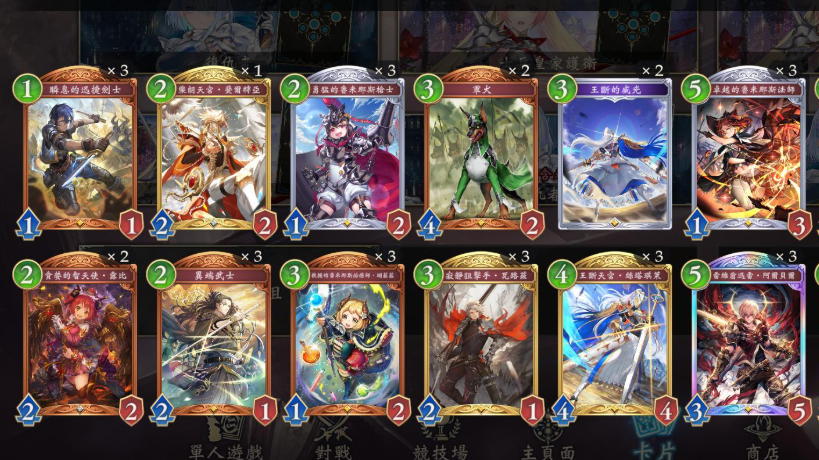
I. Introduction: Overview of the Latest Shadowverse 2 Meta and Deck Rankings
A. How to Read Deck Rankings: 3 Key Metrics—Power, Win Rate, Ranked Popularity
When many people look at deck rankings, their first instinct is to ask: "Which deck is the strongest right now?" But that question only gets half the picture. A truly useful deck ranking should be judged by at least three dimensions: deck power, actual win rate, and ranked popularity. Among these, deck power refers to the theoretical ceiling—meaning, if you manage resources smoothly, have good skills, and deep game understanding, can you overpower most other decks. Win rate is more about actual performance, showing how consistent the deck is in the regular ranked meta. As for popularity, it's often overlooked but super important—because when everyone is playing the same popular decks in ranked, the meta naturally evolves with counter and counter-counter builds. That's why some decks that aren't at the top are still great for quietly climbing ranks.
Taking the latest data from April 2, 2026, GameWith's Tier 1 decks for this 6th expansion are Enhance Royal, Celestial Witch, Kukishiro Bishop, Destruction Nemesis; but Game8 simultaneously lists Celestial Witch, Mirtio Nightmare, Crest Bishop, Odd Bishop as the strongest group. This isn't a case of who's right or wrong—it's a perfect example of how different sites have different sample sizes, time windows, and battle pools. So never take a single list as absolute truth; instead, cross-check results from various sites to find the core deck groups that consistently appear at the top.
B. Server Versions (TW, Global) and New Meta Reference Range
First, let's clarify one thing: the official Deck Portal for *Shadowverse: Worlds Beyond* now has multilingual pages, including Traditional Chinese. The official card system and Deck Builder also have clear rules: players can use class-specific cards plus neutral cards to build a 40-card deck, with a maximum of 3 copies of the same card. This means Traditional Chinese players don't have to rely solely on third-party sites to check cards, build decks, or copy decks—official tools are available.
But when it comes to meta references, the most worth your time right now are the large Japanese strategy sites and official sources. The reason is simple: for *Shadowverse*, the Japanese community updates fastest on meta pace, balance adjustments, and class discussions, and has the largest battle samples. For example, in the March 30 card ability adjustments, GameWith directly summarized the key points: Old Holy Spear Sasanido, Flash of Returning Sword were nerfed, and Pure White Saint Jeanne, Old Tome of Liantos were buffed; this kind of info is usually several steps behind if you wait for secondhand translations.
C. Differences in How New, Returning, and Advanced Players Read Rankings
If you're a new player, I'll tell you straight: don't just go for T0 right away.
Because being the strongest doesn't mean it's the easiest to play, especially in this Shadowverse 2 meta. Many top-tier decks require solid resource management, careful evolution point planning, tight core rhythm, and knowing exactly when to make key plays. Take the Celestial Wizard for example—it's a deck with a very high skill ceiling,
but this deck really depends on how skilled you are at playing it. GameWith even tagged it as a "Combo" oriented deck, labeling it as a "slightly higher difficulty" type. If you're a returning player, copying the top-ranked deck directly usually won't work well—you might not be comfortable with the mulligan, rhythm management, card retention, and evolution point usage, so your climb to Master rank will actually be slower than playing a solid T1 midrange deck.
For returning players, when checking these rankings, it’s better to first consider "classes you used to play that don’t have a strong meta deck right now". Even if some classes aren’t the top of the meta, if you’re already familiar with their curve rhythm, mulligan choices, and resource management, you’ll play them more smoothly than forcing a T0 deck you’re not used to. On the flip side, high-level players look at rankings differently—they care more about counter relationships between decks in the overall meta, if the current meta is too focused on a couple of decks (making them easy to counter), and even if future patches might push certain combos to the top of the meta. With all three types of players looking at rankings, it’s easy to see one deck being called "broken" by Player A and "just okay" by Player B—after all, everyone’s skill level and familiarity varies.
II. 2026 Latest Deck Rankings Overview
A. T0 Decks: The Strongest Decks & Go-To for Climbing
If I had to pick the "top-tier T0 zone" decks for the April 2026 (6th expansion: Apocalypse Pact) meta, these would be the ones: Celestial Wizard, Enhance Royal, Kukishiro/Odd Cardinal, Destruction Avenger, Miltio Nightmare. The reason is simple—these decks aren’t just popular on one guide site; they consistently show up at the top of rankings across different websites, or their variants take high spots on multiple lists at the same time.
Among these, the most stable and widely accepted core meta deck is definitely Celestial Wizard. GameWith rates it as Tier 1, and Game8 also lists it as one of the strongest decks—this means it’s not just a flash in the pan; it’s a deck that can truly hold up in this meta. Its strength isn’t just high individual damage—you slowly build up advantage using the Celestial Hand and Faith points, then swing the game in your favor with Celestial Abyss or a core unit after it’s been reduced in cost. Simply put, what’s scariest about this deck isn’t one-turn burst—it’s the constant pressure you feel starting from the mid-game, and that pressure is really hard to break through.
Next up is Enhance Royal. This deck is basically the face of the meta right now—not only is it powerful, but it matches what many players want in a "rank-climbing deck": clear rhythm, strong board presence, solid damage, and a straightforward way to finish games. GameWith puts it in Tier 1 because it uses the old card "Celestial Sword Idomet"’s Faith effect—every time you play a card with an Enhance effect, it supports your board and boosts damage. Game8 clearly states its win condition is "building a big board after reaching Idomet Faith, then finishing with rush cards and Albert’s Ultra Evolution". The most annoying thing about this deck is that if you don’t clear its board early enough, it just snowballs and crushes both your board and your face in the end.
The Cardinal class is interesting right now—no single Cardinal build is dominating rankings; instead, several branches like Kukishiro, Odd, Crest, Guardian, and Rest/Burst Control are pushing Cardinal to the top of the meta. GameWith puts Kukishiro Cardinal in Tier 1, noting it uses Kukishiro’s Crest effect to draw cards and fill the board at the same time, making it super oppressive. Game8 also includes Odd Cardinal and Crest Cardinal in their strongest decks. This means the Cardinal class isn’t carrying the meta on one deck right now—instead, the whole class is pretty dominant. This is annoying for ranked play because it’s hard to counter just one specific deck.
As for Destruction Avenger and Miltio Nightmare, I count them as T0-adjacent or even T0 because they perform extremely well at the top of rankings across different sites. Destruction Avenger is on GameWith’s Tier 1 list—it wears down opponents with the mid-to-late game resource chain of White Chapter, Black Chapter, Lishaena, and Imari. Miltio Nightmare is on Game8’s strongest decks list, and even Game8’s free-to-play recommended list highlights it. This means even if guide sites disagree on Royal and Cardinal, Nightmare and Avenger are still core meta decks you can’t ignore.
T1 Tier: High Win-Rate, Consistent Climb Decks
If T0 is the flashiest, most talked-about, and most meta-defining decks in the current format, T1 is the ones you can pull out without feeling embarrassed to climb ranks—hell, they’re often even better for average players. Decks like Evolution Elf, Sanctuary Bishop, Evolution Havencraft, Link/OTK Runecraft, and some midrange/aggro Dragoncraft builds all fit here. Their common traits: clear win conditions, not totally blown up against popular meta decks, and more resilient to unexpected situations than some burst-focused T0s—you won’t get instantly screwed over just because the opponent is targeting you.
These decks are heavily skill-dependent—their win rates go up as you get better at playing them.
Take Evolution Elf, for example. It’s not labeled as the top T0 deck on every site, but it’s always been in the thick of player discussions. In its 6th expansion meta tier list, GameWith ranks Evolution Elf as S-Tier (their highest recommendation), right up there with Enhance Royalcraft, Celestial Runecraft, Myrtio’s Nightmare, and Crest Bishop. This tells you everything you need to know: it’s not the auto-pick for every game, but it’s definitely powerful, consistent, and gives huge rewards once you master its playstyle.
Sanctuary Bishop is another great pick for players who want a steady climb. GameWith’s take on it is spot-on: it runs on Guardians (minions with protective effects) and buffing them to make a board that’s hard to break mid-game, and almost unbeatable for aggro decks to push through. Its problem isn’t a weak ceiling—it just plays a bit slow sometimes. If you’re chasing fast wins, it’s worse than burst decks, but if your goal is consistent ranks where one or two mistakes won’t throw your whole game, this midrange-control hybrid is perfect for grinding slowly up the ladder.
Dragoncraft is currently in a “not top-tier but still lots of playstyles” spot. Checking Game8’s class page, there are Evolution Dragon, Aggro Dragon, Ocean Dragon, Hochan Dragon, and Discard Dragon as viable lines, with Game8 even having a full guide on Discard Dragon’s playbooks. So Dragoncraft isn’t unplayable—it just isn’t as meta-defining as Bishop, Runecraft, or Royalcraft right now. If you already know your way around Dragoncraft, there’s still room to experiment, but if you want the easiest straight-up meta deck, Dragoncraft isn’t your first pick.
C. T2~T3: Fun Decks That Fit Specific Meta Conditions (Your Backup Picks)
T2~T3 decks aren’t “weak” most of the time—they’re just meta-dependent, skill-reliant, or require knowing exactly why you’re running them. Think Control Bishop, Evolution Havencraft, specialized Nightmare decks, some aggro Dragon builds, niche Elf or Royal variants, stuff like that. These decks are super good in specific matchups—you’ll be like “why is no one talking about how underrated this deck is!”—but they’re not as consistent as T0/T1 decks if you just want to farm ranks for hours without thinking.
I like to call T2~T3 the “strategist’s zone.” A lot of these decks don’t work just because you copied a list—you need to understand the current meta, pick a build that can counter popular decks without getting crushed by others. When you nail these, it feels amazing—like everyone else is just following a formula while you’re adjusting to the meta—but you can also get stomped if you don’t know what you’re doing. This tier is perfect for players who’re past being total newbies but don’t want to only play the meta every season.
III. Deck Tiers by Class
A. Meta Builds for Elf, Royalcraft, Runecraft, Dragoncraft
First up: Elf. The go-to meta build is still Evolution Elf. It’s not one of those decks where the opponent concedes the second they see it, but it’s a solid mid-to-high tier deck that rewards skill—better players will get way more out of it. Elf decks always have that “looks complicated but every step is about small details” vibe, and Evolution Elf is exactly that. Its power doesn’t come from raw burst; it’s all about managing resources and controlling the pace in the mid-game.
Royalcraft’s current king is clearly Enhance Royalcraft. It’s one of the most iconic midrange decks of the format. It’s not pure aggro, nor is it a late-game control deck—its core is: just when you think you can survive, it uses its Enhance mechanic to pile up minions, buffs, and burst damage to knock you out. This deck is great for players chasing consistent climbs because its rhythm is easy to grasp, feels smooth, and doesn’t crumble hard if one card gets stuck in your hand.
Wizard is one of the most obvious top-tier classes in the current meta. The most reliable pick is the Celestial Crystal Wizard, while builds like OTK Wizard and Linkle variants are still being discussed by players. The key to Celestial Crystal Wizard lies in that it can not only create a favorable board state with Celestial Crystal Mana, but also use Faith and finisher cards to deal crazy finishing damage. OTK Wizard, on the other hand, is the kind of deck that can end the game in a single turn if you don't apply pressure at the right time. These two decks of the same class feel completely different—one is more like a mid-range burst deck, while the other is a pure combo kill type.
Dragoncraft is currently more like "still playable, but no longer the core strong focus of the meta". Game8 mentions that Dragoncraft now has builds like Evo Dragon, Rush Dragon, Ocean Dragon, Houchang Dragon, and the discard Dragon has had strategy updates in the past month. This means Dragoncraft isn't unpopular enough that no one plays it, but at this stage it relies more on choosing the right meta direction, and it's more suitable for experienced players to operate in most cases, rather than the first choice for returning/new players who want to climb ranks directly without thinking.
B. Meta Position of Shadowcraft, Bishop, Avenger, and Neutral
Shadowcraft currently has two systems worth paying attention to: the Miltio system and the Mode system. Game8's description of the Mode Shadowcraft is quite clear: accumulate Faith through Mode effects, let Sham-Nakua go out of control, and then you can keep playing high-quality cards endlessly. This deck is characterized by very high resource utilization; once it gets into its own rhythm, the opponent will be led around and feel pressured throughout. But the problem is that it's not a completely mindless deck—you have to grasp the right timing: knowing when to deploy minions, when to keep cards in hand, and even when to use Mode effects for damage output rather than removal.
Bishop I've mentioned before that its current strength is really crazy, and it's not just strong in a single build. Kukishiro, Odd-flow, Crest, Guardian, and even some Control and Repose-oriented builds still have a fighting chance. The most dangerous thing about this class in the meta is that it's not as predictable as some other classes. When you see an opponent playing Bishop, you can't immediately tell if they're going to stall for late game, deploy minions to pressure, gain advantage with Crests, or stack Guardian minions to overwhelm you directly. The opacity of game information is an absolute advantage in itself.
Avenger is now the most representative class of the destruction system. GameWith's description of Destruction Avenger is spot on: deploy minions while preparing destruction targets, use cards like "Grand Game World" and "Wasteland of Destruction" to dig for cards, then slowly collect White Chapter and Black Chapter, and drag the opponent to death with continuous resource advantage and consistent burn. This deck is especially suitable for playing against decks that are strong in mid-game but lack late-game speed. It's not the kind of deck that can end the game with one punch; instead, it makes you feel like your space is getting smaller and you're being pressured step by step.
As for Neutral, in Shadowverse 2, it's more like a toolkit for each class, rather than forming an absolute core that can be called a "neutral deck" like in old meta. The official card system clearly states that a deck is composed of class-specific cards plus neutral cards, so neutral cards are still important, but now they're more like components to strengthen your class's curve, rather than the protagonist that steals the class's presence.
C. Which Classes Are the Strongest in the Current Meta, and Which Are More Niche
If we only look at the meta at the beginning of April 2026, I'd put Wizard, Bishop, and Swordcraft at the top, followed by Avenger and Shadowcraft as the next strongest group. Forestcraft has high potential but is quite dependent on skill level, while Dragoncraft is currently in the middle tier, focusing on functional picks. This ranking isn't an absolute mathematical answer, but is made by combining Tier lists from multiple sites, the frequency of top decks appearing repeatedly, and actual combat feelings after recent balance adjustments.
When we talk about niche classes, it doesn't mean no one plays them—it just means you see them much less frequently on mainstream strategy sites' homepages, strongest deck lists, F2P recommendations, and distribution recommendations. Dragoncraft is currently closer to this state; Forestcraft is more like "not niche, but not the most intuitive mainstream dominant either". If you want to find the class that adapts to the meta the fastest, I'd suggest prioritizing Wizard, Bishop, and Swordcraft. If you want to play something a bit unique but don't want to fully leave the mainstream, Forestcraft, Shadowcraft, and Avenger still have plenty of space.
IV. New Meta and Balance Adjustments
A. Impact of New Cards on Deck Rankings
The current meta is built on the 6th card pack, "Apocalypse Pact". GameWith's data shows that this card
Dropped on February 26, 2026, this set also introduced two new core mechanics: Accelerate and Crystals. The official card library has also been updated to include the Apocalypse Pact set, which means the entire tier list we’re talking about right now is basically a new meta built entirely on the new cards from the 6th expansion.
The most obvious impact of these new cards is that some once “just playable” archetypes have been pushed straight to the mainstream tier, while some old decks that were coasting on the meta lull have immediately been crushed by efficient new strategies from this set. Examples like the rise of Boost Royal, Celestial Witch, Destruction Dragoncraft, and multiple branches of Bishop decks are classic cases of a new set reshaping the meta. That’s why you can’t judge class strength with mindset from cards that were meta six months ago.
B. How Balance Updates & Patch Changes Shift the Tier List
What’s even more crucial is that this version didn’t just drop a new set—it also brought balance changes on March 30. GameWith’s team sorted out the 4 cards adjusted here: Old Sky Lance Sasannido and Returning Sword Flash were nerfed, while Pure White Saint Jeanne and Old Sky Book Liantos were buffed.
The official announcement confirmed that the March 30 maintenance would also bring changes to card abilities and the 2Pick game mode. This patch’s impact on the tier list is huge, since the devs don’t just nerf the strongest cards—they also buff underused decks to give them a fighting chance.
Game8 even points out that this game’s balance update pattern is basically focused on the end of odd-numbered months, and the devs lean heavily into buffs to expand play space for underrated decks. This is super important because it means Shadowverse 2’s meta is different from some other card games—you won’t have a terrible meta that lingers forever; instead, the devs use small, regular adjustments to push the meta toward more diversity. Theory’s one thing, but in practice, it depends on which cards get changed or buffed—at the very least, you can count on this game’s tier list not being stuck in a rut for too long.
C. Recent Meta Shifts (June–September) & Popular Matchups
Let’s get this straight first—we don’t want to treat future stuff as set in stone. As of today (April 2, 2026), the actual meta shifts between June and September haven’t fully played out yet, so it’s not right to act like we have all the answers. What we do know: the game’s set release schedule is on track, balance updates are still focused on the end of odd months, and the devs plus guide sites like GameWith/Game8 will keep updating their roadmaps and meta info as they go.
So if you’re looking at talking about June–September, I’d recommend framing this as a trackable direction for how the meta will evolve from now through the next few months, not trying to force fixed conclusions about the future. Right now, the core matchups to watch are around midrange Royal, Faith-based/Burst Celestial Witch, multiple Bishop deck variants focused on board pressure, and Destruction Dragoncraft’s late-game grind potential. The counterplay relationships between these decks are basically the main playing flow on the ladder right now.
V. T0 & High-Win-Rate Deck Recommendations
A. Common Traits of Streak-Friendly & High-Win-Rate Decks
A lot of players looking for T0 decks don’t actually want the “strongest”—they want decks that are easy to win streaks with. These two things overlap sometimes, but not always. Decks that work well for streaks usually have three key traits: solid opening hands that don’t blow up, aren’t too one-sided against the meta, and have a clear finish line to close games. That’s why Boost Royal, Celestial Witch, top-tier Bishop decks, and Destruction Dragoncraft get recommended so often—they don’t only shine when the hand is perfect, they have a consistent win path most of the time.
Take Boost Royal, for example—its strength is its “solid” playstyle. You know exactly what to do early game, how to push board control mid-game, and how to finish off with Charge and Albert late game. As long as you don’t make big mistakes, it’s super reliable for win streaks. Celestial Witch has a higher skill ceiling, but you need to get good at resource management to play it; once you master it, its board pressure is way more annoying than most pure midrange decks. For Bishop, it depends on the variant, but if you go with a well-built Kukishiro/Odd Crest build, it’s a standard “hard to lose” deck that performs consistently.
Right now, the most popular decks in this meta are actually midrange decks with burst potential. Pure aggro decks are strong in some meta versions, but right now, since Bishop and other classes that can stabilize board control are common, the
If you go all-in on aggro too aggressively, you’ll often run into problems where your opponent holds you off and you have nothing left to follow up with. Pure control decks aren’t unplayable, but you need to know exactly what you’re controlling and stalling for—otherwise, you’ll think you’re playing solidly, when in reality you’re slowly losing the game.
That’s why you’ll notice most top-tier meta decks right now follow a "midrange core + burst finisher" formula. Amplify Royal is like this, Celestial Wizard is like this too—even some Bishop and Nightmare variants have this trait. These decks have the most consistent pressure on the ranked ladder, because they don’t rely on specific combo pieces like pure combo decks, nor do they collapse immediately if their tempo gets countered like pure aggro. For most players, this is also the type of deck worth learning the most.
C. Which Decks Are Best for Consistent Rank Climbing
If you ask, "I want to climb ranks consistently, don’t want to rely on lucky draws every game—what decks are best?" I’ll give these answers:
Top Tier: Amplify Royal, Celestial Wizard, Kukishiro/Odd Crest Bishop.
Second Tier: Destruction Revenger, Evolve Elf, Shield Bishop.
Third Tier: Miltios Nightmare, some experienced Dragoncraft builds, Evolve Revenger, and other niche meta decks.
The core of this ranking isn’t about "which looks cooler"—it’s about which decks don’t feel extremely difficult to play in most matches, and which let you consistently reduce error rates once you get the hang of them. This is super important for rank climbing. A lot of people don’t lose because their deck isn’t strong enough—they lose because their deck relies too much on split-second plays.
If you make even a tiny misjudgment in the match, you’ll end the game feeling totally drained—so it’s way better to pick a solid, reliable deck instead.
VI. New Player & F2P Deck Recommendations
A. Best Decks for New Players to Learn
For new players, the first thing I’d recommend is definitely not flashy, complicated decks—it’s midrange builds that help you quickly get a feel for match tempo. Amplify Royal, Shield Bishop, or some lower-rank Dragoncraft builds are all great examples. The reason is simple: these decks make it easier to understand "how to hold the board in the early game, how to shift tempo mid-game, how to calculate kill lines late game"—instead of getting overwhelmed by high-difficulty combo decks right away and quitting.
Of course, if you really want to play the Wizard class, I won’t fully stop you from picking Celestial Wizard—just be prepared: this deck is strong, but it’s not something you can just copy from two videos and get consistent wins. You need to figure out when to trigger Erosion mechanics first, when to hold Hand of Magic cards, how to prioritize searching for Kargidensla, and when to use Evolution Points. New players can definitely try it, but if your goal is to have an easy, fun start, this deck’s learning curve is way steeper than Royal or Bishop.
B. F2P, Casual, Low-Cost Deck Choices
On April 2nd, Game8 updated their F2P deck recommendation list and listed Dragoncraft as the top pick for F2P players, noting the necessary crafting resources are around 15,130. This number is super valuable, because it tells us at least one thing: right now, if you’re not a whale player and want a deck that’s easy to assemble quickly, not just a meme deck, Dragoncraft is definitely a great option to go for.
This makes total sense—Dragoncraft in many card games tends to fill that role: maybe not top-tier in power, but relatively affordable to get into, and straightforward enough to learn quickly. Using Dragoncraft as your F2P transition class feels way more comfortable; once you’ve accumulated enough resources later, switching to top-tier decks like Royal, Wizard, or Bishop is totally fine. The biggest mistake many new players make is: even though they don’t have many resources, they force themselves to make the most expensive meta deck, only to get stuck halfway, play both badly, and waste resources for nothing.
C. Where to Prioritize Your Starter Pull & Initial Resources
If you’re just starting out and haven’t wasted resources yet, I’d recommend focusing on these areas first:
First, decks you’re committed to playing long-term that consistently have high meta scores—like Celestial Wizard, Amplify Royal, or main Bishop builds.
Second, classes that are low-cost but provide stable transitions—like Dragoncraft.
Third, decks that match your playstyle and you’re willing to put in the learning effort for—like Elf or combo Wizard.
The worst thing you can do at the start is spread your resources around randomly, chasing every hot deck, only to be missing key legendary cards for every single one and never reach full power. That "try everything, master nothing" mindset is the worst in card games. Instead of wasting resources spreading thin, focus on mastering one main class early on—once your card pool grows, you can expand to second or third classes, so your rank climbing will stay steady and fun for the long haul.
上 lane 手感 gets way better.
VII. Deck Copying and Building Guide
A. Deck Codes, Card Lists, and How to Copy Decks
Copying decks is super convenient these days, all thanks to the official Deck Portal they built specifically for this purpose. The official help page clearly says new players can either build a deck from scratch via the Deck Portal, or copy popular decks and tweak them as they like. The FAQ also mentions you can import decks into the game editor using QR codes or deck codes. These days, players don't have to manually type out entire card lists like they did in the old days.
So if you see a strong deck right now, the most practical process is actually pretty straightforward: First, use a third-party guide site to check the deck's role in the meta, its pros and cons, and key play patterns. Then head back to the official Deck Portal to see if there's a matching popular card list, and finally decide if you want to adjust it further. This is way more reliable than just copying randomly—at least you'll know what you're running instead of just copying without understanding the logic behind it.
B. The Difference Between Building From Scratch and Copying Decks
A lot of people think "copying decks" is embarrassing, but honestly, in today's card game environment with fast updates, heavy data analysis, and high-stakes competition, copying decks isn't embarrassing at all. The real difference is: do you just copy a deck and run it without understanding the rules behind it, or do you copy it, then figure out which cards are core, which are flexible slots, and which matches need a playstyle change? The latter is the kind of player that actually improves.
Building decks from scratch definitely has its fun parts, especially when you're already super familiar with a class. Tweaking 2 to 4 cards to fit the daily ladder meta often works really well! But if you haven't even mastered playing against the meta yet and rush to build a full deck from scratch, you're almost definitely just throwing matches away to learn. My advice is simple: Copy first, until you understand it, then adjust. This isn't giving up on creativity—it's building your own feel for matches at the lowest possible cost, and when you're good enough, you can start adding your own ideas.
C. Key Priorities When Building Decks: Core Cards, Mana Curve, Win Conditions
Actually, players who know how to build decks don't look at the set name when starting out—they focus on these three things: Core Cards, Mana Curve, Win Conditions. Core cards define what the deck is all about. For example, an Altarion Wizard without its Altarion core is basically just a Wizard with random cards thrown together. The mana curve directly affects whether you'll get mana flooded or starved in early and mid game, wasting resources each turn. Win conditions decide if you'll crush opponents with board presence, finish them with direct damage, or drag the match to the final turn to win.
For example, Aggro Royal centers around the Idometal Faith archetype, paired with rush damage and board pressure as win conditions. The Altarion Wizard deck's backbone revolves around Altarion Mages, erosion, cost reduction, and abyss win conditions. As for Destruction Revenger, it's clearly built around the effects of Chapter White/Chapter Black and consistent destruction gains. Once you nail this core framework, then look at how different players add or remove a few cards in their lists, building decks gets way easier.
VIII. Legendary Cards and Individual Card Strength Tier Lists
A. Legendary Card Strength and In-Meta Play Rates
In the current Shadowverse 2 meta, judging how strong a legendary card is isn't just about how flashy its effect is—the key is whether it can be a core part of a mainstream deck. Some legendary cards have super fancy descriptions that sound like fantasy novel lore, but when you actually play ladder, you'll find they only show up in a small number of casual decks. On the other hand, some legendary cards don't look super strong on their own, but they're absolutely critical for your deck to run smoothly—for competitive players, the latter is usually way more valuable.
Right now, the most popular legendary cards are almost all core parts of the Wizard, Royal Guard, Bishop, Revenger, and Nightmare archetypes. Stuff like the Idometal Faith package for Aggro Royal, the core Altarion set for Wizard, the Bishop's Crest/Odd Archetype core, and the key chapters and main characters for Destruction Revenger—these are the legendary cards you'll notice feel "off" without when building a deck. For most players, instead of blindly collecting every legendary from all classes, it's way more practical to first fill out the core legendaries for the two classes you play the most, since that gives better returns.
B. Individual Card Reviews: Which New Cards Jump to T1 Instantly
The real cards that "hit T1 the second they release" aren't the broken "brainless god cards" that are insane on their own. They're cards that can lift an entire archetype from "playable" straight to "mainstream tier". For example, the core Idometal card for Royal Guard, the key Altarion piece for Wizard, the Bishop's Crest core, and the chapter chain for Revenger—these are exactly that type of card. Their value isn't just from how ridiculous their single-card damage is, but the feeling that when you draw them, your whole deck instantly goes from "half-baked mess" to "fully functional deck".
This is also why a lot of players get card reviews wrong: if you only look at single-card ceiling, you'll easily overrate the cards that have flashy single effects but fit systems
Niche cards? On the flip side, the ones that actually reach T1 are often the unassuming core pieces that don’t look like much at first, but when you slot them into your deck, they make the whole run smoother, hit way harder, and boost consistency a ton. These kinds of cards are way more important than those "one-card showstoppers."
C. Quick Notes on Popular Class Cards: Wizard, Shadowcraft, Dragoncraft
Looking at the current most prominent classes, the Wizard is the one you need to focus on the most, especially the Luminance core and its accompanying card draw/filter, Faith, and cost-reduction cards. For example, GameWith’s analysis of Luminance Wizard emphasizes that the early game should be about drawing cards while building up Faith, and prioritizing using "Erode" to find key cards—this means that Wizard’s popular cards don’t shine alone for flashy plays; they only have real value when the entire system’s engine works together.
For the Shadowcraft (Nightmare), the popular "Pattern" and "Milteo" style cards share a common trait: they don’t win games on their own; instead, they make the entire resource loop grow bigger and bigger, creating an advantage snowball. That’s why Shadowcraft cards always feel "super flexible"—many of these cards don’t have just one effect, they’re really versatile.
The Dragoncraft is a typical class that relies on mana curve and resource exchange efficiency. The current mainstream "Discard Dragon" playstyle is straightforward: prioritize saving evolution points for cards that convert to attack damage, because after the evolution turn, the goal isn’t to survive—it’s to actively push the opponent to their kill line. Popular cards for this class are usually not just generic utility cards; they’re multi-purpose cards that optimize the mana curve, add damage, and maintain hand rhythm all at once.
IX. Ladder and Climbing Tips
A. GM Ladder, Master Meta, and Usage Stats
GameWith’s ranked match info mentions that MP (Match Points) and CR (Club Points) above Grand Master will reset significantly at the end of the season, and each season updates roughly every month. This is super important, because when choosing a deck for the high-tier ladder, you don’t just look at single-game win rates—you also need to see if "this deck can maintain consistent efficiency and smooth play across a long series of matches." A lot of players love to just copy top players’ deck lists, but the meta in high-level play is totally different from what casual players face. In the GM tier, deck usage is more concentrated, more targeted, and players are way more skilled—so some meta decks that work great in high-level play often struggle when regular players use them.
Don’t just stare at high-tier decks and copy them blindly! The deck you grab in Master tier or mid-climb might not work as well as a deck that fits the current meta—this is exactly why you need to separate "high-tier meta decks" from "the deck that actually fits your climbing pace."
B. Climbing Rhythm of High Win-Rate Decks
The most important thing about high win-rate decks isn’t getting lucky draws every game—it’s that they can maintain their consistent rhythm in most matches. Amp Royal, Luminance Wizard, Kukishiro Bishop, and Destruction Havencraft all have this. They all have super clear rhythm milestones: what to prepare in the early game, when to start applying pressure mid-game, and how to close out late games. These decks are amazing for climbing because you don’t have to adapt to a whole new system every single game—saves so much practice time.
If you want to speed up your climbing, my top tip isn’t switching 3 or 4 decks a day to test blindly—it’s to pick a deck you’re willing to stick with long-term, and play at least 20 to 30 games straight. You’ll quickly notice that some cards might feel mediocre at first, but once you get good, you’ll know which cards to keep, when to push for tempo, and when to mulligan to apply direct pressure. The benefits of this kind of mastery are way more important in card game ladder play than you think.
C. How to Avoid Bad Matchups in the Meta
The first step to avoiding bad matchups isn’t immediately switching decks—it’s figuring out what matchups you hate the most. For example, when facing Linkle Wizard, GameWith specifically warns that healing power isn’t the key here—board control and early pressure are what matter, because this deck fundamentally needs to build up a specific tempo window; breaking that window lets you take control. This kind of info is super valuable because it directly changes your entire game plan.
So the real ways to avoid bad matchups usually fall into three categories. First, adjust your main deck or flex slots to slightly counter the 1 or 2 matchups you fear most. Second, when you face a popular matchup, play flexibly—don’t just stick to your usual comfort habits. Third, and only as a last resort, switch decks. A lot of players panic-switch classes when they hit a tough matchup, but in reality, you only need to change 2-3 cards in your original deck, or adjust your starting hand mulligan logic—your win rate will jump a lot from that.
X. Breakdowns of Popular Class Archetypes
A. Mid-Royal, Treasure Royal, and Other Royalcraft Archetypes
Right now, the Royalcraft class is the one most worth diving into—
Midrange Royal / Augment Royal. Its biggest perk is that it isn’t too linear or rigid, but not so complicated that you’re crunching numbers on every turn. You can set up smoothly in the early game, snowball tempo in mid-game with augment effects and buffs, and finish off opponents late with Rush damage or straight up Albert for a direct win. For most players, this deck is just the perfect mix of satisfying plays and clear win conditions.
As for the older archetype Treasure Royal, it’s not totally unplayable right now, but it’s definitely not the main core for Royal in this meta. Game8’s Royal page still mentions it, but top-performing decks in recent meta discussions are almost all Augment Royal. This is a perfect example of how old archetypes for a class might still get played a little, but the ones worth investing time mastering are usually the new mainstream builds.
B. Wizard Burst and Control Decks
Wizard has way more than one playstyle right now. Celestial Wizard leans mid-range burst, OTK Wizard is the classic combo build, and the Linkle variant is another playstyle that requires early pressure. That means you can’t always use the same strategy when facing a Wizard deck. That’s exactly why Wizard is such a threat in this meta—it’s not just strong, it has tons of variety.
If you want to play Wizard, I’d suggest specializing in one playstyle first—don’t dabble in all of them. This class heavily revolves around knowing exactly what turn your deck can win on; if you mix Celestial and OTK plays, you’ll just scratch the surface of each and never truly master any. For Wizard players, the rewards of specializing are way bigger than you’d expect.
C. Nightmare Overloaded, Bishop Rest Archetype, and Dragon Ramp Decks
The most frustrating thing about Nightmare decks is that a lot of their cards look like afterthoughts, but together they create massive headaches. The resource conversion play of standard Nightmare and Miltyeo Nightmare is exactly the kind of thing where individual cards aren’t overpowered, but the whole deck is brutal to deal with. If this class got even a tiny buff in a future patch, it’d jump straight up the meta rankings.
Bishop’s Rest archetype and control decks are now more of a niche branch of the meta than the main focus. What actually keeps Bishop relevant in this version are the more aggressive paths like Crest, Odd, and Guardian. But Rest or control types haven’t disappeared—they’re more for specific rank ranges or matchups as counter decks. These aren’t unplayable, but you absolutely need to know exactly why you’re running them.
The idea of Dragon ramp sounds good on paper, but in this meta, the actual popular Dragon builds are Evolve, Rush, Ocean, Houchou, and discard variants. That means if you just call Dragon decks ‘ramp’ straight out, you’re stuck in old meta thinking. Dragons can still ramp, but you have to talk about them using current meta deck terms.
XI. Meta Report and Data Breakdown
A. How to Read a Meta Report for this Version?
When reading a meta report, don’t just jump to the conclusion—you need to understand the context first. At minimum, confirm what expansion this report is for, if there were any recent balance patches, what rank range it’s based on, and when it was updated. For example, if you look at this early April 2026 meta data and forget the 6th expansion launched on Feb 26 or the balance patch on March 30, you’ll compare old Tier rankings to current ones and go “Wait, that’s not what I remember.”
A meta report worth referencing doesn’t just list the strongest decks—it explains why the deck is good, what it counters, and what type of players it fits. That’s why I’ve always thought Tier lists alone aren’t enough—they just show where a deck ranks, not whether it’s worth investing resources into building.
B. Win Rate, Meta Popularity, and In-Game Data Differences
High win rate doesn’t always mean high popularity, and high popularity doesn’t equal the best win rate—you have to separate these two. For example, some decks are strong but super complex, so they have great win rates in high ranks but low usage among casual players. On the flip side, some decks are cheap, easy to play, and fast, so lots of people use them, but that doesn’t mean they’re the best in every rank. That’s why rankings vary across different platforms.
Players who actually know how to read data don’t just focus on one number—they check things like: Does this deck show up consistently in high-rank lists? Are different variants still being played? Is its low usage because it’s hard, or is it actually out of the meta? That way, your understanding of the meta is way more accurate than just looking at “who’s on top.”
C. Pick Decks With Data, Don’t Just Chase Popularity
Last, here’s a super useful tip: Don’t just pick the most popular deck because it’s trending. The most popular decks often get countered more because everyone’s playing them, so high popularity and high win rate don’t always go hand in hand. What you actually should do
First, you check the data and tier lists to grasp the core of the current meta, then pick based on your available resources, mastery level, and your current ranked rank.For most players, the best deck isn't the one ranked #1 on every list—it's the one that works smoothly for you, fits your resource pool, and doesn't get crushed in the current meta. It could be Jewelcraft, Runecraft with Rise of Legends, or even Evolution Portal that you've already mastered down to a T. The key isn't what others are saying; it's whether you can actually pull out the true win rate from that deck.
XII. Frequently Asked Questions (FAQ)
A. Which class is most recommended to play right now?
The most straightforward answer would be: Sorcerer, Royal Guard, and Bishop. Their top-tier decks are well-rounded, backed by solid data, and have the strongest presence in ranked play right now. If you just want to quickly adapt to the meta, picking one of these three usually won't lead you astray.
B. Should new players just copy T0 decks directly?
Sure, but it's not always the best choice. Decks like Jewelcraft, for example, are actually quite skill-intensive; for total newbies, copying a T0 deck directly often leads to a situation where "the deck is strong but I can't win with it". A more practical approach is to start with easy-to-learn midrange decks, like Rise of Legends Runecraft, Control Bishop, or budget Dragoncraft, then gradually move toward decks with higher skill ceilings.
C. How often do deck tier lists get updated?
There's no fixed schedule for updates, but since the game releases new card sets, ability adjustments happen at the end of odd months, and major platforms update their meta pages daily, tier lists actually change pretty quickly. The biggest shifts in tier rankings happen especially in the days right after a new balance patch or card set launches.
D. What decks can I use if I don't have any legendary cards?
The most straightforward method is to look at budget deck recommendations first—sites like Game8 currently list Dragoncraft as the top pick for F2P players. Alternatively, you can build a fully functional midrange deck that doesn't require every legendary card to work. Instead of forcing a half-built high-end T0 deck, it's better to play a deck that's affordable, has a solid game plan, and lets you steadily accumulate resources, then upgrade it later.
If I had to sum up the current Shadowverse 2 deck situation in a player-friendly way, it would be: This isn't a meta where a single deck dominates—instead, there's a clear core set of strong decks, but there are slight differences between platforms and different ranked ranks. There definitely is a "meta answer" right now, and it's pretty obvious, but if you just copy the answer blindly without checking the surrounding meta, or accounting for your resources and skill level, you'll probably end up struggling to climb ranks even after all that copying.
As of early April 2026, the top decks worth prioritizing are still Rise of Legends Runecraft, Jewelcraft, strong Bishop builds, Destruction Avenger, and popular variants of Nightmare. These decks together form the core backbone of the current meta—whether you're climbing ranks, looking to copy a deck, or deciding where to put your resources, you'll almost always end up considering them.
The real key to climbing ranks and staying consistent in matches, to put it in a cheesy way, is that familiar line: It's not about knowing which deck is the strongest—it's about picking the one that fits you best and putting in the work to master it. At the end of the day, card games aren't about "I copied a top-tier meta deck"; they're about "can I play that deck as smoothly and effectively as the top players do?". What's missing here isn't just understanding game mechanics or match experience—it's putting in dozens if not more practice games to master every detail and rhythm of each match.