SD Gundam G Generation Eternal: 2026 Latest Mobile Suit Rankings and First Pull Guide
If you've been searching for "SD Gundam G Generation Eternal Unit Tier List" lately, it's clear you're already past the stage of just asking if the game is fun—you're now wondering: "Should I level up the units I have?" "Which units should I pull next?" "Which ones are actually top-tier in the current meta?" That's totally normal, because once you hit the mid-game of *SD Gundam G Generation Eternal*, the power gaps become super obvious: even among UR units with EX weapons, their actual strength can be night and day. Some units not only clear stages easily but also hold their own in High Enemy missions and Master League; others look solid on paper but fall short on critical damage in tough stages. And since we're in April 2026, the game's already one year old. The meta isn't just mature—it's been completely shaken up by new limited units and anniversary events, so today's tier list logic is nothing like what it was at launch.
Even trickier, this game isn't just about raw damage. The devs long ago split units and characters into three core categories: Attack, Support, and Toughness (Defense), and clearly stated this isn't the traditional mobile game elemental counter system—it's about different ability traits and team roles. In other words, when looking at a unit tier list, don't just chase "who deals the most damage." You also need to confirm if the unit is an Attack role (built for damage), a Defense role (built to tank hits), or a Support role (built for buffs and auras). If you don't get this, even pulling a top-tier unit will feel underwhelming once you slot it into your team—the problem isn't the unit being weak, it's that your team isn't built around their roles properly.
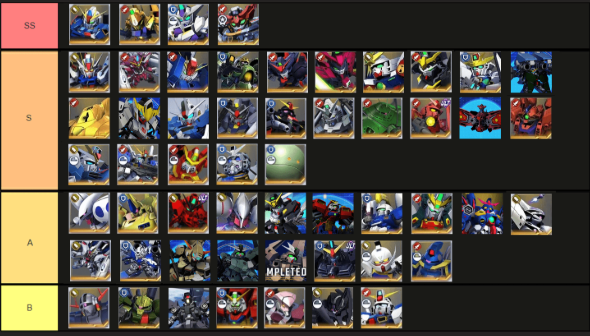
I. Introduction: SD Gundam G Generation Eternal Unit Tier List Overview
A. 2026 Meta Environment & Explanation of the Three Unit Roles: Attack / Defense / Support
Let's start with the basics. The devs already mentioned on their developer blog that units and characters in *G Generation Eternal* are split into three core roles: Attack, Support, and Toughness. These roles aren't the countering elemental pairs found in traditional mobile games—they reflect different design directions for stats and skills. Attack roles focus on high ATK and active damage, Support units typically offer EN recovery, debuffs, or buff effects, and Toughness roles have massive HP and DEF, ideal for tanking hits and protecting teammates. So when checking any unit tier list, skip the overall rank first—confirm which role the unit fits into.
This is even more obvious in actual battles. GameWith's team composition tip is super straightforward: the standard recommended team ratio is 2 to 3 Attack units, 1 to 2 Support units, and 0 to 1 Toughness unit. This basically spells out the core team structure for this meta. You can't just spam five damage dealers like you might have in older versions—you need damage-focused units, support units, and sometimes a tank for heavy hits. If you miss this balance, no tier list will help you pick the right units for your team.
B. Unit Tier List Criteria: PVE Stage Clearing, High Difficulty Enemy Assault, Versatility, and Resource Cost
Today's top game guide websites use pretty similar standards to rate unit strength. For example, GameWith's current best unit tier list focuses on key factors like Terrain Adaptability, Movement Range, Attack Range, Weapon Effects, and performance in Main Story/High Difficulty stages; Game8 also explicitly lists High Difficulty, Range, Movement Speed, and Versatility as scoring factors. That means a top-tier unit in 2026 isn't just about high damage—they need to work across all maps, terrains, and game modes.
Also, the "High Enemy Assault" mode deserves a separate mention. The devs noted in Vol.4 that High Enemy Assault is a high-difficulty event that drops SSR units; GameWith's current High Enemy Assault guide points out that event-exclusive units like "Baund Doc Custom 2" and "Red Gundam" are super versatile and worth farming first. This means don't just look at UR units in tier lists—consider if certain event SSRs are worth grinding for, because they're often the key for F2P accounts to beat tough high-difficulty stages.
C. Role of UR/SSR Units, Limited Units, and Reroll Units in the Tier List
The devs clarified in Vol.6 that the game has five rarities: N, R, SR, SSR, and UR, with UR's base level cap at 100 and SSR at 90; they also added a really crucial new system: units below SSR can also be leveled up to LV100 via SP conversion. This completely breaks the old stereotype in *G Generation Eternal* that "only UR units are worth using, SSRs are all garbage"
The game's power scaling logic is actually pretty straightforward: UR units are the absolute ceiling of the current meta, while SSR units serve as transitional power, fill spots for teams with specific tags, and some SSRs can evolve into SSPs, turning them into long-term, reliable primary damage dealers.
Then there's the whole tier of "Limited Edition Units". By the game's first anniversary in 2026, two of the biggest authorities in the game's community — GameWith and Game8 — both put Wing Gundam Zero EW and 00 Raiser on their S-tier lists for both strongest units and beginner reroll guides. This clearly shows that anniversary limited units are redefining what counts as the game's power ceiling! Because of this, the "beginner starter units", regular standard pool main units, and anniversary limited units that new players often talk about now are not even in the same league. Of course, new players just starting out can clear stages easily with standard pool and event units, but if you ask "who's the best unit in the current meta", the answer almost always comes back to anniversary limited units.
II. 2026's Latest T0-T3 Unit Strength Tier List Overview
A. Comprehensive Strength Tier List Split by Attack, Tank, and Support Types
If we organize the April 2026 game environment into an easy-to-understand comprehensive tier list, this is how I'd categorize things: T0 includes units like 00 Raiser, God Gundam, Destiny Gundam, and Wing Gundam Zero EW — these units not only hold their own in high-difficulty stages, but are also absolute top-tier in Master League. Right now, GameWith places 00R, God, and Destiny in the top core group, while Game8 classifies firepower units like Strike Freedom, God, Destiny, and Wing Zero EW as the strongest core power of the current meta.
T1 would go to units like Strike Freedom, Gundam DX, Calibarn, Hi-ν, Providence. These units rank very high on many tier lists, and some even perform close to T0 in specific modes, but their overall consistency or meta adaptability is still slightly lower. Especially for Master League Season 11, GameWith's list of strongest units includes Wing Zero EW, 00R, DX, Calibarn, God, and Strike Freedom — this goes a long way to showing who are the units closest to the current meta's answer right now.
T2-T3 are more like sub-team members, backups, or puzzle pieces for building themed teams. These units aren't weak, but they usually depend on whether you have the corresponding characters, tags, and team environment to shine. Some units are very useful as sub-damage dealers in high-difficulty stages, some are suitable for Master League's specific series or tag bonuses, and some are perfect for event farming and auto-stage progression. For most players, this is where the real gap in account long-term strength starts to show!
B. T0 Must-Train Unit List & Their Respective Primary Uses
From my experience playing up to now, the T0 units I would confidently say "if you pull them, don't hesitate — build them first" are about four to six units. The first is 00 Raiser, GameWith currently rates it extremely highly, citing its high defense, excellent terrain adaptability, main weapon power over 7000, and almost no obvious flaws in both offense and defense. The scary thing about this unit isn't just that it can burst hard in one go, but that it can be used from the early game all the way to high-difficulty stages, and it's very hard to feel like it's fallen out of the meta.
The second is God Gundam, its oppressive close-range burst is really crazy, almost all mainstream tier lists place it in a very high position. The third is Destiny Gundam, its strength isn't just from its reputation — GameWith directly points out it has top-tier firepower EX weapons, and can further boost its output with its abilities. The fourth is Wing Gundam Zero EW, after the first anniversary it shot directly to the top of reroll and strongest lists, the key reason is that it has a MAP weapon that can still be used after moving and a weapon with range 5, which is so great for stage progression and high-difficulty stages!
If I add two more, I'd put Strike Freedom and Gundam DX into the "Near T0" or groups that are equivalent to T0 in some modes. Strike Freedom in multiple
Units that consistently rank high in firepower on the tier list; Gundam DX is exceptionally flexible in Master League matches. While its overall reliability is slightly lower than T0 units, when facing specific lineups and meta environments, its damage output and adaptability are on par with top-tier T0 performers.
Why are these units standing out so much right now? It mainly comes down to how well they fit into current season bonuses, tag synergies, and firepower configurations. You might not slot them as your top pick in every mode’s team, but they’re definitely the most talked-about, high-CP choices that won’t give you headaches even after leveling them up—among mainstream players right now.
C. T1 to T3 Units: Recommended for Sub-Teams or Training Candidates
T1 to T3 units aren’t just “backup choices if you missed T0 pulls” at all—instead, they’re the core backbone of teams you’ll actually use a lot in long-term play. Take Hi-Nu Gundam, Providence Gundam, Calibarn Gundam, Sazabi Gundam, Kämpfer Gundam for example: whether you’re tackling high-difficulty missions, building teams around specific tags, or joining events and certain Master League seasons, these guys fit right in. They might not top every tier list, but almost none of them are “regret after leveling” units.
Especially Providence Gundam, with its long-ranged debuff arsenal—you’ll get how valuable it is once you actually use it a few times. It’s not necessarily the flashy star of your account, but many high-difficulty stages feel way better to clear because you have this sub-core that can consistently apply debuffs, stay at a safe attack range, and not get taken out easily. These units usually don’t strike you as “super strong” at first, but they quickly become those versatile pieces you never want to cut from your team.
III. Top Attack-Type Unit Rankings
A. Melee Crit Kings & High-Burst Main Carries
The most iconic melee attack-type units in the current meta are still powerhouses like God Gundam and Destiny Gundam—units that push their damage curves to the absolute limit. GameWith currently ranks both God Gundam and Destiny Gundam in the top tier; the former is a classic melee burst king, while the latter can unleash top-tier firepower with its EX weapon and further boost its output by stacking various ability limits. The common thread with these units? Once you level them up, your team’s offensive rhythm becomes way more aggressive and proactive.
Highly popular melee units like Sirius-type Gundam Lfrith and Gundam Epyon—they do get compared a lot in player discussions. But if we go only by the current mainstream tier lists from April 2026 that I’ve checked, the ones truly holding the top overall spot are still the most well-regarded attack units like God Gundam, Destiny Gundam, and 00 Raiser. That’s not to say other limited melee units aren’t strong, but at least in the publicly available mainstream tier data right now, these three have the highest consensus.
B. Ranged Damage Core: 3+ Range, MAP Weapons, and Long-Range Main Carry
If you prefer shooting-type main carries, the ones you should prioritize right now are Wing Gundam Zero EW, Strike Freedom, Hi-Nu Gundam, Gundam DX, and Providence. Wing Gundam Zero EW has been standing out especially since the game’s 1st anniversary because it has both a large-area MAP weapon that can still be used after moving and a weapon with range 5. This combination makes it an almost all-around solution for pushing stages, farming loops, clearing adds in high-difficulty, and dealing damage safely.
Also, Hi-Nu Gundam deserves a separate mention—Altema still ranks it high, thanks to its EX weapon dealing max 7080 damage, range 5, and a 5x3 MAP weapon. This unit is a classic ranged main core. It might not be called a burst king like God Gundam in casual talk, but once you get into high-difficulty or large maps, you’ll clearly feel the value of long range and MAP weapons. Simply put, melee is flashy and aggressive, while ranged is steady and reliable—and many high-difficulty stages in G Generation Eternal actually favor this more cautious playstyle.
C. Most Recommended Attack-Type SSR for Early Game Stage Pushing and Event Farming
UR Units
If you’re just starting out or still in the early-to-mid game, I’ll split my recommendations into two tiers. For UR units, the most reliable picks are definitely the anniversary duo: Wing Zero EW and 00 Raiser. GameWith’s beginner pull list straight-up names these two as the top priorities for the 1st anniversary. As for SSR units, GameWith’s current list of the strongest SSRs has three standouts: Gundam Astaroth Origin, Gundam Geminass 01, and S Gundam. These three got picked for good reason too
IV. Defense-Type / Tank Unit Tier List
A. Top High-Durability Main Units Worth Investing In Right Now
A lot of players make the biggest mistake with tanks in this game right now: writing off “durability-type” units as just sitting there taking hits like meat shields. But the devs’ actual definition of these units is way more nuanced—they don’t just have high HP and defense, they often come with enemy debuffs or support abilities related to hit rate, evasion, or HP sustain. In other words, a good tank isn’t just a damage sponge; it’s a unit that can take hits while creating a safer space for the whole team to deal damage.
From the tier lists released so far, 00 Raiser already has a super high defense rating, which is why it’s firmly placed at the top of the overall tier list. On top of that, Altema’s high-rated durability unit recommendations also include Gundam Kimaris Vidar, Gundam Barbatos, and Astray Gold Frame Amatsu Mina. What these all share is high durability to soak hits, while also not giving up on counterattacks entirely. If a tank only takes hits and can’t fight back, it’ll slow your team down a lot in this game; truly strong durability units usually have some form of attack power or debuff utility.
B. Why Tanks Are Even More Critical in Hard Stages & Boss Events
When you’re grinding the main story, you might think tanks aren’t necessary—after all, a lot of stages can be brute-forced with firepower alone. But once you hit hard stages or boss events, you’ll quickly realize how wrong that thought is. GameWith is straightforward about boss events: these are high-difficulty content, and high-level boss stages will make you pay way more attention to support attack counts, map weapons, and stacking debuffs. If your whole team is made up of squishy damage dealers here, you’ll get your team wiped easily and throw off your entire rhythm.
That’s why the real value of a good tank isn’t whether it can 1v1 on its own—it’s whether it can let your high-damage main carries like God, Destiny, or Wing Zero focus on dealing damage without worrying. In hard stages, a tank that can reliably soak damage, block hits, and hold aggro is way more useful than adding another half-baked damage unit to your team.
C. The Role of Tanks in Teams: Holding Aggro, Damage Reduction Auras, and Protecting Main Carries
If you ask me how to fit tanks into a team, my answer’s simple: you don’t need one in every team, but they’re perfect for hard stages. GameWith’s team-building advice is also clear—you only need 0 to 1 durability-type units. That’s smart too, because it means tanks in this game are more like “utility supports”: it’s not about how many you have, it’s about putting one in the right spot.
A really good tank usually has at least two of these three traits: first, consistently taking hits and holding the line; second, not being completely useless when it comes to dealing damage; third, helping the team with debuffs, support defense, or special skills to ease pressure. If you look at tanks with that logic instead of just staring at their HP stats, you’ll understand a lot more about what units are worth using.
V. Support-Type / Utility Unit Tier List & Versatility
A. Top T0 Support Units Worth Investing In Right Now
Support units in G Generation Eternal have always been easy for new players to underestimate—everyone just looks at damage output first. But actually, GameWith’s 1st anniversary free pull recommendations even explicitly say: If your goal is to fill in damage gaps and make high-difficulty fights feel smoother, support units like Force Impulse are actually worth prioritizing to level up. The reason isn’t that they can hold the whole team alone; it’s that once support units are broken through, their debuffs and support effects get more reliable, and they can become solid sub-damage units on their own. That line kind of nails the real value of support units: it’s not just “helping teammates”—it’s boosting the entire team at the same time.
the ceiling.
Additionally, Game8’s 1st-anniversary free gacha page highlights several support units worth paying attention to: Force Impulse, Sinanju, and Psycho Zaku. They straight-up say why support units are meta picks right now isn’t just the unit itself, but also the characters you get along with them
Their strength is also key, because in G Generation Eternal, evaluating support units isn’t just about a single unit’s stats—you have to consider the whole package: the unit’s performance plus the pilot’s skill set. That’s a super important point.
B. Why Versatile Units That Mix Damage and Support Are So Popular
The best support units aren’t just the ones that throw Buffs around—you want units that can help finish off enemies, clear maps, and act as a sub-core damage dealer to make your runs way smoother. No wonder units like Nu Gundam, rated as a top-tier support by Altema, get so much attention. It’s not only good at support duties—it has long range and excellent Debuff (negative effect) capabilities too. These hybrid damage-support units are perfect when your team isn’t fully set up yet, since they don’t take up a slot that contributes zero damage.
From a player’s perspective, why hybrid damage-support units are so "smells good" (aka, awesome) is that you rarely get that annoying feeling like "did I skip a damage dealer?" Especially in main story or event stages—your team doesn’t need pure supports forever. You need versatile characters that can drop Debuffs, control enemies, and also clear mobs on the side. Once you pull one of these, they’ll stay useful way longer than you expect.
C. Core Concepts for Auras, Healing, Damage Boosts, and Team Synergy
The hardest part about support units isn’t realizing they’re strong—it’s figuring out who to pair them with. If your main damage dealer (main C) is an explosive melee unit like God or Destiny, you’ll usually want a support that can reliably add damage boosts, speed up movement, or let the main C enter the field safely. If your main C is a long-range unit like Wing Zero or Hi-Nu, you might prefer a "support attack + Debuff stacking" playstyle. Simply put, you can’t judge support units in a vacuum—you have to see if they can push 1-2 core units in your team to a higher strength ceiling.
That’s why my go-to team-building rule is: Decide on your main damage dealer (main C) first, then find the right support to pair with them. Don’t just force a strong support into your team at random—your main C might not even get any benefit from it. The late game of this game really values the concept of "1-2 core units + their perfect synergistic pairs"—messy, random combinations usually aren’t as good as precise, matched-up setups.
VI. UR First-Pull Recommendations and Beginner Starter Unit Rankings
A. Who Are the Current Top First-Pull Picks for the 2026 1st Anniversary?
If we’re only looking at first-pull picks as of April 2026, GameWith’s answer is super clear: Wing Gundam Zero and 00 Raiser are the top first-pull targets to prioritize right now. Wing Zero’s strengths are great terrain adaptation, being able to use MAP weapons after moving, and a range of 5. 00R is well-rounded—its power is at level 7000, with almost no clear weaknesses. These two aren’t "maybe" picks—they’re the exact units you should lock in first when the anniversary banner drops.
If you expand the first-pull pool to include the free 47-pull and general banner resources, GameWith also mentions Strike Freedom, Hi-Nu, and Barbatos Lupus Rex as units worth locking in too. Their paired characters usually have super useful traits like Chance Step 2 Reset, which makes your experience way smoother from early main story to farming stages. This is the most practical approach for anniversary first-pulls right now: it’s not just about grabbing one super strong unit—it’s about getting your main damage dealer and a high-efficiency unit all together.
B. Recommended Starter Team for Newbies: "1 Damage, 1 Tank, 1 Support"
If you ask me for the most reliable newbie starter team, my answer is conservative but works super well: One high-damage dealer + one functional support + one durable frontline tank
This isn’t just some random thought of mine—GameWith’s team-building recommendations are essentially an extension of this logic, just scaled up to a full team: 2-3 damage dealers, 1-2 support units, and 0-1 tank. For new players, it’s easiest to grasp this concept by simplifying it to "1 damage dealer, 1 tank, 1 support unit."
For example, if you pull Wing Zero or 00 Raiser as your main attacker, add a reliable support unit like Force Impulse (Full Weapon Impulse Gundam), then slot in a tough, durable unit—your early game map progression will feel super solid. A lot of new players get stuck not because they lack level grinding, but because their team is imbalanced: all damage dealers with no protection, all tanks with no damage, all supports with no finishing power— I’ve seen all three cases. The most consistent approach is to assign each role to a corresponding unit.
C. Priority Order for 1st Anniversary Featured Standard Gacha & Free UR Ticket
For this 1st Anniversary, the most notable pulls aren’t just the limited gacha pool—there’s also the guaranteed pick-up gacha (引き直し確定ガチャ) and 47 free pulls
Game8 specifically notes that UR units won’t appear in slots 1-9 of the re-roll gacha, so you can only target the UR in slot 10. GameWith’s advice, though, is to first finish the 47 free pulls before touching the re-roll gacha—this way you’ll have a more complete pool of choices. This logic is super important; many people rush into the re-roll gacha as soon as they see it, wasting precious anniversary resources in the process.
Also, if you’re wondering whether to use free resources or exchange tokens for the standard gacha, GameWith’s exchange recommendations for Premium Gacha Ver.2 are actually really useful: Force Impulse and Gundam F91 are both high-priority units to exchange for. This kind of info is a huge help for new players—you don’t have to chase limited units to build a good account; sometimes swapping for a useful standard gacha support or general-purpose main unit gives better overall returns.
A. 1st Anniversary Limited Unit Strength Review: This Actually Changes the Game Meta
The most talked-about units from this anniversary are definitely the new limited units: Wing Gundam Zero, 00 Raiser, and Tallgeese III. GameWith puts the first two in their highest-tier beginner pull and top strength rankings, while Game8 slots Wing Zero and 00R into their latest high-tier addition. This means the anniversary limited units aren’t just "strong"—they’re actually pushing the meta’s power ceiling up significantly.
Tallgeese III isn’t quite as flashy as the first two, but it’s far from a decorative collectible. GameWith rates it as excellent in air mobility, with an EX attack that applies a defense debuff, plus a large-area MAP skill. This limited unit isn’t just for showing off—it’s a real combat unit that fits into specific teams. That said, if you’re asking "who’s the most worth pulling from the anniversary banner," the answer still leans heavily toward Wing Zero and 00R.
B. Which Units Shine in the Strong Enemy Invasion Mode
Once the Strong Enemy Invasion mode’s difficulty ramps up, many seemingly trivial factors become super important. GameWith’s guide for "Scorpio Lv8" specifically recommends bringing more map weapon units and having characters with 2 support attacks on the field to stack debuffs and handle high-HP Bosses more efficiently. From this, you can tell that powerful units like Wing Zero—who can cast MAP skills even after moving—or units that are good at supporting, have long ranges, and consistent damage, are usually in high demand in this mode.
On the flip side, some units that rely solely on high base damage might not feel as good in practice in Strong Enemy Invasion mode if they don’t have great range, survivability, or supporting backup. That’s why when you pick units for this mode, you should focus more on key points: "Do they have area damage?" "Can they deal damage safely?" "Can they benefit from support systems?"
C. Practicality Tiering for Limited Units: "Worth Pulling" vs "Collector’s Item"
If I had to categorize limited units in the simplest way, I’d split them into three types. The first type is units that directly boost your account’s power ceiling when pulled, like Wing Zero EW and 00R. The second type is units that are strong but better suited as supplements for specific modes or teams, like the clearly functional unit Tallgeese III. The
The third category is a limited collector's pick that fans of specific characters will absolutely adore, but isn't very versatile. In this anniversary gacha banner, the first two units are the clear examples of the first category.
So my personal gacha pull advice is straightforward: if you're a fresh starter account, prioritize going for the first category units; if you already have a full set of main damage dealers and team framework, then consider if the second category is worth adding; as for the third category, it really comes down to personal preference. After all, the SD Gundam G Generation series has always made it easy to pull for units you love, but when it comes to "practicality", you can't mix your favorite "waifu" units with meta picks.
VIII. SSR Unit Value and SSP Evolution Potential
A. Most Worthwhile SSR Attack Units for SSP Evolution in Current Meta
GameWith's current advice on SSP evolution is very clear: prioritize attack-type units. Their S-tier examples include Gundam Lfrith Ur and Messer F Type (Naked)
, and Vayeate Suivant. These three are named not just because their stats are high, but because after SSP evolution, they unlock new weapons, extended range, improved movement feel, and even additional abilities, fully evolving them into much stronger, higher-tier units.
Here's a critical reminder for everyone: SSP evolution is definitely not just random stat tweaks on old units. GameWith clearly states that the benefits of SSP evolution include full attribute boosts, new weapons, existing weapon upgrades, and unique additional abilities. So you absolutely can't judge a unit's strength just by its current SSR stats; you must check if it will undergo a complete transformation into an overpowered unit after SSP evolution. This system is super important for F2P players and long-time veteran players, as it turns many SSR units that were just used as temporary stand-ins into truly worthwhile units to invest in for the long term.
B. F2P Must-Train Recommendations for SSR Units: Attack/Support/Defense Types
If you only look at GameWith's current SSR tier list, the most worth-prioritizing attack-type units are definitely Gundam Astaroth Origin, Gundam Geminass 01, and S Gundam. These three are not just top picks, they're directly listed as the best main units in the current SSR tier. In other words, when you pull them, don't treat them like "just another SSR unit"—especially in early to mid-game stuck stages, or series-limited stages, their practicality will far exceed your expectations.
As for support and defense-type SSR units, the focus is more on completing your account's team. For example, GameWith's SSR character list emphasizes units that can trigger support attacks/defenses multiple times, or have high-value support skills—this mindset actually applies to unit selection too. When training support/defense SSR units, don't expect them to beat anniversary limited units on pure damage; they're meant to keep your team from being "one-shot damage dealers", filling gaps in survival and support.
C. SSR Placement in the UR Meta: Temporary, Support, or Long-Term Main Units
To be honest, the current meta is definitely still dominated by UR units—everyone knows that. But SSR units are way more than just temporary placeholders. The game's SP evolution, and later SSP evolution, shows that the dev team doesn't want lower rarity MS to just sit in your box unused. This is also the design philosophy they kept emphasizing in Vol.6 update: make sure the units players love don't become worthless to train just because of rarity gaps.
So to be more precise, SSR units have three different development paths. Some are only temporary, some can become sub-cores in long-term teams, and some can even become mainstays in specific series teams after SSP evolution. If you treat all SSR units as worthless junk, you'll waste your account's resources; but if you train every SSR, you'll definitely burn through all your materials. The right approach is to prioritize training SSR units that are highlighted by major guide sites like GameWith and have clear benefits after SSP evolution.
IX. Unit × Pilot: Best Pairings and Team Building Tips
A. Popular "Golden" Combos: Why They're More Than Just Fanservice
In SD Gundam G Generation: Eternal, you really can't separate units from their pilots. For example, during the 1st anniversary gacha, GameWith listed Wing Zero EW + Heero Yuy, 00 Raiser + Setsuna F. Seiei, plus their corresponding support characters, and clearly stated that these combos themselves have high damage or...
Super strong support capabilities. What does that mean? It doesn’t mean "just one mobile suit is good" — it means the entire package, including its pilot, is a top-tier combo that’s meta-viable.
So that concept of "golden pairs" like you mentioned — Phoenix Gundam + Amuro, Freedom Gundam + Kira, Tenrouou + Mikazuki — is totally spot on. In G Generation Eternal, the synergy between mobile suits and pilots is huge! If you look at info from April 2026, the golden combos players actually approve of right now are more like the meta picks: Wing Zero + Heero, 00 Raiser + Setsuna, Strike Freedom/Freedom line + high-value support/attack pilots. When building your team, you should prioritize meta-viable combos before going for nostalgia picks, okay?
B. Pilot Tips for Attack/Support/Tank Mobile Suits
The strongest character rankings from Game8 and GameWith already give super clear direction: high-value pilots usually have perks like 2 Support Attacks, 2 Support Defenses, 2 Chance Steps, high-multiplier attack skills. That means the best pilots for an attack-type main carry are usually those who can take an extra turn and consistently top up damage. For support mobile suits, you want pilots who boost support attack power and damage efficiency. For tanks, you care way more about their support defense, survival, and ability to shield teammates.
In other words, don’t just look at one stat when judging a pilot.
Don’t just go for UR rarity! So many SSR pilots still hold their own in the game, all because their support counts, skill attributes, and tag synergy line up perfectly. For example, when GameWith (a famous Japanese game guide site) rates SSR pilots, they pay super close attention to this detail. If a pilot has great skills, enough support/Chance Step counts, and pairs well with the right SSR or UR mobile suit, you can absolutely clear hard stages even without top-tier limited units. This is a must-remember point for free-to-play players with limited resources.
C. How to Build a Full Team Around 1 or 2 T0 Mobile Suits
The most practical team-building strategy is never "max all five mobile suits to be the strongest" — it’s first lock in 1 or 2 T0 core mobile suits, then fill in the missing roles to cover their weaknesses. If your core is Wing Zero and 00 Raiser, you’ll need 1-2 mobile suits that can consistently provide support effects and tag bonuses, plus a durable frontline unit depending on battle situations. If your core is close-range burst units like God Gundam + Destiny Gundam, you need to make sure they get in safely and get all their buffs to hit their full potential.
A lot of players have tons of mobile suits, but their teams never click — that’s because every unit is operating alone, no clear core focus. The right way to play this game is more like classic turn-based strategy: set your core first, add support roles, then fill in the tank line and special function units. If you get that structure right, even if you don’t use top limited units everywhere, your total power will be way higher than a random messy team.
X. 2026 Meta and Future Mobile Suit Watch List
A. How the 1st Anniversary Version Changes Current Mobile Suit Rankings
The biggest meta shift from this 1st Anniversary update is that Wing Zero EW and 00 Raiser have moved straight to the top of the strongest lists. This usually means two things: First, old T0 mobile suits won’t get cut — they’ll just need to rework their rankings. Second, the bar for future strong units is getting higher. Even classics like God Gundam and Destiny Gundam still work, but now in the overall ranks, the anniversary new units are impossible to ignore. Also, the official fan meeting page from March 2026 clearly mentioned that their event included "early reveal of game info", plus anniversary wallpapers and event pages are already live. All these signals show: the devs are pushing the 1st Anniversary as a big version milestone, not just releasing a few new units. At times like this, the whole ranking list will keep shifting for a little while.
Right now, the safest gacha pull advice is super simple: go for the anniversary units that have already changed the meta first, then wait and see if future rerun or new pools can actually outshine these strong units. Because right now, the strongest mobile suits you can count on are Wing Zero, 00 Raiser, God Gundam, Destiny Gundam...
Sure, stronger new units might come out later, but that’s a problem to deal with down the line. If you’re short on in-game resources, the most practical move isn’t daydreaming about future units—it’s maxing out the units that have already proven their strength right now. If you’re a paying player, you can definitely look further ahead; but for casual players, there’s no need to plan for future units every single time. The game’s anniversary update already gives some really strong picks, so focusing on leveling up the meta units of the current patch is way more efficient than waiting for that "maybe stronger" next unit.
C. Unit Ranking Update Rhythms & Reliable Information Sources
One last reminder for everyone: The game’s tier list isn’t something you can make once and use for three months straight. Looking at the April 2026 version alone, guidesites like GameWith, Game8, and Altema are all constantly updating their strongest lists, beginner pull lists, SSR rankings, and Master League recommendations. Even their SSP evolution recommendations for tough bosses change with events and patches. If you only rely on an old guide for this game, you’ll easily get left behind by the current meta. So my advice is simple: Follow the official website/blog to get the big-picture direction, then track the rankings and in-game play feedback from GameWith, Game8, and Altema. For important events like anniversary gacha pulls, Master League seasons, and tough boss updates, double-check the info specifically. Once you get into this habit, even if the tier list gets a big shuffle later, you won’t be too slow to react.