Surge Dolphin: Beginner to Advanced Guide – Gacha Pulls, Team Building, and Taiwanese vs Japanese Ve
If you're seeing the Turbulent Dolphins trailer for the first time, chances are you had the same thought I did: "Wait? Jet ski battles + turn-based card game + tons of cute character interactions?"
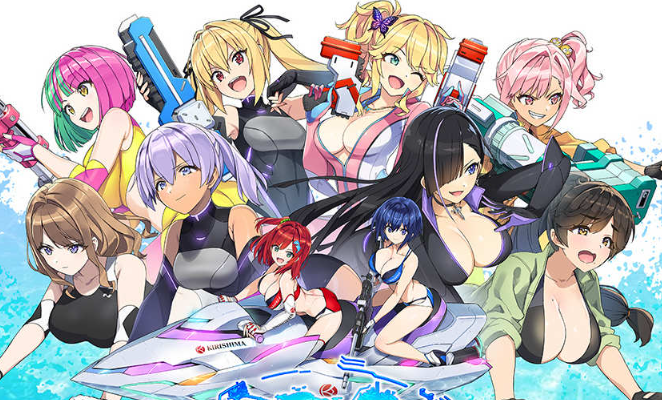
Yep, that’s its core charm: it masterfully blends "high-octane sea jet combat" and "character companion progression." You’ll fight 4v4 turn matches on the sea, then head back to your custom base to boost character affinity, change looks, and do daily interactions. The vibe strikes a perfect balance between casual mobile fun and cozy otaku immersion.
But here’s the catch:
New players often get stuck in three key spots:
-
Who should you target in beginner pulls?
-
Battles look turn-based, but winning actually depends on team composition and positioning
-
So many progression systems: affinity, interactions, outfits, materials, dungeons, events, shop… what’s the most efficient to prioritize?
So today, I’m breaking down everything for Turbulent Dolphins from zero to advanced, straight from a player’s perspective:
-
How to reroll efficiently for beginner pulls
-
How to understand the battle system and why you lose
-
Recommended team builds & who to level first (no regrets)
-
How to build affinity and interactions, and key spots for farming resources
-
How to customize outfits that feel like more than just looks
-
Differences between Taiwan/Japan versions & how to pick which to download
I. Opening Introduction & Game Overview
A. Core Game Concept Summary
This guide’s one-sentence takeaway:
To enjoy Turbulent Dolphins, it’s not about who you pull—it’s about linking your beginner pull plan, team comp/positioning, daily progression, and event resources into a smooth cycle.
Once this cycle runs smoothly, whether you’re F2P, low-spender, or just a casual here for character interactions, you’ll play stress-free without getting stuck for too long.
B. Game Background & Features
Turbulent Dolphins is set in a world where sea competitions and team battles reign supreme. You play as a coach/manager: you raise your team, train characters, set up battle lineups, and climb ranks via turn-based combat.
Here are key features to remember (we’ll reference them often):
-
4v4 turn-based command combat + card/skill hand selection: Battle fun and results heavily depend on team composition and attack order.
-
Character progression + daily companion interactions: You don’t just pull characters to fight—there’s tons of daily interactions, affinity, base features, and outfit customizations.
-
Custom outfits (separate top/bottom pieces, high flexibility): This is what sets it apart from games that only give full outfit sets—you can mix and match freely.
-
Cross-platform play: The Japan version works on mobile + PC; the Taiwan/Hong Kong/Macau version also supports mobile + Windows.
C. New Player Quick Start Guide
If you want to jump in fast, follow this guide order:
-
Start with Chapter 2: How to reroll for beginner pulls and which character types to target
-
Next, Chapters 3-4: Battle rules, team positioning, and recommended team builds
-
Then, Chapters 7-9: Daily progression, resource spending, and best shop purchases
-
Finally, check Chapters 5-6: Affinity interactions and outfit customization
-
Chapter 11: Download options and differences between Taiwan/Japan versions
II. Reroll Tutorial & Character Recommendations
A. Complete Reroll Guide
To cut to the chase: You can reroll at the start of the game, but do it smartly with a clear priority—don’t waste time blindly!
When it comes to this game’s core gameplay strategy, it’s all about turn-based combat + team building. Many newbies get the wrong idea about rerolling: it’s not about pulling the absolute top-tier rare character to get an early advantage—it’s about getting a character type that keeps your stamina flowing smoothly, pushes stages, and gets through events easily. Pick the right reroll target, and everything after that will be way simpler.
I’ll split the best reroll targets for starting into three categories—grab any one of these, and your early game won’t be too hard:
1) Highest Priority: Core Team Engine Characters
These characters typically have: Party-wide buffs, full-team support abilities, or they let your damage dealers use skills faster and combo better.
-
Provide team-wide buffs
-
Have full-party support effects
-
Let damage dealers use skills earlier and combo more smoothly
If you get one of these as your reroll target, any damage dealer you pull later can be added straight to your team—they’re the most versatile pick!
2) Second Priority: Stable Main Damage Dealer
The early game lacks characters that can consistently clear mobs and keep dealing solid damage. A common new player mistake is only rerolling for supports or tanks, which leads to painfully slow stage progression, burning through stamina super fast without enough materials, and killing your gaming vibe. So make sure your team has at least one core damage dealer to set the pace.
3) Third Priority: Survival-Type Characters
If you’re a player who struggles with hand mechanics or don’t want to deal with complicated positioning, survival-type characters are great reroll picks. Especially in hard events or boss fights, surviving the opponent’s first big burst is way more important than extra damage hits.
B. Character Evaluation & Investment Tips
Since the Chinese (TW) and Japanese game versions have different pacing and banner update orders, I’m not gonna force you to pick “must-have meta characters.” Instead, I’ll teach you how to tell which characters are worth investing in by their role type, so you won’t get left behind when the version updates.
Use these four factors to evaluate characters:
-
Main Damage Dealer: Can they deal consistent damage? Single-target or AoE?
-
Sub-Damage/Utility Damage: Can they finish off enemies, apply debuffs, or break defenses?
-
Support: Can they speed up team rhythm and boost team stability?
-
Tank: Can they lower the chance of your team wiping?
If you can get a core main damage dealer and a core support from your reroll, your start will feel super smooth.
III. Combat Mechanics & Skill Setup
A. Turn-Based Combat Logic
Raging Dolphins’s core combat is 4v4 turn-based command combat. Each round, you pick skills and plan turn order, then use strategy to beat opponents.
New players often get this wrong:
“Do turn-based games just need high stats to win?”
Nope. Wins here boil down to three key things:
1) Seizing Key Pace Rounds
Many stages are won or lost in just one or two rounds:
-
If you use a buff, crowd control, or burst skill first in that round, you can shut down the opponent right away;
-
If you’re half a step late and the opponent takes out your core character first, your whole team gets wiped.
2) Only Picking Skills Based on Damage
The worst thing in turn-based games is going for the highest damage skill every round—this leaves your team open to crowd control, debuffs, and focus fire. The right move is to set up before your burst rounds:
-
Apply buffs, stack debuffs, lower enemy defense first, then unleash your burst.
3) Ignoring Team Synergy
Stacking four all-damage characters might look like it pumps out insane damage, but you’ll usually run into this issue:
-
Your damage is super fast, but the team’s survival rate is way too low—often leaving you with a “wipe before finishing damage” scenario.
B. Team Composition & Positioning Rules
Character positioning affects:
-
Who takes damage first
-
Who’s more likely to be targeted by enemies
-
Whether their skills can cover allies that need protection
Here’s a super easy positioning rule to remember:
- Put defense-type characters on the front line
- Place your most irreplaceable core characters in the back line
- Function-type characters go in the middle line
If your main damage dealer gets one-shot right at the start every time, over 90% of the time it’s bad positioning or missing proper survival setups~
IV. Team Building & Tuning
A. New Player-Friendly Team Templates
Next, I’m sharing 3 basic team frameworks that’ve been super useful from early to mid game—they work with almost any character you pull, super versatile~
1) All-Purpose Story Progression Team
-
1 Tank/Shield character to block damage and keep the team alive
-
1 Main Damage Dealer (Main C) focused on burst damage
-
1 Support character that buffs allies
-
1 Function-type character with special effects
The core logic of this team is: Push the main story steadily, and prioritize unlocking resource-farming nodes you can use long-term.
2) Boss-Raid Specialized Team
-
1 Tank character dedicated to taking hits and reducing team damage
-
1 Full-time burst damage main dealer
-
1 Damage-boosting Support
-
1 Healer/Support that can heal and remove debuffs
The worst thing about fighting a Boss isn’t not enough damage—it’s your main dealer getting one-shot right at the start, or getting CC’ed (crowd controlled) so they can’t use their skills~
3) F2P/Low-Spend Comfort Team
-
1 Survival-focused character
-
2 General-purpose damage dealers
-
1 Function-type character
This team isn’t about going fast—it’s about fewer wipes and saving time, super friendly for budget players~
B. Character Progression Priority
The biggest resource pitfall new players fall into:
“Pulling tons of characters and trying to level every single one”
Result: Every character is half-leveled, and none can fight well.
Follow this order to avoid wasting resources:
-
Main Damage Dealer: Core for fast story progression
-
Core Support: Cranks your main dealer’s damage way up
-
Tank/Survival Character: Stops your team from wiping too often (wasting stamina)
-
Function Character: Add these when you need crowd control, extra healing, or armor break
Once your first team is formed and resources start stacking, you can work on a second or third team later~
V. Character Affection & Interaction Systems
A. Affection Growth Rules
In these “coach + character” training games, affection is usually tied to:
-
Character-exclusive stories/voice lines
-
Unlocked interaction events
-
Growth or reward milestones
I treat affection as a daily task, not something to do “when I have free time.”
Getting through interactions daily leads to massive long-term differences~
B. Social Interactions & Bonding
If you’re here for character interactions, this is the main part:
-
Chat with characters, check events, unlock voice lines
VI. Character Appearance & Personalization System
A. Character Appearance Customization
When promoting Turbulent Dolphins, the devs emphasized total freedom for character outfits—mix and match tops, bottoms, accessories, hairstyles, whatever you want, just like the official store also says.
Players split into two main playstyle groups:
-
The Collectors: Grab whatever you like, since the whole point is to have fun first!
-
The Pragmatists: Only buy stuff your main team actually uses to avoid wasting resources.
F2P (Free to Play) or light-spending players should put resources first into making their team clear stages smoothly. Once your main team is stable, you can dive into cosmetics and outfits—you’ll have a way better time that way.
B. Appearance Design Freedom
The biggest perk of the outfit system? It makes you way more willing to stick with your main team for longer.
The more you use them, interact with them, and level them up, the steadier your account’s growth will get.
VII. Character Training & Leveling System
A. Fast Character Leveling
For games like this, there’s a near-universal rule for leveling up fast:
-
Stage clearing efficiency ties directly to how many resource dungeons you’ve unlocked. The more resource dungeons you unlock, the more consistent training materials you can farm.
-
The rhythm of clearing stages matters too: The smoother you clear stages (and the fewer deaths you have), the more materials you can get steadily every day.
-
Minimizing failed runs is make-or-break—stamina is limited, so wasting it on revives or restarting stages only slows down your whole progress.
So to hit that "fast leveling" goal, don’t chase those fake "shortcuts". Instead, your priority should be leveling up a solid main team that can easily clear high-difficulty resource dungeons—that’s the core of fast progress.
B. Daily Training Content
For daily training routines, split your tasks into three categories to handle:
-
Must-Dos
-
Daily designated quests
-
Stages that give consistent training materials
-
The top rewarding tasks from events
-
Optionals
-
Do coin dungeons if you need more in-game currency
-
Farm ascension material dungeons if you’re short on ascension materials
-
Clear the relevant equipment dungeons if you’re lacking gear
-
Fun Stuff
-
Take character photos, change outfits, decorate base facilities, or mess around with those little interactive mini-features
Just knock out all must-dos first, and your account progress won’t fall too far behind.
VIII. Dungeons & Challenge System
A. Main Story Dungeon Strategies
When you get stuck on a main story dungeon, 9 times out of 10 it’s not because you suck at controls or don’t get the mechanics—it’s because you missed three key details:
-
Your main damage dealer isn’t leveled up enough
-
Your team lacks enough survivability
-
Your attack rhythm or turn order is wrong
Next time you get stuck, go back and check these three points first. You’ll usually fix the issue fast and clear the dungeon smoothly.
B. Limited-Time Events & Challenges
Limited-time events in this game are basically your secret weapon to catch up on progress:
-
Materials from event shops are way better value than what you get from regular stages—totally worth grabbing
-
Rewards from limited challenges are also super focused, perfect for boosting your team fast
My advice is crystal clear:
When joining events, aim for the highest difficulty you can consistently clear. Never force yourself to take on the hardest stages just to test your luck—you’ll only waste time failing over and over, which is counterproductive.
Resources & Economy System
A. Gems & Resource Acquisition
A lot of players see Gems and immediately want to pull characters, but for this kind of progression-focused gacha game, the real key points are:
-
Can you consistently get all the materials required for upgrading?
-
Can you keep your main team strong enough to push through the game smoothly?
So when it comes to resource allocation, here’s my advice to follow this three-level priority order:
-
First, fully build up a complete main team
-
Then start developing a second team
-
Only then think about cosmetics and collectibles-like content
B. Shop & Exchanges
When spending in the in-game shop, here’s my super practical rule for you:
Buy things that make your daily gameplay smoother, not things that only bring temporary thrills.
If the game has a monthly card, Battle Pass, or daily rewards content, these are usually the best value. For one-time bundles, if your account doesn’t have a clear shortage of materials, buying them only gives short-term fun, no long-term benefits.
X. Voice Actors & Story Setting
A. Star-Studded Voice Cast
For a game like *Raging Dolphins*, which emphasizes "character companionship" and "progression interactions", voice actor performances are often one of the core factors that boost player retention:
-
You like a character not usually because she has the strongest stats, but because her lines, voice acting are interesting, or her story resonates with you.
So if you value voice acting a lot, when pulling or leveling up characters, consider "characters you genuinely like and want to use long-term" too. This way, you’ll have more fun playing and stick with it easier.
B. Original Story & Worldview
This game’s worldview usually revolves around a whole set of core elements: maritime competition, team building, character training, rank battles, team confrontation, plus each character’s personal side stories to advance.
When you reach the mid-to-late game, you’ll easily find:
All kinds of resources you spent time grinding stages for are ultimately used to unlock more character interaction content and rich storylines.
This is exactly the most representative core loop of this type of progression and interaction game.
XI. Platform & Download Guide
A. Multi-Platform Download Approaches
The Japanese version’s official info clearly supports iOS and Android mobile devices, plus PC. As for the traditional Chinese version official website for Hong Kong, Macau, and Taiwan, it also notes support for iOS, Android, and Windows systems.
The standard for choosing a game platform is pretty simple:
-
Want to grind daily quests anytime anywhere: Mobile is definitely the most convenient choice
-
Plan to play for a long time, savor story content or customize characters: Playing on PC will be more comfortable and smooth
B. Choosing HKT Version vs. Japanese Version
When choosing between HKT version and Japanese version, the common differences are these:
-
Version update progress: Japanese version usually releases new content first, HKT traditional Chinese version may follow or have its own independent update schedule
-
Banners and event content: The launch order of each version may differ
-
Community guide resource volume: Japanese version’s guides are usually the most abundant, but you need to process Japanese content yourself; HKT version info is closer to your played version, less overwhelming in volume
The traditional Chinese version’s official website clearly lists launch info and platform support, showing this version adjusted the game pace for HKT players.
My advice to everyone:
-
If you want to reference the most guides and catch up on new content fastest → choose Japanese version first
-
If you want to easily understand everything and play with friends around you → recommend HKT traditional Chinese version
XII. FAQ & Advanced Guide
A. New Player Common
Confusion
Q1: I didn't get a strong character in my first pull. Will the game be unplayable for me?
A: Actually, this rarely happens. The real key to having a smooth gaming experience is putting together a core team: a main DPS, support characters, plus survival-focused characters. Once your core team is set up, even if you don't pull the absolute top characters in your first try, you can still progress through the game just fine. Q2: Why do I keep failing stages even when my power level is higher than the stage's recommended value?
A: 90% of the time, it comes down to positioning and timing: your main DPS getting focused by enemies first, using survival skills at the wrong time, or only spamming your highest-damage skill every turn without setting up other combos first. Q3: Who should I spend my resources on first?
A: Prioritize leveling up your main DPS first, then your core supports, then survival characters, and lastly utility characters. Once you have a solid core team built, resources will start piling up naturally later on.
B. Advanced Player Tips
Advanced players only need to develop one key habit:
Have two teams with distinct roles
-
One for story progression and farming materials
-
Another designed for event bosses and high-difficulty stages
C. Version Environment Adaptation
When the game pace is different between the Taiwan/Hong Kong/Macau version and the Japanese version, the most common mistake players make is:
-
Looking at the top team builds from the Japanese version
-
Going back to the TW/HK/MO version, you find those characters aren't released yet, or the system version is different
Ending up copying the Japanese version's resource setup word-for-word, which actually makes your team progress even slower.
Use character roles as your first criteria, get comfortable with the daily routine of your current version before chasing the "perfect" team comp.
XIII. Community Resources & Official Info
A. Official Channels
To stay updated with game announcements, events, and download info, the most reliable way is to check the official website and official social media pages.
B. Player Communities & Guides
The value of player communities lies in:
-
You can see actual battle ideas from different team builds, positioning setups, and playstyles
-
You can also find out faster the most stamina-efficient ways to farm events
C. Bonuses & Gift Codes
Bonuses for games like this are usually found in:
-
Event quests
-
Event shops
-
Official announcements and community posts
The thing that makes Turbulent Dolphin so satisfying for players is that it caters to two different types of gamers:
Want to experience ultra-satisfying combat? A 4v4 turn-based system paired with clever team positioning—this strategy-driven fun that relies on your wits will definitely hit the spot! Want to get hyped and feel accomplished from leveling up characters? Close bonds with your characters, various outfit swaps, and the familiar feeling of having characters by your side every step of the way will keep you hooked! If you want a stress-free, comfy playstyle, just stick to this core routine:
Focus on character roles in your first pull → Build a main team that works for most stages → Spend daily time farming high-value resources → Use tailored teams for events to grab all rewards → Treat close bonds and outfit swaps as bonus fun for long-term play Follow this routine no matter if you pick the TW/HK/MO or Japanese version—you won't waste time on wrong paths or precious resources from bad guides!