Modern Warships Guide: From Newbie to Advanced - S-Tier Ships Must-Grind & Loadout Tips for F2P Play
You’ll get the hang of Modern Warships after just a few matches:
Even if you shell out for top-tier ships, if your positioning’s off, you ignore radar, or mess up your anti-air setup, you’ll still just be a moving target for others to practice on.
But on the flip side, it’s so satisfying too—even a free-to-play common ship, if you nail positioning, detection range, attack range timing, and weapon loadouts, you can still tilt pay-to-win players in ranked matches.
I’m gonna break down all the useful tips here like a veteran gamer chatting, specifically to solve the most common roadblocks new players hit:
-
Should I buy a new ship first or invest in weapons?
-
Why do I get one-shot all the time?
-
Why is it so hard to deal maximum damage?
-
What’s the real "Tier 0" of the meta?
-
How do F2P players get high-CP loadouts and avoid making mistakes in the market?
-
What roles should Destroyers (DD), Cruisers (CA), Battleships (BB), Carriers (CV), and Submarines (SS) each take, and what are their responsibilities?
Enough chit-chat—let’s dive into the key points you’re asking about.
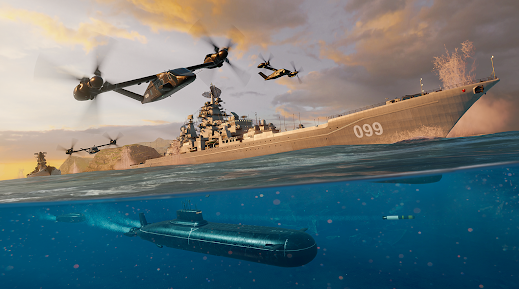
I. Quick Note: What Even Is Modern Warships?
A. Game Identity & Core Mechanics
Modern Warships’ core gameplay can be summed up in one sentence: A real-time naval PVP mode with a super fast pace and tons of info—most matches are decided in 30 seconds or less.
Don’t think it’s just ship vs. ship shooting. It’s actually a cycle: detect enemies → pick your position → time your shots perfectly → retreat to heal/reposition → jump back in when the coast is clear.
This game isn’t like the slow-paced traditional naval sims. The margin for error is super thin. Here are the most common ways new players get taken out:
-
Rush straight out at the start → get focused fire from long range + missile barrages + torpedoes to finish → back to port in 60 seconds
-
As soon as carrier or helicopter detection pings → you haven’t reacted yet → enemy opens fire → you pop like a balloon
-
Submarine launches SLBM or torpedoes on your flank, you’re not watching the radar or alerts → poof, you’re gone
B. Mobile Requirements & Optimization Tips
For mobile, the most important thing isn’t max graphics—it’s stable FPS and low ping.
Even if you crank graphics to the max, if FPS is dropping and controls are lagging, you’re gonna get wrecked in PVP. My straightforward advice for newbies: Stick to medium graphics with locked 60 FPS instead of max graphics that stutter and mess up your plays.
C. 3 Things New Players Must Remember Before Starting
When you first start, I recommend memorizing these three things:
-
Don’t chase Tier 0 ships right away—first master the rhythm of dealing consistent damage
A ship being strong is one thing; whether you can actually land that damage is another. -
Weapons are more like universal assets than ships
A lot of weapons can be swapped between ships, so they’ll still work even when you get a new ship; wasting resources on bad weapons hurts way more than buying a bad ship. -
You’re not fighting alone—your teammates’ positions and intel matter way more than you think
If you get stuck in a bad spot, leave your flank open, or the whole team clumps on one side, the enemy can exploit that and wipe your entire team.
II. Must-Know for Newbies: Basic Setup Guide
A. UI Breakdown & Settings Tips for View, Controls, Sensitivity, etc.
To play smoothly, tweak these three settings first:
-
View/Zoom: Pull it to a setting where you can clearly see missile directions, torpedo trails (the white lines), and terrain cover. If you can’t see them, you’ll die before you can react.
-
Sensitivity: Don’t go for "super fast"
Button Layout: Assign your main guns, missiles, torpedoes, defensive countermeasures (smoke/flare), and repair/supply to your most comfortable-to-reach keys. If you get focused by enemies and can’t find your defensive tools, just get ready to head back to port and restart. Button Configuration: Place "Main Guns", "Missiles", "Torpedoes", "Defensive Bombs/Flare Bombs", "Repair/Supply" in your most accessible spots. If you get focused and can’t grab your defensive tools, it’s time to pack up and retry. ### B. New Player Tutorial Flow & Priority Missions For newbies, here’s my recommended mission priority order: 1. Finish all tutorial missions first 2. Unlock all game modes you can 3. Go with your gut
Step 1: Master the ship class you’re most comfortable with. ### C. New Player Common Mistakes & Quick Pro Tips The 3 biggest traps new players fall into:
Mistake 1: Firing nonstop at every enemy you see, accidentally exposing yourself in a bad position
Pro tip: Find cover first, calculate your effective range, check if there are subs on the flanks, then decide whether to peek out.
Mistake 2: Spamming missiles like there’s no tomorrow
Missiles absolutely shouldn’t be spammed the second their cooldown is done. Wait until the enemy uses their defensive countermeasures, turns, or exposes their thin side armor, then unleash a full volley to hit them hard.
Mistake 3: Treating anti-air (AA) guns as useless decor
Without AA in carrier matches, enemy aircraft will destroy you. Even battleships (BBs) need basic AA and close-defense knowledge—otherwise, you’re just a giant floating target. ## III. Ship Class & Vessel Overview ### A. Roles of Destroyers, Cruisers, Battleships, Carriers, Submarines I’ll explain each class in plain gamer terms:
-
Destroyer (DD): The team’s eyes and flank killer. You’re responsible for spotting enemies, pushing them back, getting angles to launch torpedoes/missiles, and taking out enemy detection gear. A good DD will make the enemy feel like you’re everywhere on the map.
-
Cruiser: The all-rounder of the fleet. Handles anti-air, anti-ship, and support tasks—many matches’ consistent damage output comes from cruisers holding the line.
-
Battleship (BB): The heavy firepower backbone. You’re not the first to charge in; you’re the one who can push enemies back just by being in the right spot. Pick the wrong spot, and you’ll get focused and deleted in seconds.
-
Carrier (CV): The intelligence controller and pace setter. You decide which lanes get lit, which player gets taken down first. Many newbies think CVs are cool, but they actually test big-picture strategy: where to send your planes, who to share detection with, and which lanes to gain advantages on.
-
Submarine: The hidden killer in the shadows. Spamming torpedoes isn’t what makes you strong—what matters is making sure the enemy has no time to react the second you surface. But you’re also super vulnerable to detection and anti-submarine fire.
-
US Line: Well-rounded, consistent, and forgiving of mistakes—many ships here are the "standard template" for their class.
-
Russian Line: Brutal firepower and aggressive pace, designed to push enemies so hard they can barely fight back.
-
European Line: Focuses on unique tools and niche playstyles. If you master them, they’re terrifying; if you don’t, you’ll feel like your damage is lacking.
-
Other Lines: Each has its own strengths—just focus on their core selling points.
Here are 3 solid, common paths for most players:
XII. Playstyle Analysis for National Fleets & Beginner Ship Selection Tips
A. Quick Playstyle Overview of US, Russian, European & Other National Fleets
If you’re a military gear fanatic who loves collecting ships, pick a nation based on what you enjoy—here’s the easiest way to choose:
B. Premium Ship Recommendations & Unique Features
When picking a premium ship, you usually have two great options to consider:
C. Tips for Collectors & Military Enthusiasts on Ship Selection
What’s the worst fear for ship collectors? Getting overwhelmed and stressed from hoarding too many ships. Set clear goals first to avoid chaos:
XIII. Current Game Meta & Future Update Trend Predictions
A. Current Meta: Dominant Loadouts & Tactical Environment
The current meta is usually shaped by two key factors:
B. Impact of Recent Balance Changes on Ships & Weapons
One of the core focuses of Version 0.102’s update was balance adjustments for ships and loadouts. These changes will mainly affect:
C. Predictions on Future Ship Classes, Weapons & Gameplay Trends
I’m not gonna guess what specific ships will be added—just share the trends I’ve observed:
XIV. FAQ & In-Game Problem-Solving
A. Should New Players Buy a New Ship or Invest in Weapons First?
Investing in weapons first is more reliable, and the reason is super simple:
Unless your current ship doesn’t fit your playstyle at all, you should prioritize getting a new ship later.
B. Troubleshooting Tips: Getting One-Shot Killed or Failing to Deal Full Damage
I’ve put together a step-by-step checklist to help you get better fast—go through these:
Once you fix those first two issues, your survival time will at least double. Double your survival time, and your damage will naturally follow—you’ll be cranking out consistent, full-potential DPS.
C. Can average players hold their own in high-rank play?
Absolutely, but first you need to accept one truth:
In high-rank lobbies, it’s not about crushing opponents with max stats. It’s about fewer mistakes, better situational awareness, and more precise loadout choices.
If you nail these key points:
-
Path 1: Destroyer (DD) Beginner → Master detection and flank harassment → Switch to a strong DD or versatile cruiser mid-game
Good for: Players who love positioning, sneaking angles, and taking control of the fight’s pace.Route 2: Cruiser Starter → Master All-Around Combat → Late-Game Versatility via Module Adjustments
Good for players who want consistent damage output while avoiding being dominated by aircraft carriers.Route 3: Battleship (BB) Starter → Master Positioning & Range Control → Late-Game Role as a "Heavy Firepower Pillar" Leading the Team
Good for players who love turning the tide of battle with one heavy broadside.IV. T0 Tier Ships & Must-Pick Ships for F2P Players
A. Current Meta T0 Ship Rundown & Strength Analysis
In Modern Warships, a ship’s T0 tier ranking shouldn’t just be based on raw damage—here are the three key factors:
-
Can consistently deal damage
-
Can actively create advantages during battles
-
Can survive common threats
The official balance update for ships and gear in v0.102 shook up the meta a lot. It’s totally normal to see ships that were once called "meta kings" by players get played less these days.
Previously, ships that were so popular they were labeled "meta gods" by players now see fewer people using them, which is totally normal.
B. High-CP Ships for F2P/Light Spenders
For F2P players looking for high value, my advice is to prioritize ships with a "high floor":
-
Weapon slots are highly flexible, with low gear-setup barriers
-
No need for exclusive premium weapons to perform well—way lower entry threshold
-
Higher survivability, less likely to get deleted instantly on spawn, giving new players more room to practice
-
Hold their own well against common ranked threats like aircraft carriers and submarines
Check out new player recommendation threads in the game’s community. Most veteran players will genuinely advise newbies to start with ships that are cheap, easy to use, and don’t waste resources. The core rule is: Prioritize investing resources into things that consistently help you win.
C. Ship Upgrade, Unlock Order & Resource Allocation Tips
Here’s a tested, no-mistake resource allocation method for everyone:
-
First, master one main combat ship until you can consistently get good results
Never grind three ships at the same time—you’ll only end up with half-leveled ships that are way too weak to keep up. -
Prioritize upgrading weapons that are cross-ship compatible
When you switch ships later, these weapons can be reused directly, making your resource investment more durable. -
Wait and see before dumping big resources after every major balance update
Adjustments like v0.102 often nerf once-strong "god weapons" or buff underrated ones—don’t jump into investing right away.
V. Weapon System & Loadout Philosophy
A. Roles & Differences Between Main Guns, Missiles, Torpedoes, Air Defense, & CIWS
Before picking weapons, you must first understand each weapon’s role in the team. Here’s the breakdown:
B. Common Practical Weapon Build Examples
I’ve put together three of the most useful loadout templates for players to reference:
1) Anti-Ship Burst Build
2) Air Defense & Self-Survival Build
3) All-Purpose Versatile Build
C. Weapon Upgrade Priority & Purchase Tips to Avoid Mistakes
Upgrade Priority
Purchase Tips to Avoid Regrets
VI. Resource, Currency & Market Shopping Guide
A. How to Obtain Silver Coins, Gold Coins & Other Resources
First, get clear on how to earn resources:
B. Equipment & Ships Worth Buying in Shops & Market
Here’s a benchmark for what new players should prioritize:
C. How New Players Avoid Waste & Bad Investments in the Market
Remember these three rules to avoid pitfalls:
Updates like version 0.102 can directly shake the in-game market. Many players will panic-sell or try to speculate on ships here, so don’t follow the crowd and buy randomly when this happens!
VII. PVP Battle Modes & Basic Tactics
A. Overview of Various Battle Modes: Ranked, Casual, Clan Battles, etc.
Different modes actually call for different mindsets when playing:
B. Map Features & Core Positioning Principles
When it comes to positioning, just remember one core rule: you need to stand where you can hit enemies, and they can't focus-fire you from multiple angles easily.
Islands, cover, and battle line boundaries on the map are actually giving you choices:New players often lose not because of bad skills, but because they pick the wrong battle line in the first wave of the game: the whole team rushes to the same side, the other side is broken through by enemy submarines or destroyers, then the whole team gets surrounded and defeated. This is a real pain point for new players!
C. Roles & Practical Tactics for Different Ship Types in PVP
VIII. Advanced Techniques: Movement, Aiming & Intel Management
A. Practical Applications of Dodging & S-Movement Patterns
When you’re targeted by enemy missiles, the worst thing you can do is move in a straight line.
The point of S-movement isn’t to look cool—it’s to make it hard for enemies to calculate lead times, avoid torpedoes from hitting all at once, and pull your ship behind cover to make missiles explode before they hit you.B. Adjusting Aiming Lead & Long-Range Shot Feel
The hit rate of long-range shots depends not only on adjusting the aiming lead, but also adapting to map air conditions and shell trajectory shifts from ship rocking. You need to get used to long-range shot feel over time—don’t try to hit every shot at first. Master the general shell landing points, then adjust for precision gradually.
This is definitely one of the biggest differences between you and top players. Here’s what you need to practice:
The practice method is super simple: play Casual matches, stick to using the same main gun for 50 games. Play enough, and you’ll naturally get a much more intuitive feel for “lead times”!
C. Importance of Radar, Detection, Stealth & Intel Gathering
In this game, many players die super unfairly. The core reason is actually: you totally lack key intel.
You thought you had backup, only to find yourself trapped on a frontline with no one to turn to.
-
Main Guns: Core tool for consistent damage and finishing kills. Most last hits on low-HP enemy ships come from main guns—they’re the most common source of damage.
-
Anti-Ship Missiles (ASMs): Responsible for creating burst damage windows. Forces enemies to use countermeasure devices, turn to dodge, or even retreat—disrupting the enemy’s rhythm.
-
Torpedoes: Main function is blocking enemy movement, ambushing from special angles, and punishing enemy ships that sail in straight lines. Torpedo strength isn’t just about damage—speed and hit rate are the key.
-
Air Defense (AA): It’s definitely not only useful for fighting aircraft carriers! If your air defense system is set up properly, enemy aircraft carriers (CV) won’t dare to casually enter the field and drop bombs without thinking.
-
CIWS (Close-In Weapons System): Your final line of life-saving defense. Especially when facing saturated missiles or close-range rockets, it can block attacks that would otherwise sink your ship, saving your life.
-
Missiles: Prioritize high burst damage or multi-warhead types for sudden, explosive output.
-
Main Guns: Choose ones with consistent accuracy and reliable finishing hits to keep your damage steady.
-
Secondary Weapons: Pick ones that either add extra damage or apply crowd control effects.
How to Play: Wait until the enemy uses their countermeasures, then seize your chance to unload all burst damage and take them down instantly.
-
AA: Opt for long-range and wide coverage types to effectively counter enemy aircraft carriers.
-
CIWS: Fill the close-range interception gap—your final line of defense.
-
Main Guns/Missiles: Don’t chase maximum burst damage here. The key is: if you’re alive, you can keep attacking.
How to Play: Your goal isn’t to destroy all enemy planes. It’s to make the enemy CV think, “Attacking this ship isn’t worth it” and call off their assault.
-
Anti-Ship Missiles: Choose medium-to-high intensity, general-purpose types that work in most battlefields.
-
Main Guns: Pick stable, high-accuracy, sustained damage types.
-
AA/CIWS: At least have basic defensive capabilities.
How to Play: Don’t rely on risky all-in gambles. Win by dealing steady damage and being hard to take down.
-
First, upgrade your main ship’s most used, highest-accuracy primary damage weapon—it’s your core damage source.
-
Next, upgrade ship-agnostic missiles or AA. You can reuse them when switching hulls to save resources.
-
Finally, consider situational weapons—types only used for specific battle scenarios.
-
Don’t buy a weapon just because it’s marked “Legendary/Rare.” Confirm your ship can actually utilize its strengths, otherwise it’s a total resource waste.
-
Never buy a weapon with high theoretical DPS that you can’t hit anything with—it’s flashy and useless.
-
Cost-effective, good options recommended by veteran players are exactly what new players should build their basic loadout around.
-
Daily & Weekly Missions: Stable source of funds
-
PVP Match Wins & Rankings: Efficient earnings, but you need to have the skill to win first.
-
Limited-Time Events: Sudden large rewards
-
Market Trading: Great spot to profit from information gaps and price differences
-
First go for ship-agnostic equipment/ships
-
Buy items that immediately boost your win rate
-
Wait before considering items with volatile price fluctuations
-
Prioritize items that extend your survival time before upgrading damage
Stay alive to deal consistent damage—this game’s mechanics are super realistic. -
Fix your weaknesses instead of chasing maxed-out perfect gear
For example, if your anti-air is weak, upgrade anti-air gear first. If accuracy is low, use main guns with high accuracy to fight first. -
Don’t overspend and go all in right before a major balance update
-
Casual Mode: Practice your skills, test new ship builds, and get familiar with map terrain.
-
Ranked Battles: Pursue high win rates and consistency; your ship build needs to balance both offense and defense more comprehensively.
-
Clan/Team Battles: Emphasizes team communication and division of labor. Your ship might not be the most top-tier, but you must fulfill your role responsibly.
-
Should you risk exposing yourself to deal more damage?
-
Or should you hide behind cover first and counterattack when your enemies show a flaw?
-
Destroyer (DD): Don’t rush right into the enemy at the start. First, do your scouting—find where enemy submarines (SS) might be hiding, then find a flanking angle to deal damage.
-
Cruiser (CA): You’re the mid-field support. Reinforce your teammates when they’re under pressure, and punish enemies decisively when they slip up.
-
Battleship (BB): You need to create a sense of pressure, not charge blindly. Hold your position on the battle line, and enemies won’t dare to advance freely.
-
Aircraft Carrier (CV): Scout first at the start—don’t rush to deal damage. Light up enemy Destroyers (DD) or Submarines (SS) first, your teammates will love you for it.
-
Submarine (SS): You’re the enemy’s nightmare. The best time to strike is when they’re busy firing at your teammates, and their attention is not on you.
-
How to adjust trajectory prediction in time when the target’s speed changes
-
How your ship’s movement speed and turning angle affect your gun’s aim
-
Whether your current main guns use ballistic arcs (curved trajectory) or direct fire (flat trajectory)
-
Not knowing enemy Submarine (SS) positions → accidentally stepping on high-risk torpedo routes
-
Not tracking enemy Aircraft Carrier (CV) plane movements → getting targeted by lock-on fire in open seas
-
Can’t keep track of your teammates’ positions and movements →
-
When playing, focus on intelligence-gathering rather than just spamming damage. The key is to avoid getting hit as much as possible.
IX. Fleets, Squadrons, and Multiplayer Team Combat
A. Squadron System Overview & Benefits of Joining One
The best part about joining a squadron isn't just chatting with others—it's these three things:
-
You have consistent teammates, so the tactics you want to practice can actually come together
-
Everyone takes different roles, so you don't have to carry the entire team alone
-
In high-tier matches, good communication is often the deciding factor between winning and losing
B. Fleet Composition & Role Division
A solid, well-flowing fleet lineup usually has:
-
1 frontline ship that can soak up damage
-
1-2 mid-range firepower cores dealing damage
-
1 ship for scouting and flanking support
-
Depending on the match, you might also add a submarine (SS) to the fleet
C. Impact of Voice Chat, Markers, and Communication in High-Tier Matches
In high-tier matches, the biggest gap between players isn't their shot accuracy—it's these points:
-
"Who gets spotted first by the enemy"
-
"Who takes the enemy's concentrated fire first"
-
"Who uses their utility skills first"
If you have voice chat or team markers, teammates can sync up to focus fire. Without these, everyone plays their own game, damage is spread out, and it's ineffective.
X. Game Purchases, Battle Passes, and Event Planning
A. Battle Pass Content, Rewards, and Whether It's Worth Buying
Is the battle pass worth buying? I only follow one rule: Do its rewards match key resources you need for the ship line you're currently working on?
If it only gives skins or niche weapons you'll never use, even with lots of rewards, it's not a good deal.B. Value Analysis of Purchasable Items: Ships, Weapons, Skins, Etc.
The most common mistake casual or F2P players make is spending money randomly:
-
Buying a cool-looking ship you can't actually play well
-
Getting tons of weapons but having no extra ship slots for them
-
Blowing cash on skins that don't improve your win rate at all
My advice:
-
First, fully equip your most-played main ship
-
Then, consider buying new ships
-
Treat skins as collectibles, not as a way to boost your power
C. Priority Order for Daily, Weekly, and Limited-Time Events
For event priority, here's a super useful rule of thumb:
Can get universal weapons/key resources > Can get parts for your main ship > Everything else.
Events are perfect for F2P players to get ahead—miss them, and you'll have to grind slowly later.XI. Mobile & Emulator Setup Optimization
A. Balancing Graphics, FPS, and Battery Life on Mobile
For mobile players, here's the go-to advice:
-
Prioritize stable FPS
-
Lower graphics settings for effects and shadows
-
When playing long PVP sessions, don't use the highest graphics while charging
B. Emulator Settings: Key Bindings & Sensitivity
The perks of playing on emulator:
-
More precise controls than mobile
-
Easier to monitor the minimap/radar alerts and incoming fire at the same time
So what to do: -
Group your weapon keys logically
-
Set your sensitivity to "stable for long-range burst firing"
Don't set it too high—fast doesn't mean good; stability is everything.
C. Practical Tips to Lower Ping, Reduce Lag, and Make the Game More Stable
-
Use a stable network connection first
-
Turn off auto-downloads and live streams in the background
-
-
streaming apps, or any other software that hogs your network bandwidth
-
Before jumping into Ranked matches, it’s highly recommended to play a Casual match first to test your connection—this avoids getting stuck with lag or disconnecting mid-game.
-
If you prefer a consistent, all-around playstyle, go with the US Fleet first.
-
If you love high explosive firepower and charging head-on into battles, Russian Fleet is perfect for you.
-
If you like mobility and skill-based plays, European Fleet is your best bet.
-
If you want something iconic—pick a well-known famous battleship or your favorite ship class.
-
If you prioritize practicality first—go for ships with flexible slots, strong versatility, and easy-to-build loadouts.
-
Stick to collecting only one specific ship class this season.
-
Only collect ships from a single nation.
-
Only collect ships that are viable for actual combat, especially Ranked matches—this way you won’t feel burdened, and won’t end up with a full port but terrible win rates.
-
Which weapons are performing better in actual battles after balance adjustments.
-
Which ship classes dominate matches in the current game pace.
-
The interaction logic between missiles and Anti-Air (AA) systems.
-
The survivability or damage output curves of some ships.
-
Weapon and loadout requirements for specific game modes.
-
More and more countermeasures for specific threats will be introduced.
-
The cat-and-mouse game between detection and anti-detection will become more critical.
-
Team coordination and multiplayer teamwork will grow increasingly important.
-
Weapons can be reused across different ships.
-
You don’t have to re-level weapons when switching to a new ship.
-
Good weapons can make even average ships capable of climbing ranks.
-
Did you take the wrong starting route at the beginning of the match?
-
Are your Anti-Air (AA) systems or Close-In Weapon Systems (CIWS) not equipped, or too low level?
-
Do you save your disruption skills for when the enemy is about to launch a big attack?
-
After the match starts, do you check your radar or spot enemy positions regularly?
-
- Are you only hyper-focused on cranking out damage, completely forgetting that staying alive is the only way to actually output damage?
-
Prepare a versatile loadout that works for most situations
-
Master the role and responsibilities of your chosen ship class
-
Know when to retreat mid-fight, adjust your positioning flexibly, and perfectly time when enemies activate their countermeasures. This will let you hold your ground on the battlefield, even beating opponents with fancier gear but chaotic, unstructured play. If you only remember one core tip for Modern Warships, it’s this: Winning at Modern Warships isn’t about the most expensive ships—it’s about using battlefield intel and smart positioning to stay alive until your damage window opens. First, master one main battleship, prioritize investing in versatile weapons, solidify your anti-air and self-preservation abilities, then slowly work toward T0-tier gear and collector’s ships. You’ll realize—you’re not just a little improved. You’ve become a player who actually knows how to play the game.
-