《Lord of the Rings: Rise to War》 Beginner’s Guide – Dominate the Holy Land as a Newbie
This game actually once faced shutdown. Many players still playing it now are either coming back to relive old memories, catching up on missed content, or switching to private servers or legacy servers to keep playing. However, the core mechanics of the gameplay won’t change with version updates. As long as you plan according to this mindset, you won’t end up making blind mistakes like stepping on landmines that lead to constant defeats.
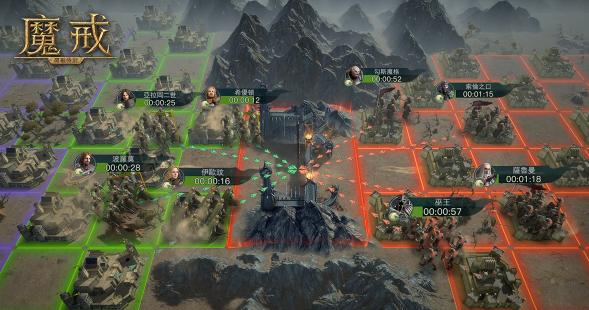
I. Game Overview & Faction Selection Guide
A. Official Middle-earth License: What You’re Actually Playing Is A "Season-based Grand Nation War Chessboard"
This game looks like a strategy SLG at first glance, but its core gameplay isn’t about building flashy stuff. It’s all about these key points:
-
Can you expand your territory to capture key strategic points with minimal cost?
-
Can you keep up with your alliance’s rhythm—deploying troops on time, defending outposts on time, and joining sieges on time?
-
Can you pair your Ring abilities with commanders to minimize war losses?
To put it bluntly: This isn’t a single-player idle game at all—it’s a season-based grand nation war game. How strong you are depends not only on your own development, but also on how organized your alliance is, and whether you picked the right faction.
B. Six Factions’ Traits: Don’t Pick A Faction For Looks—Pick It For The Playstyle You Want
People usually split factions into "Good" and "Evil" sides. The six factions are:
-
Free Peoples
-
Elven Alliance
-
Rohan
-
Gondor
-
Isengard
-
Mordor
But the most common mistake new players make is:
"I think Mordor is so cool and evil! I pick Mordor!"
You’ll get crushed in the early game, though. You think you’re a great general under Sauron, but you’re just a grunt assigned to do manual labor.
C. New Player Start Recommendations: Mordor Fast Expansion vs Free Peoples Steady Development
Here’s my no-nonsense advice from a fellow player:
If you’re in any of these situations:
-
It’s your first time playing an SLG
-
Your daily playtime is irregular
-
You don’t want to get attacked right from the start
Recommended pick: A "steady" faction like Free Peoples or Gondor
Because you’ll have time to learn basics like road building, resource balancing, troop counters, and commander development.
If you’re in any of these situations:
-
All your friends are playing Evil-side factions
-
You’re willing to follow your alliance leader’s orders
-
You want to feel aggressive in the early game
Mordor / Isengard are worth trying
But only if you’re not playing solo—you need your alliance to back you up.
II. First Day Building & Resource Strategy
A. Main City Upgrade Order: Your First Day Goal Isn’t Combat Power—It’s "Not Running Out Of Resources"
The easiest thing new players do on the first day is:
Upgrade buildings randomly → Run out of resources → Get stuck recruiting troops → Watch others fight while you do nothing
Here’s a "no-fail" early game rhythm logic for you:
Always remember this: In SLG games, the strongest players aren’t the ones who fight the hardest—they’re the ones who never run out of resources
B. Resource Node Occupation Principles: What’s the Right Ratio for Wood, Stone, Iron, and Food?
New players often ask, “What’s the best resource ratio to follow?” Here’s a brain-dead easy tip I swear by:
So when picking nodes early on, prioritize this ratio:
If mid-game you’re always short on a certain resource, it’s almost never the ratio’s fault—it’s usually because your storage is too small or you’re bad at managing collection times—seriously, most players run out of resources not because there’s a shortage, but because of their own bad habits.
C. Fortress Pathing System: Adjacent Tile Rules and Expansion Route Planning
One of the most addictive (and most frustrating for new players) parts of this game is pathing.
You have to face the truth:
You’re not playing a game where you can go anywhere you want—you’re playing a game where you can only go where your current tiles connect to.
The core idea of pathing is actually super simple:
The safest pathing strategy for new players:
Don’t try to be an explorer and path all the way across the map at the start—you’ll almost definitely run into a situation where:
you run out of resources mid-path, lose all your troops, and your fortress gets destroyed by the enemy.
D. Lord of the Rings Energy Gathering: Domination Talent Points and Territory Expansion Efficiency
You’ve probably heard veteran players talk about “Energy”, “Ring Points”, and “Domination”, right?
This is basically your daily stamina bar for all actions.
The most important thing on day 1:
III. Commander System and Hero Development
A. Commander Types: Don’t Train the Coolest Guy—Train the One You Need
Commanders are basically categorized by their roles:
: Grants allies buffs, healing, speed boosts, and reduces casualties
-
Upgrade your Main City whenever possible
-
Prioritize upgrading Barracks/recruitment-related buildings to the "slots you actually need"
-
Level up your resource buildings so you never run low on supplies
-
Don’t sleep on storage warehouses
-
For research/tech upgrades, follow the current meta, but generally: prioritize ones that boost resource collection, marching speed, or troop recruitment efficiency
-
Early game: Food and Wood are your most scarce resources
-
Mid game: You’ll hit a wall with Stone and Iron
-
Food : Wood : Stone : Iron = 4 : 3 : 2 : 1
Once your main city levels up and you need way more Stone and Iron for building upgrades, switch to 3 : 3 : 2 : 2 ratio.
-
Any tile you want to attack, capture, or collect from has to connect to your territory
-
Fortresses are your relay points and key nodes for expansion
-
Good pathing lets you bring the fight straight to your enemy’s doorstep
-
Bad pathing leaves you stuck as a “farmer” never leaving your own turf
-
Start with “resource-dense areas”
-
Next, move towards your “alliance rally points”
-
Only then go for “key strategic locations”
-
Don’t waste Energy attacking tiles you can’t win
-
Don’t risk losing fights just to level up faster—injured troops will only slow you down more
-
Always put your Energy first on: expanding territory, boosting collection efficiency, and increasing marching speed
-
Damage dealers: Faster at fighting enemies, monsters, and cities
-
Tanks/Controllers: Take hits, lower enemy strength, and hold enemies in place
-
Support
-
-
Gathering/March-Type: You might think they’re useless at first, but they’re absolutely the MVP during the early-game.
New players’ biggest mistake:
You pull a super flashy damage-focused Commander, but you lack enough resources to support your army AND have the wrong unit type, so you can’t even secure land.
So in the early game, besides your main battle Commander, you must have 1-2 characters that help you earn resources and save time!B. Talent Specialization Routes: Physical/Spirit, March Speed, Fort Limit - What to Choose?
Here’s a "no-regrets" order for your talent points:
-
First, max out your main battle Commander’s talents to secure land consistently
-
Prioritize improving march and resource gathering efficiency
-
Then go for max damage talent builds
Many new players dump all their talent points into damage right from the start. But even if you win fights, it’s meaningless—you won’t have enough resources to train troops, nor will you learn how to expand territory and follow your Alliance’s pace. Basically, you’re like a solo warrior fighting in the middle of nowhere with zero support for future development.
C. Respect Points & Invitation Letters: Don’t panic if you don’t pull them—this game is all about "taking it slow"
The spirit of this system actually aligns with the whole game’s pace:
-
When you pull a gacha, besides gear and items, you may get Invitation Letters—keys to recruit Commanders directly
-
Invitation Letters let you recruit the corresponding Commander immediately
-
Reach the required Respect Points threshold, and you can recruit that Commander smoothly
My advice: Stay calm.
Treat this game as a long-term collection process. Don’t rush to quit just because you don’t get what you want in a day or two.
After all, what really affects your combat power isn’t just what you pull—it’s your:-
Ability to expand territory well
-
Control over casualties
-
Ability to keep up with your Alliance’s overall pace
D. Commander Lineups: 3-5 Person Combos for PVE Questing and PVP Combat
You can use this template to build your teams:
-
PVE Questing/Securing Land:
-
1 Main Damage Dealer + 1 Stable Buff/Heal Role + 1 Support Role
-
Core Goal: High stability, low casualties, sufficient sustainability
-
-
PVP Field Combat/Objective Holding:
-
1 Burst Damage Dealer + 1 Tank/CC Role + 1 Functional Role
-
Core Goal: Secure first strikes, hold enemies back, disrupt the opponent’s rhythm
-
Never bring all damage dealers to PVP. PVP isn’t about flashy damage numbers—it’s about whether you can:
Lock down the enemy’s core units, hold until reinforcements arrive, or force the enemy to retreat.IV. Unit Counters & Tactical Deployment
A. The Four Main Unit Types: Infantry, Cavalry, Archers, Siege Units
The easiest way to understand them:
-
Infantry: Great for holding lines, highly stable, and usually have the most controllable casualties
-
Cavalry: High mobility, amazing for rushing and chasing, but they can get taken down easily
-
Archers: The main damage source, strong at dealing consistent damage, and excel against specific targets
-
Siege Units: Only shine when attacking castles—they’re usually awkward in field combat
B. Deployment Formation Rules: Frontline Tanks + Backline Damage + Commander Skill Combos
Remember one super important rule:
If your tanks aren't holding the line, your damage dealers are as good as made of paper.
Most of the time, it's not that the damage is insufficient—it's that your front line can't hold, so the back line's skill rotation never gets off the ground, and your entire army ends up wiped out.
C. Outpost Siege: Grove Camps and Wandering Forces XP Rewards
Special outposts are generally places where "you can get higher rewards with less energy", but new players must not be greedy. Taking on too hard a spot all at once will only trap you in a vicious cycle: "insufficient energy → heavy troop losses → resource-heavy troop reinforcements → even tighter on resources". The rule is simple: take on spots you can consistently hold and farm continuously—real efficiency is what matters.
D. Casualty Control: Wounded Troop Recovery and Tactical Retreats
One of the biggest differences between experts and new players is:
-
New players: Refuse to retreat even when their troops are down to a sliver of health, stubbornly holding on
-
Veterans: Pull back immediately when the tide turns, keeping troops ready for the next move
After playing for a while, you'll get it:
Troops are worth way more than some petty sense of pride.V. Map Expansion and Marching Strategies
A. March Range Limits: Adjacent Tile Rules and Fort Relay Stations
Every time you think, "I'm right next to it, why can't I attack?"
9 times out of 10, it's because you haven't connected your territory or your relay fort isn't set up.As a veteran who's played multiple seasons, my top recommendation for new players is to use the "three-phase expansion" strategy for setting up your base:
-
Home Resource Ring
-
Alliance Rally Ring
-
Frontline Strategic Ring
Stick to these three phases, and you'll never become that tragic player whose city gets taken while their troops are still in the rear.
B. Terrain Tactics: Mountains, Rivers, Plains
Terrain isn't just a decorative element—it directly affects these key factors:
-
March duration
-
Supply pressure down the line
-
Risk of defending positions or being ambushed
So when laying paths, don't just go for the shortest straight line. Most of the time, you should prioritize routes that are:
Safe, easy to defend, and able to support ally reinforcements at any time.C. Dor Ethell Main City Siege: Attack Countdown and Inner Gate Combat Flow
For a main-city-level target like Dor Ethell, the priority for the alliance isn't "having fun fighting"—it's these core things:
-
Can all members assemble on time?
-
Can roles and coordination be done well?
-
Can casualty rates be controlled? Otherwise, half-way through, everyone will be out of troops and it's all for nothing.
New players don't need to be the MVP here—just do these basic things:
-
Strictly follow the commander's orders—go where they tell you to attack
-
Retreat immediately when it's time, and don't delay reinforcing troops or spending resources when needed
-
Don't charge blindly—you'll just make other allies clean up your mess
Do these things well, and you'll be a top-tier new player.
D. Holy Land Battles and Sieges: Alliance Coordination and Resource Node Defense
The core of Holy Land battles is a "long-term war of attrition"—you can't win it all in one big push. The key is:
-
Rotate to defend positions
-
Rotate to reinforce troops
-
Rotate to lay paths or destroy the enemy's paths
-
Whoever cracks first loses.
So if you're a working adult player, make sure to join an alliance that:
Has a fixed rotation schedule, is easy to communicate with, and has someone in charge who gets things done
Otherwise, you'll never experience the core fun of this game.VI. Ring System and Season Goals
A. Ring Talent Trees: What to Know About Mana Axis, Wisdom Foot, and Domination Core?
I won't give you any vague nonsense about ring talents—just the directions that are definitely useful for new players:
-
Smoother Energy/Point Regeneration
-
Increase Marching/Gathering/Conquest Efficiency
-
Focus on maxing damage talents only in the mid-to-late game
Lots of newbies rush to be “gods of war” by dumping all their Ring Talents into damage—only to burn through their Energy in no time, stuck at home watching others fight. Total cringe situation.
B. Season Goals Breakdown: Points, Rank Rewards, & What You Should Actually Chase
Season goals aren’t about checking every single box—here’s what you should do:
-
Follow your alliance’s lead, and knock out what they need you to handle
-
Pick personal goals that are achievable and give you the best value for your effort
Your top priorities should always be:
-
Things that speed up your growth
Not goals that force you to fight like crazy when you’re nowhere near strong enough.
C. Hero’s Heart Mechanics: Leveling, Monster Grinding, & XP Optimization
This system ties troop training and commander leveling together—newbies don’t need to grind nonstop. Instead, learn to:
-
Find stable monster-spotting locations
-
Get the best XP efficiency with minimal troop losses
-
Pair this with your Ring Talents to keep your Energy usable all day long
D. The One Ring Energy Loop: Resource Conversion & Sustainable Territory Growth
Once you hit endgame, the core loop will click:
Energy → Claim Land/Gather → Resources → Recruit Troops/Upgrade Buildings → Higher-Tier Land → More Profits
This is the core logic of the game.If you can master this loop, you can enjoy the game comfortably even without spending a lot of real money.
VII. Alliance System & Kingdom War Gameplay
A. Alliance Entry Requirements: R4 Approval & Contribution
Every alliance has different entry rules. Some require approval from R4 members, plus a certain contribution threshold. New players don’t need to stress—just check if you meet the requirements.
Alliance Core Gameplay: Discipline, Structure, & Roles
Let’s be real:
80% of how fun this game is depends on which alliance you join.
A good alliance will give you:
-
Clear marching route plans
-
Coordinated rally timings
-
Solid defense rotation schedules
-
Basic tutorials for new players
-
Timely resource support
A bad alliance will only give you:
-
Casual invites like “come fight if you’re free”
-
Last-minute orders like “someone go defend that spot”
-
Then you get crushed while defending, with zero backup coming in.
B. Alliance Tournaments & Cross-Server Wars: Mastering Attack/Defense Rhythms
The key isn’t how strong you are alone—it’s about:
-
Showing up on time for rallies
-
Following the commander’s unified orders
-
Holding your assigned position
The sooner you realize this is a team game, the faster you’ll get stronger.
C. Stronghold Siege & Long-Term Control
Defending the Stronghold is all about protecting resources and pride.
If you hold it, your alliance’s morale soars; if you lose it, your entire faction falls apart.D. World Championship: The One Ring Showdown
The ultimate endgame goal is always that coveted, organization-heavy prize everyone wants.
If you make it this far as a new player, congrats—you’re no longer a newbie.VIII. Event Bonuses & Spending Plan
A. Launch Event Flow: First Recharge, Daily Quests, Login Rewards
No matter the version, there’s one must-do as a new player:
Grab every free resource you can get your hands on.
The gap between you and others comes down to whether you claim every reward you’re entitled to.B. Monthly Card & Pass Value: ROI for F2P & Light Spenders
If you're a micro-spender (player who spends a little), the most reliable options are:
-
Long-term valid monthly card
-
High-value battle pass
-
Exclusive packages tailored to your needs
C. Summon Pity: Shard & Invitation Letter Strategy
Treat summoning like completing a puzzle, not gambling to turn your luck around. Lucky breaks do happen, but they’re definitely not the norm.
D. Risks of Third-Party Recharges & Account Security
The most common tragedy in the player community: Cheap third-party recharge → refund → your account gets banned. Save a small amount now, and you might lose your whole account later.
IX. New Player FAQ & Pitfall Guide
A. What if My March Goes Out of Bounds?
The answer is always:
Build roads, upgrade forts, and follow your alliance’s routes.
Don’t be a lone wolf explorer.B. What to Do When You Lack Resources
-
Adjust the development ratio of your resource tiles
-
Upgrade warehouses to expand your resource capacity
-
Schedule resource gathering times in advance
-
Request resource support from your alliance
C. How to Read Battle Reports?
You need to focus on three key points:
-
Where did your troops die?
-
What part of the battle did you lose in?
-
Are your troop losses too high?
D. Account Security Backup
Bind and back up your account, and never log into untrusted platforms.
This sounds cliché, but every season there are players who regret not doing this.X. Platform Optimization & Emulator Tips
A. Minimum Mobile Specs & Graphic Settings
You don’t need the flashiest graphics—what you really need is:
No lag during battles, no frame drops during rallies, and no overheating even after long play sessions.
Lower graphics if you can, turn off shadows entirely. You’re fighting a war, not taking scenic photos.B. Emulator Multi-Instance: Keymapping for Nox/ LDPlayer Type Emulators
If you play for long hours, or you’re not very good at tapping with your fingers, emulators are way more comfortable:
-
Keyboard/mouse movement is way faster than mobile taps
-
A much wider game view
-
Higher operation precision
But remember: Never use cheats or hacks—you can’t afford to risk your entire account.
C. Keyboard Shortcuts
Set up your in-game keyboard shortcuts properly, and you’ll be shocked how much faster your controls get—it’ll feel like a whole new game!
《The Lord of the Rings: Rise to War》 is so addictive not because of summon luck or raw power, but because of the growth and immersion: you start as a rookie soldier stepping into Middle-earth, and slowly become strong enough to join your alliance, attack holy sites, storm enemy bases, and crush them under your heel. That journey is what hooks you.
If you can only remember one key tip, it’s definitely get your economy running smoothly first, then expand your power and go to war.
Once you master the basics: road building, resource allocation, talent point strategies for rings, and loss control—you’ll never be the newbie who just farms at home while everyone else is fighting. -