Hyakki Chronicles: Newbie Lineup Guide for Early-Game, Dungeon Clearing & PVP Team Composition
One of the biggest misconceptions new players have about Hyakki Chronicles is that it’s an idle card game where you can steamroll everything by pulling high-star demon generals. But after playing for a few days, you’ll realize that progress never depends on a single unit—it’s all about whether your entire team works in sync. This game blends Japanese-style aesthetics with a twisted Three Kingdoms theme. You take on the role of an Onmyoji lord, advancing battles by summoning demon generals, leveling up units, and idling to gather resources. The official store description clearly states that the game combines card strategy with casual, rewarding progression. Put simply, this isn’t just a game where raw power is king—you need to pay attention to unit roles, synergy, positioning, speed tuning, and resource allocation to succeed.
My biggest takeaway from playing idle card games like this is: the most frustrating part early on isn’t pulling strong units—it’s getting multiple solid-looking characters, wanting to level all of them, and ending up with a bunch of half-baked units stuck at mediocre levels. Especially in Hyakki Chronicles, your team needs a perfect rhythm between your main damage dealer (main C), tank, support, and crowd control units. If you focus your resources on a single team that can push stages and handle daily tasks right from the start, your progress will be way smoother. On the flip side, if you keep switching teams randomly and leveling everything evenly, even a flashy unit pool will get stuck on materials mid-game for sure.
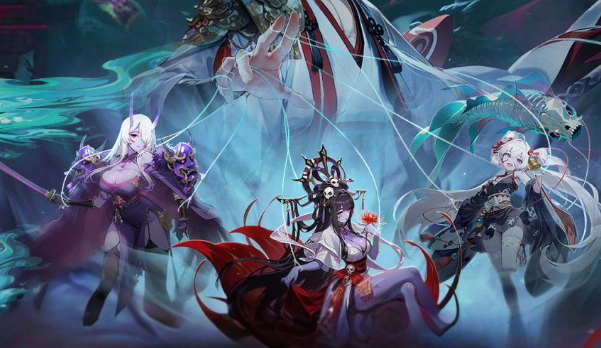
I. Hyakki Chronicles Team Lineup Overview
A. Basic Concepts & Term Explanations for Team Lineups
The core team logic in Hyakki Chronicles boils down to simple roles: frontline tanks hold the line, backline dealers dish out damage, and supports keep the rhythm of the fight going. Frontline tanks take hits and enemy crowd control. Main C’s deal most of the damage, sub C’s finish off low-health enemies. Buffs and debuffs supports boost damage, reduce enemy damage, or help generate energy. Crowd control units limit enemy actions, and healers keep your team alive long-term so they don’t collapse. A lot of new players only look at SSR rarity, but in actual battles, a high-damage unit with zero protection might get taken out before they even use their ultimate. Meanwhile, a balanced team with a tank, healer, crowd control, and damage dealer can be way more reliable even with lower-star units.
Speed tuning is another detail new players often overlook. The ideal fight flow is: crowd control or support units go first to limit enemies or apply buffs to your team, then the main C unleashes burst damage, and finally sub C’s clean up low-health foes. If your main C is too fast and uses their skill before getting buffs, their damage will be wasted. If a healer is too slow, allies might already be dead before they heal them. That’s why what really separates top players from the rest late-game isn’t just unit stars—it’s details like speed, accuracy, resistance, and positioning.
B. Current Meta Team Lineup Categories
Common lineups right now fall into four main categories. First, the Stable Shu Lineup, with core units like Zhao Yun, Guan Yu, Zhang Fei, Liu Bei, and Zhuge Liang. This lineup is super reliable, has high survivability, and makes stage pushing easy—it’s perfect for new and F2P players. Second, the Early Burst Wei Lineup, with key units like Cao Cao, Guo Jia, Zhang Liao, Dian Wei, and Sima Yi. This lineup focuses on speed and first-turn burst damage, which dominates in PvP but struggles in long fights. Third, the Burn Wu Lineup, centered around Zhou Yu, Lu Xun, Sun Quan, Xiao Qiao, and Gan Ning. It’s great for taking on long bosses and high-health enemies. Fourth, the Crowd Control Burst Qun Lineup, featuring units like Lü Bu, Diao Chan, Dong Zhuo, Yuan Shao, and Hua Tuo. This lineup has insane potential but requires tons of resources and solid play skills.
C. Required Account Resources & Goal Setting
Before building a team, you need to confirm three things: which units you have, whether you’re spending money on the game, and which modes you play most. If you have Zhao Yun, build around the Stable Shu lineup first. If you got Cao Cao, go for the Early Burst Wei lineup. If you pulled Zhou Yu, start with the Burn Wu lineup. Only if you got Lü Bu should you consider the Qun CC burst lineup. F2P players shouldn’t chase T0 lineups at the start—high-star units, signature weapons, and runes all take a lot of resources. A more realistic goal for new players is to build a team that can push main stages, clear daily tasks, and get full resources, not swap around flashy lineups every day.
II. Current Meta Strong Lineups & Tier List
A. Current Version T0, T1, T2 Lineups
Here’s how I’d split lineups into tiers right now: T0 is Early Burst Wei and Qun CC Burst lineups. The Wei lineup uses Cao Cao, Guo Jia, Zhang Liao, Dian Wei, and Sima Yi—its whole thing is killing enemies first turn, so it’s super oppressive in the Arena. The Qun lineup uses Lü Bu, Diao Chan, Dong Zhuo, Yuan Shao, and Hua Tuo—they use crowd control to create space for Lü Bu to unload burst damage. T1 is Stable Shu and Burn Wu lineups. The Shu lineup works long-term for most new players, and the Wu lineup is great for bosses and long fights. T2 is mix-and-match transitional lineups, like pairing Zhao Yun with Hua Tuo, Huang Yueying, Xu Chu, or other support units you pull. They don’t have crazy potential but are super useful early on.
B. Core Characters & Roles for Various Lineups
The core of the Shu Kingdom lineup is Zhao Yun and Zhuge Liang. Zhao Yun handles consistent damage output and frontline dives, while Zhuge Liang is responsible for crowd control and setting the team’s rhythm. Zhang Fei or Guan Yu can fill the frontline role as a secondary damage dealer, and Liu Bei leans more toward sustain. The core of the Wei Kingdom lineup is Cao Cao, as he makes the team’s burst rhythm more cohesive. Pair him with Guo Jia for crowd control, Zhang Liao for diving, and Sima Yi for finishing off enemies, and it’s easy to gain an early lead in PVP battles. The core of the Wu Kingdom lineup is Zhou Yu; the total damage after stacking his burn effects is quite substantial.
Battle Observation: The core advantage of the Heroes lineups lies in whether Lu Bu can deal damage smoothly. As long as Diao Chan or Yuan Shao successfully lock down the enemy’s main force, Lu Bu can quickly turn the tide of battle.
C. Quick Lineup Building: How to Team Up With Specific Characters You Have On Hand
If you only have Zhao Yun, it’s recommended to first build a basic framework: “Zhao Yun + Any Tank + Any Healer + Any Crowd Control + Sub-Carry”. There’s no need to rush to force a full Shu Kingdom team. If you only have Cao Cao, prioritize fast-dealing damage and crowd control characters so Cao Cao’s buffs can translate into an early advantage. If you only have Zhou Yu, pair him with Lu Xun or another damage-over-time character, then add a healer and a tank to follow a long-term burn strategy. If you only have Lu Bu, never fill the entire team with only damage dealers—you must pair him with one crowd control, one healer, or one protective character, otherwise Lu Bu will easily get focused down and killed by the enemy team.
III. Beginner Summon & Early Game Lineup Planning
A. Core Characters to Target in Summons
In the early summon phase, the top priority is to go for core characters like Zhao Yun, Cao Cao, Zhou Yu, Lu Bu, and Zhuge Liang—these are the ones that steer your team’s direction. Zhao Yun is great for players new to the game. Cao Cao is built for PVP battles. Zhou Yu excels in long-haul campaign levels. Lu Bu is perfect for players who want burst damage and are willing to invest resources into leveling him up. Zhuge Liang is an extremely versatile support character. If you don’t want to spend too much time rerolling summons, it’s recommended to get at least one main carry or a strong support before starting the game, because the difference in progression speed with or without a core character in the early game is huge.
B. Short-Term Lineup Goals for the First 3 Days & 1 Week
The goal for the first day is simple: push through main campaign levels, unlock game features, and prioritize leveling up your main carry. From day 2 to day 3, start adding frontline tanks and healers—never focus only on training damage dealers. The core goal for the first week is to set your main team, at least completing the basic setup of “1 Tank, 1 Main Carry, 1 Support, 1 Crowd Control, 1 Flex Role”. As long as this team can push levels steadily and handle daily quests, don’t rush to change your lineup—changing teams frequently in the early game will waste a lot of training materials.
C. Free-to-Play Players’ Alternative Lineup Suggestions
Free-to-play players are highly recommended to start with the stable Shu Kingdom lineup or a hybrid team to transition. For example, you can build “Zhao Yun + Zhang Fei + Huang Yueying + Hua Tuo + Any Sub-Carry” or “Zhao Yun + Guan Yu + Liu Bei + Zhuge Liang + Any Flex Role”. Even if you don’t have SSR-tier characters, it’s okay—just prioritize roles that can take damage, heal, and provide crowd control to fill in. The key for free players isn’t chasing the strongest lineup; it’s leveling up the characters you have to a point where you can steadily earn resources, then slowly replacing members once you get core characters later on.
IV. Best Lineups for Campaign Progression & Daily Training
A. High-Efficiency Campaign Team Examples & Positioning
For campaign progression, a stable team is highly recommended. Place high-toughness characters like Zhang Fei or Xu Chu in the frontline, and pair Zhao Yun (a semi-tank carry) in another front spot. In the backline, put Zhuge Liang, Liu Bei, or Hua Tuo, then add an area-of-effect damage dealer. Positioning note: Tanks should be in the spot where enemies will attack them first. Don’t place your main carry where enemy assassins can easily dive them. Healers should stay in the backline corners to stay safe. It’s better to take campaign slowly than to have team members drop out suddenly—once a character dies, the stability of auto-battling drops a lot.
B. Time-Saving Lineup for Auto-Battling & Daily Dungeons
For daily dungeon runs, the most important things are stability and area efficiency. The Wu Kingdom burn team or Shu Kingdom balanced team work great for auto-battling. If you’re just farming materials, you don’t need a PVP-style burst team—the auto AI won’t always use skills at the right pace. It’s recommended to pick characters with simple skills, wide area coverage, and strong self-preservation, like Zhao Yun, Zhou Yu, Lu Xun, and Hua Tuo—these are perfect for auto-battling and running on their own.
C. Common Campaign Roadblocks & Lineup Adjustments
If you hit a bottleneck with damage, first check your main carry’s gear and level—don’t rush to change your entire team. If survival is the issue, add tanks or healers and optimize your frontline’s gear. If crowd control is lacking and the enemy gets the first move, increase the speed or resistance of your crowd control characters. A lot of times, getting stuck on a level isn’t because your characters are weak enough—it’s because of wrong positioning, incorrect speed stat distribution, or misallocated resources.
V. PVP & Arena Lineup Guide
A. Common PVP Playstyles & Matching Lineups
When it comes to PVP battles...
VI. High-Difficulty Dungeon and World Boss Team Examples
A. General Requirements for High-Difficulty Dungeons
High-difficulty dungeons rely on consistent loop mechanics, not just raw burst damage. Basic needs include: a frontline tank that can reliably take damage, a healer that can top up HP in time, a main DPS that can deal steady damage, and supports that offer damage reduction or amplification. Most high-difficulty boss fights won’t be done in 3 turns—you need a stable turn cycle to clear them.
That’s why you should always prioritize long-sustain setups to withstand the later-stage pressure.
[B. Team Setup Templates for Specific Bosses and Event Dungeons]
For World Bosses, the Wu Burn Team is highly recommended. Get all members: Zhou Yu, Lu Xun, Sun Quan, Xiao Qiao, and Gan Ning. Their combined burn damage stacks incredibly high total output efficiency. If you don’t have a full Wu team yet, you can switch to Zhao Yun as main DPS, paired with Hua Tuo, Zhuge Liang, a sub-DPS, and a solid tank for a steady, reliable damage playstyle. For event dungeons, always check which characters get event buffs. Just slot those characters into your team if possible—even if they’re not your main team normally, their event damage or utility buffs will make them super useful.
[C. Detailed Tips for Items and Positioning]
The first key thing for high-difficulty dungeons is figuring out who takes the enemy’s first wave of skill damage. Tanks must always stand on the main enemy attack path. Main DPS should avoid being focused fire, and healers shouldn’t be placed too far forward either. For item distribution: give damage items to main DPS first, tanks should prioritize damage reduction or HP stats, and supports should go for speed or energy-related effects. Get these small details right, and the improvement will be way more noticeable than just leveling up a single character.
[VII. Role Position and Core Function Analysis]
[A. Task Division for Frontline Tanks, Main DPS, Sub DPS, Supports, Crowd Control, and Healers]
A tank’s job isn’t to deal damage—it’s to survive and soak up hits. Main DPS are responsible for steady damage, being the team’s top damage source. Sub DPS handle extra damage or secondary targets. Supports make main DPS stronger. Crowd control characters weaken enemies. Healers keep the team from falling apart during long fights. If you clearly assign each role’s duties, your team won’t have messy issues.
[B. How to Tell a Character’s Role in Your Team]
Looking at their skill effects is the most accurate way: characters with high skill multipliers that hit multiple targets are damage dealers. Those with shields, damage reduction, or taunt are tanks. Those that boost attack, speed, or energy are supports. Those with stun, silence, freeze, or speed reduction are crowd control. Those that heal, revive, or provide consistent healing are healers.
[C. When to Use Common Hybrid Role Characters]
Zhao Yun is a typical semi-tank main DPS—he can deal damage and still stay alive. Zhuge Liang is a crowd control + support role; damage isn’t his focus. Cao Cao is the core of Wei teams, using buffs to make the whole team stronger. Lu Bu is an extreme burst damage dealer, but he needs teammates to protect him to shine. Hybrid roles are great for early game—one character covers two functions, so resource pressure is way lower.
[VIII. Core Character Deep Dive]
[A. Analysis of Core Characters like Zhao Yun, Cao Cao, Zhuge Liang, Lu Bu]
Zhao Yun is one of the best core characters for new players—his pros are reliability, easy to pair with, and smooth campaign progress. Cons are late-game burst might not beat Lu Bu’s. Cao Cao is the soul of Wei teams, boosting the whole team’s burst, but you need a full Wei team to get his full effect. Zhuge Liang is the core for crowd control and support, fitting most teams to add utility. Lu Bu is the burst ceiling, super fun to play, but needs certain level, speed, and teammate protection.
[B. Each
Core Characters' Skills, Pros, Cons & Common Positioning
Zhao Yun is usually placed on the front line’s flank or mid line—he can take some damage without getting focused down and one-shot. Cao Cao stays in the safe back line to make sure his buffs land smoothly. Zhuge Liang needs speed as his top priority stat, so he’s put in a protected back line spot. Lu Bu is super squishy to one-shots—place him in the back line center or a guarded position so your tank can take damage for him.
C. Backup Plans If You Can’t Pull the Exact Core Characters
If you don’t pull Zhao Yun, use a semi-tank DPS to fill in for now. No Cao Cao? Use Sun Quan or another team-wide buffer to hold the spot. Missing Zhuge Liang? Grab any character with crowd control or slow effects. Don’t force Lu Bu if you can’t get him—running Zhao Yun, Zhou Yu, or Zhang Liao as your main DPS is more reliable early on. The key is to stabilize your resource usage first.
IX. Equipment, Runes & Stat Allocation Tips
A. Key Stats Every Team Needs
Main DPS: Prioritize Attack, Crit Chance, Crit Damage. Tanks: Prioritize HP, Defense, Resistance. Crowd Control (CC) Characters: Prioritize Speed, Accuracy. Healers: Prioritize HP, Healing Output, Speed. Supports depend on their skills—some need Speed, others need survival stats. Never stack Attack on every single character—this is one of the most common beginner mistakes.
B. Runes, Spirits, Equipment Choices & Upgrading Priority
When resources are tight, upgrade your main DPS’s weapon and DPS-focused runes first, then your tank’s armor, then wrap up supports’ Speed and survival stats. Don’t pick runes just by rarity—substats are way more important. A CC character with no accuracy will miss their CC skills even if they’re super fast. A tank with no resistance will get CC’d to death no matter how much HP they have.
C. How to Balance Stats & Optimize Sustain When Resources Are Low
For free-to-play or low-spend players with limited resources: Your main DPS takes the most resources, your tank takes the second most, and supports just need to stay alive long enough to cast their skills. Don’t chase perfect gear early on—grab usable sets and correct main stats first, then tweak substats mid-to-late game.
X. Bonds, Team Positioning & Speed Tuning Tips
A. How Bond Effects Impact Your Whole Team
Bonds boost characters’ base stats and make same-faction teams way more stable. You might not notice a big difference early game, but starting mid-game, a team with bonds will be more durable and consistent than a mixed team of the same star count. So if you have similar characters, it’s usually more worth it to build around completing bonds first.
B. Practical Positioning Examples for Turn Order & Targeting
If the enemy’s assassins always target your back line, swap your squishiest support or put a semi-tank in their favorite spot. If the enemy front line is too tanky, use AoE damage or burn effects to bypass single-target defense. There’s no fixed “best” positioning—adjust flexibly based on the enemy’s playstyle and character setup to get maximum results. Adjust your route as needed.
C. How to Use Speed Tuning & Positioning to Maximize Team Performance
Standard turn order: CC characters go first, then supports, then main DPS, sub DPS last, and healers can jump in flexibly depending on the fight. For PVE dungeons, slow down the turn order a bit and prioritize consistency. For PVP battles, rush for first turn advantage as much as possible. With good speed tuning, the same team’s combat power jumps up a whole notch.
XI. Team Swap Strategies & Resource Allocation
A. Common Replacements & Swap Logic
When swapping characters, don’t just look at rarity—focus on filling team gaps: need a tank? Pick a tank. Need a healer? Pick a healer. Need CC? Pick a CC-focused character. For example, if you don’t have Zhuge Liang, grab a CC support first. No Hua Tuo? Any consistent healer works. Missing Lu Bu? Zhao Yun, Zhang Liao, or Zhou Yu can all be main DPS options.
B. Recommended Resource Prioritization
Here’s the resource priority order: Train your main DPS and main tank first, then core supports and healers. Don’t waste too many resources on sub DPS early—level them up slowly once your main team is solid. A weak main DPS can’t kill enemies; a squishy main tank can’t hold the line; slow supports will mess up the whole fight’s rhythm.
C. Metrics for Swapping Teams Mid-to-Late Game
Before switching to a new team, confirm 3 key things: Does the new team have at least 2 core characters? Can you unlock full bonds? Can your existing equipment transfer over easily? If you reroll your whole team for just one new SSR, you’ll waste a lot of resources—usually not worth it. Wait until your core characters, equipment, and runes support the new team before making the switch.
XII. Event Temporary Teams & Limited Character Uses
A. How Event Characters Boost Your Team Temporarily
During events, limited characters with bonus effects often release. Even if they’re not your long-term main team, these characters can become really useful thanks to event-exclusive buffs. It’s recommended to treat event characters as
Temporary utility characters don't need a massive dump of resources to max them out—just level them enough to stay alive in fights.
B. Event Dungeon Exclusive Lineup Templates
For event dungeons with large enemy numbers, use an AoE damage team. For bosses with tons of HP, go with a burn team or a single-target burst team. If the enemy has lots of crowd control (CC), make sure your team has enough resistance or CC removal skills. Never use the same exact team for every event—you’ll get wrecked real bad.
C. Short-Term vs Long-Term Utilization Strategies for Limited Characters
Not every limited-time character is worth dumping massive resources into. Limited chars with strong short-term effects are great for powering through events, but only limited chars with long-term value—like those with bonds, universal skills, or cross-mode uses—are worth deep investment. Especially for F2P players, you absolutely must resist the urge to pull on every single banner.
XIII. Advanced Lineup Optimization & End-Game Player Guide
A. Pro-Level Tweaking Tips
The gap between top players boils down to tiny details: speed tuning, character resistance, skill accuracy, and position choice. You can have lower overall combat power than your opponent, but you can’t lose the fight’s rhythm. A lot of Arena matches come down to controlling the enemy’s main DPS first and taking out their healer—whoever does that wins half the battle already.
B. Expert-Level Lineup Building Core Principles
The core principle of expert lineup building: Pro players don’t just copy 5 random characters—they understand their team’s main goal. You have to ask yourself: Is this team for fast-forwarding kills? Draining enemy resources over turns? Taking down world bosses? Or countering enemy CC? The goal changes everything, so your character and gear picks will be totally different.
C. Lineup Differentiation for Multi-Account Cross-Server Battles
For multi-account players playing cross-server battles: Assign one account to a solid Shu State team, another to a Wei State team optimized for PVP, and a third to a Wu State team for boss fights. This helps you figure out the strengths and weaknesses of different playstyles way faster, and makes it easier to adjust for cross-server events.
XIV. Lineup Summary & FAQ
A. 3 Most Practical Beginner Lineups Quick Copy List
The 3 most practical beginner lineups quick copy list: First team (Newbie Story Clear Team): Zhao Yun, Zhang Fei, Liu Bei, Zhuge Liang, and any sub-DPS. Super stable, easy to level, and has great error tolerance. Second team (PVP Burst Team): Cao Cao, Guo Jia, Zhang Liao, Dian Wei, Sima Yi. Focuses on speed advantages—perfect for players aiming to climb the Arena ranks. Third team (World Boss Team): Zhou Yu, Lu Xun, Sun Quan, Xiao Qiao, Gan Ning. Relies on burn effects and long-term damage—ideal for taking down high-HP targets.
B. Frequently Asked Questions (Q&A)
Q: Is SSR always better than SR?
A: Not really. Early game, an SR character that fits your team’s needs is way more useful than an SSR you can’t fully resource up.
Q: Do F2P players have to play Shu State?
A: Not 100%, but Shu State teams are super stable, easy to get the hang of, great for story clearing, and have high error tolerance—they’re perfect for F2P newbies.
Q: Can getting Lu Bu make you instantly OP?
A: No way. Lu Bu needs protection, CC support, and resources to shine—he’ll die super fast if you just throw him in alone.
Q: Stuck on winning PVP matches?
A: First check your characters’ speed and resistance—don’t just spam attack power numbers.
C. Tips for Following Future Updates
Baigui Yìwénlù is still in active balancing and version changes—new characters, events, and limited banners can totally shift the current meta. When a new banner drops, don’t just look at the character’s damage numbers—think about whether they fill a gap in your current teams. The best long-term accounts don’t chase the latest “meta” character every time—they first build a solid main team, then slowly add PVP teams, boss teams, and event-specific teams.
All in all, the core of building lineups in Baigui Yìwénlù isn’t blindly chasing T0-tier characters—it’s figuring out what playstyle works best for your account. Newbies who want a steady, slow start should go for a Shu State team or a casual mix team. If you want to climb Arena PVP, lean into Wei State’s fast burst playstyle. For world bosses, prioritize a Wu State burn damage team.
If you love the burn playstyle, focus on mastering the Wu State’s burn system. If you want to hit higher limits, slowly cultivate a burst-control combo from the Heroes faction. Don’t waste early-game resources—focus them on your main DPS and main tank first. Mid-game, add supports and related gear like runes. Late-game, you can switch to multi-team play once you’re solid, so you avoid mistakes and dead ends. Once you get the hang of character roles, positioning, speed tuning, bond combinations, and resource management, even without a full set of top-tier characters, you can still pull off amazing plays with a smart lineup. That’s what makes Baigui Yìwénlù so fun: it’s not about pulling more cards to win—it’s about knowing how to use your characters to their full potential.