Highguard: From Its TGA Closing Showcase to Shutting Down Servers in Just 45 Days—What Went Wrong?
These days, if you spot the name "Highguard", most gamers won’t immediately link it to "some wildly popular shooter"—instead, they’ll probably wonder, "Isn’t that Highguard, the one that shut down shortly after launch?" Unfortunately, that’s exactly the case. This new free-to-play 3v3 PvP shooter from Wildlight Entertainment blends fantasy-mounted combat, base defense/attack, and Shieldbreaker capture at its core. It was unveiled at the end of The Game Awards in December 2025, launched on January 26, 2026, and announced its permanent shutdown as early as March 12, 2026—meaning it only lasted around 45 days total. This massive drop from high initial hype to quick shutdown made it one of the most notable game failures of 2026.
That said, writing off Highguard as just another dead live-service game feels a bit unfair. After all, this wasn’t just another cash-grab knockoff—it had real ambition to do something unique. Its 3v3 matchups weren’t just basic shooting: you had to defend your own base first, grab resources, seize the Shieldbreaker, and then storm the enemy base to destroy their core. Add to that the high mobility from mounts, fantasy-themed Warden heroes, and the strategic spatial control from MOBA-like and siege mechanics, this game’s design was far from generic. The real problem wasn’t that it lacked ideas—it was that the final product’s polish, gameplay feel, tutorial systems, pacing, and failure to manage player expectations couldn’t live up to that ambition.
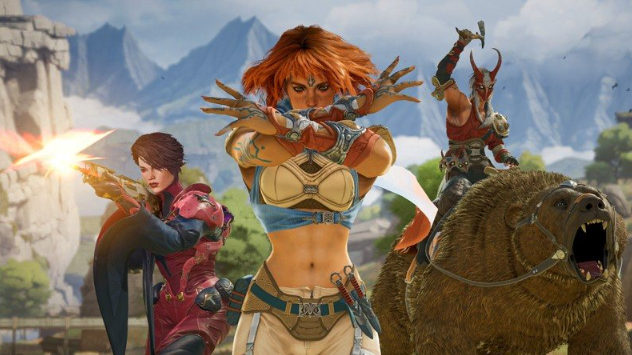
I. Introduction: The Rise and Sudden Fall of Highguard
A. Game Basics: Fantasy-Themed Free-to-Play 3v3 PvP Raid Shooter
To get Highguard’s positioning straight, both the dev team and multiple media outlets agree: it’s a free-to-play, 3v3, first-person PvP raid shooter. Xbox’s official preview labeled it exactly that: free-to-play 3v3 first-person raid shooter. TriplePoint’s official press release summed up its core with "ride, fight, and raid". The SteamDB store page blurb also notes that players take on the role of a Warden, ride mounts, fight, raid, and fight for control over a mythic continent. In other words, it’s not a typical hero shooter, not an extraction-based game, and not a standard objective-based FPS—it tried to combine several popular PvP styles into something new.
This positioning was catchy at first, since its selling points all had strong visuals: fantasy setting, Warden heroes, mounts, siege combat, bases, Shieldbreaker, raids. Watching its trailers, it felt way different from the generic competitive shooters everywhere, at least trying to add something fresh to "objective-based PvP". That’s why even though it got some flak early on, plenty of players still held out hope. The concept had real highlights, but the final game ended up falling way short of what players expected.
B. Development Background: A New IP Made by Former Apex Legends/Titanfall Devs
Another big reason Highguard got so much attention early on was its developer team’s credentials. Xbox, TriplePoint’s press release, and multiple later outlets all noted that Wildlight Entertainment is a new studio made up of devs from Apex Legends, Titanfall, and even some Call of Duty vets. That resume in the late 2025/early 2026 multiplayer shooter market made people instantly think "maybe this is the next competitive new IP shooter". But that’s why the backlash was even harsher later. Players didn’t treat it like a random small game—they held it to the standard of "ex-Apex/Titanfall devs". The game’s reputation and player acceptance dropped incredibly fast. Highg
The game that later became Highguard became the center of controversy, and the core reason for this is actually the huge gap between the sky-high expectations set for it at the start and the real performance of the final product. This isn’t just a marketing planning issue—it’s an inevitable consequence when a game gets hyped up way beyond its actual capacity to deliver.
C. Timeline Overview: Revealed as the TGA Closing Act → Launched Early 2026 → Shut Down In Under Two Months
If you lay out the entire timeline and go through it step by step, you’ll easily see why Highguard later got seen by players and the industry as a “ridiculously-fast failure case”. The first turning point was December 11, 2025: developer Wildlight chose to unveil this game in the closing slot of The Game Awards (TGA)—you know that closing spot is always reserved for massive blockbuster titles like Call of Duty or Battlefield, or top-secret surprise reveals, not some random leftover time slot. The second key point: it officially launched on January 26, 2026, supporting PC, Xbox Series X|S, and PS5 right out the gate, plus cross-play and cross-progression features. The third big milestone was on March 3, 2026, when the official shutdown plan was announced, and it fully ceased operations on March 12, 2026. The entire lifecycle of the game was only 45 days from launch to shutdown.
This blistering pace barely gives anyone time to react. Most live service games at least stick around for a while before fading from players’ attention, but Highguard is the textbook example of “you’re still waiting for it to prove itself, and it’s already gone”. It quickly got grouped with other super-short-lived games like Concord as a market cautionary tale—some media even ran headlines straight up calling it “the next Concord”. The two games’ actual situations aren’t identical, but either way, they both hit the same market reality: no matter how big the hype around a game is, it can’t beat the actual product quality that makes players stay.
II. Core Gameplay: 3v3 Assault Shooter × Territory Control × Siege Warfare
A. Mode Structure: 3v3 Objective Capture, Resource Gathering, Destroy Base Shields & Core
Highguard’s core gameplay isn’t about a single objective—it’s a staged PvP match that’s more layered than your average FPS. Reviews from outlets like PC Gamer and Polygon all noted that: every match starts with a pre-game phase where you prep or upgrade your base, then players on both sides head out onto the big map to collect resources and grab better weapons and gear. After that, the whole team fights over a key siege tool called the Shieldbreaker. Once a team successfully inserts the Shieldbreaker into the enemy base’s shield zone, they take down the enemy’s protective barrier—and that’s when the real “Raid” phase kicks off, the critical moment of breaking into the siege. This design is actually pretty different from traditional modes that just focus on capturing points or wiping out all enemy players.
The original goal behind this design is pretty clear: the first half isn’t about getting kills—it’s about laying the groundwork for the siege in the second half. You need to stay alive, collect enough resources, and grab key objectives first, so you can turn the early advantages you build into the final chance to destroy the enemy base. From a design perspective, it’s like mixing the resource-gathering rhythm of battle royales, the lane control concept from MOBAs, and the round-based attack/defend vibe from games like Rainbow Six Siege and CS. But since it’s combining mechanics from so many different game genres at once, a lot of players found the objectives unclear when they actually played, or even didn’t know what they should prioritize. That’s one of the main reasons the game’s tutorial system got so much criticism later on.
B. Rhythm Features: High-Speed Movement, Short Rounds, Frontline/Backline Rotation
Another standout design feature of Highguard is that it aims to make the “battlefield rhythm” more dynamic and fluid than your average 3v3 shooter. The game’s mount system lets players move across terrain fast, capture objectives, and switch lines quickly. Plus, the map isn’t just a single narrow alley—it has open areas, siege entrances, resource nodes, and base zones all separated. So you see a lot of quick switches between frontline and backline during matches: one minute you might be fighting over a resource point in the wild, the next it’s a full-on fight because the Shieldbreaker showed up, and the next one team is defending the base while the other tries to break through the shield. This kind of fast-paced switching
... was supposed to be the game's most unique feature.
But here's the thing: this kind of pace demands a lot from players. When a brand-new title expects you to master hero abilities, resource gathering, mount movement, base defense and attack, objective control, and map route management all at once, relying on just the "learn as you go" intuition from a single match won't cut it.
One of Highguard's biggest issues later on was that while its pace design looked great on paper, in actual gameplay, many new and intermediate players felt like they had "way too many things to do" without clear priorities for each phase. What was supposed to be its standout multi-stage gameplay turned into a clunky, messy experience instead.
C. Differences from Traditional Hero Shooters: Greater Focus on Siege/Destruction and Route Control
If you had to sum up Highguard in one sentence, it'd be this: It's an online shooter that blends elements from multiple genres, but due to over-integrated mechanics and a rushed pace, it led to a chaotic player experience—and ultimately shut down just 45 days after launch, making it a short-lived title.
Personally, I wouldn't classify it as "just another regular hero shooter"—it feels more like a 3v3 PvP game focused on siege and destruction mechanics. Sure, the game cares about kill counts, but the actual winning factor isn't how good your KD is—it's whether your team can efficiently gather resources, take control of the Shieldbreaker, push into the enemy's base, and finally destroy their core. This playstyle is totally different from the traditional hero shooter formula where you snowball after team fights; it emphasizes overall map control and objective-driven progression.
On paper, this design direction actually had a lot of potential. After all, players aren't just competing on aim—they're also fighting with much deeper tactical decisions: when to flank, when to play conservatively and defend, when to aggressively contest objectives, even when to sacrifice some resources for the perfect siege window. Unfortunately, these deep design elements never fully translated into a "fun to play" experience. What many players actually felt wasn't the fun of route control, but this mode being stuck in an awkward middle ground: it didn't have the pure shooting thrill of traditional FPS games, nor did it reach a clear enough tier for strategic rounds. This "not quite good enough but not bad enough" state was the game's deadliest flaw.
III. Hero and Class Systems: The Role of Wardens
A. Class Classification: Damage, Tank, and Support Warden Roles
Characters in Highguard aren't just different in skin design—they have clear hero roles as "Wardens". According to a character roundup from gaming outlet GamesRadar, the game launched with 8 Wardens, which are roughly categorized into Damage, Tank, and Support roles. That means the core structure is still in line with hero shooters: you don't change your role by picking up weapons; the character you choose at the start decides what duty you'll take on for your team.
This design actually makes a lot of sense. After all, matches in the game cover resource gathering, objective control, base attack and defense, and actual assaults—there's no way a team of three can all play the same role effectively: someone has to initiate fights, someone provides long-range fire support, someone protects teammates or gives team-wide buffs. The problem isn't the class division itself, but some players feel that despite clear roles for these Wardens, the actual skills don't immediately back up the difference in playstyles. So sometimes it feels like the character system is shallower than expected.
B. Ability Kit Design: Movement, Shields, Burst, Crowd Control, and Team Buffs
Based on character descriptions and roundups from multiple outlets, Warden abilities generally fall into categories like movement, detection, burst damage, shields, marking, crowd control, and team support. Take Ekon, a Warden added in Episode 2—official and media descriptions make it clear: he can turn into a wolf for high-speed movement, use abilities to apply "Dread" to low-health enemies, track nearby wounded targets, and even use a global ability to create his own hunting rhythm. This design proves that developer Wildlight wasn't just going for "reskinned gunfighters"—they tried to make each Warden have a totally different playstyle and pace.
But when it comes to actual gameplay, players' feelings about these ability kits are mixed. Even though every character's abilities have their uses, they don't really push team collaboration to a deep enough level. In other words, on the surface, the design says "each character has unique skills, distinct features, clear roles"—but when you actually get into a match, many players think these abilities don't add to the tactical tension the game should have, they just raise the learning curve. This gap between "rich design content" and "no clear value" is one of Highguard's many...
C. Common Hero Playstyles: Frontline Chargers, Ranged Suppressors, Objective Controllers
When players put it simply, the practical playstyles in Highguard basically break down into three categories. First up are the Frontline Chargers—they open fights during sieges, objective captures, and base rushes. Next, Ranged Suppressors use map elevation, cover, and mid-range firepower to pressure enemies. Last, Objective Controllers focus on defending and stalling around points like Shieldbreaker, resource areas, or base entrances. These three builds are supposed to counter each other, making the 3v3 team dynamic really tactical in theory.
Unfortunately, since the game’s tutorial and learning curve didn’t keep up, many players never got to enjoy these three playstyles working together. Instead, they wrote it off as “another hero shooter with too many mechanics.” It’s a shame, because this turns the game’s most promising team roles into an extra learning burden. When unique playstyles feel like a chore to master, even creative ideas struggle to keep casual players.
IV. Mounts & Map Design: Highguard’s Biggest Selling Points
A. Mount System: Dual-Control Movement & Shooting, Plus a Steep Skill Curve
Mounts are definitely one of Highguard’s most memorable selling points. Official Mounts trailers and early gameplay previews show the devs leaned hard into riding mounts as a core movement mechanic—players zip across terrain, leap over chasms, or blast up to high ground. Even in battle, their high mobility lets you reposition and kite enemies on the fly.
From a marketing view, this is a smart differentiator—breaking away from standard hero shooter tropes like “walking + sliding.” But mounts are a double-edged sword: they add depth to map movement, but raise the skill floor and decision-making bar. You’re not fighting on a flat plane—you juggle mount swaps, camera control, speed, landing spots, enemy moves, and when to dismount. When this dual control works smoothly, it feels flashy and fun; when it’s clunky, it makes you think, “This looks cool, but plain movement is better.” Right now, Highguard seems stuck in this awkward balance, per player feedback.
B. Map Layout: Elevation, Cover, Siege Routes, & Resource Spots
Highguard’s map design totally breaks from traditional 3-lane pushes or symmetrical arenas. From reviews and official details, maps have big open areas, resource captures, objective zones, base entrances, and clear elevation. Some maps even use verticality as core mechanics—like the new Skydrift map in Chapter 2, built on floating islands and palaces with platforms, chain bridges, and air launch pads to amp up vertical movement. This fits Wildlight’s goal: not just shooting galleries, but giving players tons of route choices and strategic space. This pairs perfectly with mounts: elevation needs high mobility, open areas need cover and varied paths, and siege modes need clear base entrances and spawn timings. Conceptually, Highguard’s maps are ambitious—nothing like flat, generic hero shooter maps. But that raises the learning curve for new players: when you’re still figuring out hero skills, resources, and gear, you also have to master elevation and siege routes. That’s a lot to handle at once.
C. Objective Siege: Breaching Lines, Flanking Routes, & Spawn Containment Tactics
One of Highguard’s most promising (and underrated) parts is its base siege mode—supposed to set it apart from other hero shooters. Players don’t just fight in neutral zones; they turn early advantages into siege windows: breaking enemy shields, rushing the base, destroying core nodes or power facilities. This shift from open-world objectives to full base pushes should make for multi-stage, exciting PvP in theory. But players often don’t feel that layered fun—they say early-to-mid game setups drag, fights lack payoff moments, or offense/defense info is unclear. It’s a shame, because Highguard’s greatest strength is exactly this “open skirmishes + base siege” design.
The two-phase core concept: If this game ever gets a spiritual sequel, I actually think this part is the most worth carrying over. It just needs clearer guidance, a faster pace to get players into the game, and an optimized version with more immediate feedback for players.
V. Modes and Version Updates: From Launch to Episode 2
A. Launch Version Content: Core 3v3 Mode, Hero Pool, and Map Count
When the game launched, it wasn't exactly lacking in content. According to media reports and our breakdown of related characters, there were 8 Wardens available in the first week. Multiple guides also noted that the first phase (Episode 1) had a mix of 5 maps and 6 bases. This means Wildlight didn't plan to launch with just one map or a couple of characters to test the waters — at least in terms of content, they were ready to lay down the basic foundation a live service game needs. But having enough content is a whole different thing from having fun. The issues Highguard faced at launch went way beyond just "not enough content". Many players, after experiencing the gameplay, didn't feel the urge to keep playing. In other words, the launch version didn't lack content — that content just didn't translate into enough strong retention to keep players coming back. That kind of problem is harder to fix than just lacking content, because you can't just add one more map or a weapon and expect it to fix things overnight.
B. Episode 2 Update: Adding Ranked Mode, New Characters, and Mounts
Wildlight moved at a really fast pace with post-launch updates: Episode 2 officially launched on February 6, 2026. The official and media confirmed that this update added the Ranked mode, new character Ekon, new map Skydrift, and a new wolf mount. On top of that, the game later got tons of balance adjustments, UI improvements, updates to the Gear Up phase, and a lot of quality-of-life patches. In other words, Wildlight's team never actually slowed down on updates — they were actively trying to fix what they saw as gaps that would get the game back on track. Ranked mode is especially worth talking about separately. Wildlight specifically noted that Ranked would only be for the 3v3 mode, because they felt 3v3 had more tactical depth and was better suited for competitive refinement. This sent a clear signal: the team didn't want to expand all modes to larger scales; they wanted to prioritize turning their core 3v3 mode into a competitive-focused structure. Too bad these fixes came way too late — the market already didn't have much patience to wait for it to prove itself slowly.
C. Unrealized Blueprint: Planned 5v5 Mode and Long-Term Game Roadmap
Interestingly, Highguard wasn't stuck at 3v3 forever. According to 2026 game roadmaps compiled by outlets like GamingBolt, Wildlight originally planned for future Episodes to add new Wardens, maps, bases, and mounts. They even mentioned shortly after launch that they'd add 5v5 expansion content and more raid tools. GameSpot and CGMagazine also noted that during the lead-up to Episode 2, there were hints of 5v5-related content and a more complete annual roadmap. So this game didn't lack long-term plans — it just never had time to turn its original blueprint into solid, stable content. That's the saddest part of Highguard's whole story: it looked like a big, ambitious live service game that Wildlight had been planning for a long time, but the market and players gave it a near-unrejectable negative verdict in just the first 2 to 4 weeks. When you don't solidify your core foundation at launch, even the most complete roadmap is just an unfulfilled daydream.
VI. Marketing and TGA Controversy
A. TGA Closing Appearance: High Expectations vs. Actual Content
If Highguard had just been a regular reveal, the market reaction afterward might not have been so dramatic. The controversy started because it was chosen as the closing act of The Game Awards 2025. Multiple outlets, including PC Gamer, reported that players reacted badly to this finale, since many people were expecting a bigger, more hyped AAA title. Instead, they got a new hero shooter. That disappointment wasn't directly the game's fault, but it immediately put Highguard in a really bad narrative box: it wasn't just another new game — it was the reason people were asking, 'Why was this the TGA closer?' Even more tellingly, Forbes later reported that Wildlight didn't pay to land that
It wasn’t a closing slot at The Game Awards—it was exposure that Geoff Keighley’s team offered up on their own. This was supposed to be a feather in its cap, but it only amplified controversy, because it meant the organizers actually believed this game deserved that level of attention. The problem? After players saw the actual gameplay reveal, many didn’t agree with that call. So Highguard was stuck with the reputation of being “pushed to a level it didn’t belong at” right out the gate. Once that kind of expectation management backfires, it’s almost impossible to fix later.
B. Players’ First Impression: Mocked as a “High-Budget Wrapped Experimental Game”
Based on various reports and community discussions, a big part of players’ negative first impression of Highguard comes from how it reads like an experimental title that’s packaged with big ambition but underdeveloped core mechanics. PC Gamer called its trailer a “dislike black hole” on YouTube, and Eurogamer and PC Gamer later cited comments from laid-off developers saying the team felt like they were being made fun of starting from the TGA reveal. All these narratives point to the same thing: before the game ever proved itself, it was framed as a high-stakes project that was supposed to “redefine PvP shooters.”
When players actually got to play it, though, they found that while it has lots of new ideas, its feel, pacing, and content polish weren’t ready—so the “high-budget, marketing-wrapped experimental work” take just stuck. This isn’t just toxic players hating for the sake of it; it really has a lot of experimental vibes: fresh concepts, mixed elements, high distinctiveness, but the core loop isn’t refined enough. The problem is: if it was a new IP quietly in testing, players would probably give it time. But once it’s framed as a TGA closing act, the market doesn’t cut it slack with “experimental” standards.
C. Comparisons to Other PvP Shooters: Peer Projects It’s Pitted Against, and the “2.0” Meme
Highguard, from the moment it was unveiled,
it was impossible not to compare it to others—its development history naturally calls to mind Apex and Titanfall.
On top of the genre, it was easily pitted against all kinds of hero shooters, tactical shooters, extraction-style games, even *Concord*. Not just big outlets like PC Gamer and Forbes; even on community platforms and random reviews, there were memes like “Concord 2.” Fair or not, this at least shows the market was already pretty sensitive, even tired, of “yet another high-budget multiplayer shooter” back then.
The worst part for Highguard is that it failed to put forward a strong enough “this is what makes us different” experience right out the gate.
Even though it does have unique elements like mounts, sieges, Shieldbreakers, and base phasing, these highlights didn’t land with the initial audience enough to push back against that lazy “just another hero shooter” take. Once the market sticks that comparison tag on it first, and the dev team can’t deliver a solid launch to shift that narrative, they’re stuck playing catch-up forever.
VII. Player Reviews and Summary of Negative Feedback
A. Strengths: Unique Art Style, Novel Concepts, Siege + Mount Combos
To be fair, Highguard is far from a game with zero upsides.
Even in negative reviews, most will admit it has some standout bits. First, that whole fantasy-wild-west-with-magic-guns visual direction is super distinctive.
Second, the mount + shooting + siege concept is actually pretty fresh.
Third, that 3v3 raid-shooter hybrid mode isn’t just a copy-paste job in today’s PvP market. Even harsher reviews use terms like “interesting structure” and “novel” to describe its designs.
That’s why when people talk about this game later, it’s not just straight-up roasting—there’s a hint of regret, like “it actually had potential.”
After all, you can tell Wildlight wasn’t just making something totally boring — it has its own art style, novel concepts, a bold mix of ideas, and the ambition to break free of existing PvP norms. Too bad those strengths never turned into enough lasting appeal down the line.
B. Key Negative Feedback: Wonky Feel, Clunky Mechanics, Lackluster Tutorial, and Insufficient Mode Depth
The thing that actually sunk this game was a chain of flaws that fed into each other.
First, unpolished feel and pacing that didn’t land.
Lots of reviews say even though the mode ideas are fresh, playing it isn’t smooth at all—you end up waiting around more than feeling tense. Second, too many mechanics that weren’t explained well.
From resource gathering, Shieldbreakers, base attack/defense to mount controls and character skills, players had to
It packed way too many mechanics into its design, turning what should’ve been a deep, engaging system into a frustrating learning curve before players even got their footing. The biggest issue here was insufficient tutorialization
some outlets even pointed out that even after finishing the tutorial missions, players still had zero clue how to actually win a real match.
Then there’s the big one: mode depth. In theory, Highguard should’ve been a deep, strategic shooter. But in practice, many players felt like it just cobbled together random elements from other games, with none of the parts standing out on their own. In other words, it had the building blocks to be deep… but failed to turn them into that “one more match” addiction that keeps players coming back. That’s a death sentence for a live-service shooter. These games don’t mind if players are confused at first — what kills them is when people play a few matches and have zero reason to stick around.
C. Tech & Optimization Issues: Connection Quality, Performance, and Hardware Requirements
If the design issues were a slow bleed, the tech problems were a direct, gaping wound at launch
Multiple reports and player reviews cited optimization, performance, and connectivity as some of the biggest early criticisms. TheGamer specifically noted that tons of negative reviews complained about bad optimization — even high-end GPUs couldn’t run it smoothly. Destructoid compiled issues like mouse acceleration, clunky crouch controls, and PC optimization bugs. Hell, even third-party guides like GearUP started popping up teaching players how to fix disconnects and latency spikes in Highguard — that’s never a good sign, meaning these weren’t isolated issues.
These issues hit extra hard for a competitive multiplayer shooter
For a single-player RPG, you might put up with occasional frame drops or blurry filters. But for a PvP shooter? Mouse feel, visual clarity, network stability, frame rate consistency — all of it makes or breaks whether players stay. Highguard clearly failed to hit that baseline at launch. On top of already struggling to figure out its modes, you had terrible optimization and wonky connections. No wonder players refused to give it a second chance.
VIII. Player Count Collapse & Server Shutdown
A. The Numbers: Initial Hype to Dips Below 100 Players Fast
Looking at the data, Highguard actually started out pretty strong. SteamDB records show that on its launch day (January 26, 2026), its peak concurrent player count on Steam hit 97,249 — almost cracking the 100k mark. For a free-to-play multiplayer shooter with a brand-new IP, that’s not just good — it’s an insanely strong start. But the problem? That number dropped way too fast. Forbes noted that in just 24 hours, its player count plummeted from ~97k to ~19k — meaning it lost almost 80% of its entire player base in a single day. By late February, multiple outlets reported that its daily peak was down to just a few thousand players or even lower.
That kind of chart curve is basically a death knell for a live-service game. Sure, post-launch player drop-offs are normal — but dropping that fast means the horde of players who came to check it out had zero reason to stick around. Highguard wasn’t lacking in attention… but everyone who gave it a shot bailed immediately. A lot of games fail because no one even saw them. Highguard failed because everyone saw it… and left right away. That’s a way worse kind of failure — it proves the market gave it a shot, but the game just couldn’t deliver when the opportunity was there.
B. The Shutdown Announcement: Timing & Official Statement
The official end came on March 3, 2026. Developer Wildlight announced the tough decision on its official X (formerly Twitter) account: Highguard would be shut down permanently on March 12, 2026. Multiple outlets including Game Informer, VGC, Vice, and Kotaku echoed this announcement. The core of the team’s statement was simple: the game failed to build a stable, sustainable player base to support long-term operations. That’s a classic, honest reason for a live-service game to fold — it’s not that no one played it, it’s just that there wasn’t enough consistent players sticking around.
When March 12 rolled around, the game’s servers went dark for good, and its Steam store page was marked “retired,” no longer available for purchase or download. The short window between the announcement and shutdown left no room for a last-minute save — this wasn’t a game clinging on for half a year waiting for a miracle, it was almost
Before it could even be saved, it wrapped up pretty quickly.
C. Community Reaction: Regret, Mockery, and Expectations Toward the Dev Team
The player community’s reaction was totally split down the middle. On one side, there was loads of mockery—all over Reddit, Steam forums, random meme pages, people were laughing at Highguard like it was just another live service game that bit the dust way too fast. But on the other side, there were plenty of players who thought the game wasn’t totally worthless—its main issues were that it launched way too early, wasn’t polished enough, and got killed by the wrong expectations that were set. You can see this split reaction in a lot of media coverage: some called it a textbook failure, others felt bad about the potential of its concept.
Feelings toward the dev team itself were just as mixed. Later, news broke about massive layoffs at Wildlight; when only a tiny core team was left to keep things running, obviously a lot of people were disappointed the game failed, but they didn’t exactly wish bad on the devs personally. Game Informer noted, per Bloomberg’s reporting, that after layoffs, under 20 people were left to handle post-launch support for Highguard. That makes the whole failure story less like “they deserved this” and more like a messy, mixed bag of too much ambition, too much hype, too slow fixes, and the whole team getting dragged down with it.
IX. Industry Takeaways: Highguard as a Failure Case Study
A. High Risk of New IPs: Fame and Hype Can’t Fix Core Gameplay Issues
The biggest takeaway for both industry insiders and players from Highguard is that it proved the high risk of a new IP doesn’t magically disappear just because your dev team has a fancy “star resume”. Members from the former Apex Legends and Titanfall teams worked on it, it was the TGA closing reveal, and it hit nearly 100k concurrent players on Steam on day one—conditions that’d make most people think “this is a dream launch” for any game. But it still failed, because the only thing that keeps players around is not your team’s resume—it’s “would I actually want to play this game for another hour every night?” Highguard never gave players a clear, resounding “yes” to that core question.
The lesson here is simple, and harsh: concepts, worldbuilding, and hype can get players through the door, but they won’t make them stay—especially for competitive multiplayer games. You can ride the hype to a huge day-one number, but if your game’s feel, pace, tutorials, or stability are garbage, players will bounce so fast their mouse wheels spin. Highguard’s biggest value to the industry is how clear it made this point.
B. Marketing vs. Product Completeness: The TGA Closing Reveal’s Failed Expectation Management
The core problem was that the massive hype from the TGA closing reveal cranked player expectations up to insane levels, and the final game just couldn’t live up to those sky-high hopes—this was a fatal flaw hiding in plain sight from the start. For multiplayer games that need a steady player base, mismanaging expectations hurts way worse than small game issues when it comes to making players leave in droves.
Highguard is a textbook example of how to mess up expectation management. It didn’t get unveiled at a regular time—TGA’s closing spot is reserved for the “biggest bomb of the season,” so players’ expectations were already maxed out. But neither the first impression from the trailers, nor the final game’s quality, could back up that huge hype. That closing spot, supposed to be a bonus, ended up being Highguard’s hardest label to shake off.
Let’s be real—if it had just been shown at a regular slot, players wouldn’t have flipped out this hard. They might’ve even waited a few days to see how it was. But when you put a game in the TGA closing slot, the market won’t tolerate something that looks like “it needs another 6 months in the oven to be good.” That’s why so many people look back now and think Highguard was doomed from its reveal—not because it was the closing slot, but because the game’s actual maturity didn’t match what the closing slot demanded.
C. Lessons for Other Teams: The Importance of Early Testing, Player Feedback, and Gradual Launches
From a product development perspective, I think the biggest lesson Highguard left for other dev teams is just this: for games that mix different gameplay styles, you can’t bet the whole release on one big, flashy reveal. These types of games need tons of testing, constant tweaks to tutorials, making sure players get the game’s goals fast, balancing, and polishing, if they actually want to stand their ground. The more hybrid a game’s design is, the less you can expect players to...
Players can pick up the mechanics right off the bat and naturally fall in love with the game. For titles like this, the best approach is usually a more gradual, earlier, and more frequent testing rhythm.
The same goes for player feedback. As you can see from post-launch content, developer Wildlight didn’t completely ignore feedback—they quickly rolled out Episode 2 updates, tons of QoL (Quality of Life) content, competitive modes, map and character updates, and even kept adjusting their game development roadmap. But these fixes never got a chance to work because the game’s fatal first impression was already set in stone. That’s the cruelest part of live-service games: you can improve later, but only if players are willing to wait. And Highguard never got that chance.
X. Player-Focused Recap & Content Recommendations
A. Who Should Check This Game Out? Design Researchers, FPS Veterans, and Industry Observers
Now that Highguard has shut down, is it still worth paying attention to? I’d say as a game, it’s not really worth jumping into now, but as a case study, it’s super worth looking into. For game design researchers, it’s a great example of mixed PvP design: 3v3 matches, siege gameplay, resource pacing, a mount system, vertical maps, base phase mechanics—there’s a lot to break down and analyze about how these elements came together, and why they ultimately failed. For FPS veterans, it’s a classic case of “super innovative concept, but the gameplay feel and polish never delivered.” For industry observers, it’s a mirror reflecting the mood of the multiplayer game market in early 2026.
In other words, Highguard isn’t really a “should I play this right now?” topic anymore, but it’s perfect as a case study for “an innovative PvP game that crashed and burned in record time.” Especially since the multiplayer game market has gotten way stricter on new IPs lately, this kind of title has even more value as a reference. It teaches you that a game doesn’t just need cool new ideas—it needs to polish those ideas enough to survive market fatigue and player skepticism. Highguard didn’t do that, which is exactly why it’s worth studying.
B. How Else Can You “Experience” Highguard? Stream VODs, Gameplay Footage, and Media Recaps
Now that the servers are down, the most practical way to experience it is definitely to watch stream VODs, gameplay footage, Gameplay Deep Dive videos, and media recaps. Stuff like the official YouTube channel’s deep dives, mount trailers, Warden Training tutorials—these can at least help you piece together the full vision the game had. Add in Xbox official previews, Polygon reviews, PC Gamer reviews, and the Episode 2 patch notes, and you’ll probably get the whole picture of its lifecycle from reveal to shutdown.
This kind of retrospective is actually way more valuable than digging up random memes. Because Highguard isn’t just a game with one-liner jokes—there are actually some design ideas here worth preserving. By watching full match VODs and design breakdowns, you’ll understand why some people called it “potentially great but unfinished” instead of writing it off as just another mediocre shooter. For anyone doing design analysis, these raw stream videos are way more useful than memes.
C. If There’s a Spiritual Sequel Down the Line: Which Designs to Keep, Which to Rebuild From Scratch
If a team ever wants to carry on Highguard’s core spirit, there are a few key highlights they absolutely can’t ditch. First, the open-world skirmish → siege objective capture → base assault phase-based PvP loop. Second, the vertical space created by mounts paired with vertical maps. Third, the design direction that makes 3v3 matches about more than just trading shots—it has clear offense/defense swaps and objective pressure. These traits still stand out in today’s multiplayer shooter market.
But there are also tons of parts that need a full remake—almost all the fundamentals: smoother, cleaner gameplay feel, more intuitive tutorials, clearer objective direction, more stable overall technical quality, and launch content that’s mature enough for public release. Basically, while there are lots of top-level core concepts worth keeping, the actual gameplay experience needs a complete rework. A successful spiritual sequel wouldn’t just copy Highguard—it would take the fun core elements and rebuild them into a tighter game that players can fall for in 30 minutes flat. That’s the real legacy worth passing down.