Gran Knights Beginner to Veteran Guide: Starter Summon Tier List & Artifact Builds All-In-One
If you've been hooked by that over-the-top "character + Grand Knight weapon personification" vibe in Gran Saga: Grand Knights, or grinding the spinoff Grand Knights: Extreme Legend right now, we're total kindred spirits. You say you're just playing casually, but next thing you know you're deep-diving into questions like "Is it worth sinking resources into this weapon?", "How do I build artifact cards to not waste materials?", and "Is my main story stuck because I lack damage output or haven't stacked enough resistance?
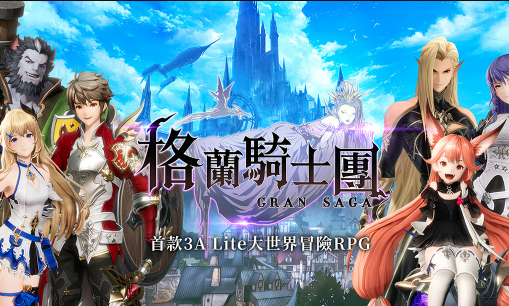
A. Core Introduction
In other words: Gran Saga: Grand Knights isn't a game where you can pull a top-tier character and coast to victory. It's about pulling the right Grand Knight weapon, building artifacts properly, and assembling a well-rounded team—once you nail these, you'll feel that insane, "cheating-level" smoothness in gameplay.
B. Game Background & Unique Features
Gran Saga: Grand Knights is often labeled as an MMORPG-focused game. When you follow the early-game tutorial and main story, it practically walks you through every system, so you'll never feel lost.
What really sets it apart from other genre titles is its core "three pillars" of progression:
-
Characters: The core unit you control on the battlefield, defining your basic role and playstyle.
-
Grand Knights Weapons: The game's soul! These weapons are even personified—you're not just swapping gear, you're getting a whole new skill set and completely different playstyle.
-
Artifacts: Think of them as "passive modules" for characters, giving base stat boosts and various passive effects. Build them right, and your power gap compared to others will be massive.
Here's a super important note: This game is kind of like "you're raising a character AND their personalized skill deck". Since you can equip tons of skills from weapons or spirits, combat isn't a fixed rotation—you get to mix and match your skill slots to build a playstyle that fits you best.
C. Quick Guide for New Players
If you're a new player just starting out, remember these three phrases to save you tons of headache:
-
1st: Don't rush after T0 characters first—figure out which characters or builds help you push the main story smoothly.
-
2nd: 9 times out of 10 when you get stuck, it's not because your power is too low—it's because you didn't adjust your resistance, crowd control, or positioning.
-
3rd: The best place to sink resources is into building a full set of exclusive Grand Knight weapons. Once you level up a character's core weapon, your whole account's gameplay experience will jump up a notch.
II. Early Pull Guide & Character Recommendations
A. Step-by-Step Early Pull Guide
Let's keep this real like players talk: The goal of your early pulls isn't to stop at a Legendary character—it's to get a main damage dealer that works in early-game, plus a support or survival character that can hold the line.
The usual process is:
-
Complete necessary tutorials first: Otherwise, tons of features won't unlock, and you won't even get gacha resources to pull.
-
Claim your first batch of gacha resources: This includes newbie quest rewards, login bonuses, and event giveaways.
-
Stick to the banner you want: If there's an Up (rate-up) banner, go for that first; if not, pick high-versatility weapons or artifacts from the standard banner.
-
Roll for a team that works late-game too: Don't stop at a rare-looking character or weapon that has skills useless for your early-game needs.
Real Player Talk: You think you're rolling for "good characters", but you're building the foundation to push through the game fast.
B. T0 Tier Must-Pull Characters
Since game versions and banners change over time, I won't lie to you and say a specific character will always be the best
T0. The more practical way to go about this is to split T0 characters into three distinct types—if you pull at least one of them in your first wish, your early game will be way smoother.
T0
-
Requirements: Fast AoE clear, solid sustainability, and can farm reliably even while AFK.
-
Playstyle: Clearing main story stages feels like cutting butter, and material dungeons drop loot consistently too.
T0
-
Requirements: High single-target burst, strong Boss damage, and good skill cooldowns or survival capabilities.
For example, characters like Orta—who were specifically highlighted by the devs as a huge help for teams in Boss raids—fall into this category.
T0
-
Requirements: Sufficient healing, damage reduction, debuff removal, or the ability to boost damage/restore energy to further strengthen your whole team.
-
Playstyle: When you run these characters, even at the same total power level, you’ll notice your team is way more durable and rarely gets wiped entirely.
C. Recommended T1 Characters
T1 characters aren’t weak—they just perform well without requiring a massive investment of resources. Many new players run into this: they finally pull a strong DPS character, but then have no survival support or healer, and get crushed by the Boss in Chapter 5. That’s why the T1 characters I’ve listed usually have these traits:
-
High versatility, works well in multiple scenarios
-
Fairly forgiving gear requirements, no strict bottlenecks
-
Easy to get the needed weapons or materials
D. Soul Weapon Selection Guide
When new players get Soul Weapons, their first thought is “equip any SSR I get first” — but later they realize their power level isn’t going up. Actually, Soul Weapons are combinations of skills and passive effects, and you can equip multiple at once—like building your own custom skill deck! The lore says Soul Weapons are weapons that hold the souls of young girls, including basic attack skills, unique ultimate skills, and passives. As characters level up, more equip slots unlock. For new players, here are three core rules to follow when picking Soul Weapons:
-
Fill your team’s gaps first: If your team lacks healing, prioritize equipping heal skills; if you’re worried about debuffs, pick resistance or debuff removal skills.
-
Prioritize consistency over raw damage: When pushing main story stages or farming materials, clearing reliably is more important than chasing maximum damage.
-
Same-element bonuses aren’t the only thing to consider: Even though elemental advantages are strong, if your team can’t even stay alive, high damage won’t help at all.
III. Character Tier List & Analysis
A. Full Character Tier List
I’ll rank characters based on the three most common game modes: main story progression, Boss challenges, and Player vs. Player (PvP). The same character might have different tiers in different modes—that’s what makes this list accurate to real gameplay.
1) Stage Clear Tier
-
T0: Fast AoE clear plus self-sufficiency
-
Their strength isn’t from insane crits—it’s that they make pushing through stages seamless, no hard blocks, and can clear reliably even AFK.
-
-
T1: Has AoE damage but needs the team to fill other roles
-
T2: Focus on single-target damage or niche roles, so stage clear feels less smooth, but they shine hard in Boss fights
2) Boss Fight Tier
-
T0: Core support in Boss fights + strong single-target burst
-
For example, characters like Orta—who were specifically mentioned by the devs as super useful in Boss raids
-
-
T1: Great DPS performance, but needs specific weapons or Artifacts to reach its full potential
-
T2: Decent DPS numbers, but low survivability, big hitstun, easy to get oneshot by bosses
3) PVP
Only one thing to emphasize about PVP gameplay: The rhythm of penetration, CC skills, and burst damage is usually the most critical factor.
Many player guides mention DPS roles like "Wind Spear" which are popular in PVP because of their penetration, but also note their limitations in survivability and crit rate.
This shows that the same playstyle has different pros and cons in different game modes.
B. Character Feature Breakdown
When rating characters, don't just look at damage numbers—focus on these four areas:
-
DPS Type: Area-of-effect (AoE) or single-target
-
Survival Tools: Self-preservation, damage reduction, mobility skills, CC immunity
-
Team Contribution: Damage buffs, energy regeneration support, defense penetration, crowd control
-
Upgrade Cost: Resources and time needed to level up
Should you prioritize upgrading Signature Weapons first? Or is it more cost-effective to level up Artifacts to higher stars first?
C. Character Role Classification
I usually divide characters into five core roles. Building a team after this is like putting together blocks—match them up and you can easily make a viable lineup:
-
Main DPS: The core damage dealer, takes most of the team's damage output, and is the main force to beat stages
-
Sub DPS: Dual-purpose damage dealer with special functions, fills damage gaps while providing support like crowd control or damage buffs
-
Main Tank/Frontliner: Stands at the front of the team to take damage, uses enemy pulling, taunts, or tanking skills to protect backline characters
-
Healer/Support: Responsible for healing, removing CC, boosting team damage, or protecting survival—key to keeping the team going long-term
-
Utility Role: Specializes in breaking shields, weakening defenses, crowd control, or dealing with specific mechanics; fills the team's missing key abilities
The most common new player mistake is: Leveling three Main DPS, leaving your team with no healer, no CC removal, and no shield breaker—you can't survive hard stages like that.
IV. Grand Weapons & Artifact System
A. Grand Weapons Recommendations
Grand Weapons are one of the core sources of combat skills in the game. Guides often say "You must level a certain weapon to Lv90"—this isn't a myth, because weapon level directly determines the strength of your skills and the completeness of your combat tools. Many players share upgrade material needs for different Grand Weapons, and advise prioritizing a few while holding off on others for resource allocation.
I've put together a super practical "Four-Step Grand Weapon Selection Guide" to help you avoid mistakes:
Step 1: Prioritize weapons that solve your current stage-clearing pain points
-
Stuck because you're being CC'd nonstop? Look for weapons with CC immunity, CC removal, or resistance bonuses.
-
Stuck because the Boss has too thick shields to break? Prioritize weapons with shield break, defense penetration, or high destruction attributes.
Step 2: Next, pick weapons that boost combat efficiency
-
Fast AoE clear
-
Steady sustained DPS
-
Good for auto-battles
Step 3: Only consider cool-looking weapons last
As harsh as it sounds but true: Looks are secondary, beating the stage is what matters.
Step 4: Focus your resources, don't spread them thin
Many veteran players warn "Leveling too many weapons at once leaves all of them half-baked"—this is totally true for most gacha & idle games.
B. Artifact Attribute System
The core value of Artifacts lies in their passive effects, and there's a very counterintuitive thing in the early game:
This is super important. A lot of new players rush to equip any SSR Artifact they get, but if its passive doesn’t fit their character’s playstyle, the power number might look high, but it’ll feel super underwhelming in actual fights. It’s basically useless.High-star SR Artifacts might be more suitable as transitional gear than low-star SSR ones, both in terms of base stats and passive effects.
When picking Artifacts, I always ask myself 3 questions:
-
Does this passive make my character hit harder? Tankier? Or more consistent?
-
Does it fit my character’s playstyle?
-
How far can I upgrade it? Do I have enough resources to keep leveling it later on?
C. Main Story & Boss Guides
I’ve compiled common main story roadblocks into a fixable list that you can address right away:-
Stuck in crowd control the whole time: Stack resistance stats first, or bring characters/weapons with immunity to or removal for control effects.
-
Boss’s AoE skills one-shot you: Don’t tank it—try to dodge whenever possible. If you have to, use damage reduction, shields, or class skills to take the hit.
- Can’t break shields or specific mechanics: You need shield break or defense penetration tools, not just another damage dealer.
- Auto-battling keeps failing: Switch key skills to manual, or adjust your skill rotation and character positions.
V. Main Story & Boss Guides
A. Main Story Chapter Guides
I won’t give you soulless walkthroughs like “follow this path for every stage.” Instead, I’ll give you way more practical advice: what your priority goals should be for each chapter.Chapters 1-3: Focus on unlocking all basic systems
Your goal here isn’t to farm gear—it’s to unlock everything you should: gacha pulls, weapons, Artifacts, daily quests, material dungeons, training grounds… all of it.The biggest tip here is definitely: Don’t waste Diamonds! Make sure you save them for the banners you plan to invest in long-term. Don’t pull randomly or use them carelessly—wasting resources here is a huge mistake.
Chapters 4-5: Start dealing with the “resistance problem”
- The game starts throwing all kinds of restrictive effects at you: immobilization, AoE crowd control, freeze, stun—things that stop you from just spamming damage whenever you want.
- This is when adjusting resistance stats on your gear or weapons makes a huge difference—your resistance levels will directly impact your odds of clearing stages here.
After Chapter 6: It’s all about mechanics, not just stacking stats
- You’ll notice that with teams of the same power level, some people clear stages easily while others get stuck and wipe nonstop. The difference isn’t their power at all.
- The key differences are: whether your team has enough utility, if your weapon skills counter the Boss’s mechanics, and if your Artifact passives work well with your team.
B. Boss Fight Practical Tips
The worst thing you can do in Boss fights is use the same strategy the whole time. Learning to tell what kind of attack the Boss is using is how you’ll win:- Circular AoE Attacks: Watch the ground for the warning signs. Take 2 seconds less damage than tanking this—your health will drop super fast if you eat it.
- Linear Spray Attacks: Dodge to the side ASAP, or circle around the Boss’s back to attack. This will force the Boss to waste its better moves and lower the damage you take.
- Full-Screen Ultimate Skills: Save your damage reduction, invincibility, or mobility skills for these. Don’t waste your defensive cooldowns on small attacks—you’ll die super easily if you do.
- Combo-based Crowd Control Bosses: For these, either stack your resistance stats, or bring characters with control immunity or control removal skills.
Only this way can you block the relentless combo of crowd-control effects.
-
C. Tips for Clearing Hard Mode
The core of beating tough stages is actually straightforward—here are the key points:
-
Manage your skill timing wisely—don’t waste crucial abilities on unimportant moments.
-
Learn to swap characters at the right time to take damage, hold aggro, or switch roles to handle different scenarios.
-
Focus on building a functional team, not just raw damage output.
VI. Quick Leveling & Progression Planning
A. 5-Step Quick Leveling Method
Step 1: Lock in Your Main Team
Don’t level up six characters at once—you’ll run out of resources fast and completely derail your progress later.
Step 2: Prioritize Enhancing the Core Grand Knight Weapon for Your Main Character
Every time you upgrade it, you’ll feel a noticeable boost in combat and your damage will feel way smoother.
Step 3: Pick Artifacts Based on Passive Utility First, Rarity Second
High-star SR artifacts are more than enough for the early game—don’t waste resources chasing SSR artifacts right from the start.
Step 4: Focus on Equip Sets & Main Stats Before Chasing Perfect Sub-Stats
Wasting tons of gold rerolling sub-stats on early-game gear is not worth it. Just get the basics down first.
Step 5: Clear Resource Dungeons & Daily Events First
This game is the type where you fall behind if you don’t log in daily—but don’t grind too hard. Just finish the high-value, efficient content.
B. Must-Know Tips for New Players
-
Build Your Team’s Push Functionality First: Healing, damage reduction, and crowd-control removal—these three are key to getting through levels smoothly.
-
Have a Clear Gacha Goal: Pull only for characters you need. Don’t waste valuable resources pulling random SSRs on impulse.
-
Invest in Characters with Full Exclusive Weapon Sets: A fully developed character is way better than three half-baked ones—their damage and utility will be much more consistent.
C. Progression Planning for Different Player Types
-
F2P (Free-to-Play) Players: The most important rule is concentrate resources. Put all your resources into your main team—never spread them thin on other characters.
-
Minimal Spenders (Light Payers): Spend your money on things that cut down leveling time—this is way more worth it than random purchases.
-
Big Spenders (Whales): You can keep up with the meta if you want, but it’s smarter to prioritize building a complete team first—that’s your ticket to beating hard levels.
VII. Team Composition & Battle Strategies
A. Practical Starter Team Skeleton
I’ll explain this using a “core skeleton” approach instead of specific characters—it’s way more useful.
-
Main Damage Dealer (Core)
-
Sub-Damage Dealer or Utility Character
-
Support or Healer
Just fill these three slots with the right characters and your starter team will be solid—you won’t get stuck easily.
B. Advanced Team Composition Tips
-
For boss fights, the advanced team is: Main Damage Dealer + Damage Boost Support + Shield Breaker/Survival Character. This combo is more consistent for all situations.
-
For stage clearing, your team needs AOE damage, enough sustain, plus the ability to pull mobs or control crowds.
-
For Player vs. Player (PVP), you need burst damage, crowd control skills, and counter-ability combos.
C. Team Building Tricks for Characters
How strong your team is often depends on getting the initial combat rhythm right at the start of a fight.
-
At the start of battle, use damage boosts or defense debuffs first, then unleash your burst skills.
-
When a boss is about to use its ultimate move, you need to prepare survival skills and crowd control abilities to either interrupt it or mitigate its impact.
VIII. Detailed Game Systems & Play Guides
A. Character Development System
-
Character Levels: Prioritize leveling up your main team members first.
-
Skill Levels: Focus on upgrading core damage or support skills that you use frequently.
-
Talent/Potential Points: Allocate them to options that immediately boost battle efficiency—don’t hoard them for later.
B. Gear Setup & Enhancement
Core priorities for early-game gear selection are:
-
Main stats must align with your character’s role (e.g., tank vs. damage dealer).
-
Get full set bonuses first before worrying about minor sub-stats.
-
Perfecting sub-stats (affixes) can wait until mid-to-late game.
C. Dungeons & Challenges
The key to farming dungeons isn’t forcing yourself to clear the hardest difficulty—it’s picking a difficulty you can beat consistently.
After all, you need steady resource gain every day, not clearing once then failing repeatedly and wasting all your Stamina.
IX. FAQs & Advanced Play Tips
A. New Player Basics
Q: I pulled so many SSR characters, why can’t I clear stages?
A: What you’re missing isn’t character rarity—it’s proper team synergy and support. Check these first: Do you have a healer in your team? Any characters that boost resistance? Does your Artifact’s passive fit your current team? Does your Gran Knights weapon’s effect match the Boss’s mechanics?
Q: What characters should I aim for in my beginner summon?
A: Prioritize pulling core damage dealers that speed up stage clears, then add at least one survival-focused character. This makes your early game run way smoother.
B. Game System & Play Related Questions
Q: How do I choose the right Artifact Cards?
A: First, check if the Artifact’s passive fits your character’s role, then look at its star rating. Using a high-star SR Artifact as a mid-term pick is a smart move.
C. Advanced Player Strategies
Q: I want to fight high-difficulty Bosses—what should I upgrade first for the biggest impact?
A: Prioritize boosting your character’s resistance and crowd control (CC) removal, Boss-specific damage, and your skill rotation during fights.
D. F2P and Light Spender Advice
Free-to-Play (F2P) players have a huge advantage here: you’re forced to make smart resource choices. Focus all resources on one main team, don’t spread yourself thin. For light spenders, you’re buying play time with small money—don’t impulse buy stuff just because you feel like it.
X. In-Game Events & Benefit Systems
A. Version Event Overviews
Game events usually give:
-
Gacha summon resources
-
Character growth materials
-
Event-exclusive exchange items
During events, what you should prioritize: Exchange items that boost your main team’s strength. Don’t go crazy grabbing limited-exclusive items—you’ll end up stuck at stages because your main team is still weak.
B. In-Game Rewards & Benefits
If you’re playing *Limit Legend*, official announcements and the in-game shop page will mention regular login rewards, summon ticket perks, and version update details.
As for the original game, it’s the kind where “skipping events means you lose a lot”—but you don’t need to grind every single event. Just pick ones with the best cost-efficiency.
C. In-Game Social Systems
The biggest perk of joining an active guild isn’t chatting—it’s:
-
Doing co-op dungeons or raid quests with guildmates
-
Getting help when asking gear setup questions
-
Event updates come faster than when you play alone
XI. Current Version Meta & Future Game Content
A. *Limit Legend* Version Content
If you’re looking for *Gran Knights: Limit Legend*, it’s the sequel to *Gran Saga: Gran Knights*, and there were global release updates in 2024.
This game has a casual, idle-style pace, but I think “character development
It follows the same core principle:
- Focus your resources
- First, cover all the roles your team needs
- Then, work on boosting your damage cap
B. S-Tier Meta Character Deep Dive
The real S-tier god units aren’t just the strongest by numbers — they’re the ones that can solve problems no one else can.
For example, Orta, who’s listed as a Light-type ranged unit with abilities like Time Stop and Charge Boost, is super helpful when tackling high-difficulty bosses.
These characters stay core to your team even when the meta shifts.
They don’t get pushed out of the meta overnight either, because their value comes from their unique mechanics.
C. Future Update Predictions
When the game’s lifecycle shifts, here’s what you should prioritize:
- Invest in characters or playstyles you enjoy
- Use your account’s resources on things that let you fully experience the game’s content
- If you switch to Gran Saga: Ultra later, restart using the same “focus + full functionality” principle.
XII. Community Resources & Game Guide
A. Coupon Codes & Rewards
Just like the Bahamut Game Zone, there are always players who update “weekly surprise coupons/redeem codes” on a regular basis.
But here’s a critical reminder: Redeem codes have very short expiry windows — redeem them as soon as you see them, don’t wait until the next day and miss out!
B. Player Community Resources
- Bahamut Game Zone
- Official Fan Pages & Game Announcements
C. In-Game Guides
Most of the time when you hit a wall, the answer is actually hidden in the game’s in-game descriptions or announcements — but a lot of people just skip reading them carefully.
Honestly, a big reason veteran players always seem to know every little detail (like they have a cheat code) is because they take the time to study the game’s mechanic explanations.
If you want to sum up this whole guide into one easy line, here’s what I’d pick:
Gran Saga’s true way to get stronger isn’t about how many SSR units you pull — it’s about building a full team with all the right roles, leveling up your core Gran Weapons, and using the right resistance setups and play pace to match the game’s mechanics.
Whether you’re returning to catch up before the original game ends or already switched to Gran Saga: Ultra, this approach will help you avoid unnecessary mistakes, waste less precious resources, and actually enjoy the game instead of feeling forced to log in every day.
If you’d like, I can also do a practical team building checkup for your current characters, weapons, and relics using the same casual style: just tell me your three main characters, your go-to weapons, and the relic cards you have, and I’ll give you custom builds for “questing”, “boss fighting”, and “event clearing”!