《Genesis War M》: A Must-See Player's Guide - From Newbie to Veteran
Hey all strategy game fans! Today I’m here to share with you guys Genesis War M: Asura Project, which we’ll just call Genesis War M for short~ This isn’t your typical grid-based tactical RPG—this game blends strategic planning, character development, class switching, and team building, so there’s tons of fun elements to dive into! As someone who’s played it firsthand, I’ll break down every key point in a straightforward, practical way to help you get started: from downloading and initial setup, character and class systems, gear enhancement, combat tips, resource management, all the way to events and community stuff. If you’re ready to step into what’s touted as a top-tier Korean strategy RPG space, let’s jump right in!
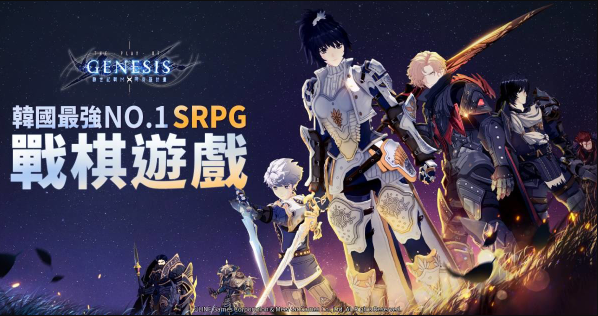
I. Introduction & Game Overview
A. Game Positioning & Features of Genesis War M
Genesis War M is a strategy tactical mobile game developed in South Korea, tailored specifically for players in Greater China (Taiwan, Hong Kong, and beyond). It’s not a casual gacha game that only focuses on pulling and upgrading characters—this is a hardcore title that combines tactical grid planning, character growth, class evolution, and gear upgrading. Simply put, you have to think strategically to play this game; you can’t just tap through battles to clear stages. You need to nurture your characters and build the right team comps. The official even labels it as one of South Korea’s top-tier strategy RPGs, and you can see its weight from GNN Game Bus’s coverage and the official website’s introduction—it’s really a big deal!
As for its key features, here are the main ones:
-
A mix of 5 core elements and multiple classes means every battle requires careful planning, so you’ll never get bored.
-
Korean-style aesthetic that’s visually pleasing, plus a clear tactical grid interface that’s super easy on the eyes while playing.
-
Deep character bonds, rich backstories, and a robust class promotion system give great depth to character growth, making the game feel super immersive.
If you’ve played tactical RPGs like Fire Emblem or love gacha-style character development, this game is the perfect combination of both. What’s more, it puts more emphasis on strategic planning rather than just relying on gacha luck.
B. Localization for Greater China
The launch of Genesis War M actually fills the gap for Korean-style strategy mobile games in the Chinese-speaking market. This game has a Traditional Chinese version and supports Chinese language settings, so Taiwan and Hong Kong players don’t have to worry about language issues and can get started smoothly. From the App Store and Google Play listings, all the descriptions and player reviews are in Traditional Chinese, which totally fits our usage habits.
And the localization isn’t just about translating the language; the in-game interface instructions and tutorial process are also very friendly to Taiwan and Hong Kong players. This is really important because the game’s system is way more complex than ordinary casual card games. Without Chinese support, new players would easily get stuck and slow down their progress.
C. Asura Project: Background Story & Setting
The game’s backstory is set on the continent of Antalia, where a kingdom is invaded by an empire. Queen Eolin leads the knight corps to rise up and fight back to liberate their homeland.
The name "Asura Project" actually carries the meaning of rebirth and transformation: when facing defeat and crisis, players have to take the responsibility of rebuilding their home. There are many characters who will adventure with you, so you’re not just moving game pieces—you become a "protector" in this story. This setting makes the game feel more than just fighting and leveling up; it’s like taking part in an epic adventure, which is super engaging.
D. Community Scale & Popularity in Taiwan & Hong Kong
Based on community data and player feedback, this game has been pretty well-received in Taiwan and Hong Kong. For example, the official Chinese Facebook page already has a lot of followers.
Media also mentioned that its core gameplay "5 elements plus tactical grid planning" is very popular among strategy-loving players.
So if you’re in Taiwan or Hong Kong and want to find players to discuss team comps, characters, or gear, you definitely won’t lack people to talk to. This is a huge plus for players who want to play long-term and participate in in-game events.
II. Game Download & Initial Setup
A. Supported Platforms & System Requirements
1. Download for iOS & Android
You can search for "Genesis War M: Asura Project Traditional Chinese Version" on the App Store. It currently has around a 4.7-star rating, which speaks to its good reputation.
It’s also available on Google Play, so users in Taiwan and Hong Kong can download it.
As for system requirements, though the official hasn’t specified exact minimum specs, this game has a lot of detailed visuals, tactical grids, and animations. We recommend using at least a mid-range smartphone, otherwise you might
If the game takes too long to load or lags/stutters, it will ruin your gaming experience.
2. PC Emulator Support
If you prefer playing mobile games on PC, you can use Android emulators like BlueStacks or Nox to run the game. However, keep in mind that when using emulators, you might run into issues with keyboard and mouse setup, resolution problems, and since the game is primarily optimized for mobile devices, the gaming experience on PC might not be as smooth. Also, the game doesn’t have an official PC version yet, so emulators can sometimes cause stability or graphical limitations.
All in all, if you plan to play on PC, we recommend testing if the game runs smoothly first, so you don’t end up getting stuck halfway through and having a bad time.
B. Account Creation & Login Process
Once you’ve finished downloading and installing the game, you can register an account and log in to start playing!
The first step after launching the game is choosing a server and creating your account. Here are some quick tips for new players:
-
Priority should go to Asian / Traditional Chinese servers if available! Playing in the same region means smoother language communication and lower network latency, which will make your gaming experience way better!
-
Make sure to bind your account! You can use Google, Apple ID, Facebook, or the game’s own account system. If you don’t, you might forget your account when switching phones or reinstalling the game, and lose all your progress for nothing!
-
As soon as you enter the game, check for any beginner’s gift packs or first-purchase bonuses—you’ll definitely want to grab these! They give you a ton of starting resources that will make your early game way easier.
C. First Launch & New Player Tutorial
After you finish the registration process and log in, you’ll usually be guided through the new player tutorial. This tutorial covers basic controls, job/class selection, tactical RPG movement rules, how to use skills, and the gacha summoning process. We strongly recommend NOT skipping it! Tactical RPGs are different from regular card games—positioning, attack ranges, and class/role counterplay are all key to battles. If you don’t master these basics, you’ll easily get stuck on later stages. Also, make sure to complete all the tutorial tasks to get free resources, then pull for characters and unlock job changes as soon as possible—finishing these early tasks will set your account up for a smooth start!
III. Character System & Recommendations
A. Complete Character List for Genesis War M
Genesis War M has a huge variety of characters, with unique classes like Warriors, Knights, Archers, Mages, Paladins, and Dark Knights. The official character pool is rich, and there are bond/interaction systems between characters to boost your team’s power. From the game’s description, it’s clear that this game isn’t just about being strong in one class—its design is multi-dimensional. (Source: GNN Gaming Bus) Each character has their own unique art, skill role, and rarity. New players don’t need to be overwhelmed by all the choices—just pick characters you’re interested in or that fit your playstyle to start with!
B. T0 vs T1 Character Tier Analysis
Players often categorize characters into T0 (top-tier picks) and T1 (strong, but slightly lower than T0). You can refer to these tier lists when you first start, but don’t let them limit you too much! The game will get updates, and character power levels will adjust—blindly following tier lists can make you miss out on playstyles that fit you. For example, there are videos and articles titled “Day 1 Launch | Top T0 Characters to Pick Early” (Source: YouTube). Our advice is to consider three things when choosing characters: their power level, how easy they are to play, and what you personally like. Even a T0 character won’t be fun if it’s too hard to use or you don’t like its design or class!
C. Core Recommended Characters
1. Crow and Eolin Character Overview
Both of these are frequently mentioned in official descriptions and player discussions. Crow is an offensive-focused Warrior, while Eolin is a princess character with a rich backstory and bond interactions—they’re perfect as your main priority characters to raise at the start!
2. Karsbrant and Arianna Characters
These two are more for mid-game or have special roles. If you’ve been playing for a while and want to unlock job changes or expand your team, you can prioritize them.
3. Elinsades and Landan Character Roles
These two might be support characters, Mages, or have higher play difficulty—they’re better for players who are willing to spend time learning the game systems (like ascending, equipping gear, etc.). Note: The above character overviews are from player discussions and the game’s character pool. Actual in-game stats will be the final authority!
D. Tips for Your First Pull
As a new player, the “first pull” and “beginner guarantee pull” are two of the most important parts of starting out. Here are our tips:
-
Check the game’s current event pool first to see which characters the official team is promoting heavily.
-
Priority goes to characters you like the class or design of—you’ll connect more with them and play the game longer.
-
If you pull a character that you think is strong AND like, that’s a great choice!
If you don't get your ideal character on the first gacha pull, don't panic! Most games have a pity system or other gacha mechanisms, so just take it slow~
E. Future Banner Must-Pull Characters Preview
Lots of gaming communities share videos or posts about "upcoming banner/limited character previews", so I recommend following the official Facebook, social media, or YouTube channels. That way, you can save resources early—stock up on prisms and buy packages so you don't run out when the event starts! For example, there are videos that go over "early-game T0-tier must-pick characters"~
F. F2P & Low-Spend Player Strength & Progression Tips
If you're a F2P (free-to-play) player or only planning to spend a small amount, it's best to focus on 1-2 strong, easy-to-use characters as your main team—don't try to level up every character, or you'll spread your resources too thin and get stuck. Here's a quick strategy to follow:
-
Early-game focus: Level up your 1-2 favorite characters first, and max them out asap~
-
Mid-game expansion: Once you have extra resources left, think about leveling up your second-tier characters~
-
Character selection consideration: Besides strength, check if the character's ascension materials are easy to get. Pick characters that are easy to ascend and don't require hard-to-find enhancement materials—this will keep your account progression smooth and avoid getting stuck~
This way, your account progression will stay smooth, and you won't get frustrated with all the roadblocks~
IV. Class Promotion & Skill System
A. Full Class Promotion System Breakdown
The class system in *Genesis War M* is actually pretty deep! Every character, besides their starting base class, can be promoted to a higher-tier class. This lets you learn more powerful skills and change your playstyle. From what the game says, there are 7 classes total to choose from. This promotion system is super important—it means you won't get bored mid-game after leveling up your early characters, and there's tons of replayability for long-term play~
B. Class Features & Role Overview
1. Warrior & Knight Class Playstyles
Warriors are for close-range melee damage or frontline tanks, while Knights usually act as tanks or focus on crowd control and defense. Both classes are easy to pick up, perfect for new players just starting out~
2. Archer & Mage Class Analysis
Archers are long-range damage dealers with high mobility. Mages focus on burst damage or area-of-effect damage. These classes are super strong if you master them, but they're easy to get caught by enemies—you'll need good positioning skills to survive~
3. Paladin & Dark Knight Classes
These advanced/unique classes usually have more mechanics or promotion requirements. Paladins do both damage and support/healing, while Dark Knights are high-damage dealers with higher skill requirements. Pick based on your playstyle: do you like a stable playstyle, or go all-in for high-damage thrills?~
C. Class Promotion Priorities & Requirements
Class promotions usually have requirements, like reaching a certain level, having specific equipment, or completing quests. Here's what I recommend:
-
Promote your most-used and best-leveled characters first~
-
If you're short on resources, don't promote every character at once—just promote one of your main characters first~
-
Check gaming communities to see what other players are saying like "which character is best to promote this time?"—learning from others' experiences saves you a lot of time and mistakes~
D. Best Skill Tree Point Allocation Tips
Skill trees usually have different branches, like damage boost, defense boost, or crowd control improvements. Here's my advice:
-
Allocate points based on your character's role. If they're a damage dealer, go for the damage branch; if they're a tank, focus on defense~
-
Don't randomly pick "useful but rarely used" skills—this wastes valuable resources~
-
Keep an eye on game updates—skill balance changes or new skills can totally change your point allocation strategy~
E. Skill Combos & Battle Strategies
Battles aren't just spamming skills—since this is a turn-based strategy game, you need to consider skill ranges, cast order, cooldowns, and tactical positioning. Here's what to do:
-
First, learn what each of your character's skills does—are they attack, crowd control, or support skills?~
-
When building your team, plan the order of who goes out—who protects whom, who finishes off enemies. Team synergy is the key to winning~
-
In PvP or hard PvE, pay extra attention to enemies' skill cycles—find their weaknesses before attacking, don't just rush in and get yourself killed~
F. Skill Upgrades & Unlock Process
Skill leveling usually requires materials, in-game currency, or completing quests. To unlock new skills, you need to meet conditions like your job level or gear requirements. Here’s our advice:
-
Don’t skip daily and weekly quests—they give tons of basic materials for skill upgrades, which are super handy to stock up on.
-
Promote your current class before leveling up skills. After promotion, your existing skill levels carry over perfectly, making this way more cost-effective and efficient.
-
When resources are tight, prioritize core skills that give the biggest boosts for their cost. Don’t waste materials on side skills that barely move the needle.
V. Equipment System & Enhancement
A. Gear Recommendations & Build Guide
Gear is make-or-break in Genesis War M. A top-tier character paired with good gear lets you unleash their full power and breeze through battles. Build your gear based on your character’s class and role: Damage dealers go for attack and crit-focused gear, while defensive/tank characters pick HP and resistance gear to stay alive. New players should focus on their main team first, leaving secondary gear for other characters for now. Concentrating your resources will make you way stronger faster.
B. Exclusive Weapons & Set Effects
The game has exclusive weapons (called "exclusives" for short) and set gear designs. Collecting a full set gives extra attribute bonuses. When leveling up, prioritize set effects over upgrading individual pieces—they give way faster, more noticeable power gains that make a huge difference in combat.
C. Equipment Rarity & Tier Classification
Gear comes in different rarities: Common, Rare, Epic, Legendary, etc. Higher-tier gear has way better stats. When resources are limited, new players can progress from Rare towards Epic gear. Legendary gear is strong, but it’s expensive to level and has unlock conditions. We recommend chasing Legendary gear once you’re further in the game—don’t pour all your resources into it early, or you’ll fall behind on other systems.
D. Enhancement Mechanic & Safety Value Concept
Like many games, Genesis War M has mechanisms like failed enhancements, protection, and safety values—its system includes gear enhancement and ascension. Before enhancing, check success rates, break risks, and safety values. Don’t overspend if you can’t afford it. Our tip: When you’re short on materials or gold, always enhance your main team’s gear first—never waste resources on backup gear.
E. Equipment Ascension System Explained
Ascension lets you boost your gear to the next tier. A common example is upgrading from +10 to the "Transcendent" tier. After ascension, you might unlock extra attribute bonuses or activate set effects. We recommend syncing ascension with your character’s promotion to maximize resource efficiency.
F. Recomposition Tools & Transfer Tips
When switching your main character or adjusting your team, the game’s equipment transfer and recomposition features come in handy. First, watch for mechanics like "Equipment Decomposition" and "Equipment Transfer" in-game. When switching characters, keep and transfer high-quality gear—this saves tons of resources long-term.
G. Offensive & Defensive Gear Strategy
Damage dealers and tank characters have totally different gear needs. Don’t dump all resources into attack stats alone—if your character is too fragile and gets KO’d easily, even the highest attack won’t help. Here’s how to build:
-
Damage Dealers: Prioritize Attack and Crit stats, then add Attack Speed or Accuracy as needed.
-
Tank/Defensive Classes: Focus on HP and Resistance stats. Adding revive or control resistance makes you even more useful.
-
Whole Team: Have at least one tank or support to protect your main damage dealer, boosting overall team stability.
VI. Combat System & Tactics
A. Turn-Based Strategy Gameplay Intro
Genesis War M is a classic turn-based strategy game: On fixed battle maps, your characters (units) move, attack, use skills, and use attack ranges to plan positioning and formations. Per game data, your unit’s attack range is shown in real time, so every move needs careful thought. GNN Game Bus
This means pulling characters and leveling them isn’t enough. "Battlefield positioning and using your class’s unique abilities" are the keys to winning.
B. PVE Stage-Clearing Guide & Progression
Clearing stages (what most players call "pushing through levels") is key for leveling, getting resources, and unlocking new systems. Here’s what to do:
Don't miss out on daily and weekly progression missions—you can earn extra rewards for completing them.
C. PVP Battle Tips & Tricks
Once your characters, gear, and team lineup are strong enough, you can jump into PVP mode (battling other real players). PVP is way more strategic than PVE—you need to anticipate opponents' moves, play around countering relationships, and be super careful with positioning. Follow these tips:
D. Lineup Building & Positioning
In strategy RPGs like this, tiny details like where to place each character on the grid, who takes the frontline damage, and who handles backline enemies are super important. Here’s what to do:
E. Enemy Countering & Damage Calculations
Most games have class or element counter mechanics—you need to figure out if your characters counter the enemy and vice versa. From what we know about this game, there are 5 elements total. It’s a good idea to make a simple counter chart. Whether you’re jumping into a new PVE level or a PVP match, check the opponent’s lineup first and pick countering characters or strategies.
F. Status Effects & Revival Mechanics
Control skills (like stun, freeze, silence, etc.) are super useful in strategy games. If you can shut down the enemy’s high-damage characters, your win rate will skyrocket. The game might also have revival or backline rescue mechanics—here’s how to handle that:
G. Pyramid Floor Challenge Dungeon
Some high-difficulty dungeons (like the Pyramid Floor Challenge mentioned here) have restrictions—like limited characters or specific team requirements. For advanced players, this is a great chance to test and show off your account’s strength. It’s best to wait until mid-game when you have enough characters and gear before taking this on—don’t rush into high difficulty right away.
VII. Special Gameplay & Advanced Content
A. Territory Wars & Guild Wars
If the game has a territory/guild system, that means you can team up or compete with other player groups. These modes don’t just rely on your personal strength—they test how well you work with your team. Here’s what to do: Join a guild as early as possible.
B. Daily Must-Do Quests & Weekly Events
Daily and weekly activities are the most reliable source of in-game resources—don’t sleep on them! Compared to the randomness of gacha pulls, consistently finishing daily logins, daily challenges, exploration quests, and weekly commissions gives way more total rewards. Here’s your daily minimum: Claim login rewards, do daily quests, and finish exploration quests. For weekly, make sure you check weekly quests and event quests early to not miss out on free resources.
C. Seasonal Ranking Systems & Rewards
If the game has long-term competitive mechanics like “season rankings” or “season battles”, that means you should build your account for long-term goals instead of just short-term gains. Here’s what to do:
D. Time-Limited Dungeons & Loot Collection
Event dungeons or limited-time dungeons.
Most events have strict time limits, and the equipment, materials, or characters you get from them are often rare—miss out, and you'll never get that chance again. Here's what you should do:
E. Progress Saving & Restarting
Some players might think about rerolling their account or even making a new one just to try out new characters or team comps. Here's our advice:
VIII. Economy Management, Events & Promo Codes
A. Resource Management & Currency System
1. How to Earn Gold & Gems
Games usually have three main types of currency: Gold (used for basic stuff like upgrading gear and leveling characters), Gems (mostly used for gacha pulls or trading for rare items in events), and Fragments/Memory Fragments (key materials for unlocking or ascending characters). Make sure you know exactly what each currency is for—don't waste them willy-nilly!
A lot of players complain that "character fragments are hard to get and upgrade materials are scarce", so our tip is: prioritize putting your currency into the most rewarding and cost-effective places to make every resource count.
2. How to Get Memory Fragments & Secret Chests
Unlocking or ascending characters usually requires Memory Fragments or Secret Chests, which you can mostly get during game events or by completing special tasks. It's recommended that you stock up a reasonable amount of these, and wait until you're sure you want to train a specific character before using them all at once—this way you won't waste resources.
B. Genesis War M Promo Code Redemption Guide
The game's official team often hands out "promo codes" that players can redeem for free resources. These codes are usually entered in the game's "Settings" menu or "Events" page. Remember the right order to claim your rewards: enter the code first to get your goodies, then use them! These free perks are a super important source of game resources—don't miss out!
C. Server Launch & Version Update Bonuses
When a new server officially opens or the game launches a big version update, the official team usually releases exclusive "server launch bonus packs" or special codes. If you're a new account player, or if the game just got a version update, be sure to log in to the game ASAP, check the in-game announcements, official community shares, and fan page info—you might never get this limited-time bonus again if you miss it.
D. Latest Promo Codes & Coupons
The game's player community always shares the latest working promo codes, so join the game's Discord or Facebook community, or follow the official fan page regularly. These promo codes often expire quickly, so grab them as soon as you see them—don't waste the chance to get free resources.
E. New Player Bonuses & First-Recharge Recommendations
When you first start playing, the official team usually offers multiple perks like "new player login packs", "starter pity system", and "first-recharge discounts". Here's our advice:
F. Official Event Announcements & Update Info
Any game updates or overhauls—whether it's a character strength mechanism, new class launch, or gacha rotation refresh—can have a huge impact on your account progress. Here's what you should do:
G. Community Resources & Guide Websites Recommendations
While this guide is
This guide is written from regular players’ in-game experiences, but if you want deeper, more detailed info, check out professional game guide sites, gameplay review videos on YouTube, or player forums. For example, YouTube has super useful quick first-pull tutorials right there!
Game communities are goldmines of resources: T0 character tier lists, gacha pulling strategy breakdowns, other players’ guide insights, and updates on the latest in-game events. We recommend joining in discussions or just checking out what other folks are sharing if you want more tips.
Alright, as someone who’s been playing for a few months, today I’m walking you through this complete guide for *Genesis War M* — it covers everything from game basics, download settings, character growth systems, class and skill combos, gear upgrades, battle strategies, endgame advanced content, in-game economy, and community resources. All the key stuff is here, no fluff. From my own playtime: this game has way more depth and fun than your average mobile game if you’re willing to put in the brainpower to strategize, experiment with character and team builds, and plan out your chess-like battle layouts. But if you just want to “tap to auto-clear” all stages, you might find it takes more thinking or progresses a bit slower — that’s not a downside at all! That’s actually what makes this game’s charm, y’know?
-
Finish Main Quests and Tutorial Quests first to get early resources fast and speed up your progress.
-
When entering "Expert Stages" or "Challenge Stages," adjust your positioning strategy based on your team—don’t stick to one fixed plan, or you’ll get stuck easily.
-
Watch what characters and lineups opponents usually use, and plan your counter accordingly.
-
Start with lower-tier PVP matches first to get the hang of the battle logic.
-
Keep your lineup flexible so you can quickly adjust when future patches or new overpowered characters come out.
-
Place tanks, mages, and damage dealers in their optimal positions to make the most of their strengths.
-
Pay attention to positioning: Don’t let damage dealers get surrounded early on, and place support characters where they can cover teammates.
-
Build a balanced team: Have a character for control/support, a main damage dealer, and a tank to soak damage—this makes your team way more stable.
-
Keep at least one character in your lineup with rescue/revival abilities.
-
Protect this character during battles so they don’t get taken down too early.
-
Once you’re in a guild, communicate with your members a lot—whether it’s about battle strategies, team builds, or assigning guild roles, make sure everyone is on the same page. Don’t go solo in these fights.
-
Especially for big group events like Territory Wars, figure out which characters fit each spot first, pick the best lineup, and avoid fighting alone. Using your team’s full strength is the key to winning.
-
Before each season starts, save up enough resources and make sure your main characters’ gear is strong enough to hit the entry threshold for season competition—this way you can jump in smoothly.
-
Don’t swap out too many characters in your lineup every season. Focus on building up your existing team consistently—this will help your overall power way more than jumping on every new character hype.
-
Set reminders on your phone's calendar or alarm clock so you don't miss when the dungeon opens.
-
Be ready to jump into the fight with a max-level team as soon as the event starts, to grab those rare resources first.
-
Focus your resources on items only available during the event to get the most out of every resource you spend.
-
If you really want to restart your account, first check if the game's reroll/pity system is friendly—will it let you get the starter character you want quickly?
-
If you've already spent a lot of time on your current account, think carefully about the cost of restarting. It's not just wasted playtime; the emotional investment and progress you've made are also big losses.
-
If you decide not to restart, keep growing your account and don't fall behind the game's updates. Never give up just because your account is a little behind!
-
Claim all new-player related bonuses first—don't leave any free resources on the table.
-
If you plan on spending real money to improve your game experience, first check if the first-recharge deal is worth it, and if it comes with extra characters or rare gear.
-
If you're a F2P (free-to-play) player too, keep an eye on the free in-game event resources to make sure they're enough to support you playing long-term.
-
Join the official Facebook fan page or game community to get the latest info in time.
-
Turn on in-game announcement push notifications, or set event alarms on your phone—this way you won't miss events and end up regretting "missing out on free resources or event-exclusive characters".
-