Fire Emblem Heroes Character Review: Tier List & Build Strategy Guide
Anyone who’s played Fire Emblem Heroes (FEH) knows this pain: for the same unit, some call them overpowered, others bench-warmers, and a few straight-up “don’t pull this trap unit”. It’s not random takes—FEH’s power level is never absolute; it’s determined by a mix of game mode, current meta, your existing skill pool, and how many resources you’re willing to sink in. On top of that, FEH updates super fast, so “power tier trends” in guides flip all the time. Even for tiers from the same site, reviews can vary a lot if they’re from different update times. The fact that some overseas guides are still updating meta-specific tiers in 2026 just proves how big of a role “patch versions” play in unit reviews.
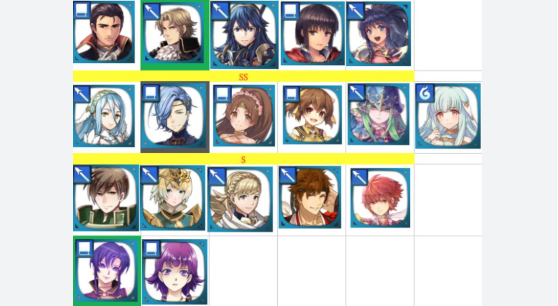
Intro: How to Actually Make Sense of FEH Unit Reviews?
The whole point of “Fire Emblem Heroes Unit Reviews” isn’t to copy-paste a training list—it’s to save you from wasting time. The worst part of FEH isn’t pulling a bad unit, it’s pulling, training, feeding skills, dumping resources… only to realize it’s not the playstyle you want. That’s why unit reviews matter most for three main reasons:
-
Clarify Your Resource Investment Priorities
You can only train a limited number of units at once: feathers, seals, orbs, Dragon Flowers, SP, refine materials, summoner support… every single one is precious. Tier lists do the work of putting units that give the best return on resources at the top, so you don’t waste time on units that take ages to pull their weight. -
Get a Grip on Current Meta Trends
You don’t have to copy every meta unit, but you should know what the common playstyles are right now—like “one-turn wipe”, “tank so hard you give up”, or those annoying “status debuffs/terrain control/movement disruption” setups that make your blood boil. -
Decide Summon Value: Sometimes Skills Matter More Than the Unit Itself
In FEH, skill value often trumps the unit itself. Some units are worth summoning just for their A, B, or C skills or Specials—feeding them to other units is how you get the most out of them. That’s why sometimes you see a unit labeled “average utility” on a tier list, but veterans still spam summons for them—they’re not chasing the unit; they’re chasing the skill fodder.
Why Does the Same Unit Have Different Tiers on Different Lists?
If you see the same unit ranked S+ on Tier List A but only A on Tier List B, don’t immediately call one list wrong. Usually, it’s for these reasons:
-
Different Game Modes = Totally Different Standards
- PvE Mode: Prioritizes units with high clear speed, low RNG reliance, and broad utility
- Arena: Focuses on consistent scores, easy wins, and all-around units that can tank and deal damage
- Tempest Trial: Values units that can “finish battles in one turn” or “annoy opponents in defense” while working with terrain and traps
- Summoner Duels: Prioritizes units with first-turn priority, wide threat ranges, skill disable abilities, and even mind game elements
-
Review Standards Vary: Some Look at Top-Tier Ceilings, Others at Casual Player Barriers
Some pro tier lists love putting the absolute “ceiling units” at the top—these units need every top-tier skill, paired with perfect teammates, to be unbeatable. But for casual players, what matters more are units that “don’t need tons of resources and can work even with non-maxed skills”. Obviously, these two different ways of rating units will lead to very different results. -
You
Existing Skill Pool
The base stats of every character in FEH are fixed, but their true strength comes down to whether you can equip them with the right unique skills or powerful general-purpose skills. If you’re missing core skills, even a unit that looks strong on paper might feel underwhelming in actual play—making you think it’s not worth investing in.
Differences in What Newbies, Returning Players, and Top Players Look for in Unit Reviews
Newbies: You need units that are smooth to clear stages with, hard to take out quickly, and highly versatile. You don’t need to chase extreme damage right now—focus on building stable units that get you through early-game levels easily, to avoid frustration.
They also shouldn’t require tons of rare resources to level up.
Three key things to prioritize: Versatility, Margin for Error (survivability when you mess up), and Resource Cost.
Skip the so-called "Aether Raids defense meta units" for now—you haven’t even figured out Castle building and the Blessings system yet.
Returning Players: Your top priority right now is filling gaps in the current meta’s unit roster.
Do a quick check: Are you missing tanks? Enemy-breaking damage dealers? Displacement utility units? Supports? Or a main damage unit that can burst enemies down in one turn?
The biggest mistake returning players make is forcing old "meta-defining units" to work in the current meta—only to get wrecked by new mechanics and regret their old choices.
Top Players: When reviewing units, focus on these: Can this unit be a "core puzzle piece" for specific modes? Does it force opponents to ban certain units or adjust their team compositions? Can its skill fodder push your main units to the next level?
You care about unit ceilings, counter matchups, and longevity through meta shifts.
II. Evaluation Standards & Tier Explanations
A. Definitions of S+, S, A, B, C-Tier Units
I’ll put this in plain, player-friendly terms:
S+ Tier: Meta Core / Rulebreaker
This isn’t just "strong"—it’s so powerful, you have to specifically counter it, or even adjust your entire team to deal with it.
S Tier: Versatile Main Unit / Fits All Situations
You won’t regret investing in this unit—it’s the top pick for most casual players to build first.
A Tier: Decent Damage, But Stage-Restricted or Needs Resource Investment
This isn’t a bad unit at all—many A-Tier units jump up to S+ when used in the right modes.
B Tier: Works in Combat, But Mostly an Alternative or Has Clear Flaws
Maybe their damage is low, or they’re super vulnerable to specific crowd control and counter mechanics.
C Tier: Fan Favorites / Collectibles / Only Useful After Legendary Weapons or Major Updates
It’s not unplayable, but be ready: you’re going against the meta to build your favorite unit.
B. Common Unit Strength Metrics: Damage, Survivability, Support, Versatility
Here’s how I judge these four metrics:
Damage: It’s not just about numbers on the stat sheet
What matters is: Can you deal consistent damage, not just theoretical numbers? Can you handle common defensive mechanics in the current meta?
Survivability: Not just physical and magic defense
In FEH, survivability is more about mechanics: things like evasion, damage reduction, shields, healing, negating follow-up attacks, negating special attacks, countering snipers… these are way more important than just stacking stats.
Support: Can they make your allies way stronger
Watch top teams—sometimes the real key is the support unit: they can provide movement buffs, damage boosts, damage reduction, clear status ailments, or apply debuffs.
Versatility: The best metric for new and returning players
High versatility means you don’t have to swap your team often to handle most of the game’s content.
C. Differences in Evaluation Logic for PvE, PvP, Arena, and Summoner Duels
I’ll sum up the core needs for each mode in one sentence:
PvE: Smooth, reliable, and efficient
Arena: Score is top priority, consistency is secondary
Airland Siege: Either take down the target in one turn, or completely disrupt the opponent’s rhythm and make them stumble step by step
Summoner Duels: Threat range, skill exchange value, and reading the opponent’s intent
III. 2026 Latest Character Tier List
Let’s get one thing straight first: In the 2026 tier list, you’ll definitely see tons of “new-gen characters” at the top spots, and that’s not surprising at all. Fire Emblem Heroes (FEH) is designed to have new characters bring unique mechanics and skills, constantly shifting the meta. As long as the game keeps updating, you’ll always find the latest legendary, legendary inheritance, or limited edition characters leading the charge.
That’s why I’m not gonna do that generic tier list that crams 50 S+ units—instead, I’ll go with something way more useful: breaking down the character types in S+, S, and A-B tiers, so you know exactly how to use whoever you pull.
A. Current Version S+ Tier Characters and Meta Core
-
One-Turn Burst Primary Carry
Traits: Can hit a wide area, eliminate targets in one hit right from the start, or take down key enemy units to the point they can’t counterattack.
Best for: Airland Siege offense, Summoner Duels, and some high-difficulty PvE stages.
The key to judging if a unit belongs in S+ isn’t just raw damage—it’s all about:-
Can it reliably break through common damage reduction or shield mechanics?
-
Does it work well and hit its stride even if you don’t max out its limited skills?
-
-
Rule-Based Support
These units aren’t usually one-shot assassins, but the buffs, movement, repositioning, damage boosts, and damage reduction they provide can drastically lift your entire team’s win rate.
S+ tier support units usually have:-
Wide support coverage or simple trigger conditions
-
Few type restrictions on teammates
-
Both survivability and damage efficiency boosts
-
-
Troublesome Defensive Core
This is the most common type for Airland Siege defense: the second you step into their zone, you get controlled, pulled, AoE damaged, forced to move, and then take extra damage from traps.
S+ tier defensive cores aren’t usually the toughest ones—they’re about:-
Hard to deal with safely using standard methods
-
While you’re taking them down, other units in their team will counter and beat you
-
You need specific counter units to handle them
-
B. S Tier Characters and Highly Versatile Main Units
For S tier units, I call them the ones that will always be useful and hold value long-term. They usually fall into these types:
-
Stable Damage Primary Carry: Not about extreme one-turn bursts—they’re reliable, deal consistent damage, and have high survivability
-
Versatile Support/Healer: Multi-functional units that can remove debuffs, heal, speed up teammates, and keep the team alive
-
High-Versatility Tank/Counter: Units that make the opponent lose when they attack you, or force enemies to not charge in randomly
New players and returning players, don’t fixate too much on S+ tier units every patch. If you fully build up your S tier units, the game will suddenly feel way easier.
C. A-B Tier Characters: Utility Value and Training Tips
A and B tier units are actually the most overlooked. A lot of people only glance at the tier letters, but here’s the thing:
-
When used in the right game modes, A tier units might be exactly what your team is missing
-
The missing key puzzle piece
-
If a B-rank unit comes with great skills, using it as fodder is totally worth it.
-
Another common scenario: A mediocre unit on its own can turn into a powerhouse once you upgrade its signature weapon.
Here’s my advice:
-
When you’re short on resources, don’t randomly dump stuff on A or B-rank units, nor waste rare skill evolutions on them.
-
First, make sure they can actually hold their own in battles before you decide if you want to invest long-term to turn them into your main unit.
IV. Weapon Type Unit Evaluations
A. Strength and Role of Sword, Lance, Axe Units
For these three melee weapon types, remember this: Their power doesn’t just come from their weapon’s attack—it depends on their full skill set.
Top melee units in the current meta usually have these traits:-
Special effects that change follow-up attack rules
-
Special effects that change counterattack rules
-
Special effects that change survival mechanics
So when you look at Sword, Lance, or Axe units, don’t just check their weapon—see if their full skill set lets them gain an edge in fights.
Meta Strength of Archer, Mage, Staff Units
I assess these three ranged types from different angles:
-
Archers: Most of the time, they’re core to “versatile damage” plus “countering flying units”, but in high-level matches, what matters more is if they have mechanics like penetration, shield-breaking, or crowd control.
-
Mages: Mage power really depends on the meta. When there’s a new mechanic that breaks defenses, Mages get strong; but if there’s a lot of damage reduction or counters, Mages will struggle.
-
Staff Units: Don’t think Staffs are only for healing—they have tons of hidden value. Strong Staff units usually do these:
-
Remove status ailments
-
Apply debuffs to enemies
-
Let allies take extra turns or extend their threat range
-
Use mechanics like “un-counterable” or harassment to mess with opponents
-
C. Advantages and Limitations of Dragon & Beast Units in Current Meta
Dragon and Beast units are similar in role—they have high base stats paired with special transformation mechanics. Their strength usually hinges on two things:
-
How easy transformation requirements are to meet
If transformation needs specific ally types, or they can’t function when their formation is broken, they’ll be at a disadvantage in modes like Summoner Duels or Aether Raids. -
Whether they keep up with the meta’s best skill sets
Some skills only hit max potential with specific weapon types. If Dragons/Beasts can’t grab these top skills, their overall ceiling will be way lower.
V. Strength by Movement Type
A. Skill Flexibility & High Ceiling of Infantry Units
Infantry units’ biggest perk is: They have the most complete skill pool and are the most adaptable.
That’s why many “long-lasting top units” are Infantry—makes sense:-
Can use most new meta skills
-
Easiest to get buffed by new game systems
-
Can find a fit in all game modes
B. Mobility & Pressure of Cavalry Units
Cavalry’s upside is high mobility, but they can get stuck by skill limits and struggle to hit their full potential.
When assessing Cavalry, watch for:-
If their threat range puts enough pressure on enemy teams
C. Role Definitions & Ideal Use Cases for Flying & Heavy Armor Units
Flying Units: Their biggest perk is they’re not blocked by terrain, but that also makes them prime targets for counters. A strong flying unit doesn’t stand out just because they can fly—they shine thanks to solid support or ambush abilities.
Heavy Armor Units: Don’t make the rookie mistake of thinking these units are just meat shields meant to stand still and take damage—so many new players build heavy armors wrong. Today’s top heavy armors typically have:-
Unique movement, harassment, or position-shifting capabilities
-
Burst damage when counterattacking
-
Mechanics like "attack me, you take retaliatory damage"
VI. Strength Assessments for Legendary, Ascended, & Limited Heroes
A. Version Value & Investment Priority for Legendary Heroes
For Legendary Heroes, here’s my quick take: You don’t pull them ‘cause they’re cute—you pull ‘em for their functional value.
Common perks of Legendary Heroes include:-
Boosting scores or team limits in specific game modes
-
Providing extremely crucial buffs to your team
-
Carrying the core skill materials of the current banner
If you’re a player with limited resources, the key to deciding whether to pull a Legendary Hero is: Can this unit fill a gap in your team right away?—not its rank on the tier list.
B. Ascended Heroes’ Influence on High-End Modes
Ascended Heroes’ value is tightly tied to high-end modes like Aether Raids: their blessings, score calculations, and offensive/defensive strategies all revolve around them.
Top players use Ascended Heroes as the core of their lineups, while casual players can rely on them to clear stages easily.C. How to Judge Strength for Vote, Limited, & Emblem Heroes
For these Limited Heroes, I recommend using three questions to decide whether to invest resources:
-
Does it bring pure stat boosts, or a new mechanic that changes how the game is played?
VII. New Player Starter & F2P Unit Recommendations
A. High-CP Units to Prioritize Training for New Players
New players’ biggest need is the ability to clear stages steadily without random failures. High-CP units usually have these traits:
-
Built-in HP recovery, shields, or damage reduction
-
High durability that won’t get them one-shot easily
-
Perform well without hard-to-obtain rare skills
-
Already have a practical special weapon by default
Important note: The strongest unit for new players isn’t an S+ tier unit—it’s the one you can actually afford to train.
B. What Unit Types Should F2P & Casual Spenders Pull First?
My usual priority order is:
-
Highly versatile support units
-
Main damage cores that can handle high-difficulty PvE
-
Only later consider special mode units you personally like
After all, support units fit in multiple teams, so their return on investment is pretty high.
C. Which Non-T0 Units Are Better for Early-Stage Clearing?
The usual answer is:
-
Have built-in AoE clearing ability
-
High fault tolerance with lots of room for mistakes
-
Don’t require constant step or trigger condition calculations
The worst part of early-stage clearing is getting stuck on stages until you’re frustrated, so stability matters more than flashy power.
VIII. Unit Recommendations for Different Modes
Top Picks
A. Useful Units for Main Story & Event Stages
What you'll need for clearing stages smoothly:
-
Fast clear speed
-
Both healing and shields
-
Ability to handle tricky terrain stages
-
Capability to counter common event stage special mechanics
Usually, a solid team of a reliable tank/support + main DPS + sub-DPS or control unit can handle almost everything.
B. Top-Tier Units for Arena & Grand Conquest
When playing Arena, don't just judge units by how "strong" they seem—watch for these key points:
-
Can they help you climb ranks consistently?
-
Do they win matches reliably every single time?
-
Are they easily countered by specific meta teams?
Sometimes, training a unit with high score potential but inconsistent performance will make ranking up way harder.
C. Meta-Defining Units for Summoner Duels & High-Difficulty Missions
Summoner Duels is basically like a game of chess:
-
Does their attack range and options put pressure on opponents?
-
Are their damage trades (like taking hits to land yours) worth it?
-
Do they have a core ability that forces opponents to ban them?
That's why meta units in Summoner Duels are usually ones that control match pace, alter movement rules, or take out multiple enemies in a critical turn.
IX. Skill Inheritance & Material Value Evaluation
A. Some Units Shine On Their Own, Others For Their Skills
The #1 move veteran players make is: When you pull a new limited unit, don't rush to max them right away—first think, "Which of my main team can use their skills?"
After all, you only have a handful of core units. Making those already great units even better is way more worth it than half-training a new unit.B. How A/B/C Skills & Legendary Skills Affect Unit Ratings
Lots of units suddenly get way better because they get a key skill:
-
An A Skill that makes them more tanky
-
A B Skill that lets them follow-up, counter, or pierce defense
-
A C Skill that speeds up your whole team's playstyle
-
Their Legendary Skill decides if they're a consistent DPS or a burst finisher
So when you see a unit ranked high on tier lists, always check: Is this unit good because of its own stats, or its skill set?
C. Which Units Are Worth Pulling Just For Their Skills (Not To Use Directly)
The rule is super simple:
-
When you put them on your team, you realize they need tons of support to fix their flaws and actually work well
X. Old Units: Refined Weapons & Their New Potential
A. Redefining Old Units With Refined Weapons
One of the coolest parts of Fire Emblem Heroes (FEH) is: Old units never become obsolete—sometimes a refined weapon update can totally make them shine again!
But a quick heads up to be careful:-
Some refinements just fill a skill gap, making the unit finally usable
-
Other refinements completely revamp them, turning them into key pieces that shape the meta
Before you spend Dragon Flowers or resources on a refinement, make sure you know which type it is—don't waste stuff on something that won't help much.
B. Which Old Units Are Worth Investing Dragon Flowers & Resources In
I only recommend prioritizing two types of old units to invest in:
-
Units that become a key solution for specific game modes after refinement
-
Units you genuinely love, and are willing to put resources into to keep them meta-relevant
If you're just investing because you "feel bad" for an old unit, you'll almost always throw resources into a black hole and waste them.
C. How To Keep Your Favorite Units Meta With Refinements & Tweaks
I totally support training the units you love, but you need to approach it like an engineer when building them:
-
Decide which game mode this unit will be built for first.
-
Next, use skill builds to fix its biggest weaknesses.
-
Finally, pair it with the right teammates to amplify its strengths.
This way, you’re not forcing units to fit the meta — you’re building a sustainable meta setup, which feels way more rewarding.
XI. Meta Standouts & Focus Units: How I Decide If I Should Go All-In
A. Most Common Unit Reviews Players Search For
The most popular unit reviews players look for break down into 3 main categories:
-
New gacha banner units look amazing, but you’re scared of wasting resources and pulling a dud.
-
A unit that’s widely recognized as overpowered (OP) and you want to know how to counter it.
-
You pulled a unit and can’t decide whether to build it or use it as fodder.
You can also use my "3-Question Method" to decide:
-
What game mode do I play most right now?
-
What role is missing from my current team?
-
Will this unit (or its skill set) make my gameplay feel more comfortable immediately?
B. The Gap Between Popularity & Practicality: Starter Units, Fan Favorites, and Choose Your Legends (CYL) Units
Just because a unit is popular doesn’t mean it’s good, and even if it’s good, it might not fit your team. Some units look insane in player test videos because:
-
Their build is min-maxed to the absolute limit with no room for error.
-
Their teammates are a perfect fit — swap anyone, and it falls apart.
-
They require top-tier skill and unit knowledge that most players can’t reach.
If you copy that exact setup to your account, it might just look cool but won’t work as well in actual matches.
C. How to Decide If The Current Banner Is Worth Going All-In For
I’ll give you one super straightforward rule:
-
You need its specific role or it fills a gap in your team → Worth considering going all-in.
-
You’re just scared of missing out and not being able to pull it later → Hold back for now.
FEH banners come back. What you’ll actually regret is pulling a unit you can’t build or use, which is way more of a waste than missing it entirely.
XII. Frequently Asked Questions (FAQ)
A. How often do unit tier lists get updated?
There’s no fixed update schedule — some sites update super often, others take forever. But always check the last update date, because the FEH meta is always changing. New units and balance updates make old tier lists irrelevant, so using outdated reviews will get you stuck.
B. Do I have to build every S-rank unit I pull?
Not necessarily. Ask yourself these three questions first:
-
Do I have the right skills to pair with it to make it work?
-
Do I even play the game mode it’s good for?
-
Does my team need another role right now?
Sometimes, leaving an S-rank unit in storage is the smartest call — if you can’t build or use it, saving resources for more useful units is way better.
C. Why do some highly-rated units feel weak to me?
The three most common reasons are:
-
Your skill build isn’t right, so you’re not maximizing its strengths.
-
You paired it with the wrong teammates, so their synergies aren’t working.
-
It’s just not good in the game mode you’re playing — its strengths are useless there.
D. Should new players look at unit reviews first or skill builds first?
My advice: Decide who you want to build first, then figure out their skill set.
For new players, focus on building a core team of units that work across all modes — thatwill immediately make your gameplay way better. Once you have more resources to spare, you can start messing with the more detailed high-end builds.
If there’s only one thing you take away from this guide, let it be this:
Character reviews aren't about memorizing tier lists—they're decision-making references for resource allocation.
First, get a clear handle on your playstyle, figure out your account's current resource pool, and then view each unit with a "type mindset". That way, you won't get dragged around by every new gacha banner drop, nor will you feel random panic when others hype up a "meta unit". The best part of FEH has never been "who's the strongest"—it's about building a winning strategy with characters you actually love. That's the core reason why veteran players stick around for so long.
If you'd like, I can adjust this year's (2026) "latest tier list" into a more practical list version based on your most used playstyle. Just fill in the gaps on the list, and your in-game experience will jump up really fast.
-