Dragon Sword: Awakening 2026 Guide: Top Character Tier List & Team Building Tips
When you first try Dragon Sword: Awakening, it’s easy to mistake it for just another open-world ARPG with great visuals. But once you get into the mid-game and even late-game, you’ll realize its most engaging core mechanic is actually "stacking debuffs + switching between heroes". This game is nowhere near the "one main DPS character" style—instead, you’ll need three heroes taking turns in battle. First, apply debuffs like Burn, Freeze, Bleed, Shock, Poison, or Airborne on enemies, then trigger signal skills to let the next character in combo chain continue, pulling off a full combo attack.
Right now, Dragon Sword: Awakening has a total of 19 heroes. Unlike the "gacha luck" grind common in many free-to-play mobile games, heroes here are mainly unlocked by progressing through the main story or using "Bond Invitations". This means new players don’t have to worry about pulling rare characters at the start—instead, you should prioritize figuring out: which limited upgrade resources you have, so which heroes to level up first to get the best value. Next, this Dragon Sword: Awakening guide will cover everything from character tier lists, five main team archetypes, all the way to equipment, runes, fate seals, familiars, and even final boss strategies.
I. Complete Dragon Sword: Awakening Guide & New Player Starter Tips 2026
A. Game Background & Core Mechanics Overview
Dragon Sword: Awakening was developed by Hound13 Studio, and built with Unreal Engine 5 to create the vast "Orbis Continent". The game’s main story revolves around a dragon that awakens again after 60 years of slumber. Players will explore various terrains—including grasslands, underground mazes, caves, and even underwater areas—while unlocking the story and recruiting various heroes and familiars. This game released its Steam version on July 22, 2026, and supports Traditional Chinese interfaces and subtitles, which is quite friendly for Taiwanese players.
B. Open-World Action System Breakdown
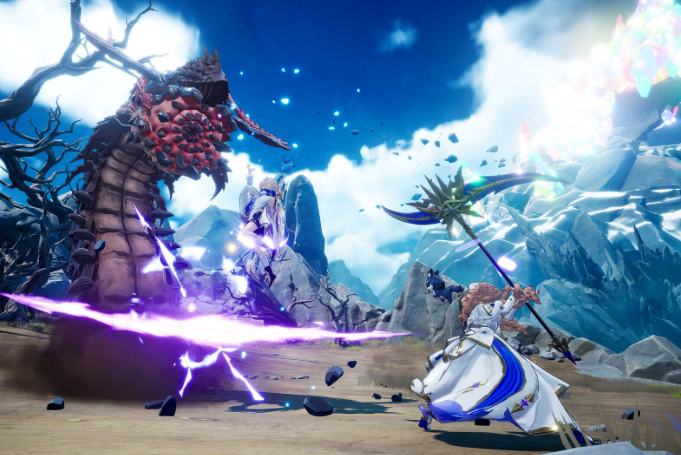
When exploring the map, you shouldn’t just focus on finding fast travel points! Climbing terrain, diving into water, riding familiars to move, searching for chests, crafting meals, and even defeating World Bosses—all these actions will impact your character’s progression. For combat, the game adopts a "three-hero rotation" design: each hero’s active skills can stack different debuffs, and once the trigger conditions are met, you can use "Signal Skills" to call the next character to continue attacking, forming smooth combos.
C. Must-Know Tips for New Player Starts
In the early game, the biggest taboo is trying to level up all 19 heroes at once! We recommend new players lock in a complete archetype first: max out the levels and equipment of three heroes, then slowly train a second team. Also, pushing the main storyline first is super important—many hero unlocks, dungeon openings, Trial Tower functions, and various progression systems are tied to main story progress. You don’t need to clear all side quests, but for quests related to "Hero Commissions", "Familiar Unlocks", and various feature unlocks, we recommend completing them along the way to save time.
II. Dragon Sword: Awakening Character Tier List & Recommendations
A. T0 and T1 Character Tier List
Currently, Dragon Sword: Awakening has no official, widely-recognized character tier list, and each character’s performance is highly linked to team comp. Based on their versatility in the current version, I’ll categorize Ceres, Tressa, Charlotte, Calcion, Dana as T0 core characters; Othello, Roxy, Reina, Joanie, Onyx, Sean, Alia belong to T1 tier. Different guides may have very different rankings for individual characters, but most players share one common view: whether a team can smoothly stack debuffs is far more important than a single character’s stat panel.
B. Full Character Roles & Quick Reviews
Ceres is the crowd control core of ice attribute teams, Tressa excels at stacking Bleed and causing Stun, Charlotte can not only apply Poison and Airborne but also deal Knockdown effects; Calcion specializes in stacking Burn to create damage combos; Reina is a key character for Airborne-focused teams. Although Dana isn’t the highest burst damage dealer, she’s easy and safe to operate with stable crowd control effects, making her very suitable for new players experiencing this game for the first time.
C. Recommended Characters for New Players to Level Up
If you want simple and stable gameplay, just choose the ice attribute team. If you want to quickly form a viable team in the early game, you should prioritize training the Bleed archetype. If you like high burst damage, the fire attribute team is a good choice. Players who prefer aerial combo play can consider the Poison-Wind archetype. The first Bond Invitation new players get: don’t just randomly pick based on tier lists online—better first check what your current team is lacking: a main DPS, a debuff trigger, or combo finishers.
III. Dragon Sword: Awakening’s Best Team & Lineup Guide
A. Breakdown of 5 Mainstream Lineups
Right now, there are 5 core lineups that are super meta in the game—you can totally memorize these: Ice Team, Fire Team, Lightning Team, Bleed Team, Venom Wind Team. There are other fun playstyles like Crossbow Team, Airborne Hybrid Team, or Stun/CC Team, but these 5 are the best picks for new players to build their main squads, they’re way easier to get the hang of.
B. Ice, Fire & Lightning Team Comps
For Ice Team: go with Seris + Dana + Othello; Fire Team: Kallen + Calion + Alya; Lightning Team: Onet + Sean + Tate. Ice Team’s perks are insane stability and tons of crowd control; Fire Team hits super clean burst damage; Lightning Team needs you to get comfy with triggering the Electrified status and linking skills together smoothly.
C. Bleed & Venom Wind Team Building Guide
Bleed Team runs great with Tricia + Roxie + Castra—they’re easy to unlock and super simple to play. Venom/Airborne Venom Team is Charlotte + Johnny + Raina, which has a high damage ceiling, but you need to nail the air combo timing to make it work.
It’s super easy to miss damage if your positioning is off or the enemy randomly teleports. These lineups are also the most talked-about and widely used by Taiwanese players for actual fights.
IV. In-Depth Look at Dragon Sword: Awakening’s Ice Team
A. Core Characters for Ice Team
Seris is absolutely the main damage dealer of the Ice Team! She stacks the Frost Erosion debuff like lightning fast and does long-range damage. Dana is the CC queen—she locks enemies down so they can’t move. Othello handles the extra follow-up damage right after enemies get frozen. The best part? This team isn’t top tier for raw DPS, it’s ridiculously survivable—even if you mess up a little, you almost never wipe.
B. Snowstorm Set Effects
Seris and Othello are perfect for building the Snowstorm set. The most common build right now is 3 pieces of Earth Shredder + 2 pieces of Snowstorm. This set boosts your attack power while also buffing Ice elemental damage and burst potential.
C. Ice Team Combat Rotation
For small mobs: first use Dana to lock them down, switch to Seris to stack Frost Erosion, then swap to Othello to land the frozen combo and finish them. For bosses? Don’t blow all 3 characters’ skills at once! Build up the status gauge first. When the boss is broken armor or gives a safe opening, use your Signal Skill and Ultimate together—your damage will jump like crazy.
V. Dragon Sword: Awakening’s Fire Team & Rotation
A. Kallen & Calion’s Roles
Kallen is the long-range damage dealer, responsible for applying the Burning debuff. Calion is the Fire Team’s key melee core—he keeps bosses in a constant Burning state so it never drops. Alya adds extra long-range Burning damage and armor break, making the team’s attack cycle super simple and straightforward.
B. Blazing Flame Set Recommendation
Calion should definitely prioritize building the Blazing Flame set. For Fire Team gear: main stat = Attack, sub-stats = Armor Penetration, Critical Chance, Critical Damage, and Burning Damage Bonus.
C. Fire Team Boss Fight Tips
The worst part about Fire Team vs bosses is you have to dodge nonstop, which breaks the Burning cycle. Don’t mash skills when they light up! First, dodge the boss’s ultimate. Wait until they’re staggered or broken armor, then unleash Kallen and Calion’s skills together—your burst damage difference is massive.
VI. Dragon Sword: Awakening’s Bleed & Venom Wind Team Guide
A. Tricia & Raina Character Building
Tricia applies Bleed, Stun, and Airborne debuffs all at once—she’s a god-tier starter for the Bleed Team. Raina focuses on air combos; when added to Venom Wind Team, she turns the status effects from Charlotte and Johnny into longer-lasting air damage.
B. Status Trigger Mechanics
This game isn’t “apply a status and chill while waiting for damage”! The real damage comes from: after the first character fills the status gauge, the next character triggers the effect with their Signal Skill, then chains another status. That’s when you’ll see the big damage numbers.
C. Bleed & Venom Wind Team Picks
If you want something easy to play: Tricia + Roxie + Castra. If you like a challenge: Charlotte + Johnny + Raina. Bleed Team is more stable overall, Venom Wind Team has a higher damage ceiling. But against giant bosses that can’t stay airborne long, you’ll need to adjust your skill order.
VII. Dragon Sword: Awakening Equipment System & Set Recommendations
A. Equipment
Stat Priority
For damage dealers, prioritize ATK Percentage, Penetration, Crit Rate, Crit Damage, then add relevant abnormal/DoT damage. Sub-stats unlock as your equipment reaches specific tiers early on, so don’t rush to fully upgrade all Legendary gear the second you get it—double-check if the sub-stats are actually useful first.
B. Earthshaker Set Effects
Earthshaker works as a versatile base set for most damage dealers. The standard go-to setup is 3-piece Earthshaker + 2-piece Elemental set—this combo is way more practical than forcing a 5-piece set with mismatched stats.
C. Holy Judicator vs. Castle Destroyer
Holy Judicator suits characters focused on defense break, Bleed, or crossbow builds; Castle Destroyer leans into specific damage cycles. Don’t judge a set by its power stat alone—core is checking which of your skills scales with which abnormal/DoT damage type.
VIII. Dragon Sword: Awakening Rune Build & Enhancement Guide
A. Crit & Crit Damage Rune Recommendations
The most universal rune combination for main damage dealers is Crit + Crit Damage. When your Crit rate is still unstable, don’t fill all rune slots with Crit Damage—common playstyle is to run 1-2 Crit runes, and fill the rest with Crit Damage; switch to full Crit Damage once your character has enough built-in Crit sources.
B. ATK & Penetration Stats
ATK is your foundational stat, but high-difficulty bosses will start to demand Penetration more and more. Early on, boosting your visible ATK feels more impactful, but in endgame content, Penetration and abnormal damage bonuses will often catch up, or even overtake pure ATK.
C. Rune Reforging & Enhancement Tips
Don’t waste resources re-forging temporary runes. Wait until you have the main stat right and the set fits before chasing sub-stats. The most resource-heavy move is switching runes for Crit Damage one day, then re-forcing all to Poison Damage when you change teams the next.
IX. Dragon Sword: Awakening Character Progression & Resource Allocation
A. Character Level & Skill Upgrade Priority Order
My recommended order goes: Main DPS Level > Key Skills > Ascension > Sub-DPS > Third Character. Skill materials have a way bigger shortage late game, so max out your main’s signature skills first. You don’t need to force every low-used skill to max level either.
Skills with lower general usage don’t need to be fully leveled.
B. Level Cap Break Method
Once a character hits their level cap, you’ll need materials like monster drops, gatherable items, badges, etc., to break through. Late-game materials are tied to specific dungeons and monsters, so if you’re missing one, go directly to its source instead of wasting stamina on random highest-difficulty stages.
C. Resource Allocation Strategy & Planning
Focus on building a solid 3-man team first before considering a second team. While you’ll definitely need multi-element teams late game, if you try to max out 15 characters in your first 20 hours, you’ll just end up with 15 useless characters that can’t even clear hard dungeons.
X. Dragon Sword: Awakening Systems & Fate Markings
A. Awakening System Mechanics
Characters can ascend in stages, and Fate Markings have their own independent growth system. Both have similar names, but they require totally different materials—never mix them up.
B. Fate Marking Effects & Progression
The most core part of Fate Markings is Hero Trait Synergy. Elements like Shock, Crush, Gale, Blood Surge, Blaze, Frost, Lightning, Venom, and Break all have corresponding ideal Markings. Even if you get a high-star Marking, if it doesn’t fit your hero’s trait, it’s usually worse than a generic Marking that can actually activate its core effects.
C. Weapon Trait Changes & Exclusive Effects
Exclusive Fate Markings often directly boost a main character’s signature damage cycle, so prioritize them for your main DPS in the late game. But low-awakening exclusive Markings aren’t always stronger than high-awakening generic ones—don’t rush to dismantle duplicate cards, compare actual stats first.
XI. Dragon Sword: Awakening Familiar & Mount Recommendations
A. Familiar Bestiary & Acquiring Methods
Familiars are also part of the exploration-based mount system. Different familiar types affect abilities like ground sprint, climbing, swimming, underwater sprint, air movement, etc. Collecting familiars from the same series unlocks shared movement bonuses.
B. Brave Drake & Other Familiar Recommendations
The Brave Drake (from the deluxe edition) has a standout feature: true air sprint, which makes map exploration super comfy. New players can start with Ladybug, Flying Squirrel, Winged Cat, Sirius, and Griffin early on, gradually unlocking stamina, climbing, and underwater movement abilities.
C. Mount System & Stamina Boost
Mount stamina directly impacts map run efficiency. Instead of only going for mounts that look fast, unlock the collection effect for same-type familiars—extra stamina makes collecting chests, crossing water, and climbing way easier.
Dragon Sword: Awakening - Exchange & Hero Acquisition
A. How to Use Bond Invitations
Bond Invitations can be used directly in the Exchange Interface to claim specific heroes. Right now, you can earn multiple invitations through Adventure Missions and Hero Records.
B. Hero Exchange Routes & Recommendations
Some heroes will join your team automatically as you progress through the Main Story, like Aria, Johnny, Onest, Cyrus, Kalcion, and Othello. These guys unlock as you play, so always double-check if a hero you want will be given for free later before you waste resources on exchanging for them.
C. How to Get Memory Crystals and Light Shards
Memory-related materials and Holy Light Shards drop in Adventure Missions, Achievements, World Boss fights, and high-level endgame content. The most time-efficient way early on isn’t grinding specific spots—just claim all Main Story, Hero Mission, and one-time Achievement rewards first, easy.
XIII. Dragon Sword: Awakening Main Story & Dungeon Guide
A. Main Story Progression Priority
The Main Story is always your top priority—areas, dungeons, heroes, and most systems are locked behind it. When you hit a level wall, then go back to do Adventure Missions. There’s no need to clear 100% of every new zone the second you unlock it.
B. Dungeon Tasks & Material Farming
Need Hero XP? Run the corresponding Growth Dungeons. Need gear upgrade materials? Spam the Infinite Summoning Grounds and late-stage Sweeping Zones. The rule for dungeon runs is always: pick the highest difficulty you can consistently clear quickly—not the super hard level that takes you 5 minutes just to win once.
C. Trial Tower Tips
The Trial Tower unlocks after a certain side quest, and it’s a key source of Fate Brand materials for late-game. Higher floors demand solid crowd control of status effects and a well-rounded team, so aim to have at least two teams for Ice, Shock, and Poison-Wind comps. Players have already shared full run guides for Floor 90, FYI.
XIV. Dragon Sword: Awakening World Boss & Endgame Content
A. World Boss Hagen Guide
The dark necromancer Hagen’s biggest pain isn’t damage—it’s his healing. After you beat the boss, special targets spawn around him. You have to take out the right ones first to stop his spirit from possessing and healing himself. If you just burn all damage on his body, you’ll end up fighting for half an hour only to see his health bar refill.
B. Endgame Siege Dungeon Picks
When Siege Dungeons start, they really test your gear, runes, and team synergy. Ice teams are perfect for your first run—stable crowd control, super safe. Switch to Fire teams once you know the boss mechanics to blast more damage and cut run time.
C. High-Difficulty Boss Tips
For high-difficulty bosses, don’t just stick to your usual damage rotation. First check if the boss can be launched, stunned, or how long its break window lasts before picking a team. A lot of players think a hero is “suddenly weak,” but it’s usually because the boss is immune to their core status effect.
XV. Dragon Sword: Awakening Combo & Status Effect System
A. How Combos Trigger
Active Skills are mainly for stacking status effects. Once the status meter hits a threshold, a corresponding Signal Skill prompt pops up. Switching here isn’t just swapping characters—you bring in the next one with a special animation to pick up your combo and keep dealing damage.
B. Status Stacking Tips
Common combos you’ll see: Frostbite stacks → follow up with Freeze, Burn full → use Fire burst, Bleed triggers → combo into follow-up hits, Poison with launch moves, etc. Once you get good, you’ll start saving skills instead of spamming them as soon as their cooldowns are up.
C. Execution Skills & Damage Rotation
A full damage rotation usually goes like this: Status Start → Signal Switch → Second Status → Combo Skill → Break → Ultimate/Execution. For mobs, you can just chain all the hits, but for bosses, save the final burst for when the boss is broken—that’s what makes *Dragon Sword: Awakening* way deeper than your average action game.
Here’s the thing: *Dragon Sword: Awakening* doesn’t rely on “the strongest single character” like some other games. Yeah, some heroes are stronger, but the big damage gaps come from tying together status effects, gear, runes, Fate Brands, and Signal Skills into that perfect rotation. For example, Cyrus is solid alone, but he shines in an Ice team. Tressia can hold her own, but pairing her with Roxie and Castella makes Bleed chains flow way smoother. Same with Charlotte—stick her with Rena and Johnny for the most satisfying Poison-Wind air combos.
If you’re a total newb, my top pick for starting out is an Ice or Bleed team. Level up your three core heroes first, then slowly expand your Fire...
For Thunder and Venom-Wind teams, prioritize getting the correct main stats on your equipment first. Next, focus on runes with Critical Hit Chance and Critical Damage attributes; only consider high-cost Reforging and Awakening for Fated Brand as a last resort. Once you start tackling the Trial Tower, Onslaught Mode, and World Bosses, you’ll realize the real sense of progression in this game isn’t just seeing your Combat Power jump by thousands. It’s the thrill of turning a Boss that once took you a full minute to defeat, leaving you frazzled the whole time, into one you can wipe with a single synergy combo of DoT effects, cramming it so hard it can’t even get back up.