Taoyuan Dark Ghost Game Guide: Master Lore, Character Tier Lists, and Team Comps All in One
If you’re like me and automatically think of the classic fairy tale where “the hero Momotaro fights monsters” when you hear the words “Momotaro”, then reading *Tougen Anki* will totally shatter your old stereotypes! The “demons” here aren’t just pure evil, and Momotaro isn’t some born-to-be-hero symbol. The core of this whole world is actually asking the audience: when those forces labeled as “justice” start massacring people behind the scenes and covering up the truth, whose side will you choose?
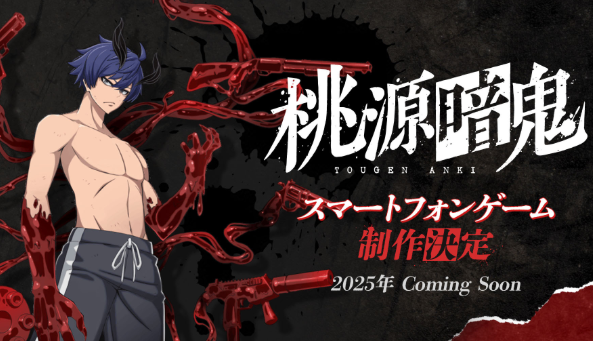
I. Preface: The Ghost-Hunting Forces in July’s New Anime Are Rising Sharply
A. The Core Worldview of *Tougen Anki*: The Thousand-Year Conflict Between the Momotaro Organization and the Oni Clan
What draws me the most to *Tougen Anki* is that it directly tears apart the fairy tale formula of “Momotaro = Justice, Oni = Evil” and rebuilds it with a much more realistic and brutal approach:
-
The Momotaro Organization: They claim to be tasked with protecting human order and eliminating the Oni threat. On the surface, they’re a group that upholds justice, but in reality, they’re a “hunting system” with strict rules, specialized training, and a massive intelligence network.
-
The Oni Clan: They’re born with inherent power, urges, and curses flowing in their blood, but they’ve long been hunted, slandered, and forced to hide in the shadows. They’re not inherently evil—they’re just labeled as monsters that must be eliminated from the day they’re born.
Because of this, the entire work revolves around a core question: Who’s qualified to define “justice”? And who’s responsible for the label of “monster”?
The protagonist group’s growth arc also completely avoids the cliché of “getting stronger means winning”. The more they fight and grow powerful, the more they have to face their inner confusion: Who am I, really?
B. Analysis of Main Characters (From a Gamer’s Perspective)
I like to compare the characters here to roles in a game—each one has a unique “playstyle”.
-
Shiki Ichinose: A high-mobility, high-damage “stealth raid core damage dealer”. His burst damage relies on perfect timing—play him well, and he’s a shadowy killer who’s everywhere and nowhere; mess up, and he’s just a dead weight rushing into battle.
-
Nyuki Namiki: A “blood art damage dealer / villain core”. His strength lies in his skill’s powerful crowd control and sustained combat ability—he’s the kind of tough opponent that gets harder to handle the longer you fight him.
-
Masumi: A standard support character. He’s reliable, versatile, and great at turning the tide. He’s probably not the kind of guy who’s trending for his looks, but your team will struggle to keep its rhythm if he’s not there.
As for the Momotaro Organization’s leaders and the Oni Clan’s top members, most of them are the “key puzzle pieces” of the team: they might seem unremarkable alone, but put them in the right roles, and they instantly form a tactical machine that gives the enemy a headache.
C. The Two Main Story Arcs: Nerima Unit vs. Kyoto Branch
Here’s how I’d sum up the difference between these two arcs:
-
The Nerima Unit Arc: Focuses on frontline conflicts, street showdowns, and dynamic character interactions. It’s fast-paced, has wild action, and raw, intense emotions.
-
The Kyoto Branch Arc: Focuses on intelligence struggles, internal organization workings, and digging up hidden mysteries. The pace is like unraveling a thread— the deeper you go, the more conspiracies you find everywhere.
One of the most fun parts about following this work is that you can switch between two types of thrills:
the gut-punch excitement of intense fights, and the mind-bending tension of endless conspiracies.
II. Full Character Tier List and Power Analysis
Note: The “strength” here isn’t just about raw combat power. It’s a combined rating that takes into account “story role and battle performance”, including factors like: damage output, mobility, survivability, utility, and how well they fit in different situations.
A. T0-Tier Oni Hunter: Shiki Ichinose
The reason Shiki hits T0 is simple: he’s in complete control of the fight’s pace.
-
Want to take out the enemy’s backline core? He can just dive right in.
-
Need to burst down a single target fast? His burst damage is absolutely top-tier.
-
Trying to dodge damage? His mobility skills are super flexible.
The scariest part? Once he lands his combo, it’s almost impossible to interrupt.
Of course, we have to cover the weaknesses players care most about too:
-
Shiji is super skill-reliant—rush for damage too fast and you’ll get taken out instantly.
-
He’s totally shut down by crowd control chains. Once he’s immobilized, his burst rotation breaks and he drops from T0 to T2 hard.
So yeah, Shiji’s strong, but he’s NOT one of those “press 1 to win” characters—only players with solid mechanics can bring out his full potential.
Demon Villain: Namiki Doko
Doko’s strength is all about non-stop pressure:
-
He won’t one-shot you every time, but every second will make you think, “Am I gonna die next?” He gives you zero room to breathe.
-
His Blood Demon Arts mostly focus on area control, sustained damage, or special status effects. He’s super deadly in long matches—the longer the fight goes, the better he gets, and he’ll drive opponents crazy enough to throw their controllers.
He’s ranked T1 instead of T0 because he relies way too much on setup, positioning, and rhythm. If a high-mobility character dives him, or gets his rhythm broken by shield breaks or burst damage, his consistency drops—he can’t hold a T0 spot like those top-tier picks.
C. T2 Support: Masumi
Masumi being T2 doesn’t mean he’s bad—it’s just the standard issue for supports:
-
When you’re rolling with a winning streak, he feels totally useless—like he doesn’t even exist.
-
But when your team’s on the brink of wiping? He suddenly becomes your lifeline. These kinds of characters are clutch in teams, but don’t shine in solo play, so they never get hyped up to T0 levels.
Any seasoned player will tell you: Masumi isn’t here to show off damage—his whole job is to keep you from losing! Especially in tough boss fights, long battles, or PVP grind matches, his value grows the longer the fight goes—he can even make or break a match.
III. Momotetsu Organization Structure
A. Nerima Unit Tactical Setup
The Nerima Unit feels like a real frontline task force:
-
Super fast on their feet
-
Insanely quick reactions
-
Their tactics are designed purely for combat—they’re like a well-oiled elite squad: tanks take hits, assaulters dive backlines, ranged units control the field, supports heal. Everyone has a clear role.
From a player’s perspective, the Nerima Unit is the perfect example of “using Demon Slayers as fighting weapons.” The whole organization is all about efficiency, mission completion, and final results—everything else takes a backseat.
B. Kyoto Branch Intelligence
The Kyoto Branch is more like the organization’s “intelligence and command hub”:
-
They don’t always fight on the front lines
-
But they know exactly where you are, your movement path, and every enemy you’ll face. The scary thing about them is they’re playing a big game—you think you’re moving freely, but you’re already following their plan. There’s no escaping their control.
C. Tōka Tsukiyomi Leadership Analysis
Leaders like Tōka Tsukiyomi have a key trait every player should notice:
-
They might not be the strongest fighter, but they control all the organization’s resources and direction.
In player terms: No matter how strong you are, you can’t beat being controlled. A puppet player only gets to react. That’s exactly why Tsukiyomi makes you wonder—who’s actually on the side of “justice” here?
IV. Demon Forces & Blood Demon Art Skills
A. Ketsu Kai Squad Headquarters Structure
If you put it in player terms, the Ketsu Kai Squad is a faction made of people pushed to their absolute limit:
-
They follow the
The rules aren’t just ordinary laws—they’re the bare minimum for survival.
-
The tactics they use don’t need to care about morality; as long as they achieve their goals, it’s all fine. That’s why the members of the Blood Demon Squad often show traits like brutal moves, aggressive playstyles, and a touch of obsession—but if you think about it, there’s a sense of tragedy to them, like they have no choice but to be this way to stay alive.
B. Analysis of Muchiya Mujin’s Blood Demon Art
Characters like Muchiya Mujin are usually the "core pillar" of the entire Demon faction:
-
Not only is he strong on his own, but he also drives the tactical rhythm of the entire Demon force;
-
If his Blood Demon Art leans toward control, suppression, or formation-breaking, he’s absolutely the kind of key player that can turn a 50-50 fight into a 70-30 advantage, directly deciding the direction of a battle.
C. Kujisaki Jun’s Demon Tactics
As soon as the name Kujisaki Jun comes up, it’s easy to associate him with roles like "high-speed assassin" or "specialist in surprise attacks." When the Demon faction needs this high-maneuver tactical position, they usually use it to:
-
Cut off the enemy’s support units
-
Raid the enemy’s backline damage dealers
-
Disrupt the formation of Momotaro’s Unit. From a player’s perspective, this means: no matter how tough your team’s frontline is, if the backline gets cut through, the whole team will collapse instantly, with no chance to fight back.
V. Core Character Skills & Combos
For this section, I’ll break down Shizuku’s playstyle into easy-to-understand combos and strategies in a "game-like" way. Just think of yourself as practicing this character—take your time and you’ll get the hang of it.
Ichinose Shizuku: Stealth Ambush
A. Shadow Rush + Ghost Strike Combo
Shizuku’s most iconic playstyle is:
-
Shadow Rush
-
Ghost Strike
-
Finishing Shift / Retreat
The most common mistake new players make is rushing in and spamming attacks nonstop, only to get locked down and bursted by the enemy.
The correct rhythm is: land one full combo and retreat immediately, wait for skills to cooldown before coming back to deal damage
Remember, Shizuku isn’t a tank—he’s a blade that needs to be drawn and sheathed at the right time.
B. Blood Demon Art Counter Tactics
When dealing with Blood Demon Arts that specialize in area suppression and sustained damage, Shizuku’s core counter strategies are:
-
Don’t stand in positions that force you into unfavorable spots
-
Use movement skills to cut off the enemy’s key damage dealers channeling their arts
-
Split the battlefield into small zones to force opponents to spread out.
As players often say:
If you can’t win head-on, shift the battle to the side
C. Single-Target Boss Build
If you plan to use Shizuku as the main carry for single-target boss fights, the focus isn’t on "enjoying AOE wave clears"—it’s on these points:
-
Maximize single-target burst damage
-
Precisely time shield break or armor break windows
-
Also balance survival for breathing room.
Simply put: Don’t overattack—prioritize consistent damage output
Shizuku is at his strongest against bosses when he finishes a full burst, retreats immediately, and waits for the next damage window to re-engage.
VI. Full Map of Pilgrimage Sites
I’ll write this from a "pilgrimage itinerary" perspective, not shoving random addresses at you. Instead, I’ll tell you how to have the best experience: which spot to visit first, where to go next, and what angles give the most resonant photos.
Tokyo Nerima Ward
A. Guide to the Original Location of Hikarigaoka Station
The vibe of Nerima Ward perfectly matches Peach Blossom Dark Ghost (the game):
-
It has the lazy, everyday feeling of a residential area
-
And the stark contrast that makes you feel like conflict could break out at any moment.
When you go on pilgrimage to take photos, the most satisfying shots are: find those "super mundane" street scenes, play the game’s BGM in your head, and imagine someone is about to burst out from the shadows any second.
B. Kiyomizu-dera Temple Battle Scene Recreation
The charm of a spot like Kiyomizu-dera comes from:
-
When you stand there, you’ll instantly feel the raw weight of the **Kyoto Branch Arc**
-
This place is oozing with historical vibes—pair it with combat shots, and it hits that perfect “ancient fates colliding in modern times” rush
Photo Pro Tips:
Skip generic front-facing selfies! Try a low-angle plus diagonal composition—this will make your shots feel like they’re straight out of the manga’s fight panels
C. Actual Photo Spots
If you want your pilgrimage snaps to look exactly like they’re from *Tougen Anki*, the non-negotiables are:
-
Find streets with real depth
-
Find alleyways with harsh, dramatic light and shadow
-
Find spots with stairs and big elevation differences
Honestly, most of *Tougen Anki*’s story tension comes from these exact elevation gaps and shadowy corners
VII. Story Arc Deep Dive
We’re breaking this down like you’re binging the anime: the 3 key climax points of the early Nerima Arc—get these, and you’ll understand why this series is so addictive.
Early Nerima Arc
A. Touka’s First Fight Breakdown
Touka’s opening battle isn’t just for cool action—it’s here to set the whole series’ rules:
-
The Oni Clan isn’t some easy pushover
-
Momotaro’s Devices aren’t unbeatable
-
The main character isn’t some overpowered chosen one
If this fight hits the right tone, you’ll immediately get it: this isn’t just a generic shonen action flick—there’s real damage, real stakes, no holding back.
B. Momokusa Ho’s Introduction Scene
The entire point of a character like Momokusa Ho showing up is to **unlock the worldbuilding**. At first, you might think it’s just a random clash, but the second Momokusa steps in, you’ll go: Wait—this isn’t a 1v1. This is a full war between two massive bloodline clans.
C. Momoiwa’s Late-Night Identity Reveal
Identity reveals are the best early story hooks:
-
You thought someone was your ally, but they’re actually on the opposite side
-
Or someone you thought was a villain is just a guy who knows way too much
This blurs the series’ “moral lines” so well, you’ll keep asking: Who’s actually the real monster here?
VIII. Class Tier List
A. Shadowstalker S+ Tier
The Shadowstalker class locks in at S+ Tier for obvious reasons: insane mobility, max burst damage, and they can dive straight into the enemy backline to wipe out squishy targets. But their flaw is huge—they’re super skill-dependent, and basically useless if caught in a long crowd control chain.
- Extremely high mobility
- Max burst damage
- Can cut enemy backlines
- Can retreat easily, but downsides: skill-heavy, weak to crowd control chains
B. Blood Demon Art A Tier
Blood Demon Art lands at A Tier mainly for its strong crowd control, dominance in long fights, and ability to turn the battlefield into its own domain. But its biggest weakness is if its core user gets taken out—once the lead is gone, the whole team’s flow breaks completely.
- Strong crowd control power
- Dominates extended fights
- Can turn battlefield into personal domain, downside: team flow breaks if core is targeted
C. Support Mage B Tier
Support classes are at B Tier—they have tons of utility, but their fun isn’t as flashy as damage roles. But in hard raids, team fights, and long battles, their value skyrockets—they just need solid team synergy to shine.
- Strong utility, less flashy fun
- Needs team cooperation to reach full potential; way more valuable in hard, team, or long fights
IX. Team Build & Tactics
We’re framing this like “team mindset”: who’s the main carry, who’s for survivability, who tanks damage, who handles crowd control.
A. Standard Oni-Hunter Team: Shiki + Masumi + Momoka
This is your go-to consistent clear team: Shiki initiates fights and cleans up, Masumi keeps allies alive and sustained, Momoka tanks damage to hold the team’s flow steady. The best part? You don’t need perfect plays every round to grind through content.
- Shiki is in charge of initiating fights and clean
- Masumi handles survival and sustain healing
- Momo takes the brunt of damage and controls the fight pace—you don’t need perfect skills to clear stages easily
B. Oni Clan-Specific Raid Team Composition
The two worst things that can happen when fighting the Oni Clan are getting stuck in Blood Demon Arts and slowly dying, or having your backline melted by fast-moving classes. That’s why a good raid team needs three key roles: Shield Breakers/Blood Demon Art Breakers, a survival healer, and a burst damage unit to take out the core casters fast.
- Stuck in Blood Demon Arts and dying over time
- Backline gets wiped by fast classes—core roles must have shield/BDA breaking, survival, and fast burst damage to delete key targets
C. Kyoto Branch Elite Team Setup
Kyoto Branch stages rely way more on “info and crowd control” than others, so the elite team you bring needs stronger CC, more consistent pace, and better counterplay options. Think of it as a formal combat squad, not just a random crew messing around.
- Tougher crowd control
- More consistent fight pace
- Better counterplay options—this is a formal combat system, not a street brawl team
X. Dungeon & Stage Push Guide
A. Horse Training District Main Stage Clear
The Horse Training District main stages are fast-paced with tons of minions—you need AOE clears and fast movement, so high-mobility main DPS like Shiki are perfect. A solid team setup is Main DPS + Tank + Support, and you’ll push through easily by playing steadily.
- Need AOE clears and fast movement
- High-mobility main DPS like Shiki fit well—pick Main DPS + Tank + Support and you’ll clear smoothly
B. Oni Blood Team Headquarters Raid
The raid features strong enemy pressure and long fight times—you need to add sustain and CC to your team, or you’ll run out of resources late and get wiped in one push.
- Strong enemy pressure
- Long fight times—need sustain and CC to avoid running out of resources and getting wiped late
C. High-Difficulty Boss Battle Team Picks
A common formula for beating high-difficulty bosses is: have a dedicated shield/defense breaker, a burst unit that hits during the boss’s attack windows, and a support unit to keep your team alive. Don’t stack all DPS—one death and restarting wastes way too many resources.
- Dedicated shield/defense breaker
- Burst unit hits attack windows
- Support keeps team alive—don’t stack all DPS, dying and restarting wastes resources
XI. Character Progression & Resource Management
A. Character Star Ascension & Awakening Path
A general rule for all players: max out your main DPS to the “breakthrough threshold” first, then work on your tank and support. For main DPS like Shiki, star rank directly impacts damage and combo consistency; for supports like Masumi, star rank determines if they can save teammates in clutch moments; tank star ranks affect team survivability.
B. Oni Force Skill Tree Build
The worst way to build your skill tree is “put a little in everything”—you need to know your goal first: pushing stages? Beating bosses? PvP? Align your build with your goal to avoid wasting precious resources.
- Pushing stages
- Beating bosses
- PvP—choose build based on goal to save resources
C. Daily Quest Resource Priority
If you want the most efficient daily routine, here’s a player-focused priority: clear quests with diamonds and character shards first, then material quests, then use stamina to run relevant dungeons—this gives the best value.
When it comes to event rewards in-game, follow this priority to make the most of them: first pick resources that speed up character progression, then materials for leveling or awakening, followed by gacha tickets or in-game currency, and lastly cosmetic or purely collectible items. After all, getting stronger first makes all that collecting way easier later on.
Unit 12: PvP Arena Live Battle Guide
A. Quick Class Counter Check
Stealth Strike classes are great for rushing enemy backline DPS, but they’re super vulnerable to crowd control chains that shut them down completely. Blood Demon Art classes excel at area-of-effect damage pressure, but they get countered hard by enemy cores targeting them directly—trading kills is never worth it. Support classes boost team survivability, but they’re often the first target enemies go for, and getting one-shot ruins the whole team’s pace. So the core PvP strategy is clear: take out the enemy’s most important core character first. Your goal isn’t to wipe the whole team—it’s to break their path to victory
Requirements:
B. Cross-Server PVP Hero Selection
Cross-server PVP opponents are usually strong players from other servers, their team lineups are often well-rounded with no obvious weaknesses. So when choosing heroes, don’t just go by personal preference—follow these three rules: pick a counter-pick hero that shuts down the enemy’s core, select a character with strong self-preservation skills, and grab a key carry for finishing off enemies. If you can hit all three points, your cross-server PVP win rate will definitely go up steadily.
C. High Elo Team Adjustments
The outcome of high-elo matches often depends on tiny details, mainly three things: which side lands their crowd control skills on the enemy core first, which side forces the opponent to use survival abilities first, and which side holds enough strategic resources in the last 10 seconds of a fight. That’s why high-elo players tweak their lineups to stay competitive: swap high burst damage for more reliable CC-focused characters, replace traditional tanks with meta tanks that have high crowd control resistance, and swap basic supports for game-changing supports that can turn the tide in emergencies.
Unit 13: Community Info & Update News
A. Platforms Like Bahamut & Facebook Groups for Guides
For games based on anime adaptations, Taiwan/Hong Kong players mostly use forums and groups as go-to info sources: they upload first-hand plot updates for new episodes, talk about character popularity and different playstyles, and share anime pilgrimage tips for famous scenes. If you want to enjoy the series more, these communities are the best extra materials.
B. Top Streamer Play Tutorials
If the game has PVP elements, top streamers’ high-tier play videos are super valuable because you can learn “how to avoid feeding kills easily”. A lot of combat skills are hard to explain in text, but they’re easy to get from videos: when to fall back, when to engage, and when not to be greedy for kills.
C. Season 2 Character News
The most anticipated parts for players in Season 2 usually include: deepening the Kyoto Branch’s story arc, the Oni forces’ further expansion, and more powerful high-level Blood Demon Arts coming up. In Season 2, you’ll see a more complete organization structure, plus harsher character tests and choices.
Unit 14: New Player FAQ
Q1: What’s the difference between Tougen Anki and the traditional Momotaro?
A: The Oni race is a total fresh twist on the classic tale. The fights between Oni hunters and Blood Oni Squad aren’t just simple “monster slaying to level up” like old fairy tales—it’s a fate war centered on bloodlines. It’s not a basic “hero vs demon lord” story; it’s about the core question: “Who actually deserves to be called a Demon Lord?”
Q2: Why is Shiki Ichinose called a T0-tier character?
A: His Stealth Ambush ability gives super high mobility, paired with the burst damage from Oni God Combo—he’s really good at controlling the fight’s pace. A good Shiki player moves like a ghost, while a bad one is just a squishy that gets killed easily.
Q3: Are there any recommended anime pilgrimage spots?
A: Hikarigaoka Station, Kiyomizu-dera Temple, and Nerima Ward’s street route—these places have a strong vibe matching the anime’s scenes. The key isn’t taking photos for a checkmark, but stepping into the actual anime scenes to get the most fun experience.
Unit 15: Long-Term Anime Collection Guide
A. 12-Episode Plot Summary & Easter Egg Explanations
If you want to dig deeper into this series and get more out of it, I suggest doing three things after every episode: remember the “clashes of ideology” in that episode, remember the “foreshadowing about bloodlines and identities” mentioned, and remember the “critical character choices” they made. Because Tougen Anki’s Easter eggs aren’t just hidden in objects—most of them are in the characters’ lines and the choices they make.
B. Character Design & Voice Actor Info
The characters in this series are designed with strong “contrast”: like heroic lines paired with brutal hunting actions, or human struggles hidden under monster appearances. If you love deep-diving into characters, you’ll get more hooked the more you look into them.
C. Season 2 Outlook & Similar Anime Recommendations
If Season 2 moves towards deeper organization insider plots and larger-scale conflicts, fans will definitely get lots of great content to look forward to:
I'll wrap up with a real player's honest take:
"Peach Valley Dark Demon is never a work that asks readers to pick sides. What it really wants to show us is that no matter which stance you take, there are countless wounds, hidden lies, and unshakable obsessions."
When you reach the second half of the story, you'll realize those so-called character strength rankings are just shallow surface-level stuff; what really keeps you hooked and unable to let go is that intense sense of immersion——
"If I were in that position, what choice would I make?"
-
The full truth behind the Momotaro Organization will be revealed, and the hidden conspiracies behind it will become clearer
-
The Oni forces’ true motives will unfold further
-
Internal clan conflicts and factional rifts will become much clearer, not vague and generic like in the early stages.
-
A crueler ultimate question: what kind of being will the protagonist ultimately choose to become?
For similar works, I won't force a rigid list, but if you love the vibe of "twisted fairy tales + organizational conspiracies + blood curses", you'll definitely find tons of works that hit the spot for you.
-