Crusaders Quest Ultimate Guide for New Players: Complete Analysis of Gacha Pull, Team Building, Ench
If you’re new to Crusaders Quest, most people will probably get fooled by the cute "block matching" at first—thinking it’s just a casual, click-and-beat game. But once you dive in, you’ll realize the biggest test isn’t about character rarity: What makes this game tough is, you don’t lack characters, you lack understanding of the game’s logic; you don’t fail stages because you’re weak, it’s because your team building is totally off; you don’t need to grind more, it’s because you wasted all your precious resources on the wrong things.
So this guide breaks down every part of the game super detailed: from the newbie’s biggest sticking points like starter summons, character training direction, core team building, to the later stuff that gives you a headache like gear enchantments, goddess collaborations, arena battles, even hidden systems that most people ignore but are super important. After reading this, you’ll at least do three things:
-
Know your start path: No more stressing over which character to level, what to prioritize, or how to spend your initial resources without wasting them.
-
Have a logical team: Don’t just copy random tier lists, build a practical team that fits your playstyle by following the game’s rules.
-
Avoid mistakes in mid-to-late game: Gear training, enchantment upgrades, and advanced PVP battles won’t feel like a random puzzle anymore.
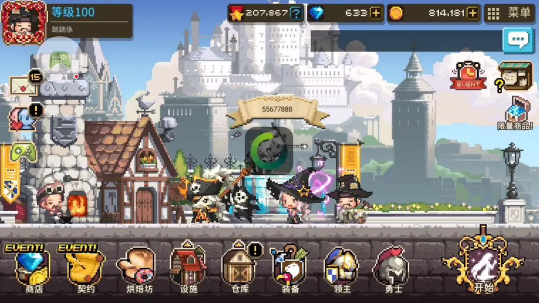
I. Intro & Game Overview
A. Core Intro
Crusaders Quest is an RPG that perfectly combines block matching gameplay with character skill triggers, team building, and gear training. Skilled players can enjoy most of the game with one team, while newbies even with super high power might get stuck on a stage and question if this game is for them.
B. Game Background & Features
Crusaders Quest’s charm is unique—half action game, half strategy game:
-
Gameplay: You need to keep an eye on the block refresh rhythm, decide the order of matching blocks, and time character skill triggers perfectly.
-
Strategy: You have to pick the right heroes, build a team with complementary roles, and put gear and enchantments in the right places.
-
Training: You need to plan your precious resources, do character breakthroughs, and slowly build a full team that can "farm dungeons reliably, beat bosses, and handle PVP battles."
To sum up the core features in plain English:
-
"Strong" in this game never means one super strong character, it means a well-synced team
-
Stages you can’t beat aren’t because you’re underleveled—they’re because you messed up the block matching rhythm or used the wrong team
-
Once you get the hang of skill triggers and action loops, you’ll be addicted: You’ll start chasing "the smoothest damage rotation," "the most consistent control chain," and "the easiest auto-play method."
C. Newbie Quick Start Guide
If you want to get into the game super fast, read in this order:
-
Read Chapters II + III: Hero System & Starter Summon Choices
-
Read Chapter IV: Team Building Logic
-
Read Chapters V + VI: Gear Enchantments & Progression Planning
-
Read Chapters VIII + IX: Goddess Collaborations & PVP Battles
-
Read Chapters X + XIII: Game Systems & Advanced Player Tips
II. Hero & Character System
A. Hero Classes & Selection Guide
The biggest newbie mistake is: thinking high rarity = strong, wanting to level every cool-looking hero. That’s not a rule, but you need to know Crusaders Quest heroes fall into 4 main categories:
1. Main Damage Dealmakers
These heroes have a straightforward job: Deal heavy damage, take down BOSSes, and complete dungeon runs as quickly as possible.
But damage dealers split into two types:
-
Burst Damage Dealmakers: Depend on skill timing and chain-clear rhythm, and pulling off a big burst combo is super satisfying
-
Sustained Damage Dealmakers: Consistent damage output, high forgiving, perfect for new players pushing through maps and long battles
New players are strongly recommended to start with Sustained Damage Dealmakers to get your footing, since you’re still not familiar with the block-clear rhythm. Burst damage requires precise control of every move, making it harder to master.
2. Support Heroes
These are the easiest heroes for new players to overlook, but they’re absolutely critical for your team in the late game. After all, in Crusaders Quest, most level wins and losses don’t come down to who deals more damage—they come down to:
-
Can they maximize the damage consistency of your damage dealers?
-
Can they keep your whole team alive?
Many times when you’re stuck on a level, swapping in a good support hero works way better than leveling up your existing damage dealers by 10 ranks.
3. Tanks
Tanks aren’t just there to "stand in front and soak damage"—great tanks usually have these extra traits:
-
Have crowd control abilities
-
Have consistent survival mechanisms
-
Can protect teammates
If you only bring a tank that soaks damage without any extra skills, many hard levels will leave you thinking "how are we still dying?".
4. Utility Heroes
These heroes might not deal much damage, and they’re not classic tanks or supports—but they solve problems for specific situations:
-
Work wonders for specific level mechanics
-
Can disrupt enemy attack rhythms
-
Can boost the overall stability of your team
Many hard dungeons—utility heroes are the key to clearing them.
B. Hero Leveling & Progression Order
Here’s a progression order you’ll never regret following:
-
First, build a core team that can steadily push through the main story
1 Damage Dealer + 1 Support + 1 Tank
The biggest mistake new players make is leveling 5 damage dealers, leaving you with no heals, no crowd control, and no one to soak damage—you’ll just be running in circles, stuck on every level.
-
Focus on upgrading skill cycles that are used in every battle first
A lot of heroes get their power from specific trigger conditions or combo effects—max out their core skills first. Wasting resources on skills that you barely use is just a waste. -
For equipment, prioritize "survival + consistent damage" over "higher damage" first
The most common new player mistake: only chasing damage-related stats, then getting your whole team wiped by a dungeon area-of-effect skill.
You need to make sure your team has enough room to survive before you can even talk about higher damage ceilings. -
Don’t spread your resources too thin: focus on maxing out 3 core heroes at most at the same time
There’s never enough resources to level up 10 heroes fully at once. Get one team fully built first—you’ll earn more rewards daily, and building a second team will be way faster later.
III. First Summon & Character Choice Tips
A. First Summon Guide & Recommendations
Let’s be straightforward about first summons: you can reroll, but don’t let it ruin your mood. After all, Crusaders Quest is a long-term game—what really determines how far you go is your resource management skills and team composition knowledge, not pulling a top-tier hero on your first day.
For new players rerolling, I suggest setting "3 stop conditions":
-
Get a hero that can be your main damage dealer
They don’t need to be the absolute best, but they should be able to hold their own while pushing maps and running dungeons. -
Get a support or tank hero that can keep your team stable
Many new players only reroll for damage dealers, and by mid-game they…
-
Lagging like crazy.
-
The unit you get needs to synergize with your existing team
Here’s the key: Even if you pull a super powerful unit, it’s totally useless if it can’t fit into how your current team works.
New players’ most practical goal:
Get a reliable damage dealer or a versatile support, and you’re good to go for now.
The actual power gap later can be fixed with gear, enchants, Goddess systems, and team synergy.
B. Pull and Acquisition Mechanics
In Crusaders Quest, you need a down-to-earth attitude when it comes to pulling units:
-
Pulls are just how you get units
-
But ascension (training) decides if your unit can actually perform in battles
So even if you pull a ton of units, if you can’t level them up properly, they’re still useless.
My advice for new players is the "Two-Step Pull Method":
-
First, fill out your team’s basic framework: At least one usable damage dealer, tank, and support
-
Then go for the playstyle you like: Burst, control, or sustained damage
Next, we’ll talk about solutions for specific dungeons. Once you have your team’s basic core set up, you won’t run into that frustrating situation: "I pulled so many units but still can’t beat anything."
Unit 4: Team Composition and Lineup Building
A. Analysis of Common Team Types
I’ve broken down common teams into four main types. Master these four, and you’ll immediately know where to put any unit you pull:
1) Reliable Map-Pushing Team
Core Goal: Stable, auto-friendly, low failure rate
Building concept:
-
Consistent damage dealer
-
Sustain-focused support
-
Durable frontliner with crowd control
This team doesn’t go for speed—It’s super hassle-free. Once you get this team running smoothly, your daily dungeon run efficiency will double.
2) Boss Burst Team
Core Goal: Unload all your damage in a short period
Building concept:
-
Burst damage dealer
-
Damage-boost support
-
Crowd control/survival unit
What’s this team’s biggest fear? Getting burst down before you can unleash your damage, or having your damage rhythm interrupted by the opponent.
3) Crowd Control (CC) Grind Team
Core Goal: Disable enemies so they can’t act, while you take your time fighting
Building concept:
-
CC chain
-
Consistent damage
-
Sustain
Many people think CC teams are "grindy," but when it comes to high-difficulty stages or bosses with special mechanics, CC teams are often the only solution.
4) Arena Counter Team
Core Goal: Adapt to the meta and counter the opponent’s core units
PVP is different from PVE. You can’t just rely on stats. You need to focus on:
-
Opening rhythm
-
Choosing between going first or last
-
Countering the opponent’s core skills
So PVP teams are like rock-paper-scissors: You need multiple setups to handle different opponents.
B. Team Composition Tips
I’ll share a super useful "3-Question Team Formula." Ask yourself these before building any team:
-
Who is the main damage dealer on this team?
Without a core damage unit, adding more supports is just a waste of time. -
What keeps this team alive?
Healing, shields, damage reduction, crowd control, and so on
At minimum, they need a reliable way to stay alive.
-
How does this team actually deal damage?
Is it all about combo rhythms? Buffs? Or crowd control to buy time for damage?
If you can answer that, your team won’t be total garbage.
The most common team-building mistakes new players make:
-
Full DPS team: Looks like it hits hard, but dies in one hit from anything.
-
Full support/tank team: Super survivable, but can’t kill the boss and loses when time runs out.
-
DPS + tank, but no supports: Super common mid-game stuck point, since there’s no sustain to keep the team going.
Unit 5: Equipment & Enchantment Systems
A. Basic Equipment Know-How
Equipment is insanely important in *Crusaders Quest*:
-
Even the strongest character will either hit like a wet noodle or die instantly without good gear.
-
With the right gear, even off-meta characters can shine.
When looking at equipment as a new player, focus on 3 key points:
-
Sustain stats are way more underrated than you think
Especially in story stages and hard dungeons—you can’t deal damage if you’re dead. -
DPS gear isn’t just about raw attack
Different characters need different things: some need crit chance, some need skill multipliers, others need attack speed or energy regen. Always check what your character actually needs. -
Sets and enchants define your endgame power ceiling
Early game, anything works. But mid-to-late game, you’ll notice: the same character with perfect sets and enchants is leagues ahead of one that doesn’t have them.
B. Efficient Equipment Progression
My go-to progression order is:
-
First, get the core gear for your 3 main team members
Next, figure out what exactly a "team core" is: it’s made of:
-
Tank (T): The priority is surviving damage first.
-
Support (Healer/Buff): The priority is keeping heals/shields running consistently.
-
Damage Dealer (DPS): No need for perfect stats yet—focus on being able to farm daily dungeons reliably.
-
Invest in your main team first
Level up this team so you can farm higher-tier dungeons—you’ll get better gear and materials, and training your second team will be way faster later. -
Enchant to fix gaps before going all-in on max stats
If you’re dying a lot, enchant for sustain. If your DPS is inconsistent, boost their reliability. A lot of new players rush to get perfect DPS enchants early, get stuck on dungeons, can’t farm materials, and end up in a bad loop.
VIII. Progression & Milestone Systems
A. Fast Leveling Guide
If you want to level up fast, remember this core mantra:
Main story unlocks rewards, dailies give steady resources, and dungeons max out your efficiency.
For new players, here’s the daily routine I recommend:
- Clear daily quests/reward activities first.
- Work on the main story.
- Put your stamina/resources into dungeons that boost your team’s efficiency.
- Save the fun, RNG-reward content for last.
Follow this order, and your account will feel way smoother and less time-consuming to manage.
B. Breaking Through Progression Walls
The 3 most common mid-game walls new players hit are:
Mechanic Wall: "Your damage and survival are solid, but you just can't clear it" Solution: Bring utility units. A lot of stages test if you have the right "toolbox" heroes.
The #1 mindset to keep:
If you're stuck, first check your team's functionality. Don't immediately dump resources into hard-leveling characters.
Most of the time, you just need the "right solution" instead of brute forcing it.
IX. Dungeon & Stage Guides
A. Main Story Deep Dive
The main story isn't just for cutscenes—it unlocks all sorts of stuff you need:
Pro Tips for Clearing Main Story:
B. Special Mode Guides
Special modes usually split into two types:
Key Tips for Resource Dungeons:
Key Tips for Challenge Dungeons:
X. Goddess System & Support Roles
A. Goddess Selection & Synergy
The core rule for picking a Goddess is "fix your team's weaknesses": If your team deals enough damage but can't survive, pick a Goddess that boosts survival; if you need more damage, pick one that increases output. When pairing, make sure her skills synergize with your team's heroes. For example, if you use combo-heavy units, a Goddess that builds up damage over time works great—super straightforward for new players to pick up.
Goddess System Guide
New players often overlook the Goddess system, then later ask confusedly: "Why do I do so much less damage than others with the same characters and gear?" The answer usually lies in the Goddess—her effects can turn your team from "barely scraping by" to "crushing everything."
To keep it simple, I split Goddesses into three main groups:
My most solid advice for new players:
Start with a Survival or universal Goddess. Once your team is stable, go for damage-boost or counter-focused Goddesses.
B. Goddess & Team Synergy Logic
When pairing Goddesses with your team, it's never about "which Goddess is the strongest"—think about:
Goddess
IX. Arena and PVP Gameplay
A. Arena Beginner's Guide
PVP gameplay is totally different from PVE—they’re like two separate games! The team that can steamroll through PVE smoothly might get CC'd out the moment the match starts in PVP, and won’t even be able to use their skills.
So for PVP beginners, I’ll only give you 3 key points:
B. Advanced Arena Strategies
When you hit the late-game Arena, the differences between players usually come down to these factors:
If you want to rank up quickly, here’s what I suggest: after every match, ask yourself only two questions:
X. Game Systems Breakdown
A. Bread System
The biggest benefits of the Bread System are:
Whether you can enjoy playing the game long-term comfortably often depends on whether you’ve built up this "claim your daily fixed rewards" system.
Useful tips:
B. Practice Mode
Practice Mode is a feature many players skip, but it’s actually a shortcut to cut your learning curve—here’s why:
My advice:
Every time you get a new core character or want to switch playstyles, spend 5-10 minutes in Practice Mode first—you’ll save yourself at least a whole week of trial and error.
XI. Current Meta & Tier List
A. Current Version Strength Analysis
A lot of players ask "Who’s the strongest right away?" But anyone who’s played Crusaders Quest knows that in games like this, character strength is
-
Sustain Wall: You can’t survive, get one-shot, or heals aren’t enough.
Fix: Boost your tank’s survivability, add more damage mitigation, use crowd control, or focus on upgrading your tank’s gear first. -
Damage Wall
-
More progression systems
-
Higher-tier material drops
-
More efficient resource sources
So one of the top priorities for new players is: Push the main story as far as you can.
If you hit a wall, go back and upgrade gear, tweak your skill rotation, or stabilize your team composition.
-
Start with a stable team, not your burst team you're still learning to use
-
Even if you slow down your combo pace, stay consistent
-
For stages where you get one-shot, prioritize tanks and crowd control—don't brute force damage
-
Resource Dungeons: Your goal is consistent runs and long-term gains
-
Challenge Dungeons: Your goal is clear it in one go for key rewards or unlocks
-
Go for "0 deaths"
-
You can take it slow, but stay consistent
-
Counter the mechanics with the right units
-
Burst through the critical phases fast
A lot of players treat challenge dungeons like resource dungeons, or vice versa—and end up wasting stamina, time, and blowing their mind.
-
Survival Goddesses: Best for pushing stages and high-difficulty content—they drastically boost your team's survivability
-
Damage Boost Goddesses: Best for boss fights and when you need speed
-
Crowd Control Goddesses: Best for mechanic-heavy stages and PVP counter play
-
What does your team lack right now?
-
Can the Goddess fill that gap?
For example: -
If your team gets one-shotted all the time, pick a Goddess that gives damage reduction or shields
-
If you just need a tiny bit more damage to take down the boss, pick one that boosts damage or extends your burst window
-
-
If your team gets completely CC'd (crowd controlled) and can't do anything, pick a Goddess that provides CC removal or Interrupt effects.
With this mindset, you'll find Goddess picks are actually super easy!-
First, figure out if your team is a fast or slow team
Fast teams aim for opening pressure, while slow teams need to survive the first wave of attacks before countering. -
Don’t just look at damage—look at whether you can even use your skills
In PVP, it’s often not a lack of damage that wins or loses, it’s not getting a chance to use your skills at all. -
You need at least 2 different team builds
You should have at least one burst-focused team and one control/anti-control team, otherwise you’ll just get destroyed by counter teams.
-
Opening rhythm: How you chain the first set of gems, and which character’s skill to use first
-
Counter play: Knowing what the opponent is going to do, and if you can save skills to interrupt them early
-
Equipment enchantment details: It’s not a matter of 100 extra attack points—it’s about whether you can survive that key hit
-
Goddess selection: Pick the wrong Goddess, and your whole game’s rhythm falls apart
-
Which turn did my team start to fall apart?
-
Was the problem I had that I couldn’t survive, or that I couldn’t use my skills?
Once you find the cause and adjust, your improvement will be super fast.
-
Make your daily basic rewards more consistent
-
Let you get stronger steadily without grinding dungeons all night
New players often overlook this system because it doesn’t give that "wow" feeling like summoning a new character, or the thrill of clearing a tough dungeon. But veteran players will tell you straight up:
-
Max out all the nodes that boost your daily output efficiency first
-
Don’t chase flashy rewards at the start—focus on getting reliable and useful ones first
-
Go with the flow of your main team’s needs: if you’re low on a certain resource, prioritize investing in that area
-
You can test each character’s skill traits
-
You can practice matching gem chains
-
You can also adjust Goddess combinations and skill rotations
A lot of teams look perfect on paper, but once you get into actual combat, they often get stuck and can’t pull off skill rotations smoothly. That’s where Practice Mode is super useful—no stamina wasted, no risk of failing, so you can tweak your rotations until they feel natural.
-
- It’s not just about the character themselves—it’s heavily tied to the resources you have, your equipment enchant levels, goddess synergy, and how well they link with your team!.
So I highly recommend using these "four dimensions" to judge whether a character is worth investing in:-
Versatility: Can this character clear stages, fight BOSSes, and perform in PVP? Or are they only useful in one specific game mode?
-
Build Cost: Does it require tons of rare gear, specific enchants, and max-level investment to make them effective?
-
Team Synergy: Do you have teammates that let this character’s skill rotation run smoothly?
-
Replaceability: If you don’t have this character, can you use others to fill the same role? If yes, don’t rush to dump precious resources into them.
Using these four angles to evaluate, you won’t get led around by those "seemingly god-tier" characters and waste your resources.
B. Patch Updates & Balances
The biggest pitfall new players fall into every patch is hyping up a character to godlike levels and dumping all their resources into them.
My advice is straightforward:-
Invest in your main stable team first and lay a solid foundation.
-
Of course you can invest in meta characters, but do it in batches—don’t dump all your resources at once.
-
Keep at least some resources set aside so you don’t get stuck in a tough spot when the next patch hits.
This way, no matter how the meta shifts, you won’t get left behind and can adapt to changes easily.
XII. New Player FAQ & Decision Guide
A. Common New Player Confusions
Q1: I pulled a lot of characters, why am I still stuck on stages?
A: What you’re missing isn’t more characters—it’s a full team composition with all roles covered. Make sure your team has damage dealers, tanks, and supports doing their jobs; don’t force three damage dealers into your team and charge in, that’s basically suicide and you’ll barely clear anything.Q2: Where should I farm gear first? Should I enchant or upgrade first?
A: First build a stable gear framework you can rely on to clear runs consistently, then go for perfect enchants and substats. If you can’t even farm reliably (i.e., you fail runs nonstop), your efficiency will be terrible and you’ll just waste time and resources.Q3: How do I choose a goddess? I want to use all of them!
A: Just pick one that fills your team’s gaps. If you’re struggling with survival on stages, go for a defensive goddess; if you’re missing damage against BOSSes, pick a damage-boosting one. Don’t go for the flashy, overhyped ones at the start.B. Veteran Player Questions
Q1: I want to run a burst team, but I keep messing up my rotations—what do I do?
A: First, practice the skill rotations in training mode until you get them down, then adjust your team to a structure that protects your burst windows. A burst team isn’t just about stacking damage—you need to make sure your burst actually lands without getting interrupted.Q2: I get CC’d to death in PVP, is there a fix?
A: Of course there is, and it’s usually not about stacking more damage—it’s about:-
Swap in a support/utility character that can counter or cleanse CC to shut down the enemy’s control.
-
Adjust your goddess to a counter-focused build that pairs with your team to handle CC.
-
Shift your team from a "go first for burst" playstyle to a "hold off, take hits, then counterattack" style—it’s better for PVP pacing.
C. Meta Adaptation Decisions
-
You keep failing stage runs a lot → Fix survival and build a stable team first
-
You’re missing damage on BOSSes → Add damage-boosting supports or adjust your burst rotation
-
You get crushed in PVP → Build a counter team first—don’t force your PVE team into PVP
XIII. Advanced Tips & Pro Guide
A. In-Battle Mechanics Tips
I’ll share some tips that actually feel super useful in real battles:
Don’t mash blocks as soon as you see them—first, think about who you want to triggerA lot of characters’ core strength actually relies on specific
Mashing random buttons during combo sequences will only mess up the smooth flow, wasting valuable damage output opportunities.
-
-
Time Key Skill Triggers Perfectly
Save some key skills for burst phases against bosses, and time others to counter enemy ultimates right before they land—this maximizes every skill’s effectiveness. -
CC isn’t about quantity—it’s about connectivity
The key to crowd control is being able to chain it together, not spamming as much as possible. If your stun leaves you vulnerable afterward, you’re just giving the enemy a chance to counter—more CC won’t save you here. -
Auto isn’t a crutch—set up your team to auto first
A lot of veteran players think using auto is lame, but end up grinding manually until their hands hurt, wasting tons of time. Smart players set their teams to farm reliably on auto first, then use the saved time to work on PVP or tackle tough challenges—efficiency is what keeps you playing long-term without burning out.
B. Uncovering Hidden Gameplay Elements
In games like this, hidden perks often come from small, overlooked systems, underused function buttons, or specialized teams built for specific modes.
-
Tiny details in easy-to-miss systems
-
Underutilized but useful features
-
Specialized teams for specific modes
If you want to get ahead of other players, the most effective move isn’t pulling 10 more gacha rolls—it’s:
Increase the efficiency of your current resources by 20%.
Improving efficiency is the key to playing comfortably long-term.
C. Long-Term Planning Tips
Here’s a solid, stable long-term plan:
-
First, prioritize building a reliable team that can farm basic tasks consistently
-
Next, train a specialized team for boss assaults
-
Finally, work on a dedicated PVP team
Invest in gear and enchants in this same order:
-
Make your farming team stable first
-
Make your boss team fast next
-
Only then chase the extreme min-max details for PVP
Stick to this plan, and you won’t regret it.
XIV. Community Resources & Official Info
A. Official Channels
To stay up to date on events, updates, or game adjustments, the most reliable sources are always official announcements and community pages. This isn’t just common sense: when players think a character got nerfed or buffed, it’s often due to mechanic changes, balance tweaks, or gear interactions being fixed—not because their own level is too low.
B. Player Community Resources
Community guides are useful, but you have to learn to filter them properly:
-
Is this build for new players or only for highly leveled accounts?
-
Is this team good for PVE, PVP, or a specific dungeon?
Ask these two questions first, and you won’t end up copying a build that doesn’t work for you.
C. External Tools & Calculators
External tools can be really helpful when researching efficiency or min-maxing gear. But here’s the advice:
-
New players should first get their team’s core functions sorted out properly
-
Only mid-game should you start chasing optimal stats and min-maxing
If you rush this before you’re solid, you’ll get stuck in “data anxiety” and end up burned out.
Crusaders Quest might look like a simple blocky game, but what makes it fun is: the more you understand your team’s rotations, how to pair gear and enchants, and how to time goddess skills and control, the more different levels of strength you can get from the same character.