Brown Dust 2 2025 Character Tier List: T0 Must-Pull Guide for PVP, PVE, and Mirror Battles
If you're like me and got into Brown Dust 2 in 2026 and played it deep into the later stages, you must have one super clear realization: This game is never about “pulling a strong character = clearing stages lying flat”, it's more like “pulling a character means getting a set of unique gear combos + team BUFF puzzle pieces.”
That's why those famous contrasting scenarios pop up—you look at a character in tier lists thinking they're insanely strong, but when you pull them at +0 and equip them, they get absolutely demolished by the other team in PVP; on the flip side, some character in your hand that doesn't seem top-tier, with just the right key gear + breakthrough levels + suitable BUFFs, can actually steamroll all stages.
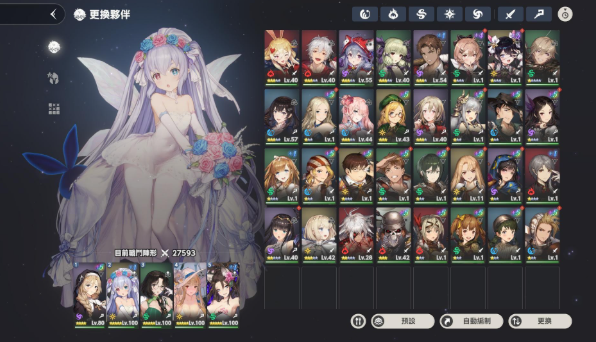
I. Opening & Game Background Introduction
A. Core Concept Introduction
First, let's lay out the most critical concept upfront:
In Brown Dust 2, “character strength” = base character + gear + breakthrough level + potential + team BUFF/Debuff synergy.
Especially in the PVP Mirror War arena, many tier list evaluations directly lock onto “+5 Gear + Full Potential Unlock” setups—after all, even a tiny difference in SP energy or skill coverage per turn can make the exact same character feel like night and day to play.
So after reading this guide, you should gain three core abilities:
-
Understand evaluation standards across different game tier lists
-
Figure out your priority order for character training
-
Master team composition counter techniques for different scenarios
B. Game Core Loop & Background
If you're a new player just starting out, I can sum up Brown Dust 2's core gameplay loop in one line:
-
PVE Mode: Progress main story / join events / challenge high-difficulty stages → Earn game resources → Upgrade characters and gear → Take on even harder stages
-
PVP Mirror War Mode: Suppress opponents with “gear skill combos + SP energy management + starting position planning,” earn points through strategy
The “Gear System” is this game's most unique design: the same character switching different gear becomes a completely different skill role. Some gear looks or works mediocre on its own, but once you have a full set to activate the combo loop, their strength is absolutely mind-blowing.
II. Character Strength Ranking & Evaluation for PVE Mode
This section will explain things in a way “closer to actual player experiences”:
When playing PVE, you can't only look at “which character has the highest damage number,” you need to ensure you can consistently deal out damage reliably.
After all, many PVE stages essentially test:
-
Do you have a corresponding element damage core (main C)?
-
Is your team's BUFF setup sufficient?
-
Do you have the right functional characters (like healers, controllers)?
Next, for PVE character selection, I'll split them into three categories: “Damage Dealers, Supports, Functional” types, so you can fill gaps based on your existing team lineup.
A. Strength Ranking of PVE Damage Classes
Looking at the PVE damage tier list released at the end of 2025, top-tier damage characters all fall in the “S Tier,” which includes common names like Morpheah, Wilhelmina, Levia, Liatris, Loen, Nebris, Venaka, Michaela, Sacred Justia, Eleaneer, Yuri.
How to interpret the “PVE Damage Tier List” to avoid being misled?
1) “Immediately Battle-Ready” characters that can be used right after pulling
Traits: Practical skill design, wide enemy-clearing range, low dependency on team setup.
These characters can perform well even at +0 level, perfect for new players.
If you're a new player just starting out, choosing these characters first will save you tons of frustration in the game—after all, you don't need to grind out a full set of BU
Once all the necessary resources (like FF) are fully allocated, you can smoothly enjoy the game.
2) "Top-Tier" Characters That Are Extremely Buff-Dependent
Features: Their theoretical damage output is incredibly high, but you need to meet these conditions to make them work:
-
Sufficiently high-quality Attack Buffs / Critical Damage Buffs
-
The ability to keep the character dealing consistent damage through critical turns
-
Sometimes also meeting specific attribute requirements or enemy positioning rules
These characters are the perfect example of that classic "they look like gods when others use them, but feel totally weak when you pick them" discrepancy.
It’s not that the character is bad—you just haven’t leveled them up to their full potential yet, okay~
3) "Puzzle-Solving" Damage Dealers That Are Super Picky About Enemy Formations
Features: They feel like absolute legends in some stages, but switch up the enemy lineup and suddenly they’re useless—can’t deal any damage at all.
Invest in these characters way more carefully: you need to confirm if the content you play regularly *actually* needs them.
B. PVE Support Character Rankings
In Brown Dust 2, PVE support characters are basically the core "engine" of your team!
Give the exact same damage dealer a slightly different support buff, and the damage difference is massive—it feels like you’re playing two totally different games.
To make picking easier, I’ve organized the key core supports by their "Buff Type":
1) Huge ATK / M.ATK Boosts: The Most Versatile Base for Any Team
Think of these supports like this: No matter if you run a physical or magic damage team, these damage-increasing buffs almost never go out of meta.
Names like Homunculus Lathel, DS Liberta, B-Rank Helena, and MC Teresse pop up in almost every team comp list, and the main reason is their buffs are super reliable.
2) Critical Rate Buffs: You Need Consistent Crits to Reach Top-Tier Damage
A lot of damage dealers live and die by their critical hits!
If your crit rate is inconsistent, the experience is brutal:
-
This run: full crits → insane, godly performance
-
Next run: zero crits → it feels like you’re just scratching enemies, no damage at all
Characters like B-Rank Helena, DS Liberta, and Red Hat Rou all provide critical rate buffs—these supports are a must-have for players who want "consistent damage".
3) Critical Damage Buffs: Take Your Burst Damage to the Next Level
Critical damage is the most OP and addictive damage boost in Brown Dust 2!
For example, Red Hat Rou gives a massive critical damage boost.
My super straightforward advice for new players:
Prioritize getting "ATK / M.ATK + Critical Rate" sorted first, then go after the critical damage ceiling once you’re settled in.
Otherwise, you’ll often end up in that super awkward spot where you pulled a main damage dealer but can’t deal enough damage at all.
C. PVE Utility Character Rankings
Utility characters are the most overlooked thing in PVE!
But once you hit late-game hard stages, you’ll understand:
No matter how strong your damage is, you can’t clear stages if enemies stack all their buffs on you; miss a dispel, and your whole team gets paralyzed immediately.
Based on common utility needs at the end of 2025, the most useful functions are these:
-
Buff Removal: Characters like the Scheherazade series are go-to core dispel sources
-
Silence: Breaks certain enemies’ skill rotation
-
Debuffs: Prevents your team from getting one-shot by enemies
-
Targeted Shield Break / Defense Reduction: Only needed for specific bosses or mechanic stages
My utility character investment advice for *all* players—new and veteran alike:
-
Prioritize leveling up Dispel characters
-
Next, add Silence / Debuff type characters
-
Only invest in specialized utility characters that are "only needed for specific stages" last
III. PVP Mirror Match Tier Rankings
PVP Mirror Matches in Brown Dust 2 are actually...
Dust & Clover 2’s most skill-demanding mode:
You don’t need to pull top-tier characters, but you *must* nail these 3 things:
-
SP Management: Making effective moves on Turn 1 matters so much
-
Opening Positioning & AOE Shape: The difference between hitting enemies and missing is HUGE!
-
Offense/Defense Mindset Gap: The same gear that’s super strong on offense isn’t automatically good on defense
Also, official tier lists usually note their ratings are based on "+5 Gear + Full Potential," and they really stress how much SP reduction ruins PVP.
A. How I Prioritize Top PVP Characters
I’m not just shoving a full tier list at you—instead, I’ll break this down into 4 key factors that decide Mirror War wins/losses, so you can build your team around the characters you own to fix gaps:
It’s way easier to make a balanced team when you go off what you already have!
1) Opening Core: "Opener" Characters With Low SP Cost That Flip The Game
In Mirror War, Turn 1 often decides about 70% of the match:
If you can land Dispel / Silence / AoE Pressure / Defense-Break on your first move, the enemy will struggle to set up properly.
Take Rou for example—she’s always mentioned in PVP tier lists: Not only does she give a Crit buff, but after balance changes, she got a huge extra Crit Damage boost. With her Potential unlocked, her SP cost is way more friendly, so she works great as both an opening pick and a follow-up character.
2) Meta Mainstay: How Important Is Dispel Really?
Let me be real with you:
If your team has no Dispel skills, get ready to tilt hard against certain defensive setups.
Like Scheherazade has some gear ranked as "top-tier Dispel," and after balance tweaks, her AOE skills are way more reliable too—she’s a monster for countering defensive opening plays.
3) AOE Shape & Coverage: Hitting Targets Is Everything
It’s super common in Mirror War for enemies to position perfectly to block your AOE—so even if your skill looks insane, it’ll do nothing.
That’s why in late 2025 meta, two things matter most:
-
Is your AOE coverage large enough?
-
Can you consistently hit key targets given standard enemy positioning?
Take Elise for example: After balance changes, she got a massive heart-shaped AOE with Defense-Break and Resistance-Break effects. She’s projected to see way more play going forward.
4) Old Standbys Still Have Clout—Just Not The Only Top Dogs
Characters like Eclipse and Venaka, which are traditional strong picks, were described as "still solid even if their top-tier pick rates dropped" in late 2025 meta. The reason? The meta got more balanced, and there are way more viable options now.
B. PVP Team Counters & Synergies
Mirror War counters aren’t just about elemental weaknesses—there’s way more to it:
1) You Run A "Buff Stack Team" → Your Worst Counter Is A "Dispel Team"
You’re going all in on shields, buffs, and survivability?
One low-SP Dispel from the enemy, and your entire team falls apart.
So when running a Buff Stack team, keep two things in mind:
-
Can you lockdown their Dispel user before they act?
-
Or can you make your key buffs unremovable, even if they get Dispel’d?
2) You Run A "Burst Nuke Team" → Your Worst Counter Is A "High-Tempo Counter Team"
You aim to one-shot the enemy’s main carry on Turn 1?
If you miss that, you’ll likely get blown up on Turn 2 instead.
The keys to winning as a Burst team are:
-
Is your Crit Rate consistent enough?
-
Do your Defense-Break and Resistance-Break effects line up with your damage timing?
-
Will your opening skill land on their core character?
3) You Run A "Tank Team + Turn-Grinder" → Your Worst Counter Is A "Tank-Break Team + Targeted High Damage"
Tank teams often collapse
Method:You think your defense is tough enough, but the opponent brings a "tank-breaker" skill that perfectly breaks your formation.
Therefore, a tank team isn't about mindlessly stacking defense; it needs to have:
-
Counter-initiation methods
-
Or threat characters that make the opponent "dare not act rashly"
C. PVP Environment Analysis
From observations at the end of 2025, the Mirror Battle meta is described as "more balanced and diverse". While attackers still hold a higher win rate, it’s much better than the extreme state in the early days.
Coupled with the balance adjustment on 2025/12/16 that targeted key characters’ costumes, this shows the developers are actively pushing to prevent the meta from being dominated by just one or two lineups.
Conclusion from players’ perspective:
When investing resources now, don’t just bet on one extreme playstyle.
The more balanced the meta gets, the more you need "1 main lineup + 1 backup lineup" to counter different defensive setups.
IV. Detailed Character Recommendations & Analysis
In this section, I’ll split character recommendations into three categories:
T0 Tier Must-Pulls, Great Value for Resources, Limited Banner Analysis.
A. T0 Tier Must-Pull Characters
Let me clarify first: When I refer to T0 Tier, I mean characters that—after investing resources—can consistently give you advantages in both PvE and PvP, not just short-term hype that gets replaced as soon as the meta shifts.
T0 Tier Type 1: PvE Core DPS Powerhouse, Extremely Versatile
Like the S-tier core DPS characters in the 2025-end PvE tier list—they’re the backbone for tackling high-difficulty content in the long run.
But I’d advise you to first check which attribute core DPS you’re missing, instead of mindlessly pulling all S-tier characters, to avoid spreading your resources too thin and not being able to level them all properly.
Player Tested Tips:
-
If you’re missing core DPS → Prioritize a "versatile DPS that can handle most stages"
-
If you already have enough DPS → You should instead prioritize BUFF and support characters—their damage boost is way more noticeable than forcing another DPS to level up.
T0 Tier Type 2: PvP Mirror Battle Core Mechanic Characters
The most sought-after in Mirror Battle has never been characters with the highest single-hit multiplier—it’s those that "create tangible value every turn".
Take characters like Rou, who can suppress enemies at the start, follow up combos, and are strongly tied to crit and crit damage stats—this is the typical core piece for Mirror Battle.
Another example is Scheherazade, who has dispel abilities; she’s the kind of character that makes the whole match feel suffocating without her.
B. High Value Characters
I define value in one sentence:
Characters that can be used effectively without dumping resources to +5, and whose absence makes your team struggle a lot.
1) BUFF Support: The Earlier You Level Them, The Less You Regret It
Stats like ATK/M.ATK boosts and crit rate gains will stick with you all the way to late-game content.
BUFF characters like Homunculus Lathel, DS Liberta, B-rank Helena, and MC Teresse are on the practical list compiled at the end of 2025 as the kind you "can’t avoid using in most teams".
Player’s Honest Tip:
If you have limited resources, finishing "a full physical BUFF set" or "a full magic BUFF set" is way more practical than forcing 3 DPS characters that you can’t properly level up.
2) Utility Characters: Prioritize Dispel/Silence/De-buff
PvE utility characters are the most overlooked, but they’re often the solution when you get stuck on a stage.
For example, utility functions like dispel, silence, and de-buffs are repeatedly highlighted as top priorities in the 2025-end utility list.
C. Limited Banner Character Analysis
Limited characters in Brown Dust 2 are usually split into two main categories:
-
Collab Limited: Once you miss them, it’s almost impossible to get them back—they’re a once-in-a-lifetime kind.
-
Holiday/Anniversary Limited: Usually not weak, but more importantly, the "free resources given out" and benefits from concurrent events.
My practical approach to limited banners:
-
If you’re a collector: That’s all you need—pull as you wish without overthinking.
-
If you [care about resource efficiency]: The last part of the snippet is incomplete, so this is the full translation of the available content.
For players who prioritize strength first: Ask yourself, “Does this unit fill a gap in my team?” Don’t pull just because it looks cool.
If you’re a F2P or light spender: Prioritize, “Can I actually build this unit properly after pulling it? Don’t let it gather dust in my storage.”
The Most Common Tragedy:
You’re hyped when you get a limited unit, but you don’t have the resources to level up its key Break levels, Potential, and gear → ends up just a decorative unit in storage, wasting precious resources.
V. Team Composition and Counter Systems
This is the “win rate boost core section” of the entire guide. If you only look at character rankings without knowing how to build a proper team, you’ll keep stuck in the loop of “this unit’s strong but I can’t make it work right.”
A. Classic Team Comps
I’ll use a “core skeleton” approach here—just plug your available units into this structure, no need to force fits.
1) Most Reliable PVE Skeleton: Main DPS + Main Buff + Sub-Buff/Utility + Flex Slot
-
Slot 1: Core Main DPS matching the element
-
Slot 1: ATK or M.ATK main buff support
-
Slot 1: Crit Rate or Crit Damage buff support
-
1-2 Slots: Utility units or sub-DPS
Follow this structure, and you’ll notice your damage and survivability get way more consistent, and your level stuck rate drops significantly.
2) PVP Mirror Battle Skeleton: Lead Control/Dispel + Tank/Survival + Burst Finisher
For Mirror Battles (PVP), don’t go with “I’ll bring 5 DPS units.” Focus on these core points instead:
-
Turn 1: Make the enemy’s life tough, limit their play space
-
Turn 2: Take out the enemy’s key units, prioritize eliminating threats
-
Don’t get blown up by the enemy’s Turn 2 counterattack—keep enough survival space
B. Counter Relationship Breakdown
Here are the 3 core counter pairs you’ll run into most often:
1) Buff Stacking ↔ Dispel
If you stack Buffs nonstop, the enemy almost definitely has a Dispel skill ready. This is the most common counter logic in PVP—slip up and they’ll break your Buff chain, killing most of your counterattack potential.
It hurts so much when you’re proud of your Buff stack and the enemy just dispels it.
So when running a Buff team, either kill the enemy’s Dispel unit first, or position your team so they can’t strip your key Buffs.
2) Counter for Turn-Stalling Tanks: Tank Breaks + High-Accuracy Multi-Hit Attacks
When facing a tank that stalls turns with dodge, shields, or taunt, use multi-hit attacks with high accuracy, or dedicated tank-breaking methods to deal with them.
3) Counter for Burst One-Shots: Counterattacks + Survival Buffs
If you can’t one-shot the enemy, you’ve already lost most of the fight.
So the core elements of a burst team are clear: consistent critical hits, solid defense/resistance penetration, and the ability to hit the enemy’s key units.
C. Teammate Synergy and Buff Mechanics
Just remember one slogan for this part: A main DPS’s job is to land their damage multipliers. A support’s job is to turn those multipliers into actual, usable damage output.
Especially Buffs like Crit Rate, Crit Damage, and Elemental Damage Bonus—they can push the same main DPS’s output ceiling up a whole tier or more.
VI. Gear Enhancement and Potential Breakthrough System
A lot of players waste resources on unnecessary things, then complain “I pulled a strong unit but still can’t win.”
But the truth is simple: you’re putting resources into places that don’t help boost your damage at all.
A. Gear Upgrade Mechanics Breakdown
1) Gear Level Changes Aren’t Just Number Increases
In competitive modes like Mirror Battles, gear level affects way more than just base stats:
-
SP costs adjust
-
Skill range or duration changes
-
Some Buff values scale with gear level
Plus, Mirror Battle rankings are already based on “maxed Potential at +5” — tiny differences can create a whole tier of power gap between teams.
2) Potential Level Makes a Huge Difference in PVP
The reason is straightforward: Higher Potential lets you use key skills faster, or makes their effects hit exactly as intended.
So when building a Mirror Battle team, you MUST consider: “Does this unit NEED max Potential to be viable?”
damage output.
B. High-Awakening Gear Recommendations
Not every piece of gear needs to be upgraded to +5 to be viable. Focus on enhancing these types first:
- Mirror War-specific Speed Gear: SP and turn timing are make-or-break for Mirror War runs!
- Core Team Buff Gear: Invest in this set once, and your entire squad gets constant, game-changing buffs.
- Your Main DPS’s Core Gear (the one you use every day): This has the best return on investment, since you’ll rely on it daily.
On the flip side: Even if a gear set looks great on paper (high damage multipliers, etc.), if it’s hard to use effectively in real matches, don’t waste resources maxing it just because tier lists praise it.
C. Gear Acquisition & Planning
Here’s how I plan my pulls in gacha games:
- First, figure out your main playstyle: PVE? PVP? Or a mix of both?
- If you want to cover both, don’t only pull for DPS characters. Buff and Dispel supports are way more critical for your team’s success.
- Every time a new banner drops, ask yourself three questions:
- Do I need more DPS right now, or do my team lack Buff/Dispel supports?
- Can this character work at +0, or do they need high Awakening to be strong?
- Do I have enough resources to level them up in the next month?
VII. Character Leveling & Inner Growth System
I’m only going over the priority order here—stick to this, and you’ll cut resource waste by at least half.
A. Leveling & Progression Route
- First, level your core 5-person squad to the threshold for clearing hard event content.
- Next, level your core Buff supports until their buffs cover enough turns comfortably.
- Finally, work on niche characters you only use occasionally.
The biggest mistake new players make:
Spreading resources evenly across 10 characters… ending up with each one feeling underpowered.
B. Awakening & Promotion System
Awakening characters is super resource-heavy, so get your priority order straight:
- Main DPS
- Core Buff Supports
- Tanks or niche function characters (after the above two, since Awakening them gives the biggest gains: higher damage, more consistent clears)
C. Engraving & Inner Abilities
Engraving and Inner Abilities only start mattering in mid-to-late game. My advice: don’t hyper-focus on these early on. The biggest early-game power gains usually come from:
- Your team’s basic synergy.
- Getting your buffs fully covered.
- Getting your gear rotation smooth.
Once these are all sorted out, THEN dive into Engraving details—those upgrades will actually feel impactful.
VIII. Resource Management & Gacha Spending Strategy
I’ll break this down for the three types of players that matter most: Low-spenders, F2P (Free-to-Play) players, and long-term whales.
A. New Player Gacha Spending Tips
If you want to spend a little, only put your money into things with long-term, consistent value:
- Monthly pass-style packs that give steady gacha resources over time.
- Battle passes that speed up character progression.
- Bundles that are actually good value and you know you’ll use.
The worst move new players make:
Going all-in on a meta character, pulling until they get them, then having no resources to level them up, leaving them collecting dust in storage.
B. F2P Progression Plan
The two most important rules for F2P players:
- Never go for the absolute best in two areas at once.
- Pull to fill team gaps, not just meta characters. Need Buffs? Pull for Buff supports. Need Dispel? Pull for Dispel characters.
Dispel debuffs and only use extra damage dealers when you’re missing specific attribute damage.
Once you’ve built the core of your team, even if your damage isn’t top-tier, you’ll still play really smoothly.
C. Long-term Spending Plan
Long-term spenders are essentially buying two things:
-
Save time
-
Reduce trial-and-error costs
Even if you’re a whale, I have to give you a heads-up:
The Mirror War and hard content environments can shift due to balance changes. At the end of 2025, some key costumes’ balance adjustments were noted to impact the PVP meta.
So it’s best to keep "summon flexibility"—don’t dump all your resources into one single thing at once.
IX. Common Questions & Newbie Guide
A. Newbie FAQs
Q1: I summon characters based on the tier list, why can’t I clear PVE stages?
A: 90% of the time, you’re missing "buff and support characters". Your main damage dealer is just the sword, buffs are the whetstone, and support characters are the problem-solving tools. If you only have a sword without a whetstone, of course you can’t cut through enemies.
Q2: I keep losing in PVP, is it because my account’s bad?
A: Don’t blame your account yet. When fighting in Mirror War, check three things first:
-
Do your speed characters get to take "effective actions" first?
-
Is your SP stuck so you can’t use skills?
-
Is your positioning letting AOE skills hit the enemies?
B. Character & Build Questions
Q3: Do I need to level all characters to +5?
A: No, leveling the wrong ones just wastes resources.
Prioritize leveling: Core buff characters, Mirror War speed characters, and your main damage dealer’s core costume. Leave others for when you have enough resources.
Q4: Is it worth raising a strong character that’s only +0?
A: Yes, but adjust your expectations.
A +0 character is usually good as a temporary unit or a seed for future training, but you have to make sure they can actually fit into your core team.
C. Progress & Development Questions
Q5: I never have enough resources, what should I do?
A: Stop "leveling ten characters evenly"—instead, focus on "leveling five characters".
If you focus on building a team to clear event hard stages, resources will naturally pile up.
X. Version Updates & Meta Analysis
This part focuses on "meta signals you need to watch for in 2025" and the impact around the "2.5th anniversary".
A. 2025 Version Updates
I suggest you don’t just focus on "who got buffed/nerfed" when looking at updates—pay attention to these points instead:
-
Changes to SP skills
-
Changes to AOE skill shapes
-
Changes to key mechanics
The balance adjustments noted to impact Mirror War at the end of 2025 include changes to key costumes like Rou and Elise.
B. 2.5th Anniversary Celebration Content
The 2.5th anniversary is usually the most resource-rich and comfortable time for returning players.
The official anniversary event page states: There will be a large number of free summons accumulated over time for the 2.5th anniversary, plus specific costumes as one of the event highlights.
You’ll also get to see
Official will release 2.5th anniversary event and reward info in time-segmented sections in their announcements.
Player tip: If you’re a F2P or light spender, the 2.5th anniversary is the absolute best time to fill your team’s buff gaps.
Don’t dump all your summon resources on one main damage dealer—first fill the key gaps your team is missing, and your account’s power will jump super fast!
C. Future Development & Predictions
The Mirror War meta at the end of 2025 has already moved towards being "more balanced and diverse", which also means future game design will continue to avoid situations where "a single team dominates everything". So I suggest prioritizing resource investment in:
-
Universal buff cores
-
Dispel/silence and other mechanic-focused characters
-
At least
Two available Mirror Battle opening setups
XI. Advanced Player Guide
This last section, I’ll break down exactly what “pro players” are doing without beating around the bush.
A. High-End PVP Battle Tips
1) Start adjusting your opening based on the enemy’s defense team
High-tier Mirror Battles aren’t about sticking to the same five characters the whole time. You need to make real-time calls based on your opponent’s defense line:
-
Should I prioritize using a Dispel on my first move?
-
Which AOE shape should I use to take out their core unit?
-
Should I go for an “instant kill” playstyle or drag out the turns to counterattack?
2) Treat SP as a resource, not just a skill button
A lot of Mirror Battle players lose because “their skills are strong but they can’t get to cast them” or “they use skills at the exact wrong time.” Top Mirror Battle tier lists keep emphasizing that SP cost, Break, and Potentials directly impact PVP performance—so you need to build this habit:
How much SP am I spending per turn, and what advantage am I getting in exchange?B. PVE Content Guide
High-difficulty PVE stages don’t test who has the most insane damage multiplier—they test these things:
-
Do you have damage dealers of the right element?
-
Is your BUFF setup complete enough?
-
Are your support characters’ roles configured correctly?
Just follow the core PVE team-building ideas in this guide, and you’ll gasp, “Wait, that stage actually cleared that easily?!”
C. Events & Seasonal Content
If you plan on playing this game long-term, events and seasonal content are your main sources of resources.
Especially around anniversaries, the devs usually release a ton of gacha pulls and returning player rewards—your #1 priority here is NOT pulling on impulse, but:-
First, fill in any missing BUFFs or support roles your team needs
-
Next, prioritize pulling for the main DPS unit of the element you’re actually missing
-
Last, think about collecting cosmetics or skins
One last takeaway that every player can relate to:
The focus of Brown Dust 2’s character tier lists has never been “who’s T0”—it’s about “what piece of the puzzle are you missing?” -