Blue Reflection Quartet: The Girls' Miracle Purchase & Platinum Trophy Guide
When I first saw *BLUE REFLECTION Quartet: Girls' Miracle*, I thought Koei Tecmo was finally releasing the official 5th mainline entry in the series. But after playing it myself, I realized this game is more like a massive finale compilation for the entire BLUE REFLECTION series! All the storylines scattered across console games, TV anime, and the now-shut-down mobile game have been reorganized and integrated into this title. It’s not just a simple pack of old content either—even *BLUE REFLECTION: MIO* and *BLUE REFLECTION: KAGAYAKI* have been remade into fully playable in-game content.
If you only played *BLUE REFLECTION: Emperor* before, you’re probably confused about many characters, the world view, and settings, right? The most valuable part of *Girls' Miracle* this time is that it finally lets players catch up on all four titles in the complete timeline! Next, we’ll cover everything from play order, battle mechanics, and growth systems to version details and endings.
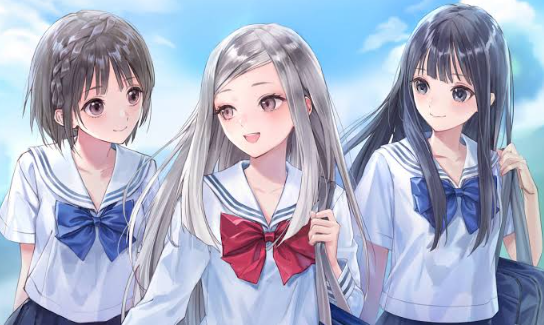
I. Overview of *BLUE REFLECTION Quartet: Girls' Miracle*
A. Compilation of the 4 BLUE REFLECTION Titles
*Girls' Miracle* includes four titles at once: *BLUE REFLECTION: Sword of the Phantom Girls*, *BLUE REFLECTION: MIO*, *BLUE REFLECTION: KAGAYAKI*, and *BLUE REFLECTION: Emperor*. Among them, *Sword of the Phantom Girls* and *Emperor* were originally console RPGs, *MIO* is a 2021 TV anime, and *KAGAYAKI* is a mobile/PC game that launched in 2023 and was shut down shortly after. This time, it’s like finally putting together the puzzle pieces of the series that were scattered for years!
B. RPG Features Where School Life Meets World-Saving Crisis
The core charm that has always defined this series is how it tightly weaves “girls’ everyday school life” with “world-saving crises.” During the day, you might be chatting with friends, attending class, going on dates, or dealing with small problems of your companions—and the next second, you’ll be thrown into a different world made of human souls to fight battles. This unique mix of youthful vibes and doomsday tension is what makes the BLUE REFLECTION series so memorable for players.
C. Release Date for the Traditional Chinese Version
*BLUE REFLECTION Quartet: Girls' Miracle* will officially launch on July 30, 2026. The Asian version supports Traditional Chinese subtitles and interface. Steam may show the unlock date as July 29 due to time zone differences, but the official release time is still based on July 30!
D. Multi-Platform Availability
Currently, the game is available on PS5, Nintendo Switch, Nintendo Switch 2, and Steam. The PS5 and Nintendo Switch have physical editions, while Switch 2 and Steam mainly offer digital download versions.
II. Included Titles and Play Order Suggestions
A. *BLUE REFLECTION: Sword of the Phantom Girls*
As the starting title of the series, the protagonist of *Sword of the Phantom Girls* is Hinako Shirai. She was once a ballerina but lost her ability to dance due to an injury. After meeting Tsukishiro Saji and Rainy, she gains the power of “Anti-Image Users” and starts stepping into the inner worlds of her classmates to fight against the “Primordial Ones” that threaten humanity.
B. *BLUE REFLECTION: MIO*
*MIO* was originally a 2021 TV anime, and this time it’s been remade into a game. Players mainly follow Hirahara Sakuragi and Hanai Ruka as they explore the mysteries of “Kemono” and uncover the truth behind Shimizaki Shion and the girls’ out-of-control emotions.
C. *BLUE REFLECTION: KAGAYAKI*
*BLUE REFLECTION: KAGAYAKI* was originally a live-service mobile game, and this time it’s been remade into a single-player game. Players will become the captain assigned to the “Weakest Squad in History,” fight against the Ashen Ghosts in a world corrupted by ash, and also interact with their squad members at school.
D. *BLUE REFLECTION: Emperor*
The core character of *BLUE REFLECTION: Emperor* is Aoi Hoshizaki. She suddenly arrives at the “Drip World” where only schools and large bodies of water exist, and explores the mental spaces with girls who have lost their memories. This is the title with the most overlapping settings among the four works.
E. Recommended Play Order for First-Time Players
If you’re new to this series, I strongly recommend playing in the order of Phantom → Mio → Kagayaki → Tei. This isn’t just a chronological order—it also helps you avoid being overwhelmed by a ton of unfamiliar characters when you play *Tei*, which can leave you going “Wait, who’s that?”. It makes following the series’ timeline way easier too.
III. New Additions & Adjustments in *Miracle of the Girls* for the Four Titles
A. High-Definition Remaster & Quality-of-Life Updates for *Phantom Blade*
*Phantom Blade* is probably the game that got the most noticeable upgrade in this remaster.
A. Visual & Convenience Optimizations
This remaster prioritized boosting the resolution of character and environment textures, plus added super useful features like fast travel and auto-save. For players who’ve played the original, the core story hasn’t been altered randomly at all—but the comfort level of exploring and grinding has improved a ton. You’ll never get stuck wasting time with clunky old controls anymore.
B. New Prologue & Epilogue for *Mio*
Besides fully adapting the original anime content into the game, *Mio* also adds a new prologue and epilogue that connect to other works in the series. It also uses memory shards scattered in the “Kemono” to flesh out the characters’ private stories, making the overall plot more fulfilling.
C. 24 New Story Events for *Kagayaki*
This time, *Kagayaki* didn’t just randomly insert old mobile game videos—they rebuilt everything into console-level gameplay. Plus, they added 24 brand-new story events, filling in character interaction scenes that were missing from the original mobile version, which greatly improves the plot’s completeness.
D. 8 New Playable Maidens for *Tei*
The most popular change among veteran players in the *Tei* version is the addition of 8 new playable battle characters: Maruka Hanari, Yukiko Takaoka, Nanae Azumi, Miki Seto, Aresia Morisaki, Ayumi Ikoma, Kirara Kuno, and Kanami Hoshitani. You’ll never miss the chance to control these characters in battles anymore.
E. REFERENCE Database & World Timeline
The game also adds the REFERENCE database and world timeline, where you can check the timelines of all events, character relationships across works, and cross-series character connections. The series’ setting is a bit complicated overall, so I recommend checking it after finishing each game—it’s way easier to understand than cramming all the info at once.
IV. Lore & Story of *Miracle of the Girls*
A. Antitheses & Magical Girl Setting
The magical girls in the series are called “Antitheses”. Their power is directly tied to their personal emotions and will—they don’t get stronger just by putting on a battle suit. They have to truly face their own hearts and those of others to grow properly.
B. Primordials & Humanity’s Survival Crisis
The “Primordials” in *Phantom* are massive, godlike beings that threaten humanity’s survival. The battle purpose of the protagonist Hinako Shirai and her team evolves from solving classmates’ troubles at the start to an important mission of protecting the entire world.
C. Will Shards & Memory Shards
“Will Shards” represent the power formed from a character’s inner heart. In works like *Tei*, “Memory Shards” are further turned into important clues to explore the world and recover the past. So “memory” can almost be said to be the core keyword of the entire series.
D. Psyche Spaces & Kemono
The “Psyche Spaces” in *Tei* are formed from the characters’ memories and emotions; the “Kemono” in *Mio* are closely related to the collective unconscious. Though their names are different, they essentially explain how the maidens’ inner worlds affect the real world setting.
E. Ash Beasts & The Weakest Unit in History
The world of *Kagayaki* is slowly collapsing due to mysterious ash, which forms monsters called “Ash Beasts”. The protagonist is assigned to a problematic, underpowered unit, and has to fight Ash Beasts while dealing with each maiden’s psychological issues—this gives the plot tons of tension.
V. Characters & Voice Actors of *Miracle of the Girls*
A. Hinako Shirai, Yukitsuki Shijou & Raimu Shijou
The original three leads can be said to be the soul core of the entire series: Hinako Shirai is voiced by Yuki Takada, Yukitsuki Shijou is voiced by Marika Takano, and Raimu Shijou is voiced by Sayaka Hata. Their friendship is also the most important emotional thread in *Phantom*.
B. Aoi Hoshizaki & Characters from *Tei*
Aoi Hoshizaki from *Tei* is voiced by Kanako Yanagihara, and her companions include Shizumu Jin, Rena Miyauchi, Yuuki Kaneshiro, and others. Aoi’s biggest feature is her super strong affinity—she can naturally connect characters from different works, making her an important
Connect the hub.
C. Ohbara Sakura, Hanari Ruka & Mizaki Shino
The core trio of *Mio* is made up of Sakura, Ruka, and Shino. Their drastically different views on "bonds" create the most intense and engaging conflicts in *Mio*'s storyline.
D. Kuno Kirara & Characters from *Ran*
Characters in *Ran* have much more distinct personalities. Kuno Kirara, Takaoka Yukiko, Azumi Nanaka, and Hayami Miki all have their own struggles and beliefs. Remade as a standalone console game, its story is way more complete than the mobile game's event stories, and the character charms really stand out.
E. 8 New Playable Characters
These 8 new characters are definitely not "reskinned filler"! Once you build actual teams, their unique skills and roles will completely change *Tei*'s combat strategies. Even long-time players won't stick to the same team forever when replaying, which greatly boosts replayability.
VI. Miracle of the Girls Battle System Guide
A. Turn-Based vs. Semi-Real-Time Combat
The combat systems of the four games aren't the same: *Gen* leans toward traditional command and timeline-based turn-based combat, while *Tei* clearly moved toward semi-real-time combat. So when switching to a new game in the series, it's best to rewatch the tutorial to avoid confusion from different combat rhythms.
B. Aethel Energy & Aethel Points (EP)
Combat in *Tei* heavily relies on "Aethel Energy" and "Aethel Points (EP)" mechanics: EP builds over time, and you can only use skills once it passes the action bar. So don't mash skills as soon as your character's turn comes—you need to decide whether to save EP for combo damage instead.
C. GEAR Ranks & Phantom Forms
The higher a character's GEAR rank, the fuller their EP limit and combat abilities become. Some shard effects also activate based on GEAR rank. Early in fights, using low-cost skills to keep the pace going is almost always way better than hoarding for big attacks from the start.
D. Combos, Special Moves & Finishing Blows
When it comes to combos, special moves and finishing blows, when fighting bosses in *Tei*, properly chaining combos not only deals massive damage—it also triggers buffs for Phantom Forms. Pay attention to rhythm during boss fights, and don't waste EP on unnecessary combos.
The core combat trick is to build up your combo count, then unleash a powerful Aethel Energy combo attack. As long as you keep the combo going without breaking, one burst attack can easily chip away multiple sections of a boss's HP.
Melee Combat & Boss Strategies
When facing big bosses, don't just spam attacks—counterattacks, dodges and exploiting elemental weaknesses are key. Late-game bosses hit extremely hard, so tanking damage and trading HP is usually more time-consuming than playing steadily with good rhythm.
VII. Miracle of the Girls Beginner Guide
A. Recommended Play Order for New Players
New players are recommended to play in the order of *Gen* → *Mio* → *Ran* → *Tei*. Don't skip the first three games just because *Tei* has newer graphics—trust me, you'll miss out on a lot!
B. Party & Skill Setup
Don't build a party full of only damage-dealers. When I play, I always keep at least one character who can heal, provide buffs or break enemy defenses—it makes boss fights way more forgiving.
C. Shard Equip & Upgrades
Shards are basically passive gear. Early on, focus on boosting attack power, EP efficiency and survival ability. You don't need to replace all your old shards as soon as you get new ones.
D. Bond & Friendship Boosts
Going on dates with characters and completing their requests isn't just for more story. Raising character bond levels also gives you TP, shards and other growth resources. So whenever I see a new character event, I usually prioritize finishing it first.
E. Fast Travel, Combat Speed & Story Skip
The new fast-forward features in Quartet are totally worth turning on. Especially in New Game Plus, when getting trophies or re-running for materials, it saves tons of waiting time.
VIII. Miracle of the Girls Growth & Exploration Systems
A. Growth Points & Ability Upgrades
Growth in *Gen* is different from standard RPGs. You don't level up just by fighting enemies; you have to actively assign the growth points you get. So don't grind tons of battles and forget to open the ability page to allocate them!
B. Shard Upgrades & Item Crafting
Materials obtained during exploration can be used to make battle items and facility parts. Don't waste materials randomly late game. Save rare materials for the crafting projects you really need.
C. School Development & Facility Sets
School development in *Tei* is really important. Various facilities not only bring stat boosts, but also unlock exclusive events for some characters. When I play, building new facilities...
Heal first, then handle the pure stat upgrades later.
D. Dark Cave & Evolution Systems
Players aiming for full 100% completion need to pay extra attention to the training content related to the first Dark Cave. Some evolution forms only unlock when specific stat requirements are met—these are easy-to-miss collectibles in the entire trophy list, so don’t let them slip your mind!
E. Photo Mode & Gallery Function
This time around, the photo mode lets you use way more characters—Yuzuki, Raimu, plus 8 new members can join the fun! The GALLERY page in the main menu also lets you directly check out character illustrations drawn by Mel Kishida.
IX. Girls' Miracle Chapter Flow & Platinum Trophy Guide
A. Prologue to Final Chapter Flow
Each of the four games has its own independent chapters, so the overall playtime is pretty lengthy. For your first playthrough, prioritize the main story—after unlocking a new area, you can clear side character events and memory fragments as you go, no need to grind for 100% exploration on every map the first time you step in.
B. Key Tasks & Exploration Tips Per Chapter
Grab memory fragments, special gathering spots, and character requests as soon as you spot them. Some maps change later in the game, so coming back to finish stuff after beating the story will only be more of a hassle!
C. Original Species & Large Boss Strategies
When fighting Original Species, prioritize managing recovery items and Ether resources. Boss fights in the fourth game focus way more on GEAR control, combos, weak point attacks, and timing your moves correctly.
D. Trophies & Platinum Requirements
The PS5 version has a total of 48 Trophies, including 1 Platinum Trophy. Apart from the main story, character interactions, collectibles, training mechanics, and special content across all games all unlock trophies. The real challenge isn’t usually boss fights—it’s not missing any hidden systems!
E. New Game+ & Playthrough Carry Over
Players chasing full collection completion shouldn’t skip the New Game+ run. For some character training and TP-related content, replaying with carry over is way easier than grinding through the first playthrough slowly.
X. Girls' Miracle Ending & Story Analysis
A. Emperor: Origin & Rebirth World
The later story in the fourth game reveals that the Drop world isn’t just a random other world—it’s deeply tied to world reconstruction, the girls’ memories, and major events in the series.
B. Aoi Hoshizaki’s Reincarnation Concept
Aoi might seem like a regular student suddenly caught up in events, but she’s actually closely connected to all the world’s changes—this is why she’s the key character linking all the different girls together.
C. Timeline Relationship Between The Four Games
The first game lays out the concepts of Reverse Ones and Original Species, the second expands on the plot of mermaids and emotional overload, the third depicts a post-apocalyptic world of ash, and the fourth wraps up multiple character storylines. Each game works as a standalone story on its own, but playing them in order lets you see the continuous evolution of the same world.
D. New Prologue & Final Chapter Link
The added prologue and final chapter cleverly tie together the core concepts of the series, making the overall worldbuilding logic more complete and filling in questions players might have after playing individual games.
The Quartet’s most praiseworthy story addition is the key bridge it connects between the second and third games. Details that could only be clarified by digging deep into setting explanations are now all crystal clear.
E. Ending Clues & Series Worldbuilding Recap
The core message BLUE REFLECTION wants to convey isn’t just the girls’ battles—it explores the deep theme of “even if emotions bring hurt, is it still worth building connections with others?” All four games eventually circle back to core concepts like memories, bonds, goodbyes, and starting anew, tying together the core thread of the entire world.
XI. Girls' Miracle Version & Price Comparison
A. Standard Edition Content & Price
The standard edition’s suggested retail price in Taiwan is NTD 1,490. If you just want to fully play all four games, the standard edition is more than enough to experience all the base content.
B. Special Edition Content & Price
The special edition’s suggested retail price is NTD 2,430, with extra additions like a character art book, a new B3-sized fabric poster, and in-game costume download codes—great for fans looking for collector’s items.
C. Collector's Edition Content & Price
The collector’s edition’s suggested retail price is NTD 5,550. In addition to all the special edition’s content, it adds an A1-sized fabric hanging scroll, a character-exclusive perpetual calendar, 18 character-related items
High-quality collectibles like character-themed photo cards and clear message boards are perfect for hardcore fans to complete their sets.
D. Differences Between Physical and Digital Versions
The PS5 and Switch versions are great for players who prefer physical collections, while the Switch 2 and Steam editions are digital-only. The core game content is identical across all platforms; the main differences lie in the physical bonuses included with boxed versions and platform-specific control features.
E. Purchase Channels for Taiwan and Hong Kong Versions
Players in Taiwan and Hong Kong can buy the Traditional Chinese version via PlayStation Store, Nintendo eShop, or Steam, based on their account region. For those who prefer physical copies, it’s recommended to purchase from local authorized retailers to avoid overseas versions with incorrect language, which could harm your gaming experience.
XII. Miracle of the Girls Collector's Edition & Pre-order Bonuses
A. Character Art Book
The Special Edition’s art book includes all visual illustrations of the series’ characters, plus world timeline information. For fans of Mel Kishida’s character designs, this art book is far more than just game merch—it’s a must-have for collections.
B. B3 Fabric Poster & A1 Fabric Scroll
The B3-sized fabric poster is a Special Edition bonus, while the Collector’s Edition adds a larger A1 fabric scroll. Both use brand-new visual illustrations from the game, with high-resolution details perfect for decoration.
C. Daily Character Perpetual Calendar
This perpetual calendar has no year limit—it’s practical merchandise that can sit on your desk for long-term use, no need to worry about it expiring. It’s one of the more useful collectibles in the Collector’s Edition.
D. Character Photo Cards & Clear Message Board
The Collector’s Edition comes with 18 character-themed photo cards, a clear message board, and a dedicated marker set. If you love collecting character-related merch, this edition is way more complete than the Special Edition and will satisfy your collection cravings.
E. Custom "Quartet" Frame & Limited-Time Bonuses
The custom "Quartet" frame was released for free during the game’s initial launch, running until August 12, 2026. The free distribution period has now ended; the four pre-order bonus frames for digital versions were also pre-launch exclusives, so you’ll miss out if you don’t grab them.
XIII. Miracle of the Girls Platform Version Differences
A. PS5 Version Features
The PS5 version is perfect for players who want higher resolution, stable visual performance, and prefer physical collections. It’s also my top pick for players who game at home regularly, delivering a more polished experience.
B. Nintendo Switch Version Features
The biggest advantage of the Switch platform is portability. While visual specs aren’t the series’ strong suit, most of the game focuses on story and character interactions, so the anytime-play feature in handheld mode works great for relaxed gaming sessions.
C. Nintendo Switch 2 Version Features
The Switch 2 balances portability and better visual performance, but currently it’s digital-only with no physical version available. Players who care about boxed copies can wait for future updates.
D. Steam Version & PC Gaming Notes
The Steam version supports Traditional Chinese interface and subtitles, plus Japanese audio. It also includes 48 Steam-exclusive achievements. PC players can adjust resolution and visual settings based on their hardware specs to get the best gaming experience.
E. Important Note: Switch Edition Can’t Upgrade to Switch 2
This is a critical point to check before purchasing:
The Switch edition can’t be upgraded to the Switch 2 version via an upgrade pass, and save files between the two versions are completely incompatible.
If you already have a Switch 2, don’t accidentally buy the Switch edition just for the physical box—you’ll waste your budget if your saves can’t transfer. Be extra careful when choosing the version!
XIV. Miracle of the Girls Reviews & Purchase Recommendations
A. Graphic Remaster & Character Art
Art design has always been the series’ biggest selling point. Even though this is a 2017 title with texture upgrades, it still holds up well today. Mel Kishida’s signature transparent character designs don’t feel outdated at all, carrying strong emotional resonance.
B. The Four Games
The core charm of all four games lies in each story revolving around the girls’ growth and bonds. They not only have great plots but also let players immerse themselves in the characters’ emotions, experiencing that unique miracle time made just for them.
Story & Combat
System Evaluation: This "Blue Reflection: The Girls' Miracle" compilation brings together four games released across different time periods on distinct original platforms, so gameplay consistency isn’t that high. The combat in the first entry "Sword of the Girl Who Dances in Phantasm" feels really old-school by today’s standards; in contrast, "MIO" and "SUN" still show traces of being reworked into full, polished titles; and when it comes to the most fully realized systems overall, there’s no question that "Emperor" is the standout.
C. Is the Compilation’s New Content Sufficient?: How "packed" the new content is really depends on how you frame it: if you’re treating this like a straight-up fifth new RPG from the series, there’s not a ton of extra stuff here. But if you see it as a full preservation project for the entire BLUE REFLECTION lineup? The effort is actually pretty impressive. Having "MIO" playable as a full standalone game again, and the now-shuttered mobile title "SUN" finally being preserved as a single-player experience? That’s a huge deal for long-time series fans.
D. Is It Worth It for Series Veterans to Buy?: As for whether old fans should grab this compilation, here’s a quick guide: if you’ve only played "Sword of the Girl Who Dances in Phantasm" or "Emperor", this is totally worth picking up to fill in the gaps. But if you’ve played all four original games, you’ll want to prioritize checking out the eight new characters, the quality-of-life updates, and the all-new REFERENCE content—those are the core highlights that’ll make the compilation feel fresh for returning players.
E. Where Should New Players Start?: If you’re completely new to the BLUE REFLECTION series, don’t overthink it—just start with "Sword of the Girl Who Dances in Phantasm"! Playing through the official ordered sequence up to "Emperor" gives the smoothest, most complete experience, and helps you follow the entire series’ story and themes perfectly.
XV. Frequently Asked Questions About The Girls' Miracle
A. Is The Girls' Miracle a New Entry?: No, this "The Girls' Miracle" isn’t a traditional fifth new RPG. It’s a massive compilation project that reworks and repackages four existing games, adds new content, and is specifically built to preserve the entire BLUE REFLECTION series’ library for future players.
B. What’s the Difference Between Blue Reflection, 碧藍反射, and 蒼藍反像?: These are mostly translation differences or old fan nicknames from different regions. They all refer to the same core BLUE REFLECTION series—not three separate games. It’s just a matter of different naming habits across the fanbase.
C. Does The Girls' Miracle Support Traditional Chinese?: Absolutely! "The Girls' Miracle" does support Traditional Chinese. Whether you’re on PS5, Switch, Switch 2, or the Asian/region-appropriate Steam versions, you’ll get Traditional Chinese support. Steam specifically has full Traditional Chinese interface and subtitles, so you don’t have to worry about language barriers at all.
D. What’s the Difference Between the Hong Kong and Taiwan Versions?: The main differences between Hong Kong and Taiwan editions are store region, currency for pricing, physical retail availability, and age rating labels. But there’s no storyline or Traditional Chinese content that’s different between versions—you don’t have to replay anything if you switch editions. Just pick whichever is easiest for you to get your hands on.
E. Theme Song "Ephemeral Youth" and Development Team Info: This compilation is developed by Gust and published by KOEI TECMO GAMES. The series’ character design and overall supervision are still handled by the familiar Mel Kishida. The brand-new theme song "Ephemeral Youth" is sung by Marina Mizuno. Listening to the full track, then reflecting on the meetings and partings of the four main girls across all four games, it perfectly fits the compilation’s Quartet core theme: bringing all those memories and feelings back together again.
"BLUE REFLECTION Quartet: The Girls' Miracle"’s biggest draw for me isn’t how many new characters it adds—it’s that it finally preserves the entire BLUE REFLECTION series, which has spanned over a decade across games, anime, and discontinued mobile services. Especially having "MIO" playable as a standalone game again, and the now-shuttered mobile entry "SUN" finally being saved as a single-player experience? That means way more to series fans than just a simple HD remaster—it’s way more meaningful and worth collecting. If you’re completely new to the BLUE REFLECTION series, I
I seriously suggest you don’t rush to check the endings or character relationship charts right away—just start with *Blade of the Phantom Maidens* and play straight through to *Emperor*. The first couple hours might feel like just a generic “pretty girls plus school RPG” setup, but once the Inverse Beings, Dream-like Spirits, Grey Anomalies, Psyche Spaces, and all the characters’ memories start linking together, you’ll realize that what *Miracles of the Maidens* is really trying to preserve all along is the shining proof of all the precious moments those girls spent together.