Heavenly Heroes Chronicle: Complete Beginner's Guide - Faction, General, Divine Beast, and Equi
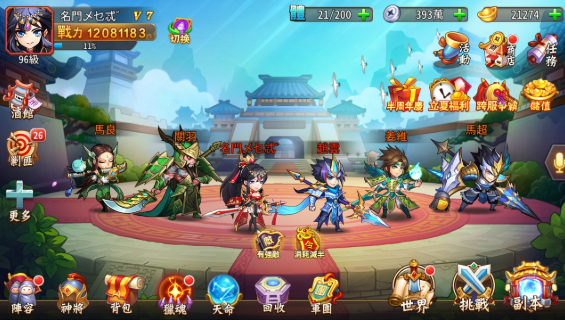
If you love Romance of the Three Kingdoms-themed games and have a soft spot for strategy mobile games with elements like "training generals, arranging formations, and countering skills", then Azure Sky: Chronicles of Heroes will hook you right away! The game has a cute Japanese chibi art style, flashy battle effects that feel like they’re jumping off the screen, and over-the-top, satisfying skill animations for your generals. Plus, there are tons of in-game rewards—you get useful resources like Recruit Tokens and Gold ingots every day. The overall pace is super friendly for mobile players; it’s not too grind-heavy and won’t take up all your time.
But this game also heavily relies on early planning—if you pick the wrong direction at the start, even if you play every day, you’ll feel powerless when you get absolutely destroyed later, whether you’re pushing main story stages, challenges like the Demon Soul Tower or Bloody Battle Demon Tower, Arena matches, or Cross-Server battles. This is something you really need to keep in mind.
I. Game Introduction & Beginner’s Guide
A. Core Gameplay & Features of Azure Sky: Chronicles of Heroes
In a nutshell: This is a strategy RPG that’s built on collecting Three Kingdoms generals, paired with faction synergies, turn-based formation battles, and long-term character development.
The outcome of battles isn’t just about comparing power stats—it depends on several key factors for your team:
-
Whether you’re getting faction buffs
-
Whether your team has a balanced class setup
-
Whether your skill rotation is well-timed
-
Whether resources are focused on your core generals
The game store pages in Taiwan, Hong Kong, and Macau also clearly highlight that this is a Three Kingdoms RPG, comes with tons of free rewards, supports voice chat, and has casual-friendly features like battle auto-skipping—things that are really thoughtful for regular players.
B. Beginner’s Start-Up Guide: Account Binding, First Gacha Pulls & Claiming Resources
To avoid mistakes in this game’s beginner phase, just follow one core rule:
Claim every resource you can get first, then decide which gacha banners to pull and which faction to align with.
The most common mistakes beginners make are:
-
Rushing to do gacha pulls right after logging in
-
Realizing after pulling that you missed tons of beginner rewards, event recruit tokens, and faction recruit tokens
-
Regretting picking the wrong banner or faction at that point
Many traditional Chinese gaming platforms also offer events like logging in for 14 consecutive days during the server launch to get resources/recruit tokens, and even letting you pick a specific general on Day 7—so keep an eye out for these if you’re new.
C. Taiwan Server Environment & Server Selection
The traditional Chinese support for the Taiwan/Hong Kong/Macau version is really solid, so you don’t have to worry about not understanding the game content.
For server selection, the safest strategy for new players is:
-
Go for newly opened servers first: Resource gain is roughly the same, competition is more manageable, and you can keep up with most players’ progress
-
Try to pick the same server as friends or guild members: Later on, there’s cross-server battles and legion activities—you’ll struggle a lot without a team
-
Never force your way into old servers: Veteran players on old servers are already super developed, so you’ll feel like a noob and get crushed easily
D. Tips for F2P (Free-to-Play) vs. Light Paying Players
To put it in plain player terms, the differences are clear:
-
F2P Players: You need to follow a "plan everything first" approach
-
Light Paying Players: You can try to progress by using "timing advantages"
The worst mistake F2P players can make is wasting resources randomly. As long as you do these things, you’ll be fine:
For micro-buyers willing to pick up cost-effective items like monthly cards or first-recharge bonuses, you’ll typically unlock key assets earlier:
II. Faction Overview & Early-Game Launch Choices
A. The Four Factions (Shu, Wu, Wei, Qunying) – Pros & Cons
The four faction playstyles you brought up are super typical for Three Kingdoms strategy games – they’re designed with distinct flavors, each having its own unique identity and play path.
Every faction has its own vibe and role:
Many players on Taiwanese gaming forums like Bahamut will instinctively go with “level whatever hero you pull from whichever faction” when discussing choices – because faction bond strength directly impacts how smoothly you get through early stages.
B. Which Faction to Pick Early On?
Here are some super practical tips for your early-game faction pick:
C. Faction Bond Bonuses & Switching Mechanics
In these games, faction bonds are almost always “the purer, the stronger” – the more heroes from the same faction you have, the more complete the activation bonuses you get.
So two common team builds for new players:
D. Recommended Factions for New Players & Why
If you’re playing this game for the first time and don’t want to stress over complicated faction builds:
I suggest new players start with Shu or Wei.
Shu is easy to pick up, Wei is tough and durable; as for Wu and Qunying, wait till you get the hang of the game and want that extra intense fun before trying them.
III. Hero List & Reviews
A. Hero Rarity & Tier Classification
The difference you mentioned between Gold Heroes and Silver Heroes is basically between “high-rarity core heroes” and “filler/transition heroes for free-to-play players”.
In these games, rarity usually affects:
-
First, decide which faction you want to align with
-
Only focus on training 5-6 core generals for your main team
-
Save your Recruitment Orders for high-value gacha banners or faction-exclusive ones
This way, even if you don’t spend real money, you can steadily progress through the main story and join events without issues.
-
Core Gold Heroes
-
Key Mythical Beasts
-
Key Equipment/Relics
This lets you build a full team much faster, making your growth feel way smoother and way more satisfying.
-
Shu: Insane consistency, great sustainability, and super forgiving of mistakes.
-
Wu: Brutal burst damage, focused on Burn/Ignite effects, and plays at a fast pace.
-
Wei: Extremely tanky, strong counterattacks, solid crowd control, and gets way more powerful as the late game goes on.
-
Qunying (Heroes): Relies on one hyper-strong hero to carry the team, super flexible with mixed faction bonds.
-
Want smooth map progress, minimal stage blocks → Shu
The Shu faction is well-balanced, making it easy to put together a basic team with tanks, healers, and damage dealers – plus their development stays consistent later. -
Chasing burst damage, aiming for top ranks in events → Wu
Wu’s biggest highlight is fast, brutal damage output – but their weak spot is that if survival isn’t handled well, they can get one-shot way too easily. -
Love tower climbing, prefer steady, methodical play to wear opponents down → Wei
Wei teams are all about being extremely tough – it’s usually a “you can’t kill me, I’ll slowly outlast you” playstyle, perfect for players who like reliable, steady gameplay. -
Like gambling for luck, want one core hero to carry the whole team → Qunying (Heroes)
Qunying teams are super fun to play – their core damage dealer is strong – but they’re the riskiest for new players: if you don’t pull that “single hyper carry”, the whole team feels like a loose, unassembled puzzle with scattered strength.
-
Pure Faction Route: Max out all same-faction bonds – this team is the most stable for clearing stages, perfect for new players who don’t want to deal with messy mixed builds.
-
Mixed Faction Gap-Filling Route: Add heroes to cover your team’s gaps – if you need more tanks, grab a Wei tank; if you need more burst, add Wu damage dealers – super flexible.
-
-
The cap on base stats
-
Skill multiplier strength and whether the skill mechanism is comprehensive
-
Faction bond strength
-
Development potential in the late game
But! New players must remember:
High rarity doesn't mean you should rush to invest in leveling them up right away.
What you should invest in is the team that can help you push stages and farm resources quickly.B. Strongest General Tier List and Meta Units
I won't make a rigid, unchanging tier list here, because game versions get adjusted all the time, and this article needs to have enough original content.
I'll explain using the common player definition of "meta units":-
Can serve as the core damage dealer or support for the entire team
-
Can be used in all kinds of game modes
-
Can perform well even at low break levels
Heroes that meet these three criteria are definitely the "meta units" you should level up first.
C. Representative Generals by Faction
Everyone's familiar with the Three Kingdoms characters, so I'll use in-game roles and explain them in a way that's more relevant to how players actually use them:
-
Liu Bei: Common role is team core, buffer support, and the team's stabilizer. If you want a steady, reliable Shu faction team, you'll almost always need him.
-
Guan Yu: Common role is "main damage dealer, execute capability, single-target burst damage". You
-
Whether challenging a Boss or mopping up the battlefield, he's a brutal character that hits like a truck—one blow and your enemies will be begging for mercy~
-
Cao Cao: Common role is "core tank, crowd control and pace controller", the soul of the Wei faction team, just like him—"The more you hit me, the harder I become to take down"—he's totally a master at turning the tide in tough situations~
-
Sun Ce: Common role is "burst forward, pace driver", the most fun part of Wu faction teams is usually the thrill of "taking the initiative and bursting down enemies", he gets the team rolling fast at the start~
D. Transitional Generals and Characters Not Recommended for Summoning
Transitional generals aren't useless! They're great tools to fill gaps in your team during the early game—don't sell them randomly!
As for what types of characters aren't recommended to summon, I'll explain by type:-
Skill mechanisms are too specialized, almost only work well in specific game modes
-
Need very high break levels to become strong, which new players can't reach in the short term
-
Don't fit the mainline of the faction you chose, forcing to level them up will only waste precious resources
For new players, the scariest thing is definitely not not getting good characters, it's getting a bunch and then having no idea when to stop or how to choose~
IV. Shu Faction Team and Leveling Order
A. Priority Order of Shu's Core Generals: Liu Bei, Guan Yu, Zhao Yun, Zhuge Liang
The feeling of a Shu faction team is usually "stable, can drag out fights, and even turn the tide"—that kind of reassuring feeling, they don't die easily.
Here's a super practical Shu team leveling order for you:-
Liu Bei
-
Guan Yu / Zhao Yun
-
Zhuge Liang
-
Then add Shu tanks, healers, or support role characters to make the whole team complete
You'll find that: Building a "team that works well" is way more important than chasing the "strongest damage dealer" right from the start—otherwise, you won't even make it to the late game~
B. Recommended Shu Team: Main Tank, Damage Dealer, Magic Damage Combination
The most stable lineup structure for a Shu team is the standard core formation:
-
1 Tank
-
2 Damage Dealers
-
1 Support
-
1 Healer or semi-healer
If you feel like the battle pace is too slow when playing Shu, it's probably because you don't have enough damage dealers or your burst timing is too scattered, making it impossible to burst down enemies;
If you feel like your team gets easily destroyed, then it's likely because your "tank andIf your healer’s performance is lacking or their gear build is off, adjust that right away~
C. Shu Kingdom Beasts & Build Recommendations
In this game, Beasts are essentially a “second skill set” – pick the right one and your team’s power gets a huge boost.
For Shu Kingdom teams, these are the most common Beast effects to prioritize:-
Boosts the team’s sustain, letting everyone stay alive longer
-
Gives consistent damage, no RNG reliance
-
Or lets you land burst damage or CC on key turns to turn the tide
Gearing up is pretty straightforward, no overcomplicating it:
-
Tanks: Prioritize Defense, HP, and damage mitigation—survival is non-negotiable
-
Main DPS: Prioritize ATK, Crit Rate, and Penetration to deal solid damage
-
Support: Prioritize Speed, Accuracy, Effect Accuracy, or Buff Duration to support your team properly
D. Shu Kingdom Team Differences: PvE vs. PvP
-
PvE Mode: More focus on stability and sustain—you need to survive waves of enemies
-
PvP Mode: More focus on initiative, CC, and burst windows to pressure the enemy first
When running Shu in PvP, you’ll usually swap pure sustain supports for CC/burst-focused ones to take out their core early~
V. Wu Kingdom Team & Leveling Order
A. Wu Core Characters Priority: Sun Ce, Zhou Yu, Xiao Qiao, Sun Quan, etc.
The core of a Wu team is burst damage and pace control—they deal insane damage in a combo but have deadly weaknesses.
Here’s a solid Wu team leveling order for you:-
Sun Ce
-
Zhou Yu
-
Sun Quan / Xiao Qiao
-
Add a Wu-aligned tank (or a cross-faction tank) to avoid turning your Wu team into a “glass cannon that only deals damage but can’t survive”
New Wu players’ biggest mistake: Their team deals great damage but can’t survive, often getting wiped early in fights.
That’s why Wu needs to prioritize frontline defense and survival earlier than other factions—don’t just stack damage!You deal insane damage…but you can’t stay alive.
So Wu needs to prioritize frontline survival earlier than other factions.B. Building a Wu Burst Damage Team
To make a Wu team hit insane burst damage, the first step is:
-
Stack up on stacking DoTs like Damage Boost, Burn, and Ignite—this is how you pull off the biggest burst hits~
Wait until your team’s core character uses their ultimate ability to wipe the enemy—don’t let everyone use their skills randomly! Wu teams crumble when skills are spread out, making burst damage useless. Mess that up, and you’ll swear Wu is weak~
3. Wu Kingdom Beast Synergy
When picking Beasts for Wu, you usually go two ways: either boost your team’s burst or fix their survival gaps.
4. Wu Kingdom Cross-Server Battles & Event Fit
Wu teams actually perform well in cross-server battles and speed-run events—faster clears mean more resources! But there’s a catch: you need a full burst rotation ready, or you’ll get taken out after just a couple hits.
5. Wei Kingdom Team & Leveling Order
Wei teams live by high bulk, lots of CC, and counterplay. Leveling order tip: Start with Cao Cao, then Sima Yi, then add Wei DPS characters, finally filling in Wei supports or healers. Wei gameplay is often about waiting for the enemy to blow their burst skills, then picking them off slowly.
1. Recommended Wei Counterattack Team
For Wei counter teams, two things matter most: first, survive long enough to trigger counterattacks, and second, keep the enemy tied up. Gear and Beasts are super important here—each extra turn you survive boosts your win rate a lot!
2. Wei Magic & Support Characters
If
If you just stack survivability on your Wei Faction team, you’ll run into the problem of dealing way too little damage. That’s why you usually need to pair them with mages or sustained DPS heroes—this way, you can hold off enemies while slowly wearing them down.
3. Wei Faction Teams for Soul Tower & Blood Battle Tower
As mentioned frequently in official news and updates, this game’s core gameplay revolves around leveling up generals and building teams for battles. Tower stages essentially amp up these two core elements: the more complete and stage-suited your team is, the higher you can climb. Wei teams usually perform pretty well in tower content, since tower stages don’t rely on burst damage as much as they do on consistent clear ability.
6. Qun Xiong Faction Teams & Training Order
1. Qun Xiong Single Core: Prioritize Lu Bu, Dong Zhuo, Ma Chao, etc.
A super common core strategy for Qun Xiong is: Single Core Command. That means once you pull that naturally powerful core general, your entire Qun Xiong team will suddenly feel way smoother and way easier to play. The usual Qun Xiong training order is: first max out your single core general, then add support heroes that help the core perform better, and finally fill in tanks and a second DPS slot.
The biggest risk for new Qun Xiong players is: if you don’t get that core general, you’ll think the Qun Xiong faction is super hard to play and basically unworkable. So Qun Xiong is better suited for players who have decent gacha luck, or are willing to spend a little bit to get that core.
2. Building Qun Xiong Hybrid Teams
The key to Qun Xiong hybrid teams: don’t panic if you can’t get faction bonuses—just fill gaps with cross-faction heroes. For example, you can build a team like "Qun Xiong Core + Wei Tank + Shu Support"—this team is actually super strong early game, since it uses the least resources to get the most complete functionality.
3. Qun Xiong for Stage Clearing & Tower Adaptation
Once your Qun Xiong single core is fully built, most stage clearing modes will feel really comfortable—after all, one core can handle most of the DPS work. But when you hit high-difficulty tower stages, Qun Xiong becomes way more dependent on "utility heroes"—otherwise, it’s super awkward when your core gets crowd controlled (CC’d).
4. Qun Xiong Dual-Faction Play
Dual-faction play is usually for mid to late game, since you need to level two full cores at once. New players, don’t rush—focus on making one team strong first.
7. Beasts, Gear & Bond Systems
1. Beasts List & Faction Pairing
You can think of beasts as your team’s "sixth member"! When choosing a beast, don’t just go for the coolest looking one—pick based on what your team is missing: if you need survival, go for shield, damage reduction, or heal types; if you need burst, go for ones that boost damage, critical hits, or follow-up attacks; if you need crowd control, pick ones that have CC or skill lockdown effects.
2. Top Beast Priority Order
If you want to rank beast priority, I suggest going by "general utility" (how well they fit any team).
C. Bond Activation Order & General Pairing Tips
The most common pitfall with bond setup is: forcing weak generals that aren’t strong enough just to get the bond, which actually drags down your entire team’s total power.
The right way to do it is:-
Clear stages first with a solid five-man DPS team
-
Then slowly replace generals with bond-suitable ones
Bonds are bonus perks to help you, not chains holding you back.
D. Gear & Artifact Upgrade Priority Order
Resources for gear and artifacts are always tight, so for new players, the safest upgrade order is:
-
Prioritize upgrading your main carry’s weapon or core DPS gear
-
Max out your tank’s defensive gear
-
For supports or healers, just upgrade speed or effect hit rate based on need
Never upgrade everything evenly— that’ll make your progress slowest and least fun.
IX. Resource Allocation & Long-Term Training Order
A. Gold, EXP & Soul Stone Allocation Logic
The core rule for new players is: Focused Investment.
I recommend splitting all your resources into three parts like this:-
60% into 2-3 core generals of your main team
-
30% into backup roles for your main team
-
10% for transitional generals or a second team
B. General Ascension & Full Break Priority Order
High-cost operations like general ascension (golden promotion) and full break should only be saved for:
-
Core generals you know you’ll use long-term
-
Or generals you plan to make your main team’s core
New players most often regret wasting ascension resources on characters that look strong now but will be replaced later.
C. Hunt Partners & Resource Stage Priority
The priority order for resource stages is always:
-
First, prioritize farming the materials you’re stuck on right now!
But here’s the deal: farming resources isn’t the goal—getting your main team up and running fast is. Don’t waste all your time grinding “collectible gear”; focus on building a stable core that can clear stages reliably first.
D. Long-Term Steady Development Roadmap
The most reliable long-term development path is:
-
Build and fully form a main team using only one faction’s characters.
-
Make sure this main team can consistently clear stages and towers.
-
Add a second team based on the game modes you like playing most.
-
Finally, build your third team.
Follow this order—whether you’re a F2P or light-spender player, you’ll have a great time without feeling pressured.
X. PVP Lineups & Battle Tips
A. Common PVP Lineups & Counter Relationships
PVP battles all come down to three key things:
-
First Strike Priority
-
Burst Damage
-
Team Sustain
So most meta PVP lineups fall into two main playstyles:
-
Wu Faction: Focus on burst damage
-
Wei Faction: Build a counter-attack system.
For Shu and Qun factions, pick your playstyle based on whether your core characters are fully developed.
B. Priority Order for Lineups in Cross-Server Battles & Arena
Cross-server battles care way more about “team completeness and gear builds” than just character star levels.
So here’s my recommended PVP development order:-
Get your PVE main team fully stable first.
-
Level up 2~3 core PVP-focused characters next.
-
Finally, go for a fully optimized PVP lineup.
C. Priority for Character Leveling & Lineup Shifts in PVP
In PVP, these are the first characters to level up:
-
Your crowd control or first-strike role characters
-
Your main burst damage dealer.
Because if you lock down the enemy first and take out their core character, they often won’t have a chance to fight back.
D. Common Lane Control Tips & Switch Lanes Strategy
What players call “switching lanes” is actually an adaptation tactic:
-
If you can’t beat a burst team, switch to a counter-attack system to wear the opponent down.
-
If you get stuck in a sustain battle with no way to win, add burst or armor-penetration utility characters.
PVP isn’t about using the same lineup for every match—learn to adjust your team based on the environment.
XI. PVE Dungeons & Event Guides
A. Lineup Priority for Soul Tower & Bloody Battle Soul Tower
The core of tower-based gameplay is: Pair damage dealers and defenders that can stay on the field consistently, making sure your team can keep the pace even at higher stages, clear smoothly and get rewards.
For tower defense teams, three core points are needed: Stability, high error tolerance, enough sustain. So the tower team order is usually:
- Level up your frontline tank first
- Next, train healers or supports
- Finally, train damage dealers
B. Lineup Ideas for “Clear Stages” Style Gameplay
The “clear stages” gameplay relies heavily on burst rhythm and team synergy. Required characters should have these traits:
-
Can quickly clear waves of small mobs pouring in along a lane
-
Can deal critical damage to the boss
-
Can use crowd control or self-sustain in dangerous turns
Therefore the team needs to be more complete than a main story team. Utility role characters are particularly important—without them, it’s easy to get stuck.
C. Resource Priority for Event Dungeons
The correct logic for event dungeons is super simple:
Redeem all core exchangeable resources first. Don’t blow all your stamina grinding for a single piece of gear. In the long run, what you lack most are “irreplaceable scarce resources” like ascension materials, full-awakening materials, treasures, beast upgrades—focus on these first.
D. Progression Order for Clearing Main Story & Hard Stages
To clear the full main story, there’s an easy trick to remember:
- Start with a team from the same faction to push through stages until you get stuck
- When you hit a wall, mix in characters from other factions to fill gaps
- Once you have enough resources, switch back to a pure faction team to claim synergy bonuses
XII. Spending, Package Choices, & Game Optimization Tips
A. First Top-Up, Monthly Passes, & Package Value Comparison
We won’t get into exact prices here—just give you practical ideas for players:
- Monthly passes / Battle passes give the best value for money
- First top-up helps you jump way ahead in game progress quickly
- Limited-time packages depend on their contents: worth buying if they include ascension materials, full limit break materials, or mythical beast core materials—hold back if they only give pull tickets, it’s easy to overspend here
B. Gacha Spending & Faction Choice Direction
The biggest mistake in gacha spending is "wanting to level every new character you pull". Even if you’re willing to spend money, you need a plan first:
- Which faction are you focusing on?
- Are you focusing on PvE or PvP gameplay? Once you decide, only pull from banners that fill gaps in your existing lineup
C. Benefits of Playing on a PC Emulator
If you grind resources or do events for long periods, playing on a PC emulator has tons of perks:
- Controls feel smoother and faster
- AFK grinding is way more convenient than on mobile
- Managing multiple accounts is easier—BIG CAVEAT: NEVER use unofficial hacks or scripts. Getting your account banned is just not worth it
D. Strong Playstyles for F2P & Casual Players
You can play well as a free-to-play (f2p) or casual player—here are the core three points to follow:
- Concentrate all resources on your main team—don’t spread them thin
- Prioritize irreversible materials like ascension, full limit break, and mythical beast core from events
- For PvP, don’t force chasing expensive meta teams—first build a team you can consistently use well
XIII. Version Updates & Long-Term Game Planning
A. Judge New Characters & Meta Changes from Updates
Every version update brings new characters, mythical beasts, and treasures. To decide if you need to chase them, ask yourself three questions:
- Can this character fill a gap in my main team?
- Is it a core that works for both PvE and PvP?
- Does it need high limit breaks to be good? Can I afford to invest in it? Once you think through these, you won’t get sucked into pulling for every new thing the update throws at you
B. Monthly Event Resource Priorities
Sticking to this for monthly events will never go wrong:
- Always prioritize exchanging all ascension, full limit break, and mythical beast core materials first—you’ll always need these long-term. Gear can be farmed slowly, but you can never have enough ascension materials
C. Community Tips: Bahamut Discussion Boards & Streamer Recommendations
Places like the Bahamut Forum have dedicated game sections and curated guides—perfect for checking faction tips, event info, and team builds. There’s one rule to follow when taking community advice:
- Only take advice with actual battle reports, gear screenshots, and personal tested stats
- If someone only yells “meta” or “must pull”, just take it with a grain of salt
Blindly following trends in games like this is a fast way to waste precious resources - Even if the game’s meta changes later, or the devs adjust things, your main team you invested in consistently will still be the most stable and reliable. That’s why long-term planning is key:
D. Game Future Outlook & Server Shutdown Risk Assessment
Here’s a player’s take (no corporate stuff):
- This is a long-term idle-style game—the worst thing isn’t falling behind the meta, it’s spreading resources too thin so none of your teams can get fully built
- Get one full team built first before even thinking about building a second or third
《Azure Hero Chronicles》, this three-kingdoms strategy RPG with four factions, the most fun part isn’t pulling a rare general. It’s when you connect all the dots: faction synergy, core general roles, mythical beast & gear setup, and resource order—you’ll suddenly notice your team jump to a whole new level: pushing stages gets smooth, tower climbing is way more reliable, and even PvP matches…
They won’t be as easily shut down as they were before, and they’re definitely not just punching bags others can mess around with anymore.
-
-